Kimpa Vita: The Prophetess Who Said Christ Was Born in the Kongo — and Burned for It

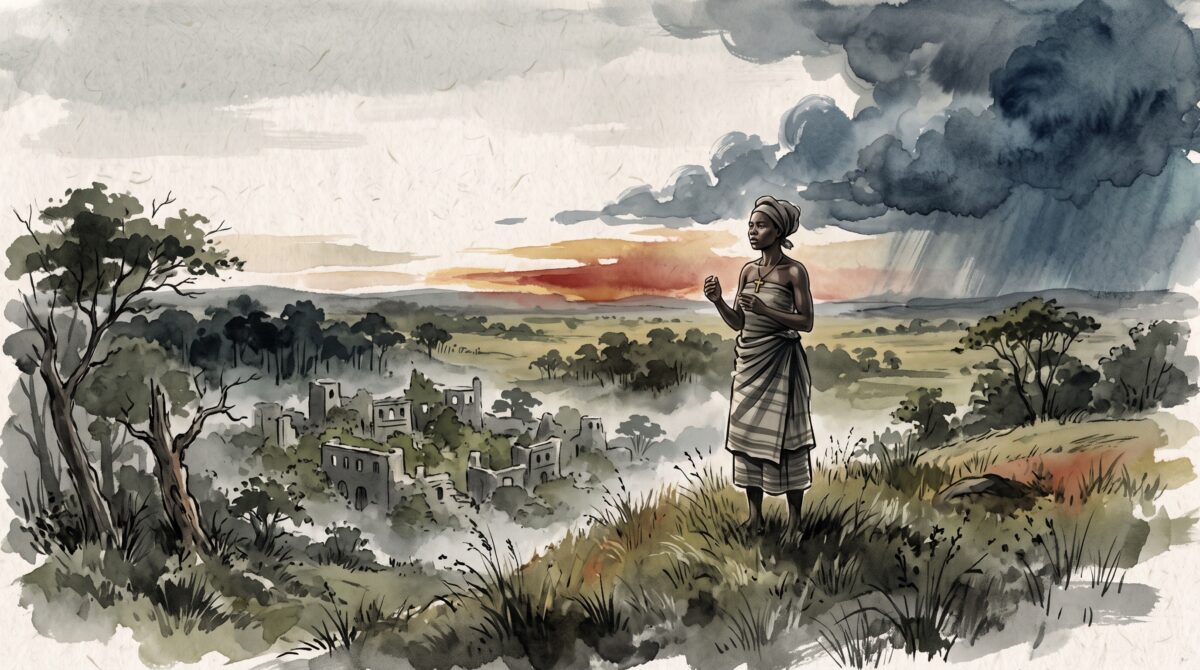
In the early summer of 1704, in a kingdom that had been bleeding itself to death for forty years, a young noblewoman fell gravely ill and, by her own account, died. When she opened her eyes again, she told those around her that she was no longer entirely herself. She had crossed over, met God, and been sent back to the land of the living carrying the soul of a Catholic saint inside her body, with a message she had been chosen to deliver.
Her name was Kimpa Vita, baptised Dona Beatriz, and the message she carried would shake the Kingdom of Kongo to its foundations. Within two years she would gather thousands of followers, defy kings and missionaries, lead the reoccupation of an abandoned holy city, and be condemned to the flames as a heretic. She is remembered now as the Kongolese Joan of Arc. In her own time she was something stranger and more dangerous: a prophet who told an African kingdom that heaven had always been theirs.
A kingdom in ruins
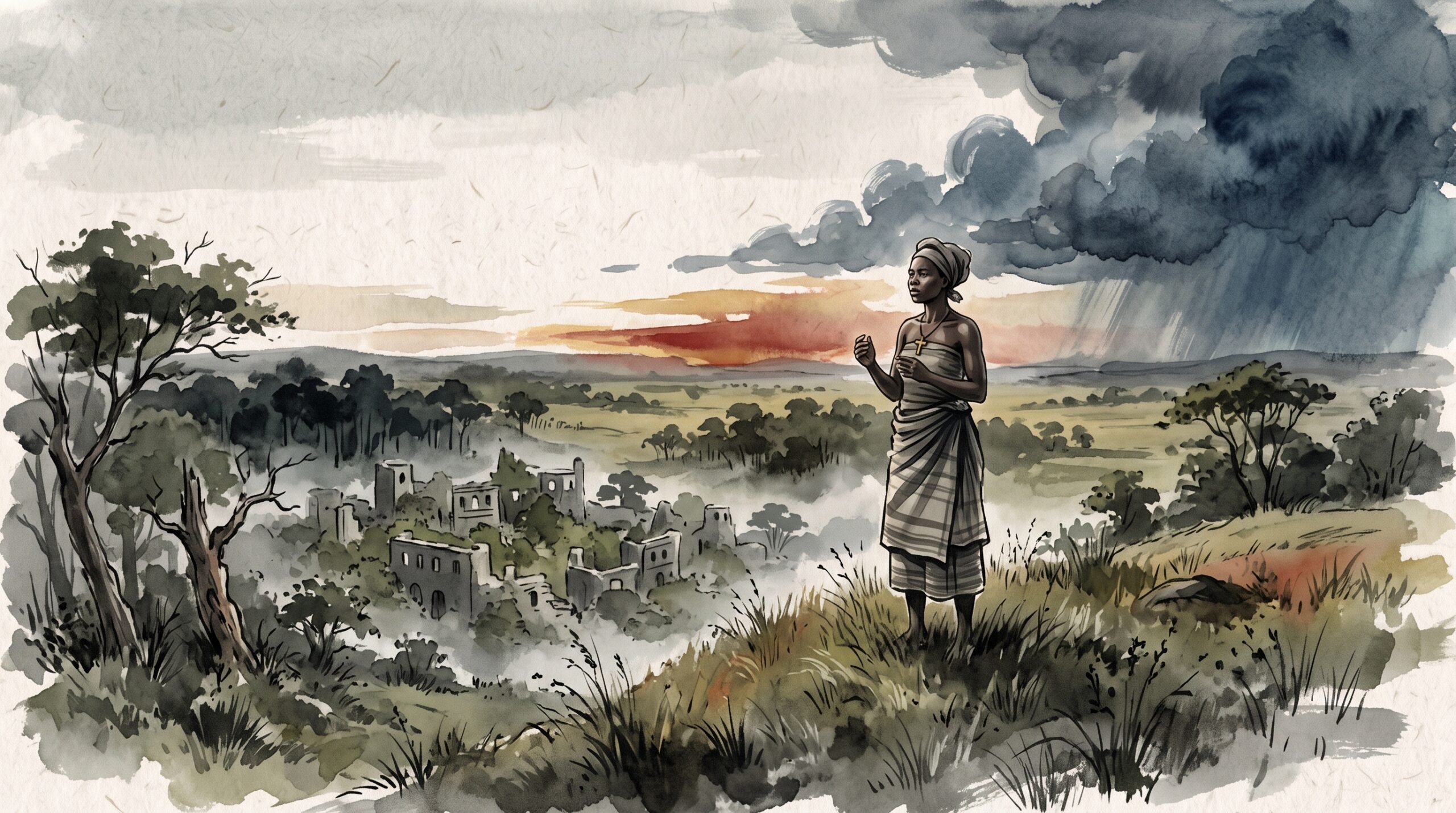
To understand Kimpa Vita, you have to understand how broken her world already was. The Kingdom of Kongo, in what is now northern Angola and the western Democratic Republic of the Congo, had been a Christian kingdom for more than two centuries. Its kings had converted to Catholicism in the 1490s, exchanged ambassadors with Portugal and the Vatican, and built stone churches in a capital Europeans called Sao Salvador. For a time it had been a confident, literate, cosmopolitan African state.
Then it came apart. In 1665 a Kongolese army was shattered by the Portuguese at the Battle of Mbwila, and the king was killed on the field. With central authority gone, rival branches of the royal house turned on one another in decades of civil war, and the transatlantic slave trade fed on the chaos, carrying off the losers of each new round of fighting. By the time Kimpa Vita was born, around 1684, the once-great capital of Sao Salvador had been abandoned entirely, left to the forest, while claimants to the throne glared at one another from fortified hilltops. It was a nation that had lost its centre, both its city and its faith in itself.

The woman who died and came back
Kimpa Vita was born into the Kongolese nobility and trained, some sources say, as a nganga, a kind of spiritual medium, before she had her great revelation. When she recovered from her deathbed illness in 1704, she announced that the saint now speaking through her was Saint Anthony of Padua, known in the Kongo as Toni Malau, Anthony of Good Fortune, one of the most beloved figures in local Catholic devotion.
This claim of being inhabited by a holy spirit was not, in itself, what doomed her. Across the Christian world, visionaries and ascetics had long sought union with the divine through extraordinary means, from the desert mystics to the Syrian holy man who spent thirty-seven years preaching from the top of a pillar. What made Kimpa Vita different was not that she claimed to carry a saint, but what the saint told her to say.
A Christ born in the Kongo
Speaking as Saint Anthony, Kimpa Vita preached a Christianity turned inside out. Jesus Christ, she taught, had not been born in distant Bethlehem but in the Kongolese capital of Sao Salvador. Mary had been the slave of a Kongolese nobleman. The saints were Black and African. The holy places of the faith were not an ocean away in a Europe most Kongolese would never see; they were here, underfoot, in the kingdom’s own soil. The European missionaries, she charged, were hiding this truth to keep the Kongolese from claiming their own place at the centre of the Christian story.
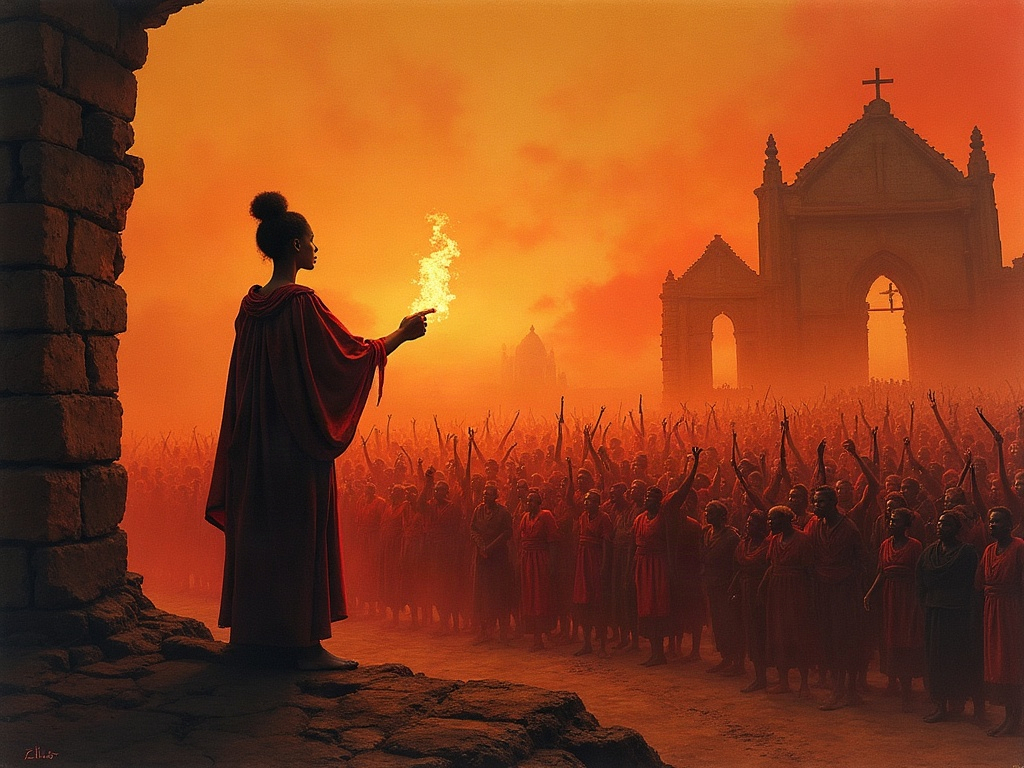
It was a breathtaking act of reimagining, and for a humiliated, fractured people it was electric. This new teaching, which came to be called Antonianism, told the Kongolese that they were not junior members of someone else’s religion but its true heirs. Kimpa Vita urged her followers to discard the crucifixes and sacred objects the foreign priests had given them, and to reoccupy the ruined, overgrown capital of Sao Salvador, which she declared the kingdom’s Bethlehem. Thousands came, and the dead city began to live again.
The prophetess and the kings
Kimpa Vita’s mission was never only spiritual. Her core demand was political and urgent: the warring factions must stop tearing the kingdom apart and reunite under a single restored king in the reborn capital. In a land exhausted by civil war, the vision of reunification was almost as intoxicating as the theology. She sent out emissaries, received petitioners, and tried to pressure the rival claimants to the throne into accepting one crown.
This is exactly what made her intolerable to the men in power. King Pedro IV, one of the leading claimants, saw a woman who could summon crowds and confer legitimacy, which meant she could also withhold it. The Capuchin missionaries, Italian friars who had staked their lives on bringing Roman orthodoxy to the Kongo, saw a heretic leading their flock into damnation and burning the holy objects of the Church. A prophet who challenges both the throne and the altar at once does not tend to grow old. History is full of movements crushed where faith and defiance met, from the Christian peasants who walled themselves into a doomed castle in Japan to the countless visionaries silenced for telling the powerful an unwelcome truth.
The fire on the hill
Her undoing came, as it so often does, through the ordinary human details of her life. Kimpa Vita took a lover, one of her guardians, and became pregnant. For a woman claiming to be the vessel of a celibate saint, a very visible child was a problem, and when the baby was born she explained that it had been conceived through her guardian angel. Not long after, she was captured by the forces of King Pedro IV.
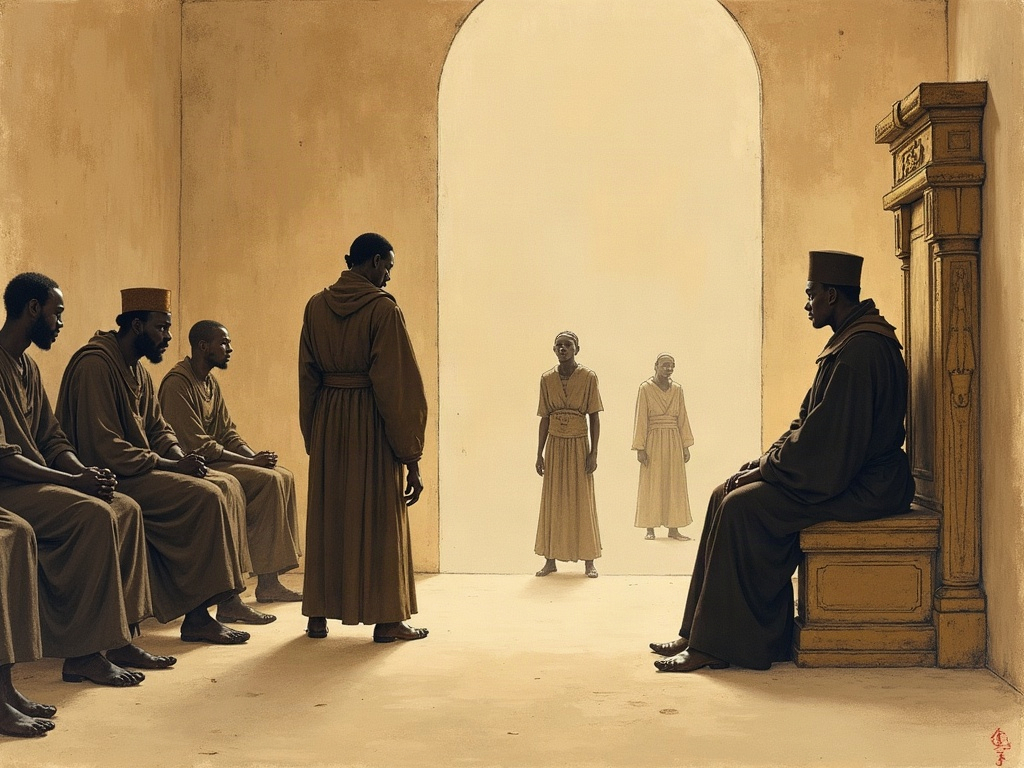
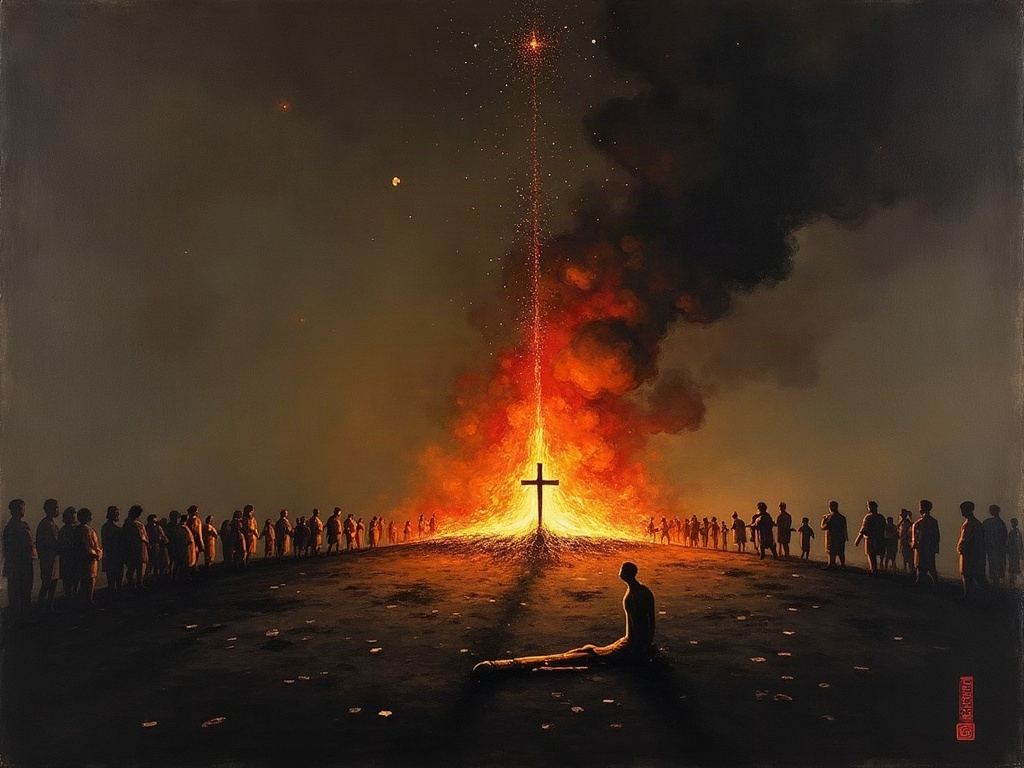
She was tried before a church tribunal, driven by the Capuchin friars, on charges of heresy. The verdict was never in doubt. On 2 July 1706, Kimpa Vita, still only in her early twenties, was burned at the stake as a heretic. Her infant child, by most accounts, was thrown into the flames with her. She went to her death having given her kingdom a dream of unity and dignity, and was killed by the very powers she had tried to reconcile. There is a terrible kinship between her and other young people across the centuries who were executed not for any crime but for the force of their conviction, like the gentle wartime agent Noor Inayat Khan, who held to her cause to the end.
The ashes that would not scatter
The men who lit the fire believed they had ended it. They had not. The Antonian movement outlived its prophet, and though Pedro IV eventually retook Sao Salvador and the rebellion was broken, the memory of Kimpa Vita refused to burn away. Her insistence that the sacred could wear an African face planted a seed that surfaced again and again, in later African prophetic movements, in independent African churches, and, some historians argue, across the Atlantic in the minds of enslaved Kongolese who shaped the religious life of the Americas.
Today, in Angola and far beyond, Kimpa Vita is honoured as a national heroine, a pioneer of African Christianity and an early voice of resistance to European domination. A province bears her name, and scholars rank her among the most consequential women in African history. The woman the Capuchins called a heretic is now remembered as a visionary four centuries ahead of the people who judged her.
It is worth sitting with the strangeness of that reversal. Kimpa Vita was wrong about the geography of the Gospels, and almost certainly sincere in every word she preached. But beneath the specific claims was a truer insight: that a people has the right to see itself reflected in what it holds holy, to stand at the centre of its own story rather than the margins of someone else’s. For saying so, a young woman was burned on a hilltop and then, slowly, across three hundred years, remembered. Sometimes the fire meant to erase a name is exactly what carves it into history.
Sources & further reading:
- This African Prophet Was Burned at the Stake 320 Years Ago. Today, Kimpa Vita Is Celebrated as the ‘Kongolese Joan of Arc’ (Smithsonian Magazine)
- Women Leaders in African History: Dona Beatriz, Kongo Prophet (The Metropolitan Museum of Art)
More from the archive
- The Taiping Rebellion: When Jesus Christ’s ‘Brother’ Led the Deadliest War in Human History
- Khutulun: The Mongol Princess No Man Could Beat in Wrestling
- Yasuke: The African Warrior Who Became a Samurai Under the Warlord Who Unified Japan