The Shimabara Rebellion: The Boy, the Castle, and the 37,000 Who Chose Defiance

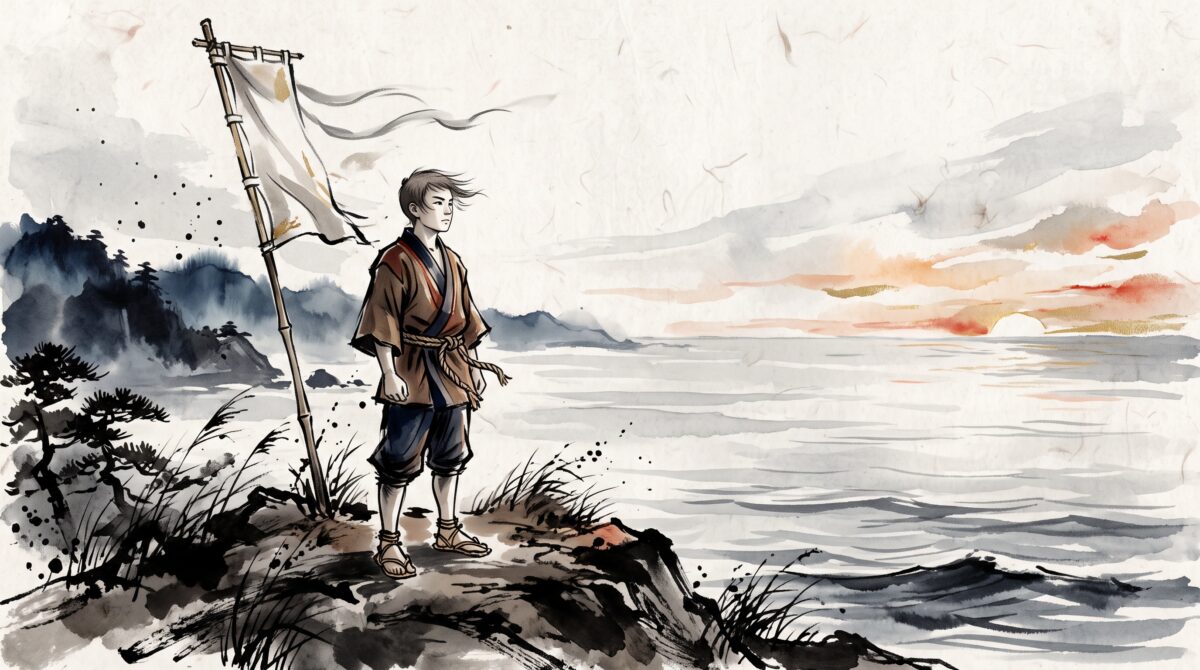
In the winter of 1637, on a poor peninsula in the far southwest of Japan, tens of thousands of farmers did something that should have been unthinkable. They put down their hoes, picked up whatever weapons they could find, and declared war on the Tokugawa shogunate, the single most powerful military government their country had ever known. At their head they placed a boy of sixteen. And for a few desperate months, against every expectation, they held.
The Shimabara Rebellion is one of the great doomed uprisings of history, and also one of the most revealing. It explains, better than almost any other event, why Japan would soon seal itself off from the outside world for more than two hundred years.
A land taxed past the point of endurance
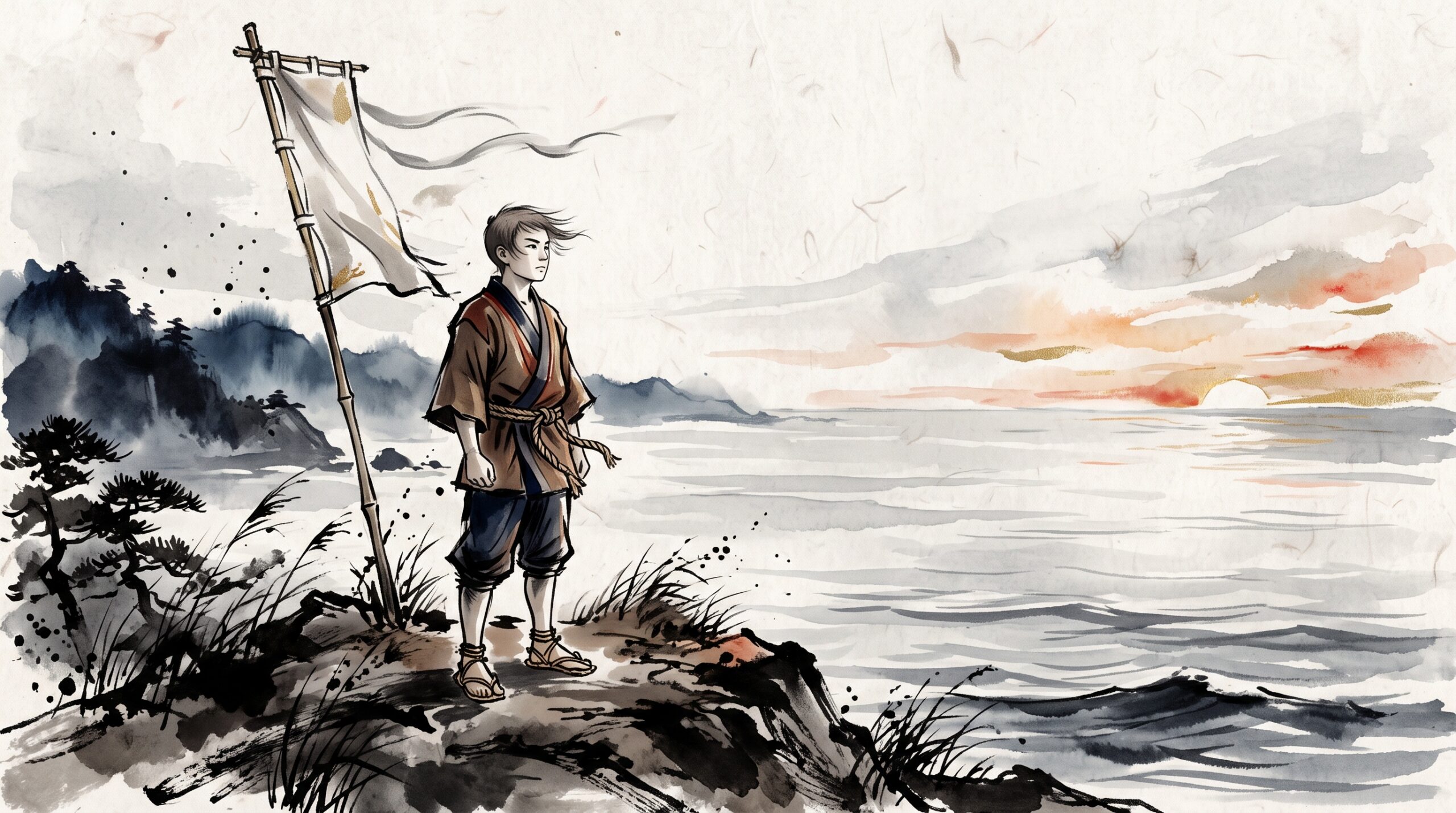
The trouble began with hunger. The lord of the Shimabara domain, Matsukura Katsuie, had inherited grand ambitions and an expensive castle from his father, and he paid for them by squeezing his peasants without mercy. Taxes were set at crushing levels and collected even when the harvests failed and famine set in. Those who could not pay were punished with a cruelty that shocked even hardened observers: people were bound in straw raincoats and set alight, or plunged into freezing water, as a warning to the rest.
The neighbouring Amakusa Islands suffered under the same merciless taxation. So the first spark of Shimabara was not, strictly, about God. It was about survival. But there was a second fire burning underneath, and it gave the rebellion its astonishing unity.
The faith they were forbidden to keep
A generation earlier, Catholic missionaries had found remarkable success in this corner of Japan, and whole communities had become Christian, or Kirishitan. Then the shogunate turned against the foreign religion, fearing it as a wedge for European influence. Priests were expelled or executed, and ordinary believers were ordered to renounce their faith, often by trampling on sacred images in a public test of loyalty.
On Shimabara and Amakusa, many had simply refused to give it up. So when the oppressed farmers finally rose, they rose as persecuted Christians as well as starving subjects, and their rebellion took on the intensity of a holy cause. Villages burned shrines, raised banners marked with crosses, and found themselves bound together by something far stronger than grievance.
The boy they believed heaven had sent
Into this moment stepped one of the strangest figures in Japanese history: Amakusa Shiro, also called Shiro Tokisada. He was perhaps sixteen years old, the son of a former retainer, and he was beautiful, calm, and magnetic in a way that struck everyone who met him. Prophecies had circulated that a heaven-sent youth would one day appear to lead the faithful, and the rebels became convinced that Shiro was that boy. Stories spread that he could call birds to his hand and walk on water.
Whether Shiro truly commanded the uprising or served as its sacred banner hardly mattered. Tens of thousands of people now believed that heaven was on their side, embodied in a teenager. It is a role with grim echoes elsewhere in history, from the charismatic child-preacher at the heart of the doomed Children’s Crusade of 1212 to every movement that has ever asked the young to carry the weight of a miracle.
The last stand at Hara Castle
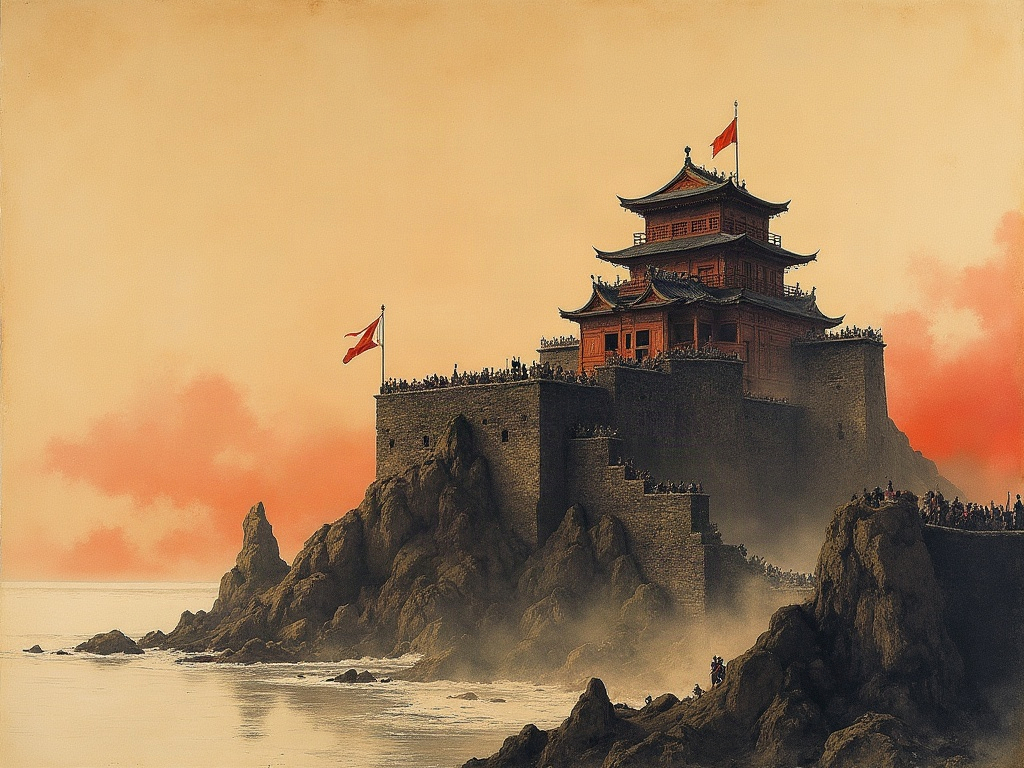
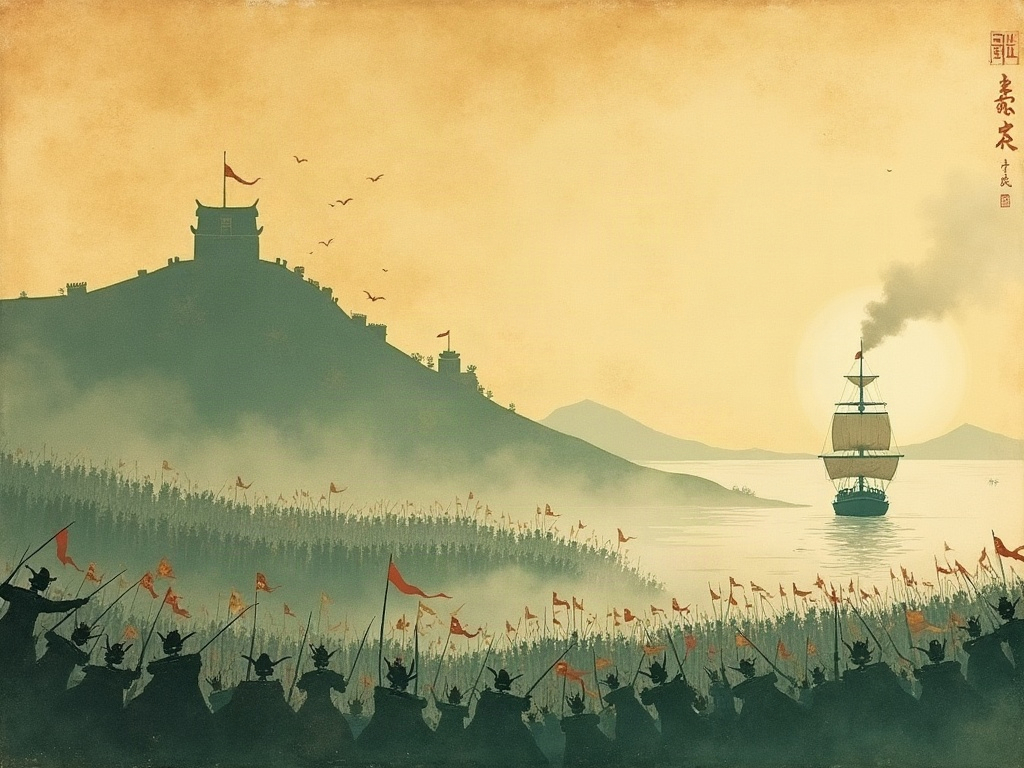
When their scattered attacks failed to take the domain’s strongholds, the rebels made a fateful choice. Some 37,000 of them — men, women and children, along with a core of battle-hardened masterless samurai, the ronin who had lost their lords in Japan’s recent wars — withdrew into the ruins of Hara Castle, an abandoned fortress on a headland above the sea. They repaired its broken walls, planted their banners, and waited.
The shogunate’s response was overwhelming. An army that eventually numbered well over a hundred thousand surrounded the castle. Yet the first great assault was a disaster for the attackers: the defenders, fighting from high walls with the fury of people who had nothing left to lose, threw them back and killed the shogunate’s own commander, Itakura Shigemasa, in the attempt. For a besieging force of that size to lose its general to a rabble of farmers was a humiliation, and it hardened the shogunate’s determination to end the rebellion by any means.
Cannon from the sea
The new commander, Matsudaira Nobutsuna, understood that these walls would not fall to courage alone. So he reached for help from an unlikely quarter. The Dutch, who traded with Japan and were eager to prove their usefulness, brought a ship into the bay and bombarded the Christian defenders from the water. It is one of the bleaker ironies of the story: European Protestants firing cannon at Japanese Catholics to win favour with the shogun who was trying to stamp Christianity out.
The bombardment did little direct damage, but it carried a message to the men and women inside: no rescue was coming, from heaven or from across the sea. The shogunate settled in to do what siege armies have always done. It waited for the food to run out.
The silence afterward
By the spring of 1638 the defenders were starving. When captured scouts revealed how little food and powder remained, the final assault came. The walls were stormed, and what followed was less a battle than an annihilation. Nearly everyone inside Hara Castle was killed — the fighters, and then the families who had sheltered with them. Estimates of the dead run to the tens of thousands. Amakusa Shiro, the boy who was meant to be heaven’s messenger, was beheaded, and his head was carried away and displayed as proof that the rebellion, and its promise, were finished.
The consequences rippled outward for centuries. Convinced that Christianity and foreign contact had nearly torn the country apart, the shogunate slammed the door on the outside world. The Portuguese were expelled entirely, the practice of Christianity was driven deep underground, and Japan entered its long era of near-total seclusion known as sakoku. Like the slaughter in the Teutoburg Forest that convinced Rome to halt at the Rhine, Shimabara was a bloodletting that redrew a nation’s map of what was possible.
And yet the faith did not die. In the fishing villages of the region, families who had watched their neighbours burn quietly kept believing, hiding their crosses and disguising their saints as Buddhist figures, passing the prayers down in secret from parent to child. These Kakure Kirishitan, the hidden Christians, endured in silence for more than two hundred years, until the world reopened and they could finally step back into the light. The shogunate had won the castle and erased a generation. What it could not do, in the end, was reach inside and extinguish the thing those 37,000 had been willing to die for.
Related Reading
- The Taiping Rebellion: When Jesus Christ’s ‘Brother’ Led the Deadliest War in Human History
- The Forty-Seven Ronin: The Samurai Who Waited Two Years to Avenge Their Master
- The 1381 Peasants’ Revolt: The Complete Story of England’s Great Rising