The Children’s Crusade of 1212: The Doomed March of the Boy Who Promised to Part the Sea

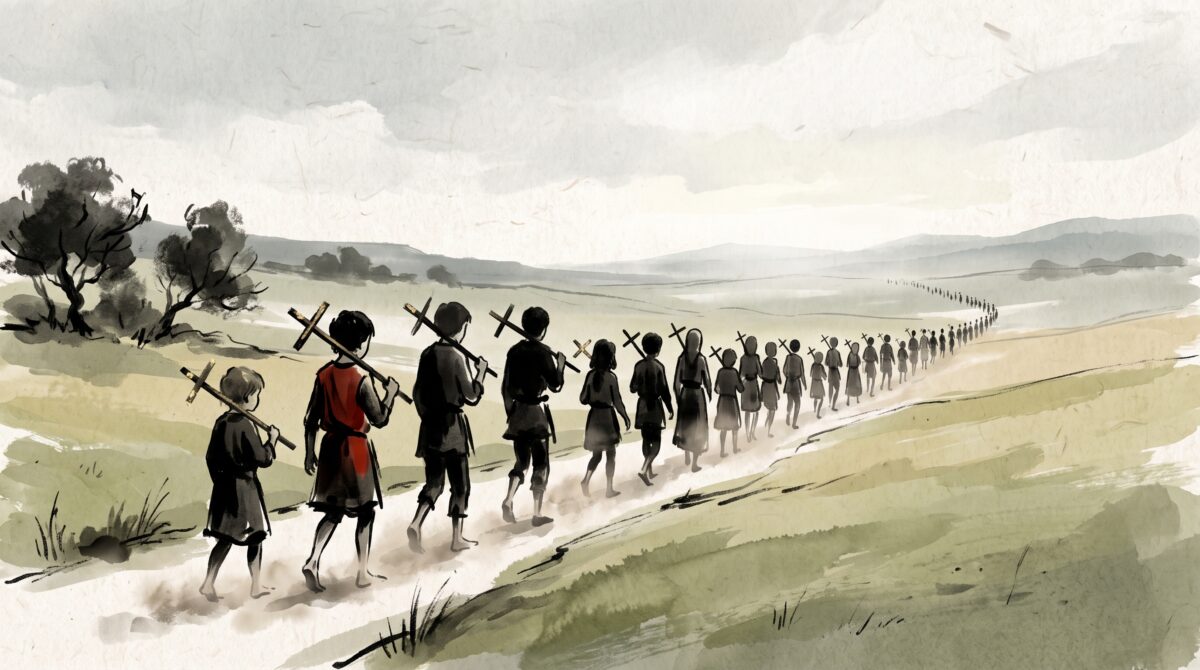
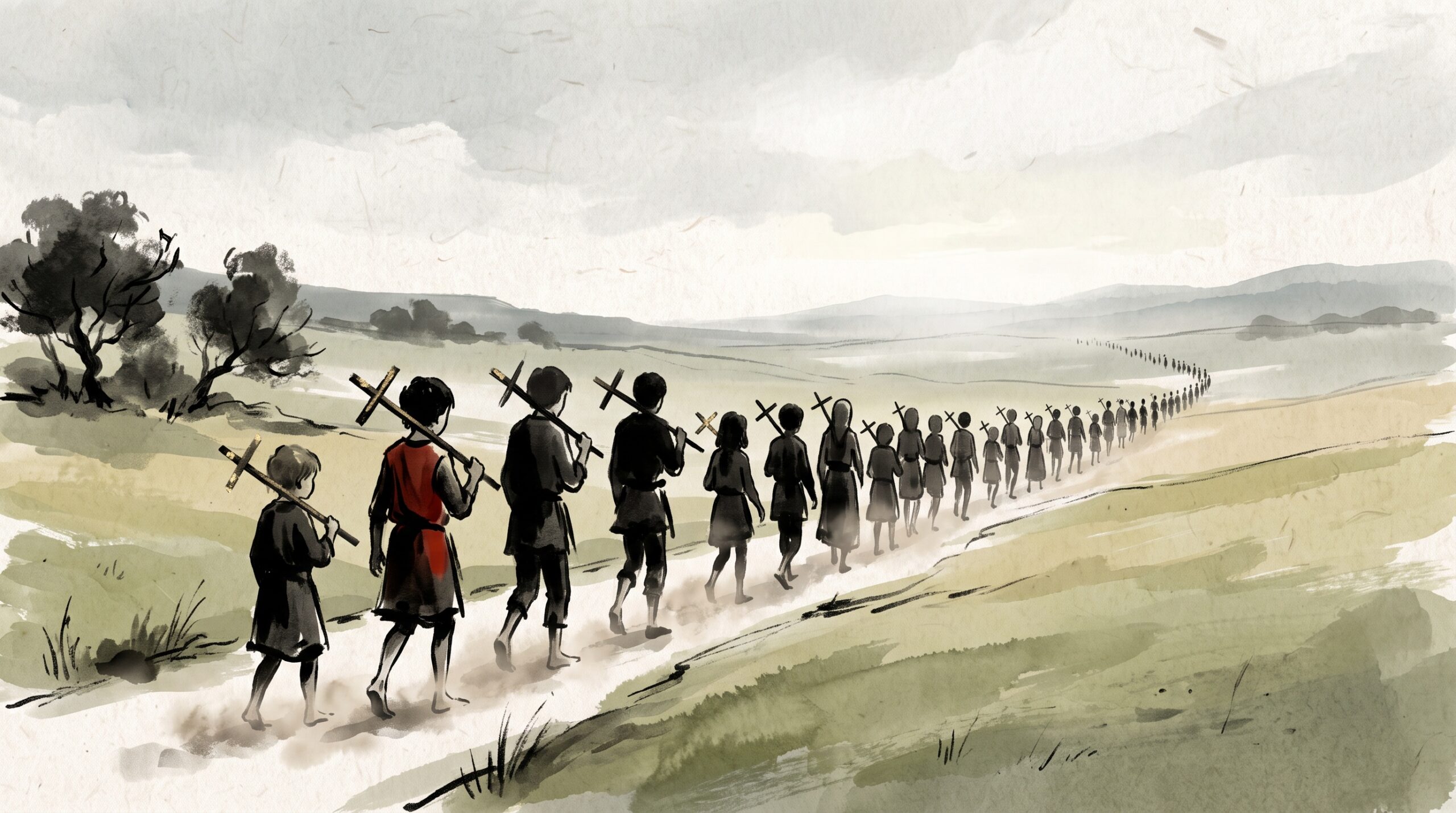
In the summer of 1212, something extraordinary moved across the roads of France and the Rhineland. Not an army of knights, not a column of armored lords with banners and warhorses, but a slow, swelling tide of the young and the poor — shepherd boys, farmhands, servant girls, ragged children — walking south on bare and blistered feet toward a Holy Land most of them could not have placed on a map. They carried crude wooden crosses and almost nothing else. They had no supplies, no soldiers, no plan beyond a promise so audacious it should never have moved a single soul: that God would part the sea before them, and that Jerusalem would fall not to swords but to the pure faith of the innocent. It is one of the strangest, saddest episodes of the entire Middle Ages, and eight centuries later we are still arguing about what truly happened.
A World Primed to Believe
To understand how thousands of people could follow a child toward the horizon, you have to understand the world they lived in. By 1212, the great armed Crusades had been grinding on for over a century, and they had mostly failed. Jerusalem, seized in 1099, had been lost again to Saladin in 1187. The mighty had marched out in iron and come home in defeat. In the villages, a seductive and heartbreaking logic took hold: perhaps God had spurned the proud and the powerful precisely because they were proud and powerful. Perhaps the Holy Land would be given instead to the humble and the sinless. And who was more sinless than a child?
It was an age of raw, immediate faith, hunger, and hard lives, where a charismatic voice promising that the meek would inherit the earth could spread through the countryside like fire through dry grass. The ground was ready. All it needed was a spark.
The Shepherd Boy and the Letter from Christ
In France, the spark was a shepherd boy named Stephen of Cloyes. He claimed that Christ had appeared to him in the guise of a pilgrim and handed him a letter to deliver to the King of France. From that letter, Stephen began to preach — and crowds gathered. He is said to have drawn tens of thousands to the abbey of Saint-Denis, where onlookers reported he worked wonders. The children and the poor flocked to him, convinced they were about to do what armies of mailed knights could not.
King Philip II of France, for his part, was unimpressed. On the advice of his scholars he told the crowds to go home. For a time, many did. But faith of that intensity rarely dissolves on a king’s command, and the same fervor was already catching in the German lands to the east.
Nicholas of Cologne and the Sea That Would Open
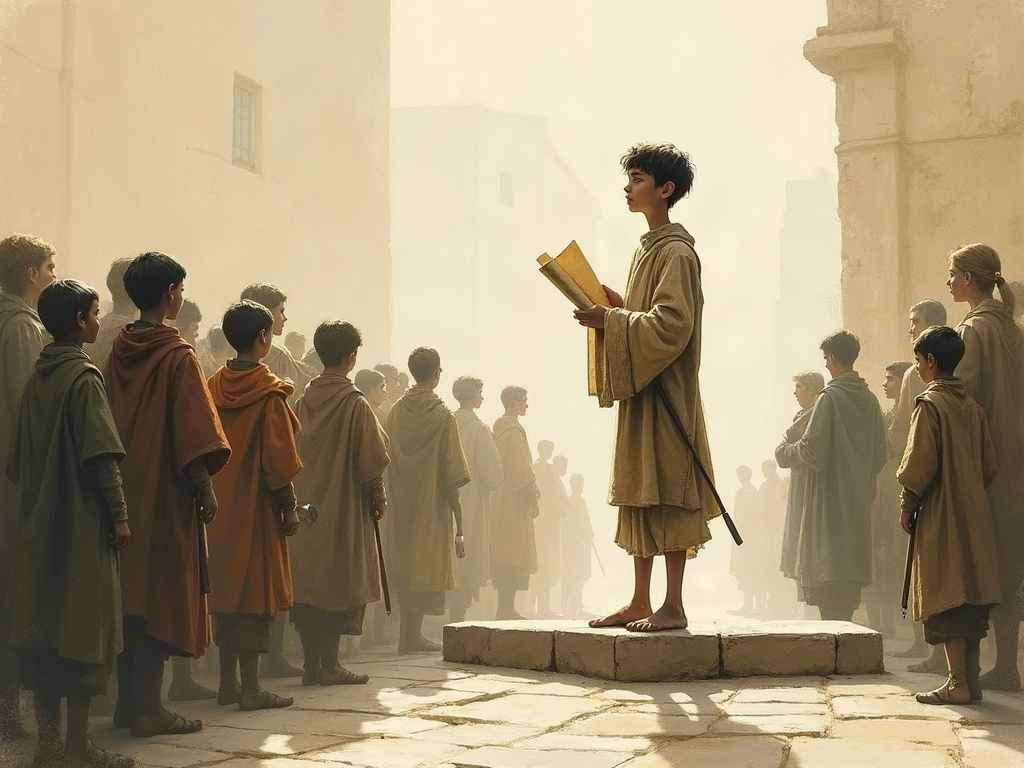
In the Rhineland, a boy named Nicholas of Cologne took up the same call with an even bolder prophecy. He preached that his followers would march south to the Mediterranean, and that when they reached the water, the sea itself would dry up and part before them — as it had for Moses — leaving a path they could walk all the way to the Holy Land. There they would convert the Muslims not by the sword but by love and the sheer force of their innocence.
Thousands answered him. The chronicles speak of a great throng streaming out of Germany and over the Alps — a crossing of appalling hardship for people with no provisions and no shelter. The mountains took a merciless toll. Cold, starvation, and exhaustion thinned the ranks terribly, and many who had set out singing hymns never came down the southern slopes at all. Those who survived pressed on to the Italian coast, to the great port of Genoa, carrying with them an absolute certainty that the water was about to open.

The Sea Did Not Part
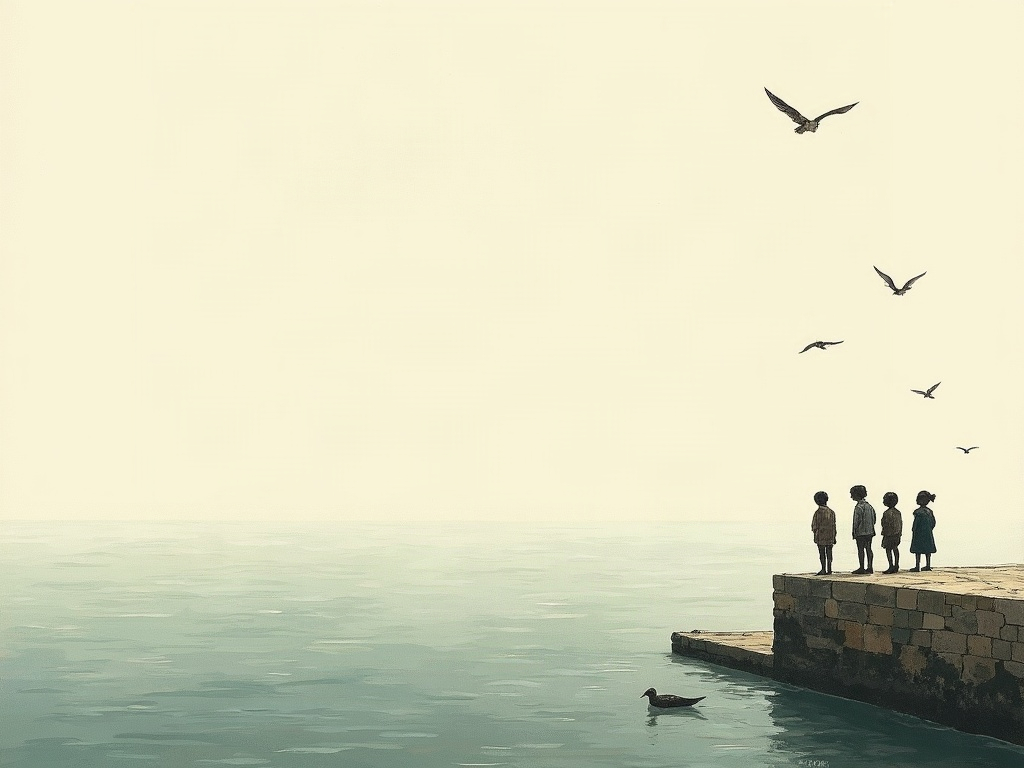
They reached the shore. And the Mediterranean simply lay there — flat, blue, and utterly indifferent. No path opened. No miracle came. One can only imagine the silence that must have fallen over those ragged, footsore crowds as the thing they had crossed a continent to witness quietly refused to happen.
What followed was collapse and dispersal. Some settled in Genoa and never left. Others pushed on to Rome, where Pope Innocent III is said to have met them with a mixture of pity and firmness, gently telling them to go home and grow up before honoring any crusading vow. Many simply turned around and began the long walk back, broken and mocked along the roads they had so recently traveled in triumph. Like the crowds swept up in the Nika Riots of Constantinople or the commoners who rose in the medieval Peasants’ Revolt, they had been lifted by a shared conviction far larger than themselves — and then left to face what was left when the conviction ran out.
The Darkest Chapter — and Whether It Is True
The most chilling version of the story comes from later chroniclers. According to them, a group who reached Marseille were approached by two merchants — remembered by the grimly fitting names Hugh the Iron and William of Posqueres — who offered them free passage across the sea to the Holy Land out of Christian charity. The children boarded the ships gratefully. Some of the vessels, the tale goes, were wrecked in a storm with all aboard lost. The rest sailed not to Jerusalem but to North Africa, where the merchants sold their trusting young passengers into slavery. If true, it is a betrayal almost too bitter to read: innocence marched across a continent only to be handed, smiling, to the slavers.
Here, honesty demands a pause. Modern historians treat much of this with deep caution. The careful reconstruction by scholars such as Peter Raedts argues that the two movements were separate, that they have been tangled together and embroidered by chroniclers writing decades later, and — crucially — that the “children” may not have been children at all. The Latin word pueri used in the sources meant “boys,” but it was also commonly used for the landless rural poor, the farmhands and servants at the very bottom of society. The Children’s Crusade, in this sobering reading, may have been less a march of literal children and more an uprising of the desperate poor, their numbers and their fate dramatized by later writers into the haunting legend we know. The slave-ship ending, in particular, rests on sources written long after the fact.
Why the Story Still Haunts Us
So which is it — a true tragedy of stolen children, or a half-legend grown in the retelling? The honest answer is that we will probably never fully know, and the uncertainty is part of what keeps the story alive. What is not in doubt is that in 1212 a wave of ordinary, powerless people were swept up by a promise of miraculous deliverance and set off on an impossible journey, and that it ended in grief rather than glory — much as the collective dream that drove the doomed Darien colony centuries later ended in ruin.
The Children’s Crusade endures because it holds up a mirror no century can quite put down. It is a story about how hope, faith, and desperation can fuse into something that moves thousands of feet down a road toward a horizon that was never going to open — and about how eagerly the powerful and the predatory wait at the end of such roads. We remember the knights and the kings of the Crusades easily enough. It is harder, and perhaps more important, to remember the barefoot and the hungry who believed the sea would part for them, and who kept walking long after any reasonable person would have turned for home.

Sources & further reading:
Related Reading
- Richard II at 14: The Boy King Who Faced Down the Peasants’ Revolt
- The Taiping Rebellion: When Jesus Christ’s ‘Brother’ Led the Deadliest War in Human History