The Darien Scheme: The Colony That Bankrupted Scotland and Ended Its Independence

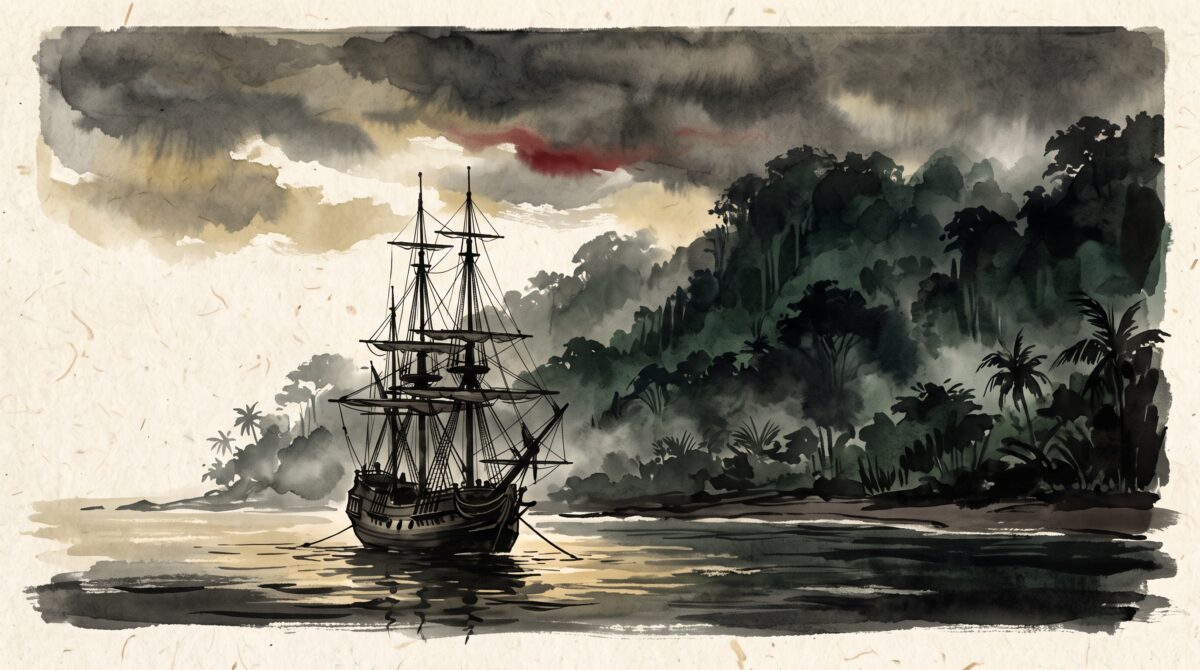
In the last years of the seventeenth century, a small, proud, and poor nation decided to make itself rich in a single stroke. Scotland would plant a colony on the far side of the world, at the narrow waist of the Americas, and from there command the trade of two oceans. It was a dream of such scale and ambition that ordinary people — shopkeepers, widows, clergymen, country lairds — handed over their life savings to make it real. Within two years the dream had swallowed roughly a fifth of all the money in the country, drowned some two thousand of its people in a Panamanian swamp, and left Scotland so broken that it would soon surrender the thing it prized above all else: its independence. This is the story of the Darien Scheme, the most catastrophic financial gamble a nation ever made on its own future.
A Nation Hungry for a Future
By the 1690s Scotland was a kingdom running out of room. It shared a king with England — the two crowns had been joined since 1603 — but it remained a separate nation with its own parliament, and it was locked out of the lucrative overseas trade that was making England rich. English navigation laws barred Scottish merchants from the colonies. A run of failed harvests in the decade known as the “seven ill years” brought famine and hollowed out the countryside. The country needed a way in, and it needed it badly.
The man who offered one was William Paterson, a Scottish financier of restless brilliance who had helped found the Bank of England. Paterson had a single, dazzling idea. On the Isthmus of Darién, in what is now Panama, a mere sliver of land separated the Atlantic from the Pacific. Whoever controlled a colony there could become the broker of all the world’s commerce, moving goods between the two great oceans without the murderous sail around Cape Horn. It was, he promised, “the door of the seas, and the key of the universe.”
The Whole Country Buys In
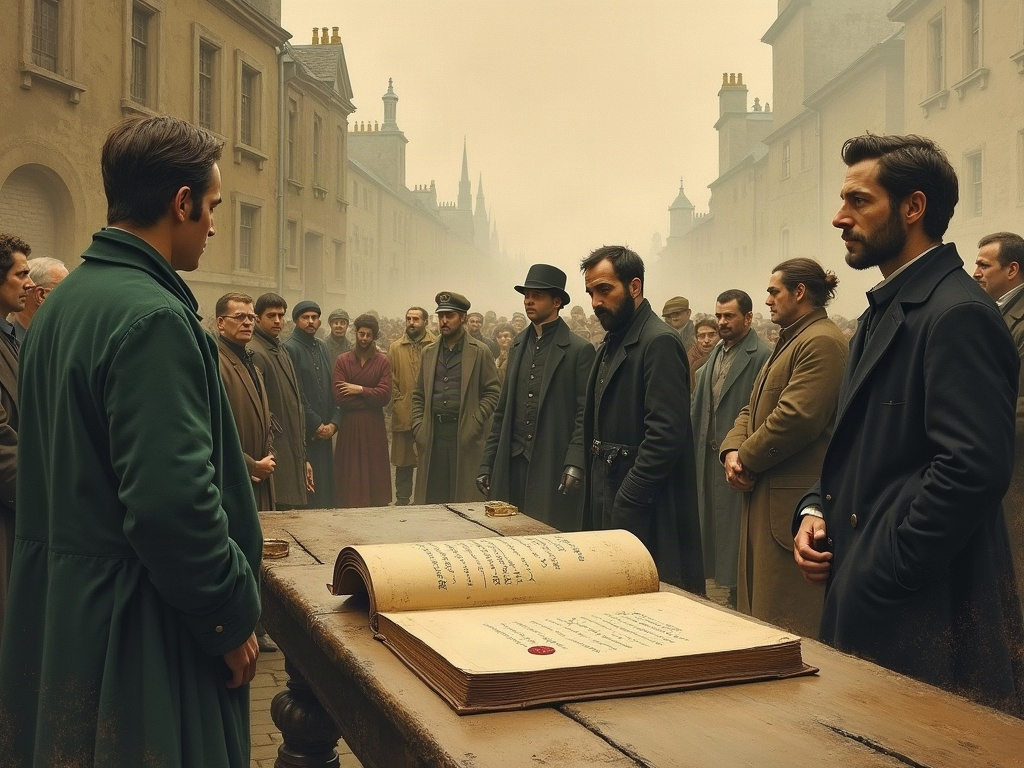
In 1695 the Company of Scotland Trading to Africa and the Indies was chartered to carry out the plan. What happened next had no real precedent. The scheme was not just a merchant venture; it became a matter of national pride, a patriotic cause into which Scots poured money as an act of faith. Subscriptions flooded in from every rank of society. Estimates suggest the Company raised around £400,000 — somewhere between a fifth and a quarter of all the liquid capital circulating in the entire kingdom.
This was the fatal thing about Darién, and the detail that makes it a tragedy rather than merely a bad investment. It was not a few wealthy speculators risking money they could spare. It was the savings of a whole people. There is a grim irony in a nation betting its fortune on a flood of expected gold, when history had already shown how a sudden tide of wealth could just as easily wreck an economy as make one — as it did when a West African emperor’s river of gold upended the markets of a continent. Scotland did not pause to consider the danger. It simply believed.
The Door of the Seas
In July 1698, five ships — the Saint Andrew, the Caledonia, the Unicorn, the Dolphin, and the Endeavour — sailed from the port of Leith carrying around 1,200 colonists. They reached the coast of Darién that November and named their new home Caledonia, raising a fort they called Fort St Andrew and a settlement they called New Edinburgh. For a moment, standing on that green and steaming shore, the dream seemed within reach.
Almost everything about the plan was wrong. The site was a malarial lowland where fever killed settlers faster than they could bury them. The soil defeated their farming. Worst of all were the goods the Company had sent to trade: heavy woolen cloth, fine combs, wigs, and mirrors — merchandise fit for a northern European parlor and utterly worthless to the indigenous Kuna people and the tropics around them. The colonists had brought the wrong cargo to the wrong climate to sell to people who had no use for any of it.
Abandoned by a King
Then there was the matter of powerful enemies. Spain regarded Darién as its own territory and had no intention of tolerating a foreign colony astride its empire. And the colonists’ own king abandoned them. William III ruled England and Scotland both, but his priorities were English and European. He had no wish to provoke Spain into war, and the English East India Company saw the Scottish venture as a dangerous rival. So the king forbade English colonies in the Americas from offering the Scots at Darién any help at all — no food, no supplies, no shelter. Sick and starving settlers who sailed to Jamaica or the English ports for relief were turned away under royal orders.
Cut off and dying, the first colonists held on for barely eight months. In the summer of 1699 the survivors abandoned Caledonia and fled. Of the roughly 1,200 who had set out, only a few hundred lived to see another shore, and many of those died on the voyage home.
The Second Fleet and the Spanish Siege
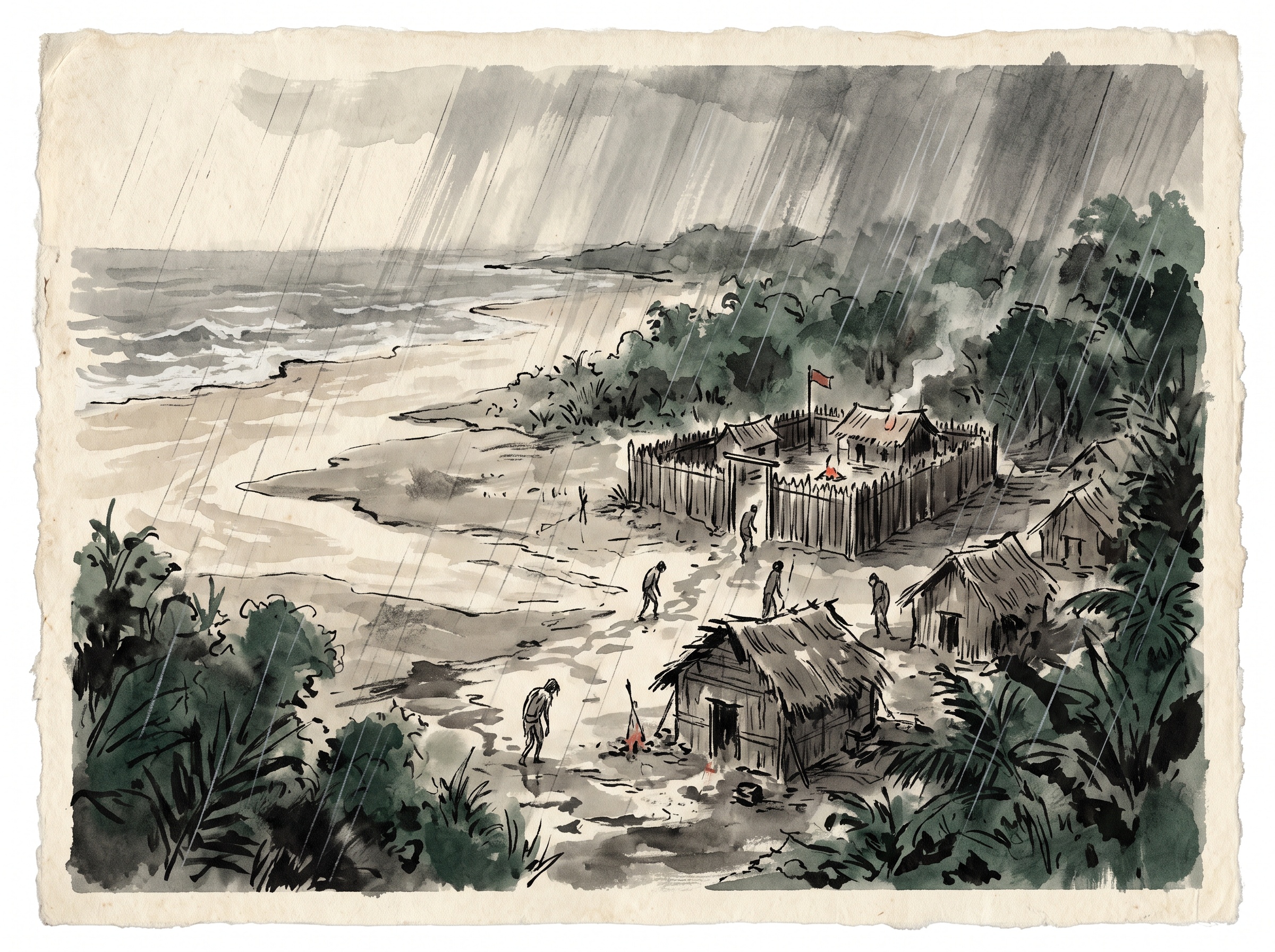
The cruelest turn was still to come. Back in Scotland, no one knew the colony had already collapsed. A second expedition of around 1,000 fresh colonists in four ships set out in 1699 and arrived at Darién late that year to find the settlement they had come to reinforce burned and deserted. Rather than turn back, they tried to rebuild it.
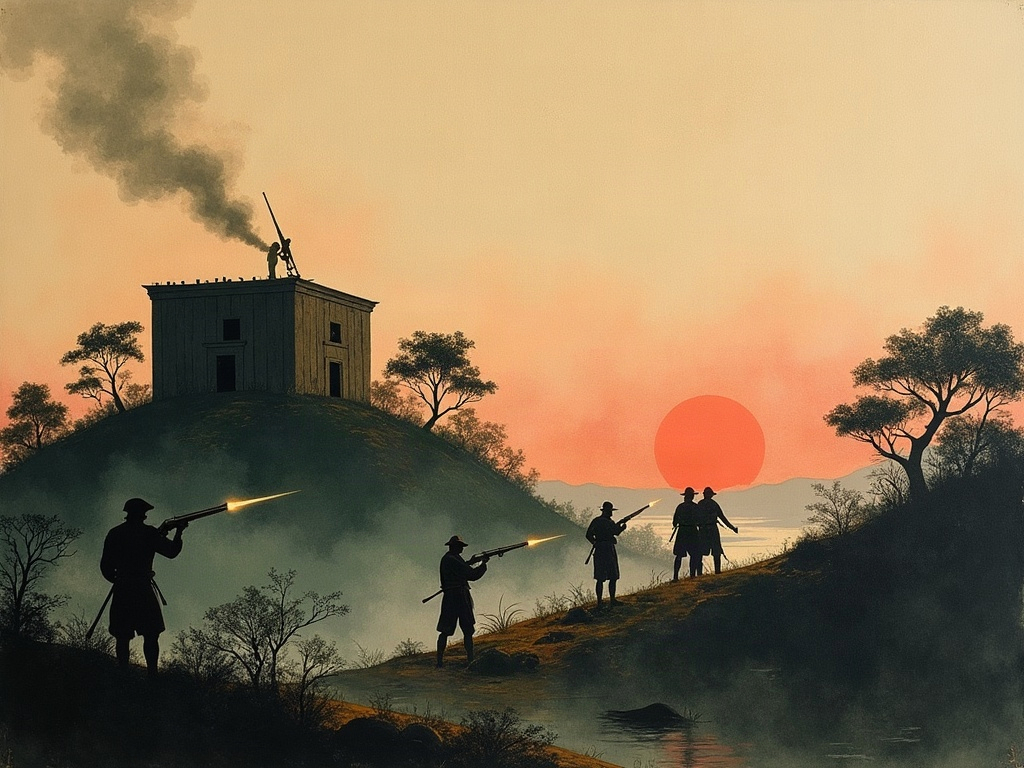
This time Spain struck in force. In early 1700 Spanish troops laid siege to Fort St Andrew. For roughly a month the exhausted, fever-wracked Scots held out against a professional army, but the end was never in doubt. In the spring of 1700 they capitulated. The Spanish, in a rare gesture, allowed the survivors to sail away with the honors of war. The colony of Caledonia was over for good. In all, the two expeditions had sent some 2,500 people to Darién; around 2,000 of them never came home. Of the sixteen ships involved across both voyages, only a single one returned to Scotland.
The Price of a Dream
The financial wreckage was total. The savings of thousands of families simply evaporated. Nobles were ruined; modest households that had subscribed a few pounds in hope lost everything. The scheme’s human cost was matched by an economic one that touched nearly every corner of the country at once. There is something almost unbearable in the fate of those who gave the most and received nothing — a pattern history repeats with painful regularity, like the man who discovered the gold that built California and died penniless himself. Scotland had reached for the key of the universe and been left holding nothing but debt and grief.
William Paterson, who had lost his own wife and child to the Darién fever and barely survived himself, came home a broken but unbroken believer. He would spend his remaining years arguing not for another colony, but for a different kind of rescue.
How a Colony Ended a Country
Here the story turns from disaster to consequence. England, watching its northern neighbor reel, saw an opportunity to achieve something it had long wanted: a full political union that would secure the island behind a single parliament and a single crown. For Scotland, financially gutted and desperate, union suddenly looked less like surrender than survival.
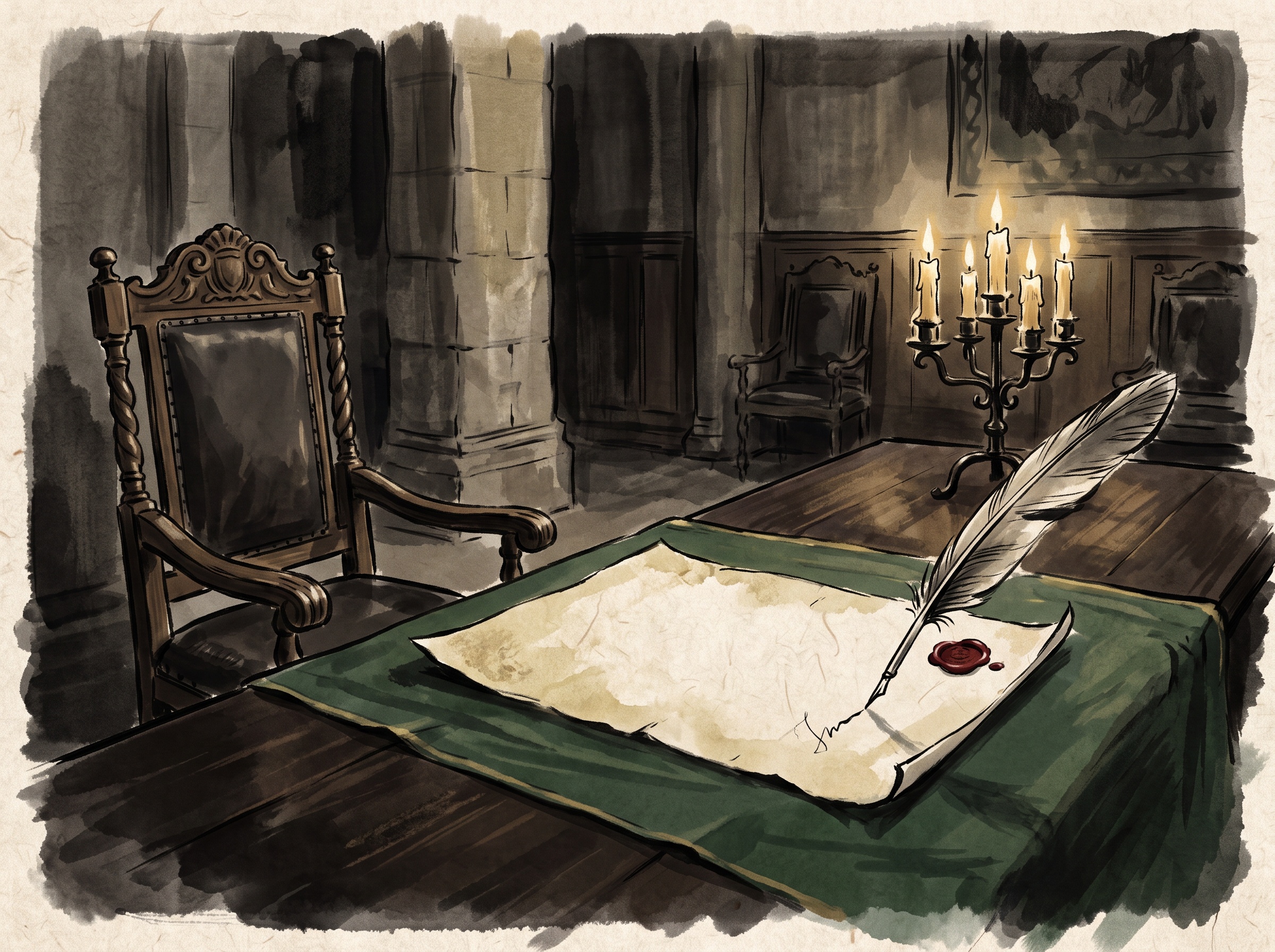
When the Treaty of Union was negotiated, one of its provisions was a payment from England to Scotland known as “the Equivalent” — a sum of just under £400,000. A significant share of that money went, in effect, to compensate the ruined investors of the Company of Scotland, repaying the Darién losses with interest. To its defenders it was fair recompense; to its critics it looked unmistakably like a buyout, England settling Scotland’s catastrophe in exchange for Scotland’s parliament. The poet Robert Burns would later put it with bitter simplicity: his countrymen had been “bought and sold for English gold.”
On May 1, 1707, the Act of Union took effect. Scotland’s parliament dissolved itself, and the Kingdom of Great Britain was born. A nation that had tried to buy its way to greatness in a Panamanian jungle had instead lost its political independence — a loss of sovereignty as consequential, in its own quiet way, as the overthrow of any throne, including the fall of the last monarch of an island kingdom absorbed by a greater power.
Why the Story Still Matters
The Darién Scheme is often told as a cautionary tale about bad planning — the wrong site, the wrong goods, the wrong season. All of that is true. But its deeper lesson is about hope, and about what happens when an entire people invests not just its money but its identity in a single promise. The Scots who signed the Company’s ledgers were not fools; they were a proud nation looking for a future and willing to risk everything to seize it. That their courage was betrayed by disease, by a cold king, and by their own planners does not make the gamble less human. It makes it more so. The door of the seas never opened. But in its closing, it swung open another door entirely — one that led to the end of Scotland as an independent kingdom, and to the long, complicated birth of Britain. Few dreams have ever failed so completely, or changed so much.
Sources & further reading: