The Vasa: The Mighty Warship That Sank Minutes Into Its Maiden Voyage

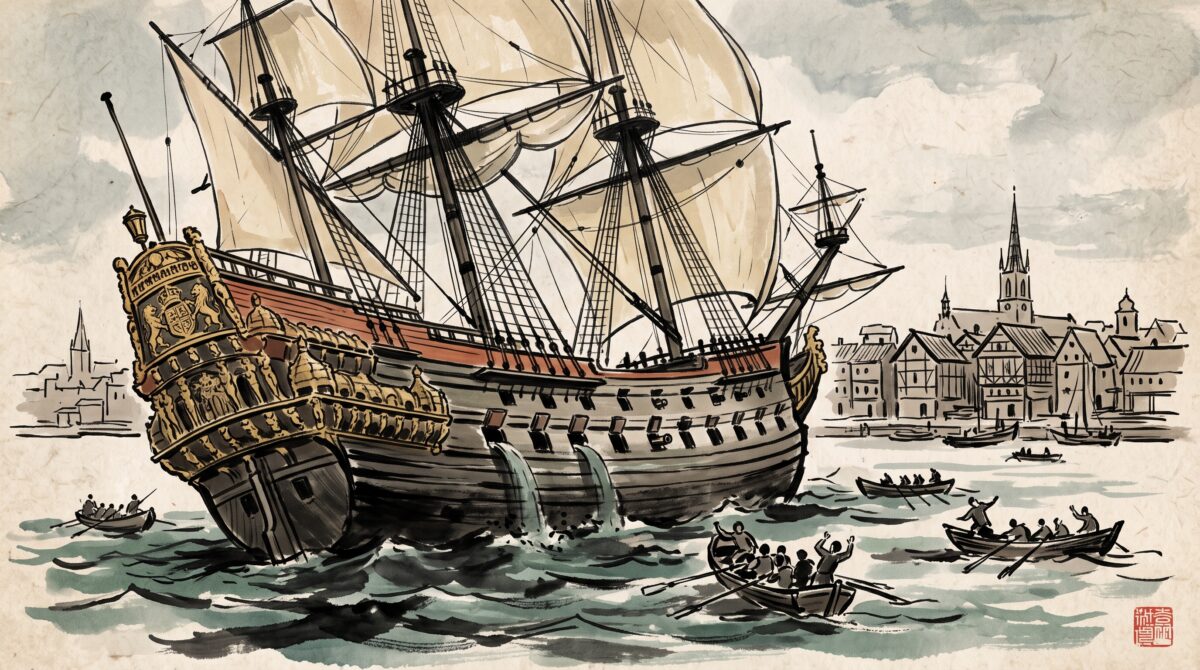
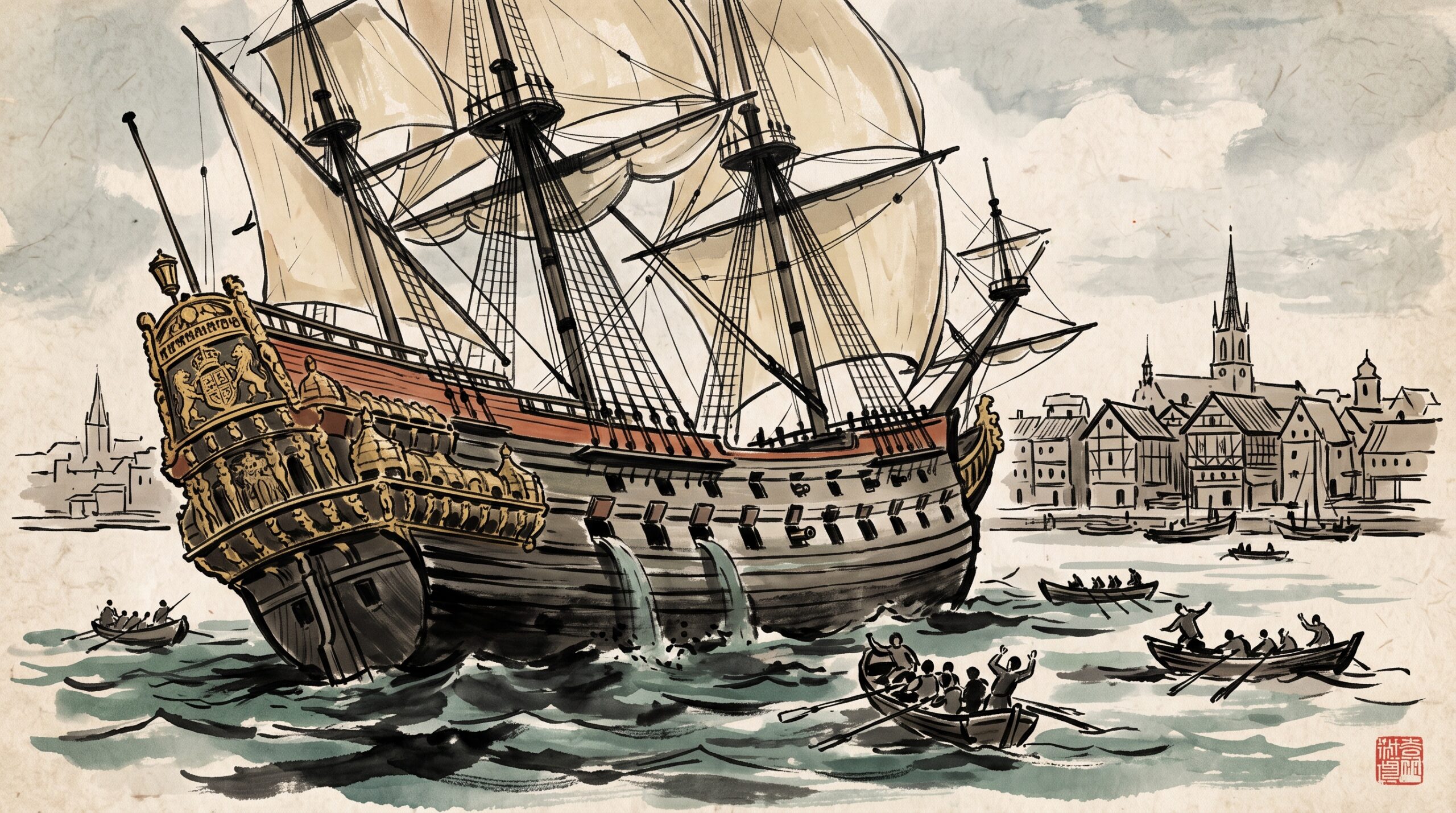
On the afternoon of August 10, 1628, half of Stockholm turned out to watch a miracle set sail. Crowds lined the quays and crowded the rooftops to see the Vasa leave on her maiden voyage — the largest, costliest, most lavishly decorated warship Sweden had ever built, a floating fortress bristling with bronze cannon and gilded from waterline to sterncastle with hundreds of carved lions, emperors, and sea gods. She was meant to be the terror of the Baltic and the glittering symbol of a rising empire. She sailed roughly thirteen hundred yards. Then, before the eyes of the entire city, a light summer breeze leaned her gently to one side, water rushed in through her open gun ports, and the proudest ship in the north rolled over and sank. This is the story of the most spectacular failure in naval history — and of the astonishing afterlife that followed.
A King’s Ship for a King’s War
The Vasa was born of ambition at its hungriest. Sweden in the 1620s was a nation on the rise, locked in a long struggle for control of the Baltic and about to plunge headlong into the Thirty Years’ War. Its king, Gustavus Adolphus — remembered as one of the great military innovators in European history — needed a navy to match his armies. He ordered a new class of warship grander than anything his yards had produced, and he wanted it quickly.
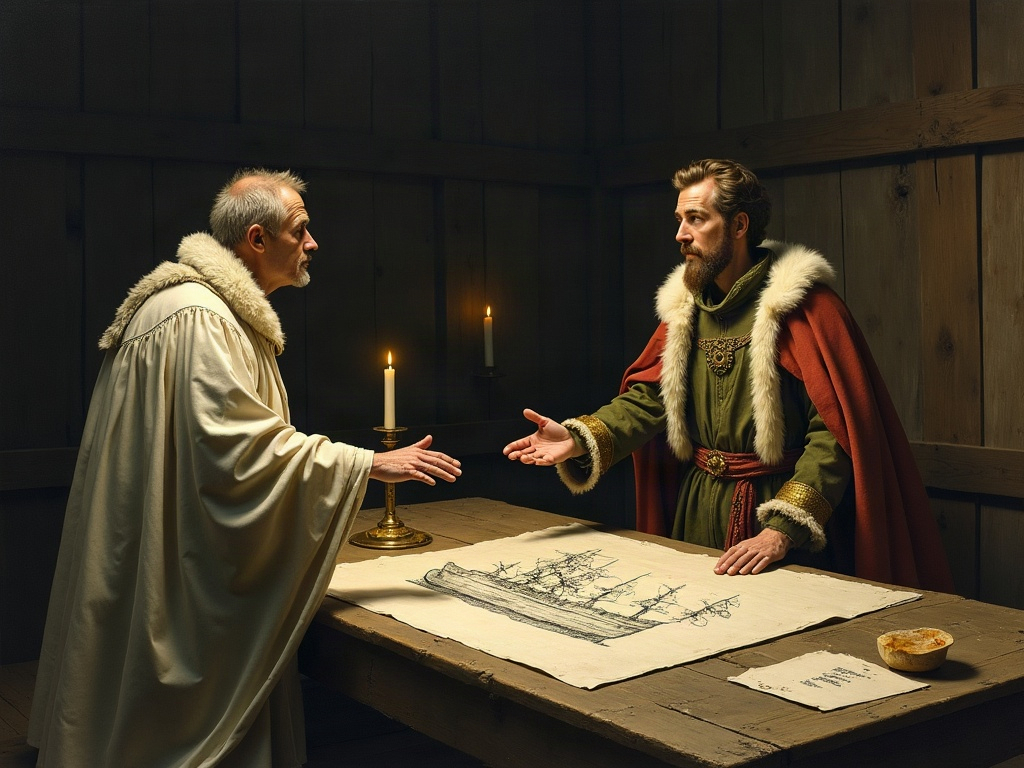
Work began in 1626 at the naval shipyard in Stockholm under an experienced Dutch master shipwright, Henrik Hybertsson. From the start the project was shadowed by pressure from the crown and by a problem no one in Europe could yet solve: there was no mathematical science of ship stability. Hull proportions were set by rule of thumb, experience, and a shipwright’s instinct — and the Vasa was being built larger than any instinct had been tested against. Then, partway through, Hybertsson fell ill and died in 1627, leaving the ship to be finished by others working to a design whose creator was gone.
Too Beautiful, Too Tall, Too Narrow
What took shape was breathtaking to look at and quietly doomed. The king wanted a powerful ship, and somewhere in the building it acquired a second full gun deck, stacking a formidable battery of heavy bronze cannon high above the waterline. He also wanted it magnificent: the Vasa was smothered in sculpture, close to five hundred carved and painted figures meant to broadcast the glory and divine favor of the Swedish crown. All of that ornament and armament sat high up, where it mattered most and helped least.
Beneath it, the hull was too narrow and too shallow to carry the weight, and there was no room to add enough stone ballast low in the ship to counterbalance the towering structure above. The result was a vessel that was grotesquely top-heavy — a cathedral of oak and gold balanced on a keel that could not hold it upright. The men who built her almost certainly sensed something was wrong. Proving it, with a king waiting, was another matter.
The Test That Was Ignored
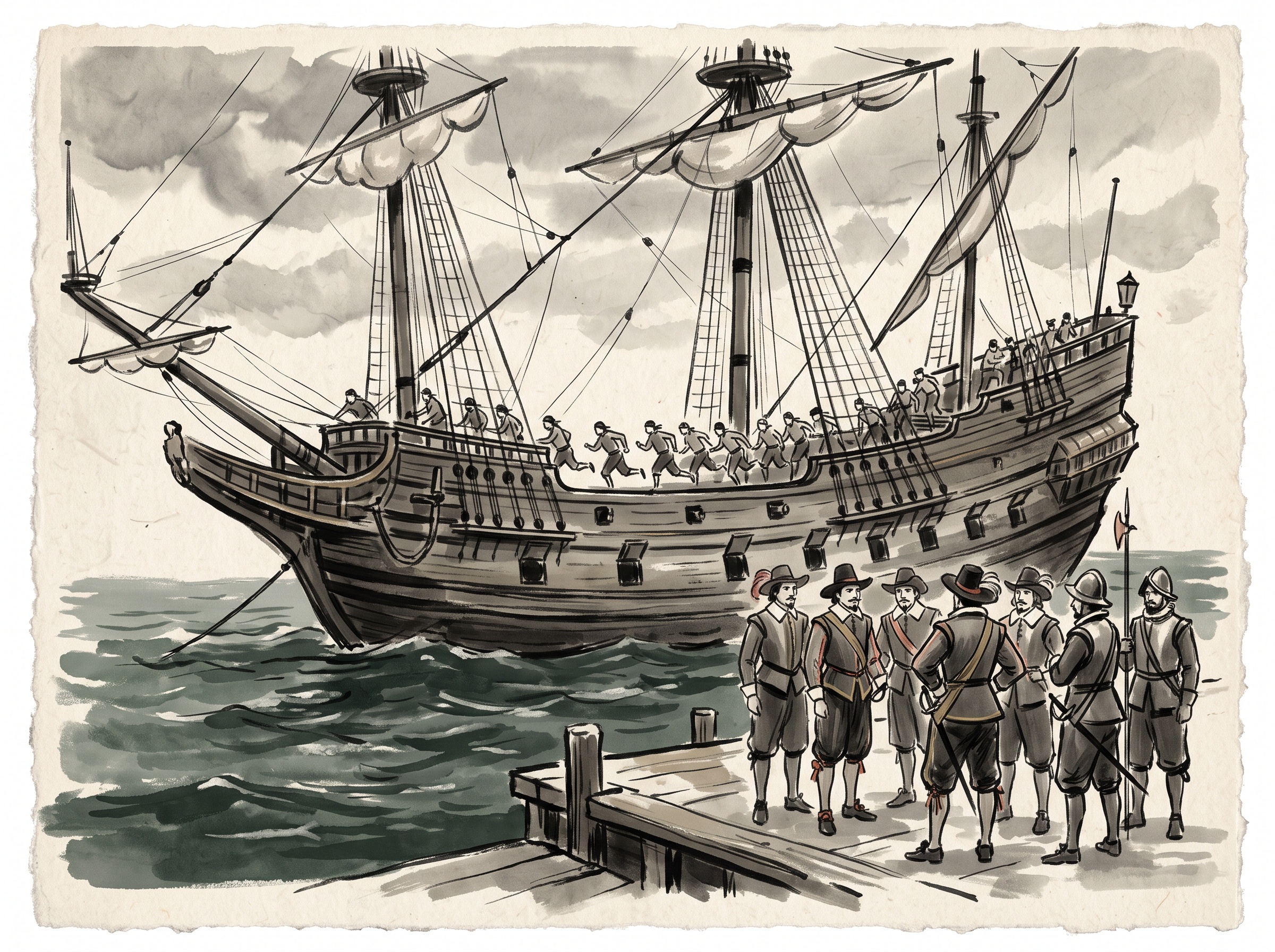
In the weeks before the launch, the ship was given a stability trial that has become legend. Thirty sailors were ordered to run back and forth across the upper deck in unison, to see how the Vasa handled a shifting load. After only three runs the ship was rocking so violently that the officers stopped the test for fear it would capsize right there at the mooring.
Admiral Klas Fleming, one of the most senior naval figures in the country, witnessed the whole thing. His reported reaction has echoed down four centuries as a case study in how disasters are allowed to happen: he is said to have remarked only that he wished the king were home. No one dared halt a ship the monarch was impatiently expecting. There was no mechanism, and no courage in the moment, to tell Gustavus Adolphus that his masterpiece could not safely sail. So it sailed.
Thirteen Hundred Yards
The maiden voyage was almost a ceremony. The Vasa fired a salute as she pulled away from the palace quay, her lower gun ports open so the cannon could answer the cheering crowds. She caught her first real gust of wind and heeled over. She righted herself. Then a second, still quite modest, breeze pushed her again — and this time she kept going. The open gun ports, only a few feet above the water, dipped below the surface. The Baltic poured in. Within minutes the Vasa settled onto her side and sank in full view of the city, taking roughly thirty of the people aboard down with her. She had been at sea for less than a nautical mile.
It was a humiliation on a national scale, and a king does not absorb humiliation quietly. An inquest was convened, the captain was interrogated, builders and officers were questioned. Blame, however, kept sliding off everyone it touched. The captain had done nothing unusual; the builders had followed proportions the crown had approved; and the one man ultimately responsible for demanding such a ship was beyond any court’s reach. In the end no one was punished. Like the fate of the ill-starred Dutch East Indiaman that wrecked the very next year, chronicled in the harrowing tale of the Batavia’s shipwreck and mutiny, the Vasa became a lesson the age was not yet equipped to learn.
Three Centuries in the Dark
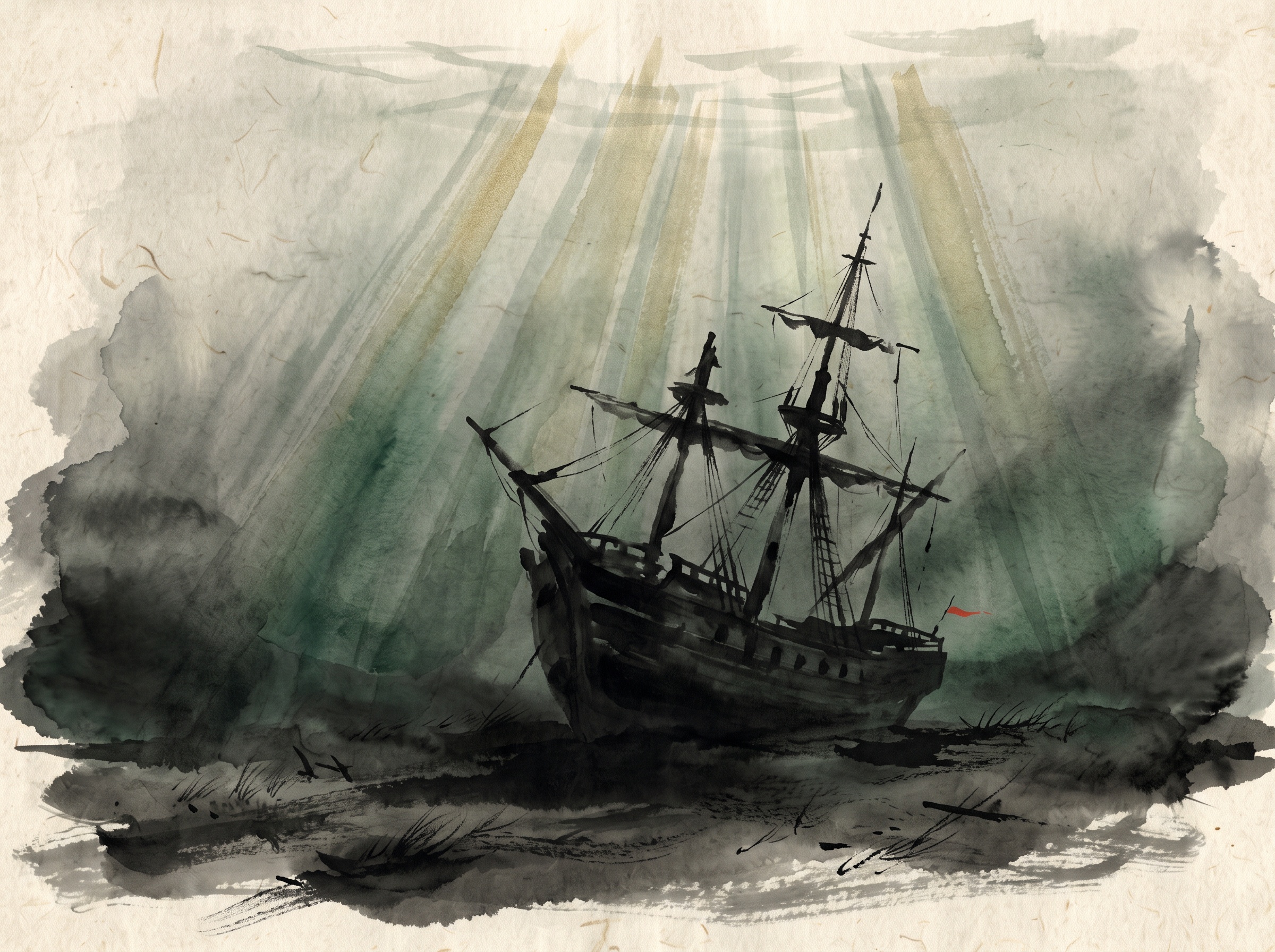
And then the Vasa did something no shipwreck is supposed to do. She waited. She came to rest upright on the harbor floor in about a hundred feet of cold water, and there she stayed, slowly swallowed by silt and forgotten by all but salvagers who stripped most of her valuable bronze cannon within a few decades using an early diving bell. After that the world moved on, and for three hundred years she simply stood in the dark.
The Baltic, it turned out, was the perfect tomb. Its water is cold, murky, and only faintly salty — too brackish for the shipworm Teredo navalis, the voracious mollusk that devours wooden wrecks in warmer seas within years. What would have been chewed to nothing in the Caribbean was instead preserved almost whole. Unlike the vanished vessels that leave only riddles behind — the kind of maritime mystery embodied by the ghost ship Mary Celeste — the Vasa left an entire ship, waiting to be found.
The Raising of a Ghost
She was found by a man who refused to give up. In the 1950s an amateur marine archaeologist and engineer named Anders Franzén became obsessed with locating the lost warship, dragging the harbor with a homemade coring device for years until, in 1956, he pulled up a plug of blackened oak from the right spot. Divers confirmed it: the Vasa was down there, intact and standing.
What followed was one of the most audacious salvage operations ever attempted. Over several years, divers working in near-total darkness tunneled beneath the hull to pass cables under her, and in 1961 the Vasa was lifted — whole — back into the daylight she had left 333 years before. Preserving her was a second feat entirely: the waterlogged timber had to be sprayed for nearly two decades with polyethylene glycol, a waxy compound that slowly replaced the water in the wood so it would not shrink and crack as it dried. The ship that drowned a city’s pride in minutes took generations of patient science to bring back.
Why the Vasa Still Matters
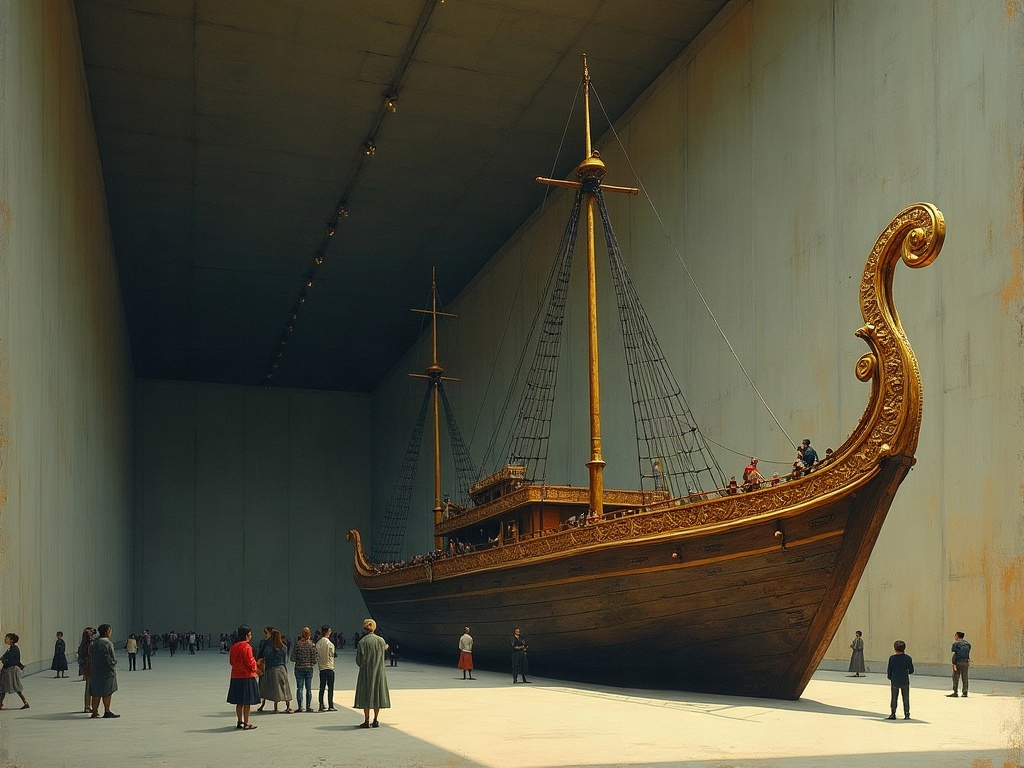
Today the Vasa stands in her own museum in Stockholm, around ninety-eight percent original timber, the only largely intact seventeenth-century ship in the world and one of the most visited museums in Scandinavia. She is studied not only as a marvel of early shipbuilding but as a near-perfect parable. Engineers and managers still invoke her as the textbook example of a catastrophe everyone saw coming and no one stopped — of ambition overriding evidence, of a failed test waved through because the person who ordered the project outranked the people who understood it.
There is a strange tenderness in her fate. The flaw that killed the Vasa in minutes is the same brackish, lifeless water that saved her for the ages, so that the proudest failure in naval history became its most complete survivor. Ships are meant to vanish; disasters are meant to be forgotten. Yet here stands one, gilded and towering, four centuries after a gentle breeze laid her low — a reminder, as vivid as any in history, that the hardest words to say are often the truest, and that it is usually easier to launch a beautiful mistake than to be the one who says it cannot sail. For another vessel lost to the same quiet physics of imbalance, see the Eastland, the ship that rolled over at its own dock — proof that the lesson of the Vasa had to be learned more than once.
Sources & further reading:
Related Reading
- The Champagne Shipwreck: A Czar’s Lost Gifts on the Baltic Seabed
- 133 Days at Sea: The Sailor Who Refused to Die on a Wooden Raft