The Siege of Baler: The Spanish Soldiers Who Kept Fighting a War That Had Already Ended

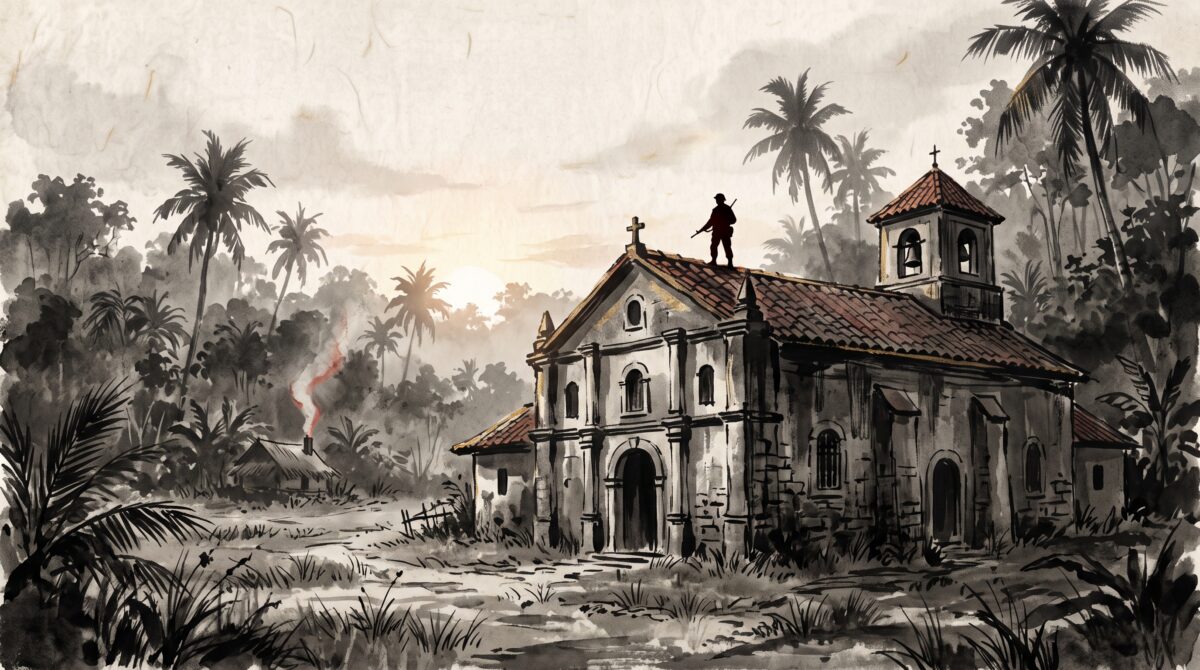
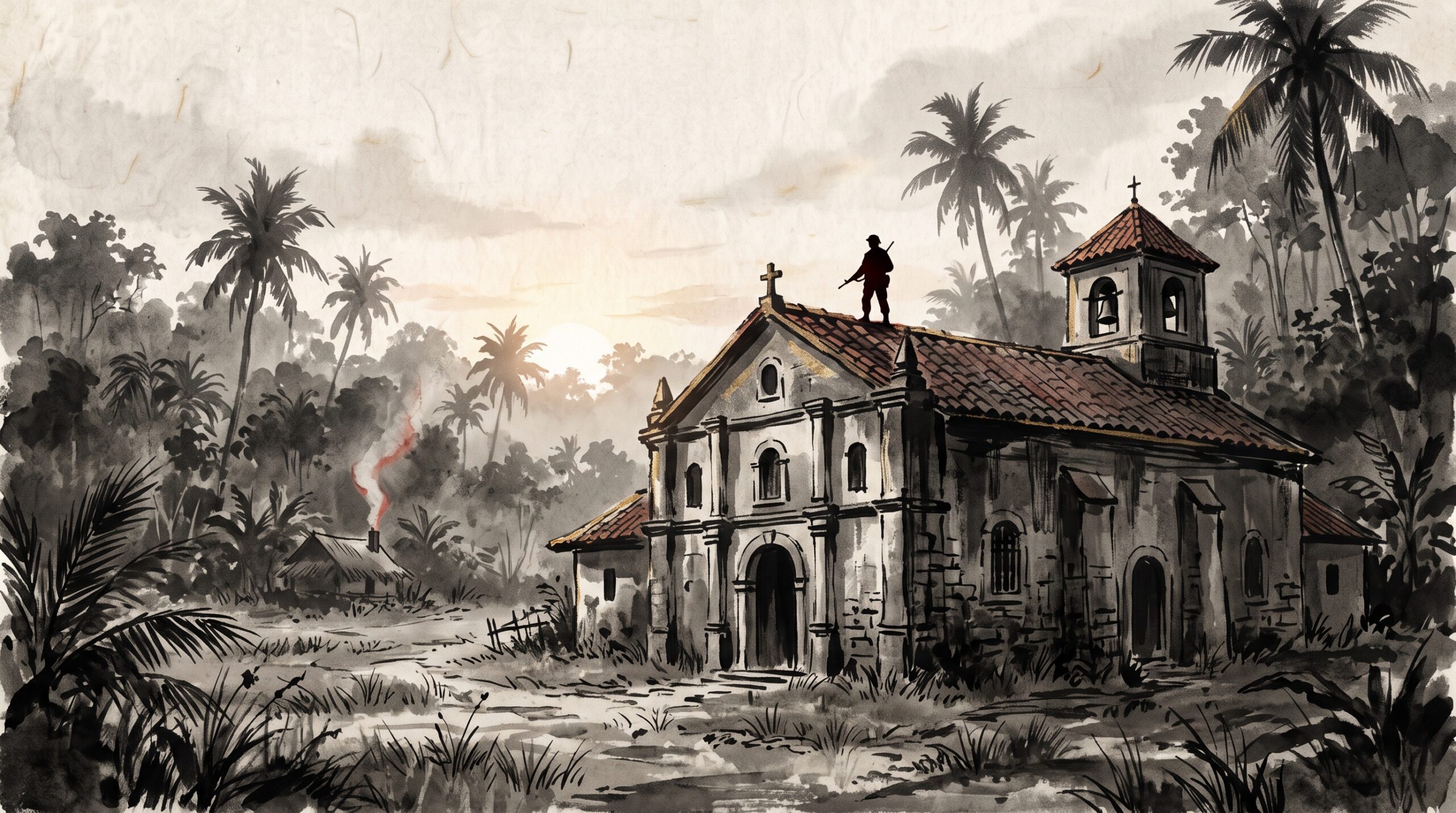
On the east coast of the Philippine island of Luzon, in a small jungle town called Baler, there is a stone church. In the summer of 1898 a few dozen Spanish soldiers walked into that church, barred the doors, and began a defence that would last eleven months. They would endure an encircling army, a tropical siege, disease that rotted them from the inside, and the slow death of their comrades. And through all of it they clung to one belief that had, unknown to them, already become a lie: that Spain still needed them to hold.
By the time the last of them finally laid down their rifles, the empire they were fighting for had lost the Philippines entirely. The war was not merely going badly. It was finished, signed away in a treaty an ocean away. The men of Baler were defending a flag that no longer flew over the country around them, and they had no idea.
A war that was already decided
By 1898 Spain’s grip on its last great colony was collapsing on two fronts at once. The Philippine Revolution had risen against three centuries of Spanish rule, and Filipino forces under Emilio Aguinaldo were taking the countryside town by town. Then the United States entered the picture, crushing the Spanish fleet in Manila Bay in a single morning and turning a colonial revolt into an international war.
The detachment sent to Baler, a remote outpost reachable mainly by sea, numbered about fifty men. Not long after they arrived, the surrounding province rose against them. Hopelessly outnumbered and cut off, the garrison did the only thing that offered any hope of survival: they abandoned their indefensible barracks and shut themselves inside the town’s church, the one building with walls thick enough to stop a bullet.
Fifty men and a stone church
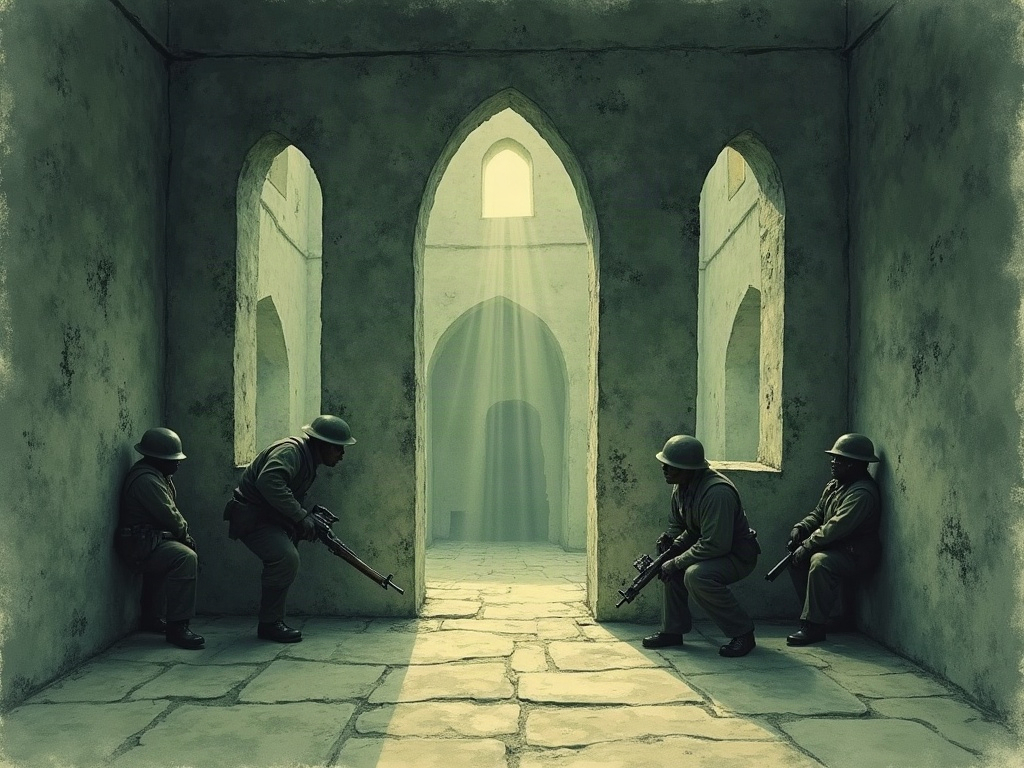
The church of Baler became a fortress. The soldiers knocked loopholes through the stone, stacked whatever they had against the doors, and settled in behind walls that were, for the moment, impenetrable. Outside, the besiegers dug in and waited, confident that time and hunger would do their work. Inside, under the command of Captain Enrique de las Morales and then, after his death, Lieutenant Saturnino Martin Cerezo, the garrison held to an iron discipline.
It was the kind of last stand that recurs throughout history: a small, doomed force choosing to hold an impossible position rather than yield. The men of Baler sealed themselves into their stronghold with the same grim resolve as the defenders of the doomed rebels who walled themselves into Hara Castle two and a half centuries earlier, and they would pay a similar price for it in slow attrition. But where Hara fell in a single storming, Baler would be destroyed from within, one fever at a time.
The messages they refused to believe
Here the story turns from a straightforward siege into something stranger and more tragic. In December 1898, Spain and the United States signed the Treaty of Paris. Spain gave up the Philippines. The war the Baler garrison was fighting had officially ended, and Spain had lost.
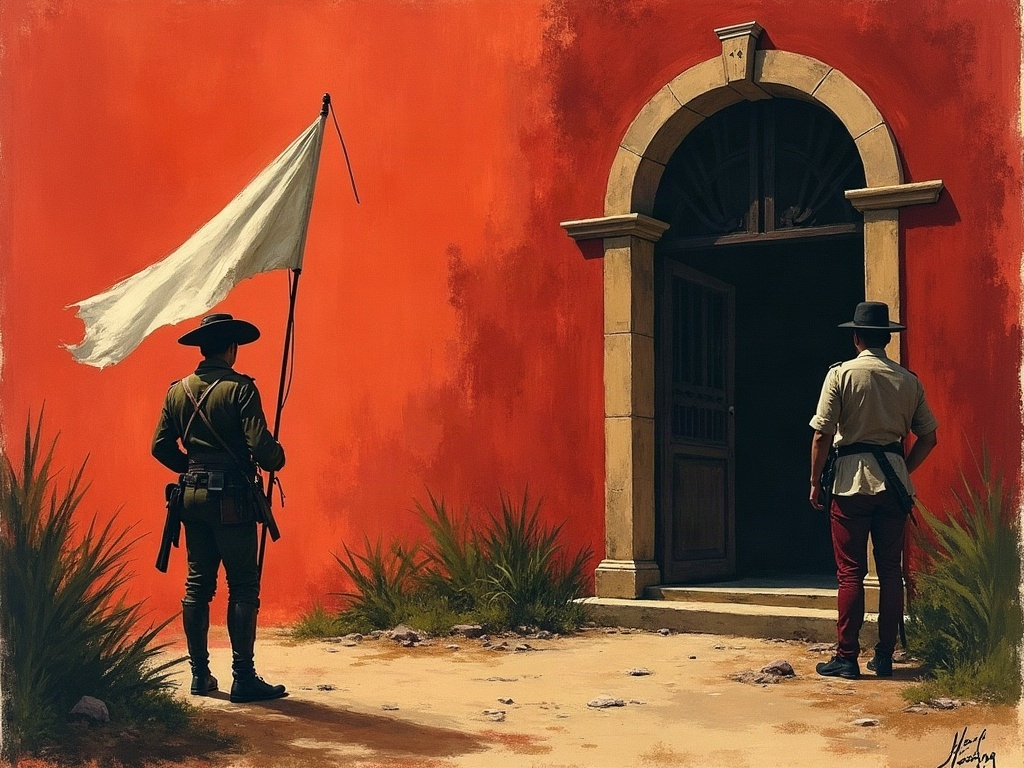
Word was sent to Baler. Again and again, envoys approached the church under flags of truce, carrying letters, newspapers, and even senior Spanish officers sent specifically to order the garrison to lay down its arms. The war is over, they said. The treaty is signed. You are free to go home. Stop fighting.
And the men inside the church refused to believe a word of it. To Cerezo and his soldiers, every messenger was a Filipino ruse, every letter a forgery, every newspaper a fake printed to trick them into opening the doors. They had convinced themselves that surrender meant massacre, and so the kinder the message, the more certain they became that it was a trap. They fired on the men bringing them their own salvation. Their devotion to orders had curdled into something that no longer served any living purpose, a loyalty continued past all reason, not unlike the forty-seven ronin who held to a vow of duty long after the world had moved on.
Disease, hunger, and the dead
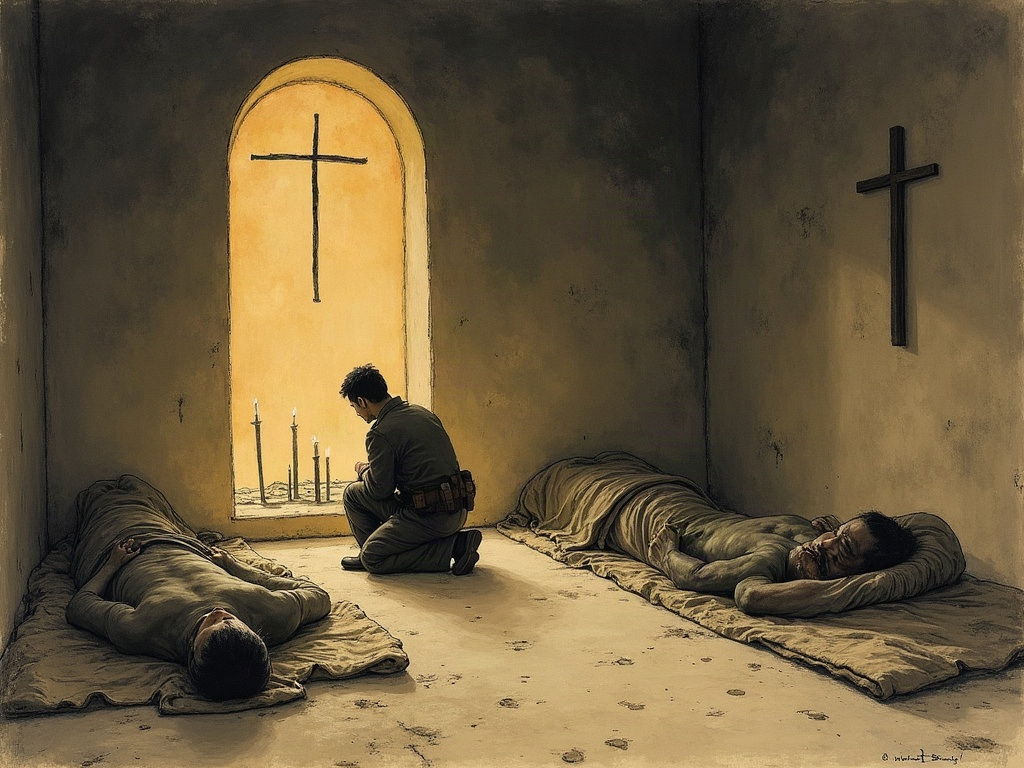
While the garrison fought off rescue, the real enemy was already inside the walls with them. Confined for months in the damp church on a punishing diet, the men began to fall to beriberi and dysentery. Their limbs swelled, their strength drained away, and the infirmary corner of the church filled with the sick and the dying.
Captain de las Morales was among those the disease took, leaving the younger Cerezo to carry the siege on his shoulders. The garrison buried its dead where it could and kept firing. In the end, illness and hunger killed far more of them than the besieging army ever managed to. To endure a siege is to wage war against your own body as much as against the enemy outside, a slow erosion that the besieged children of Leningrad would know in a different century, where survival itself became an act of defiance recorded in the nine heartbreaking pages of a child’s diary.
The newspaper that finally ended it
What cannons and envoys could not do, a scrap of newsprint finally did. In June 1899, after 337 days, Cerezo got his hands on a Spanish newspaper and read in it an account of events at home, mundane details of ordinary life that no Filipino forger could possibly have invented. The ordinariness of it was what convinced him. The war really was over. Spain really had lost. The messengers had been telling the truth the entire time.
On the second of June, the survivors marched out of the church. Of the roughly fifty who had gone in, only a few dozen walked out, gaunt and sick but unbroken. What happened next is the part of the story that has kept it alive. Emilio Aguinaldo, learning of the garrison’s astonishing endurance, was so moved by their courage that he issued a formal decree declaring that these men were to be treated not as prisoners of war but as friends. They were given safe passage and sent home to Spain.
In their homeland they became legends, remembered as Los Ultimos de Filipinas, the Last of the Philippines, their defence retold in books and films for generations. It is a strange thing to celebrate, a siege held in the service of a cause already lost, months of suffering for nothing anyone could measure. And yet the story endures precisely because of that. The men of Baler kept faith when faith had been rendered pointless, held a line that protected nothing, and were honoured in the end not by their own side but by the enemy who had watched them do it. Sometimes history remembers us less for what we accomplished than for what we were willing to endure, and for the grace of the people on the other side of the wall who recognised it for what it was.
More from the archive
- The Ship That the World Forgot: The MV Doña Paz and the Deadliest Peacetime Shipwreck in History
- The War of Jenkins’ Ear: How a Severed Body Part Started a Nine-Year Conflict Between Britain and Spain
- The Battle of Los Angeles: When America Fired 1,400 Rounds at Nothing