Nine Pages: The Child’s Diary That Became the Voice of Besieged Leningrad

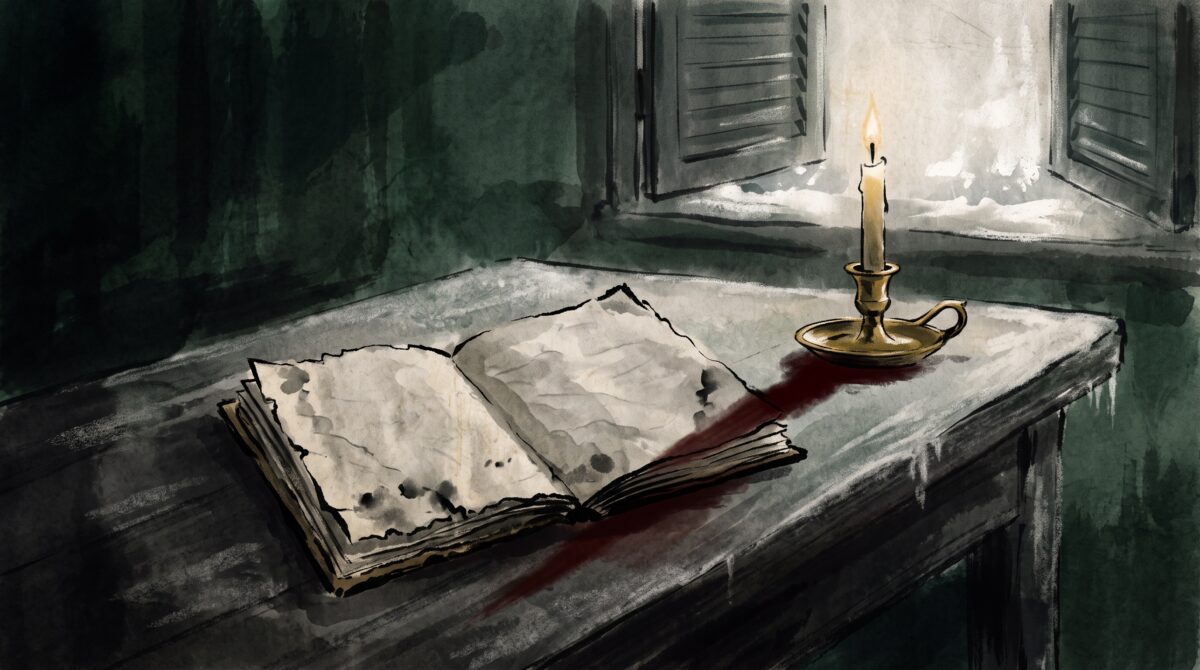
The notebook is small enough to hold in one hand. Its pages are tabbed with the letters of the Russian alphabet, the kind of thing a young woman might use to keep addresses and phone numbers. It once belonged to a seamstress named Nina Savicheva. But in the winter of 1941, her little sister Tanya, eleven years old, took it and began to write in it. She did not record addresses. She recorded deaths.
There are nine pages in all. Together they are among the most heartbreaking documents to survive the Second World War.
A city sealed shut
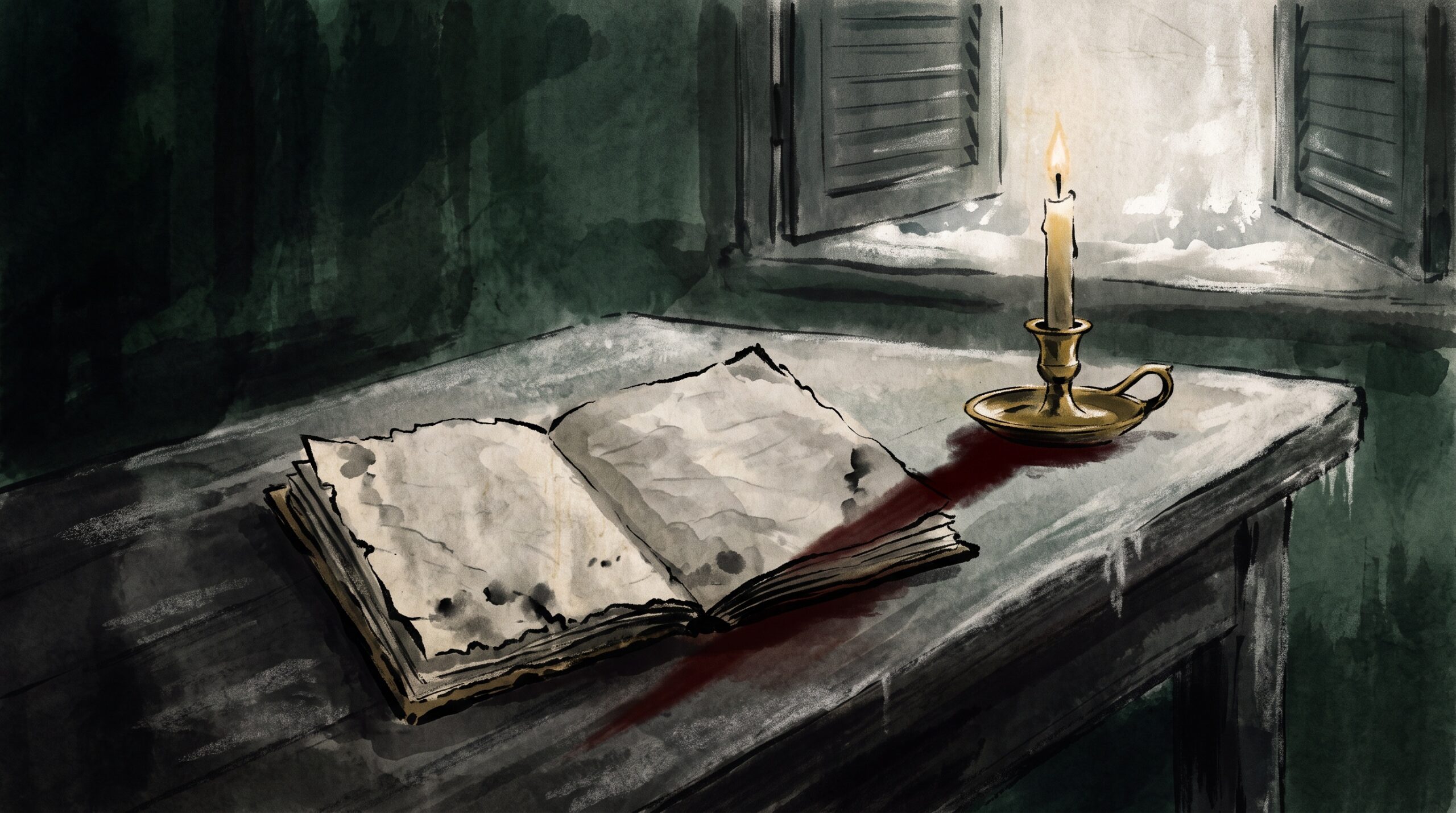
On 8 September 1941, German and Finnish forces closed the ring around Leningrad, the great Russian city of canals, palaces and shipyards that Hitler wanted not merely captured but erased. The plan was not to storm it street by street. It was to starve it. Supplies were cut, the city’s food warehouses were bombed, and over the next 872 days roughly three million people were trapped inside with a dwindling stock of bread and fuel.
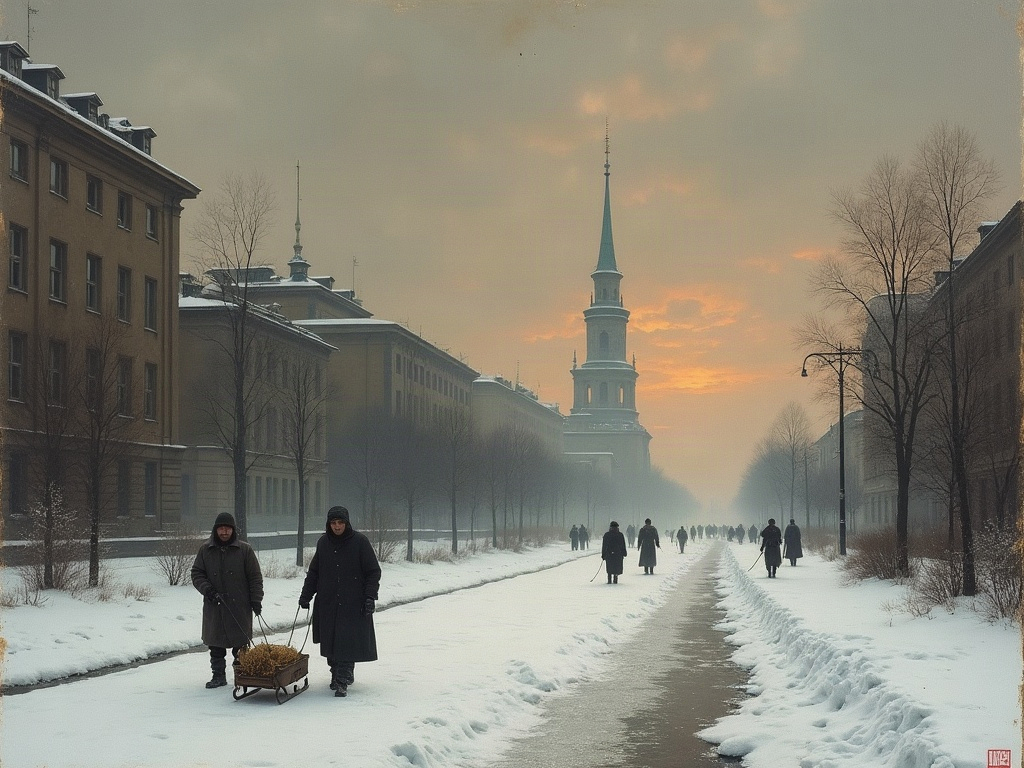
The winter that followed was the worst. Temperatures fell far below freezing, and there was almost no heat, no running water, and no electricity. By late November the ration for dependents and children had fallen to 125 grams of bread a day, a few thin slices, and much of that was padded with sawdust, cellulose and other filler. People boiled leather, scraped wallpaper paste, and ate whatever they could find. Historians still argue about the exact toll, but the usual estimates run from around 650,000 to well over a million civilian deaths, most from hunger and cold. This was not a footnote to the war. It was one of its great catastrophes.
For readers who know the airlift that kept West Berlin alive after the war, such as the story of the Candy Bomber and the Berlin Airlift, Leningrad is the dark counterpart: a city that had no airlift and no rescuers, only the ice and its own endurance.
The Savichevs of Leningrad
Tanya Savicheva was born in 1930 and lived on Vasilievsky Island with her mother, her grandmother, her older sisters Nina and Zhenya, her brothers Leka and Mikhail, and two uncles, Vasya and Lyosha. It was a large, close family. When the siege began, Nina was away from home and could not get back to the family. Mikhail would also leave. That left Tanya, a child, in an apartment where the people she loved were slowly running out of life.
The first to die was her sister Zhenya, who had worked herself to exhaustion at the Admiralty shipyard. Tanya found the notebook, turned to the letter for her sister’s name, and wrote in a child’s careful hand: Zhenya died on December 28th at 12:00 in the morning, 1941.
One line at a time
What follows is not literature. That is exactly why it hits so hard. Tanya wrote no description, no lament, no explanation. She wrote the person, the date and the hour, as precisely as a clerk filling in a register. As best the surviving entries record it:
- Grandma died on 25 January 1942, at three in the afternoon.
- Leka, her brother, died on 17 March, at five in the morning.
- Uncle Vasya died on 13 April, at two in the morning.
- Uncle Lyosha died on 10 May, at four in the afternoon.
- Mama died on 13 May, at seven thirty in the morning.
Then the final three pages, which are only a few words each: The Savichevs are dead. Everyone is dead. Only Tanya is left.
By the time she wrote that last line she had spent roughly half a year in a freezing apartment with the people she loved most, watching each one fade. She was twelve years old. There is no record of her speaking about those months at any length. The notebook said what she could not.
The road across the ice
Tanya was not left alone for long. Neighbours and relief workers found her, starving and barely able to stand, and she was taken to a children’s home. In the summer of 1942 she was among those evacuated across Lake Ladoga, along the ice road in winter and by barge when the ice melted, a route that came to be known as the Road of Life. It was the only lifeline the besieged city had. Convoys were bombed and shelled as they crossed, and trucks regularly vanished through the ice. Even for those who reached the far shore, rescue was no guarantee. Many evacuees were so emaciated that a first full meal killed them.
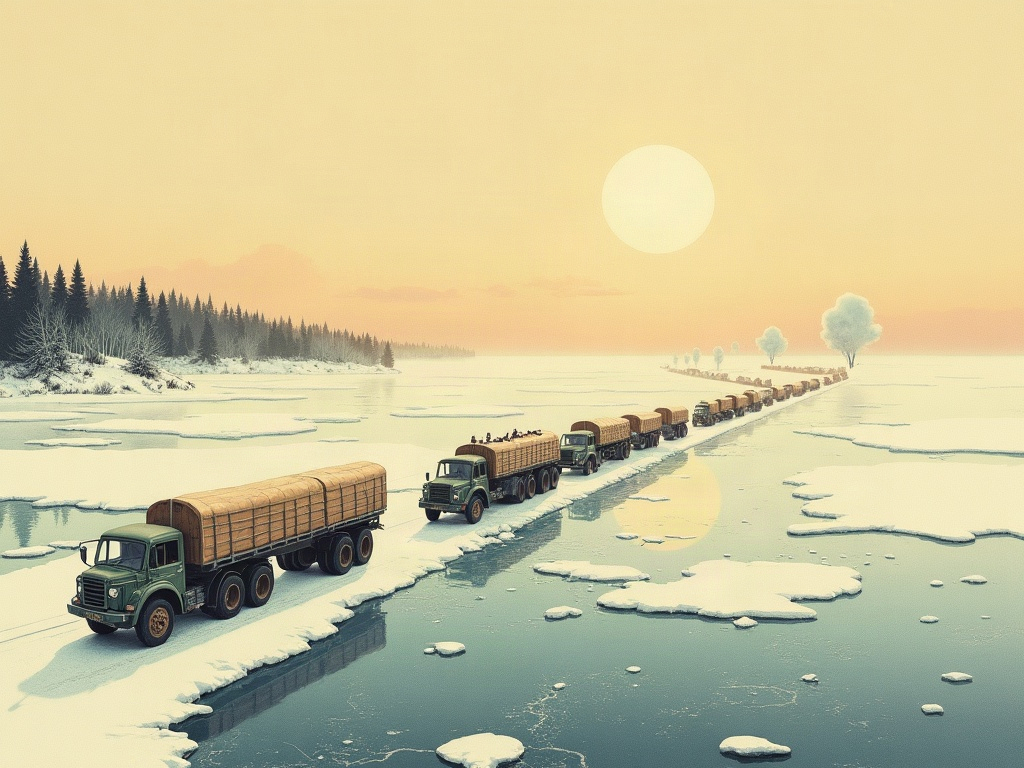
Tanya reached a village in the Gorky region, east of Moscow, where she was cared for by a local community. But the siege had done lasting damage to her body. She developed intestinal tuberculosis and other illnesses linked to prolonged starvation, and she died on 1 July 1944, a few months after the blockade was finally broken and while she was still only thirteen or fourteen years old. The war had its way with her after all, only slowly.
How a notebook became a monument
The rest of her family was not entirely lost. Her sister Nina survived the war, and so did her brother Mikhail. When Nina came home after the siege was lifted, she found the notebook among the family’s things. She learned of her family’s fate only through Tanya’s pages, and later learned that Tanya herself was gone.
The diary did not stay private. It was shown publicly in the Soviet Union and has been cited as an exhibit in the telling of the Nazi war crimes that followed the war. Today the original is kept in St Petersburg, and Tanya’s nine pages have been reproduced on memorials along the old Road of Life and at the Piskaryovskoye Memorial Cemetery, where hundreds of thousands of siege victims lie in mass graves. Visitors still leave bread there.
Compare it with the voices of other Soviet women who endured the same war: the sniper Lyudmila Pavlichenko, who answered the invasion with a rifle, or the secret agent Noor Inayat Khan, who faced it in disguise. Tanya had no weapons and no mission. All she had was a pencil and the courage to write down what was true. And for sheer endurance, only a few stories rival that kind of survival, such as the 133 days Poon Lim spent adrift on a raft.

Why nine pages still matter
It is easy to lose a human being inside a number. Eight hundred thousand dead is a figure the mind slides over. Zhenya, at twelve noon, at the end of December, is not. Tanya Savicheva did not set out to leave testimony. She was a child trying to hold on to the people she was losing the only way she knew how, by marking the moment each one left.
That is what makes her notebook last. It reminds us that behind every siege, every blockade and every strategy of starvation is a kitchen, a bed, a family sitting in the cold, someone small writing down the hour. History is not only what armies do. It is also what remains in the margins when the armies have gone, in a pocket notebook with the alphabet printed down its edge, and in the quiet insistence of a girl who wrote, simply and without being asked to, that they had all been here.
Sources & further reading:
Related Reading
More from the archive
- Lady Death: Lyudmila Pavlichenko and the 309 Shots That Shamed a Room Full of Men
- Olga of Kiev: The Widow Who Took a Fourfold Revenge on an Entire Kingdom