Olga of Kiev: The Widow Who Took a Fourfold Revenge on an Entire Kingdom

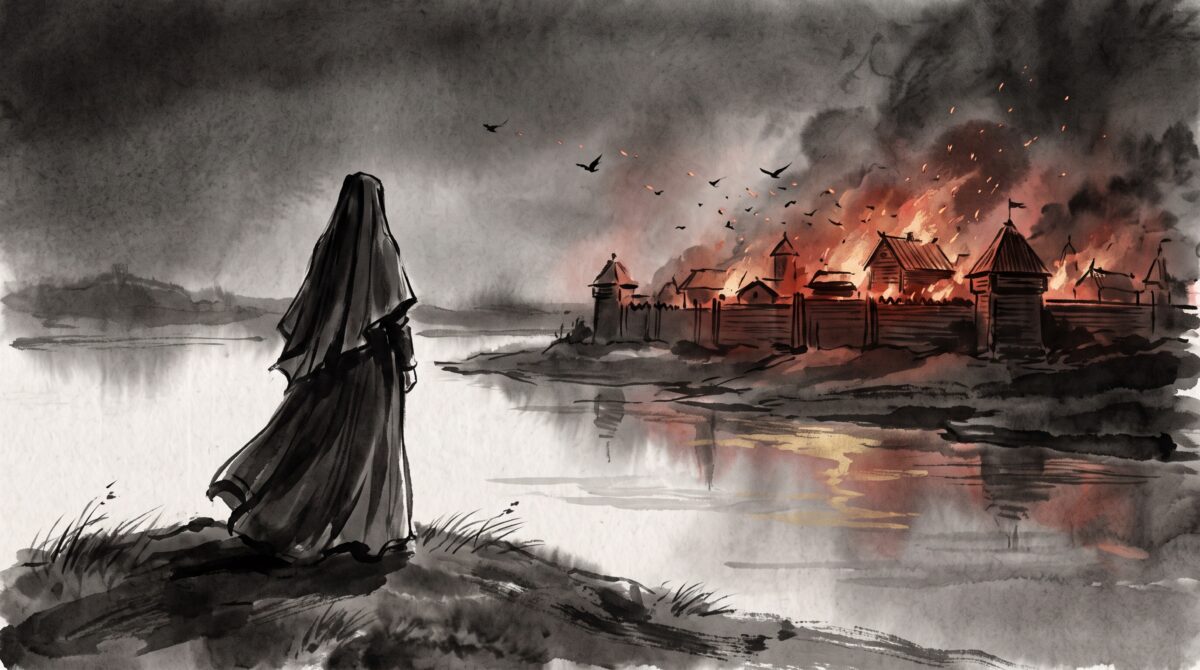
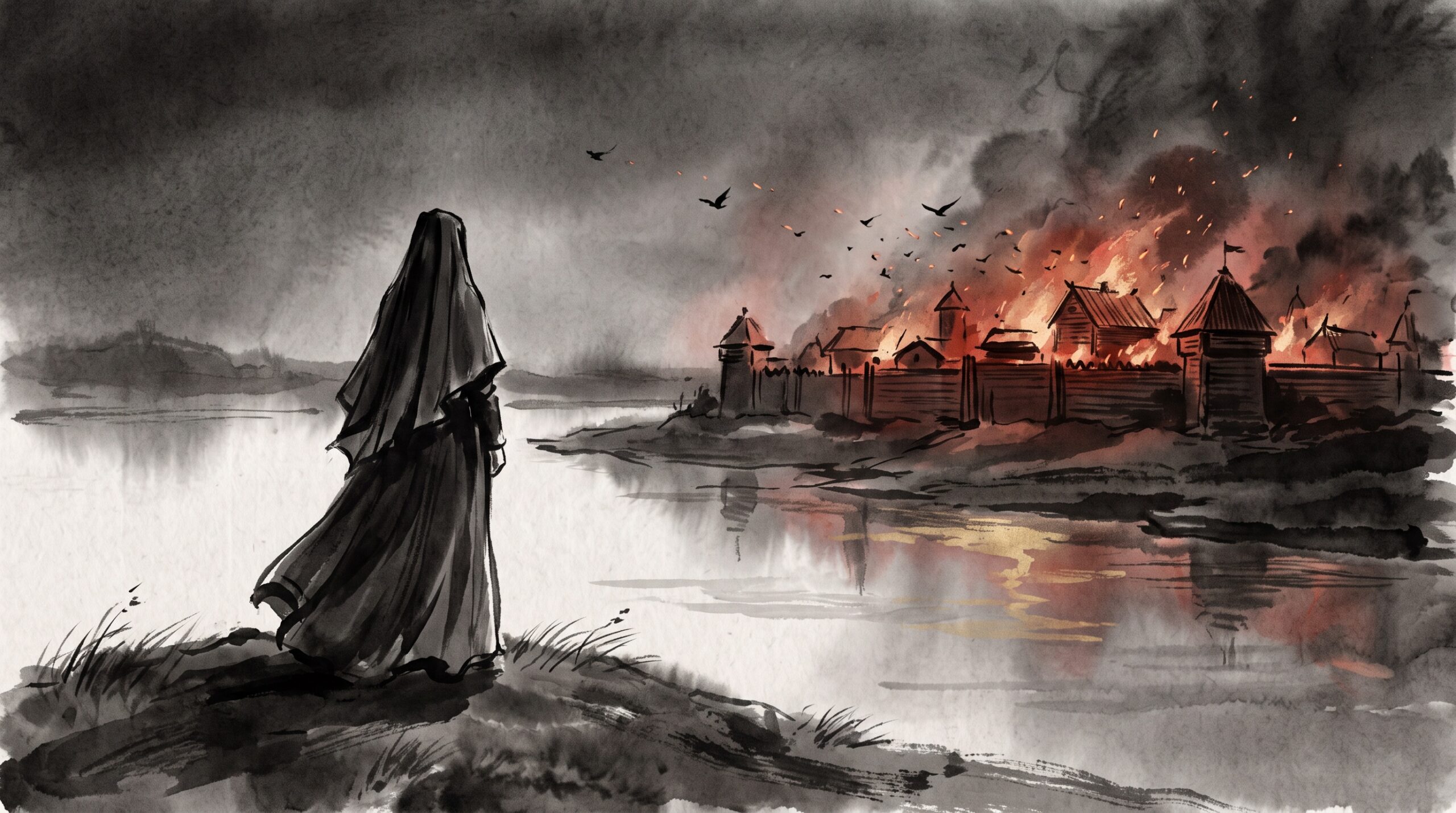
In the tenth century, a widow stood on a hillside above a river and watched a city burn. The flames had not been set by a besieging army or a lightning strike. They had been carried into the town on the wings of its own sparrows and pigeons — birds the inhabitants had handed over, that very morning, as a humble peace offering. The woman watching was Olga, princess of Kiev, and the burning city belonged to the people who had murdered her husband. She had already made them pay three times over. This was the fourth, and the last.
A prince torn apart by two trees
Olga’s story begins with a killing as brutal as any in the medieval record. Her husband was Igor, prince of the Kievan Rus, the sprawling confederation of Slavic and Norse peoples that gathered around the great river roads of what is now Ukraine, Russia and Belarus. In the year 945, according to the Russian Primary Chronicle, Igor went to collect the annual tribute from a subject tribe called the Drevlians — the “forest people.” Having taken his due, he grew greedy, turned back with a handful of men, and demanded more.
The Drevlians had had enough. Their prince, a man named Mal, reasoned that if a wolf comes among the sheep he will take the whole flock unless he is killed. So they killed him. The method the chronicle records is the stuff of nightmares: they bent down two tall birch trees, bound Igor by the legs to their crowns, and let the trees spring upright, tearing him in two. It was less an execution than a message. What the Drevlians failed to reckon with was the widow that message left behind.

The suitor who should have run
Olga was left ruling Kiev as regent, for her son Sviatoslav was still a small boy. The Drevlians, flush with their success, made a catastrophic miscalculation. Rather than brace for war, they decided the tidy solution was to marry their prince Mal to the woman they had just widowed, folding Kiev into their own realm. They sent twenty of their most distinguished men up the river by boat to make the proposal.
Olga received them with every appearance of warmth. She told the envoys she was pleased by their offer, that her husband could not be brought back, and that she wished to honour them before all her people. In the morning, she said, her men would come for them, and they were to refuse to walk or ride — they were to insist on being carried to her court in their own boat, a great mark of status. The flattered Drevlians agreed. The next day Olga’s retainers hoisted the boat, envoys and all, and carried it straight to a deep trench that had been dug overnight in her courtyard. They tipped the boat in. Olga leaned over the edge and asked whether they found the honour to their taste. Then she had them buried alive.
The bathhouse and the funeral feast
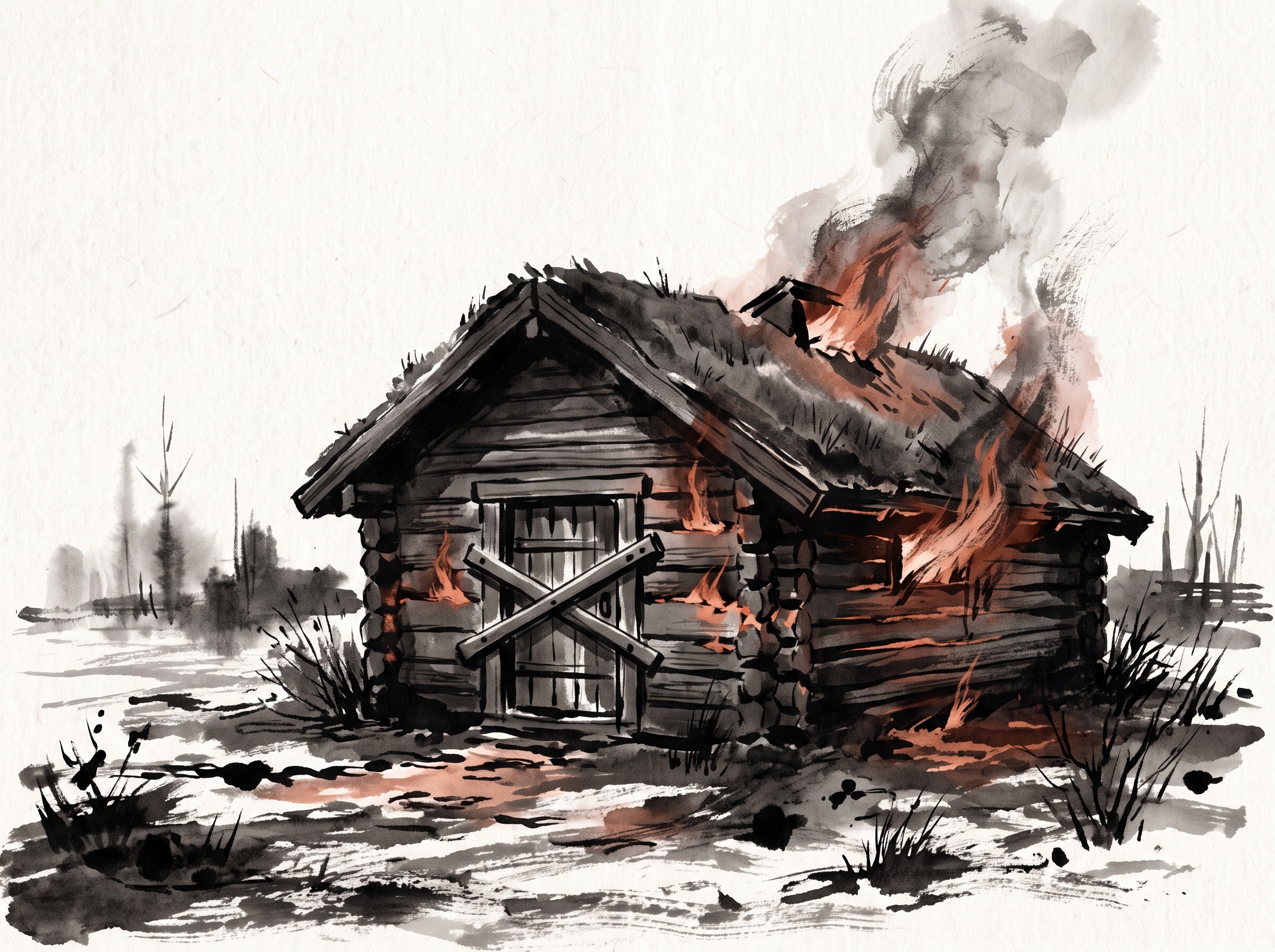
One embassy swallowed by the earth, Olga sent word to the Drevlians that if they truly wanted her to come to Mal, they must send an even grander delegation of their best men, or the people of Kiev would never let her go. Delighted, the Drevlians dispatched their leading nobles. When this second embassy arrived, Olga graciously offered them the courtesy of a bathhouse to wash away the dust of the road before their audience with her. The moment they were all inside, her people barred the doors and set the building alight, and the flower of the Drevlian nobility burned where they sat.
Still the Drevlians did not understand what was happening to them. Olga now sent a message ahead of her own arrival, asking them to prepare great quantities of mead at the city where her husband had died, so she could mourn properly at his grave before the wedding. She came with a small retinue, wept at Igor’s tomb, and hosted a funeral feast. She encouraged the Drevlians to drink deeply, and when they were helplessly drunk, she gave the signal. Her soldiers fell on them. The chronicle puts the dead at five thousand. The patience in it is chilling — a widow playing the grieving bride through three separate massacres, each one baited with the enemy’s own vanity. It is the same cold, deferred discipline that would later make legends of men like the forty-seven ronin, who waited two years in disguise to avenge their master, except that Olga compressed hers into a single terrible season.
The birds that burned a city
With their envoys dead and their nobility gutted, the surviving Drevlians shut themselves inside their fortress capital, Iskorosten, and Olga laid siege to it. For a year the walls held. Then she offered terms so mild they seemed like mercy. She told the exhausted defenders she no longer wanted vengeance or heavy tribute — all she asked, as a token of submission, was three pigeons and three sparrows from each household. Relieved, the Drevlians eagerly gathered the birds and handed them over.
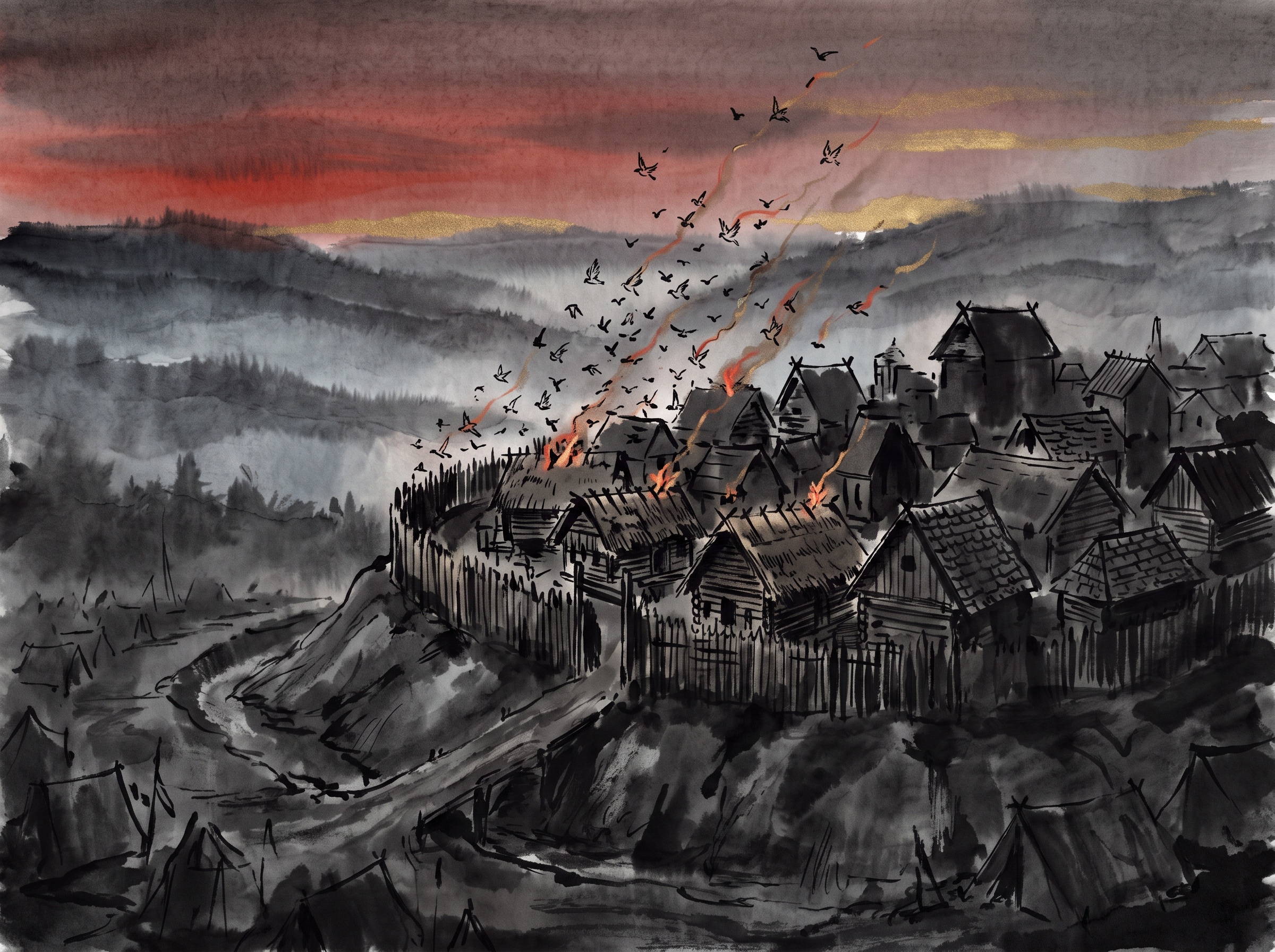
Olga had her soldiers tie a scrap of cloth smeared with sulfur to each bird with thread, set the cloth smouldering, and release them at dusk. The birds did what birds do: they flew home, back to the nests and dovecotes and thatched eaves of the city they had always lived in. The fires caught everywhere at once, in every loft and roof, so that the defenders could not fight it. As the people fled the burning town, Olga’s army was waiting. Some were killed, some enslaved, the rest left to pay the tribute she had claimed never to want. Iskorosten was destroyed. Whether the ingenious trick ever truly happened, or belongs with the other too-perfect ruses that cling to clever rulers — the kind of cunning the chronicles also heaped on survivors like Mithridates, the king who supposedly made himself immune to poison — the message of the tale was never in doubt: do not harm this woman’s family.
From vengeance to sainthood
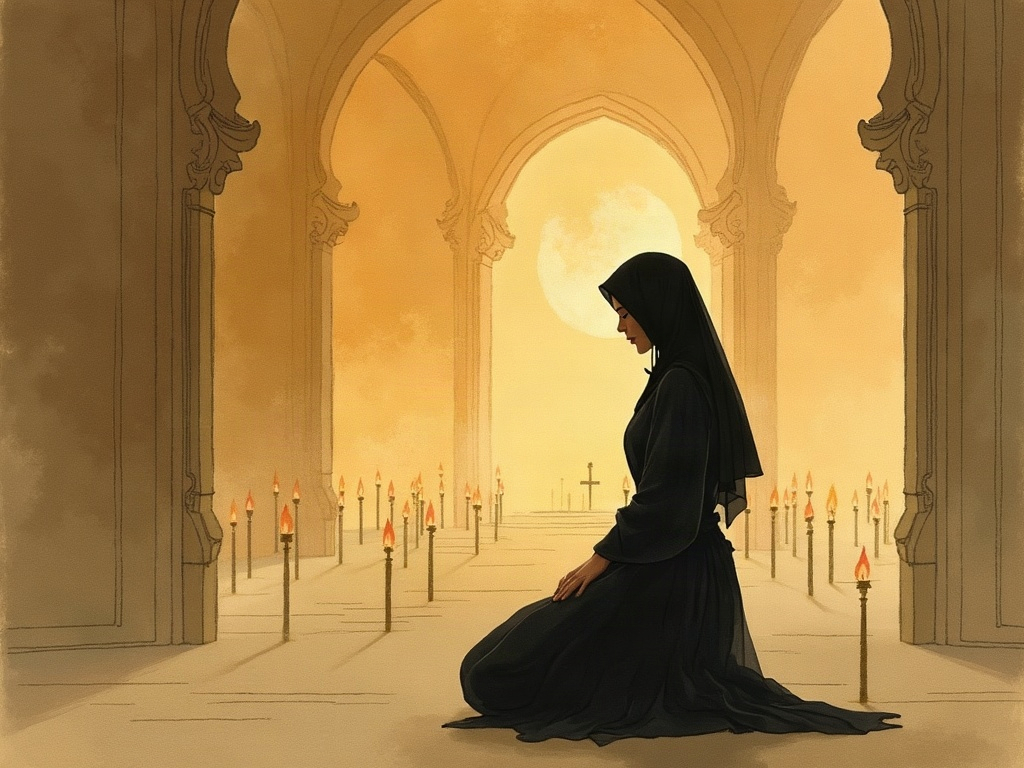
Here the story takes its strangest turn. Having drowned, burned and slaughtered her way through an entire people, Olga did not become a byword for cruelty. She became a saint. She ruled Kiev with a firm, reforming hand as regent for the still-young Sviatoslav, reorganising how tribute was gathered so that no prince would ever again be torn apart over a tax collection. And then, sometime around 957, she travelled to Constantinople, the dazzling capital of the Byzantine Empire, and was baptised a Christian.
She was the first ruler of the Rus to convert, generations before the faith took hold among her people. Her own son Sviatoslav refused to follow her, laughing that his warriors would mock him for it. But the seed she planted grew: her grandson, Vladimir the Great, would make Christianity the religion of all the Rus, and Olga herself was eventually canonised, honoured as isapostolos — “equal to the apostles,” a rare title shared with only a handful of saints. The avenger of the Drevlians is, to this day, a patron saint of widows and of converts. She belongs to that small, startling company of women the chronicles could neither ignore nor tame, remembered the way the Mongols remembered the wrestling princess Khutulun, who bent the rules of her world until they broke.
Why she still matters
It is tempting to read Olga as pure legend, and much of the detail almost certainly is. The Primary Chronicle was written down well over a century after she lived, by monks who were happy to shape a saint’s early life into a folk epic of fours — four embassies, four revenges, each more extravagant than the last. The buried boat, the burning bathhouse, the incendiary birds: these are the furniture of saga, not the dry record of a tax dispute. But a real woman stands behind the legend. A widow genuinely ruled Kiev, genuinely held a fractious realm together through the minority of her son, and genuinely chose a new faith at an age when most rulers only deepened in the old one.
What survives, under the folklore, is a portrait of someone who refused the single role her world offered a grieving widow: to be married off, absorbed, forgotten. Olga answered an insult with an imagination for consequence that terrified everyone around her, and then turned the same unbending will toward building and believing rather than burning. The medieval mind found nothing contradictory in a saint who had once filled a trench with living men. Perhaps they understood something we flinch from: that the capacity for terrible resolve and the capacity for genuine transformation can live in the same person. Olga of Kiev was both, and a thousand years later we are still telling her story — which may, in the end, have been the only victory she truly cared about.
Sources & further reading:
- Olga of Kiev (Encyclopaedia Britannica)
- The Russian Primary Chronicle (Laurentian Text), trans. Cross & Sherbowitz-Wetzor
Related Reading
More from the archive
- Nine Pages: The Child’s Diary That Became the Voice of Besieged Leningrad
- The Forty-Seven Ronin: The Samurai Who Waited Two Years to Avenge Their Master