The Woman in Sailor’s Clothes: How Jeanne Baret Became the First Woman to Circle the Globe

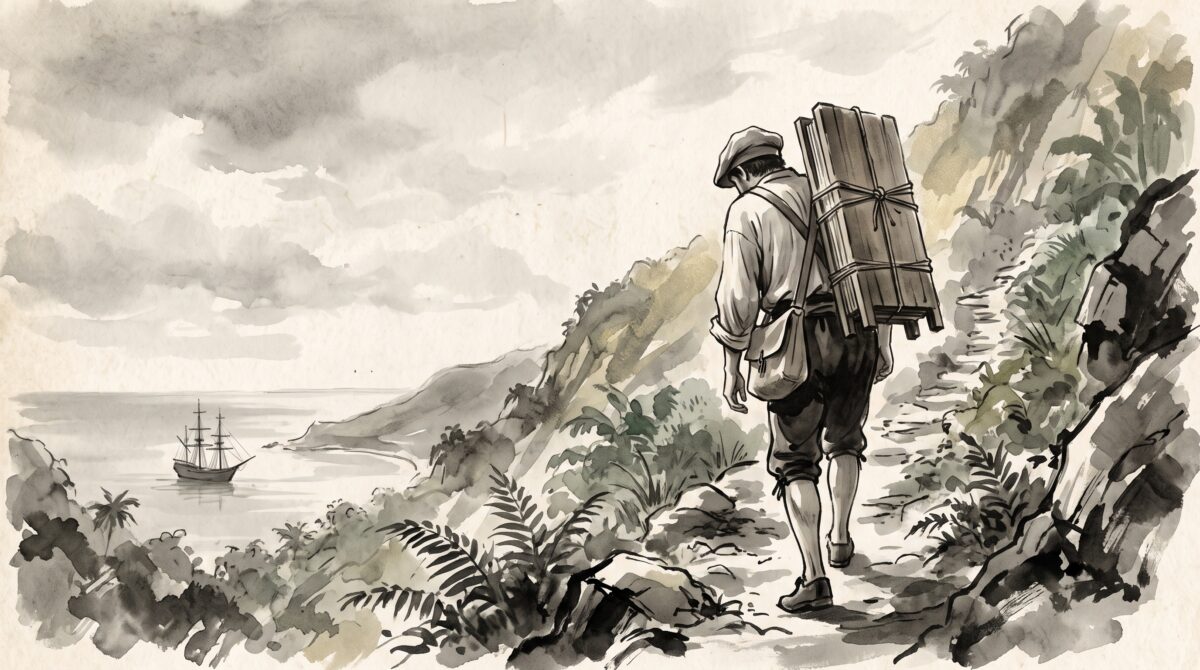
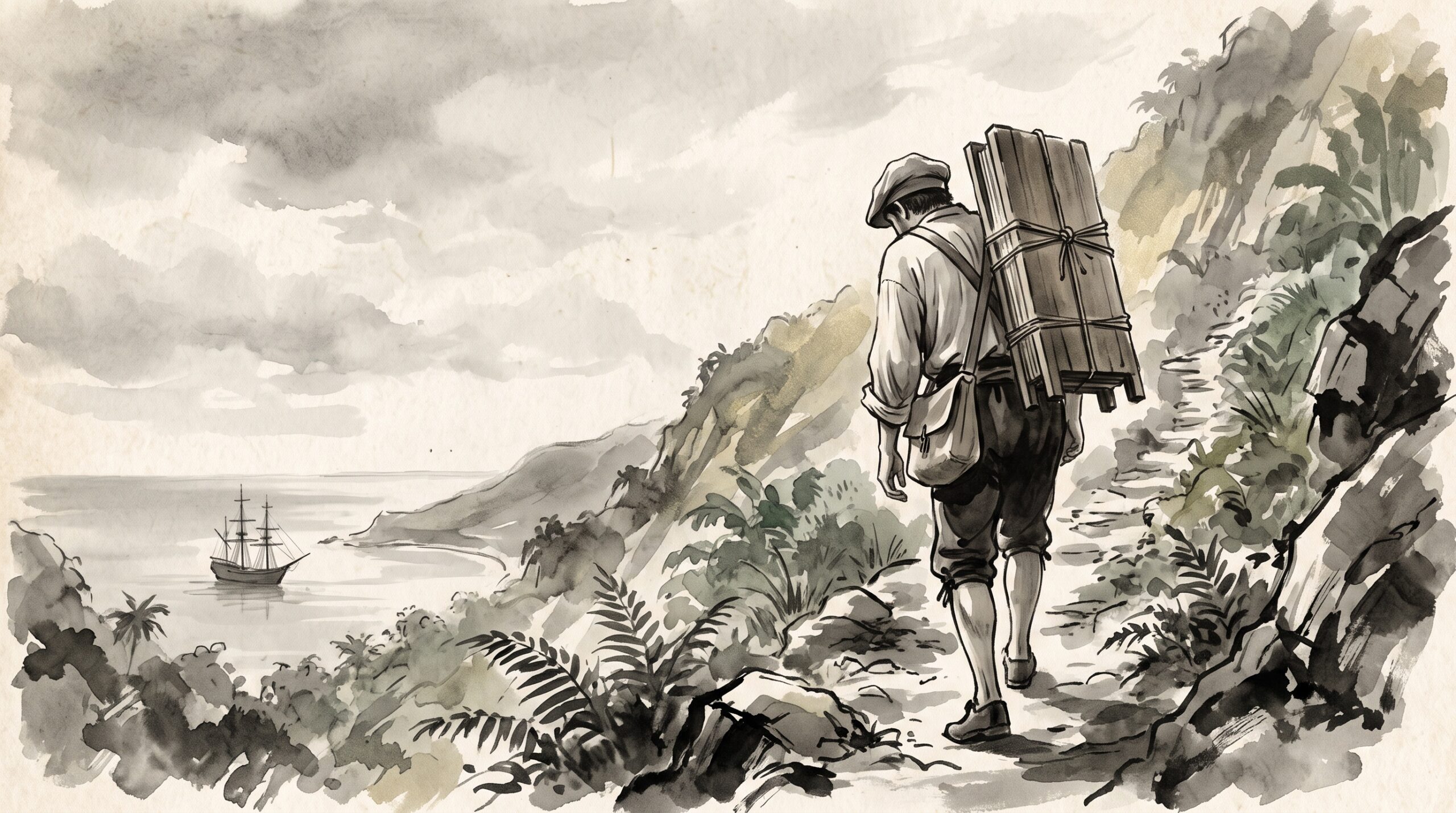
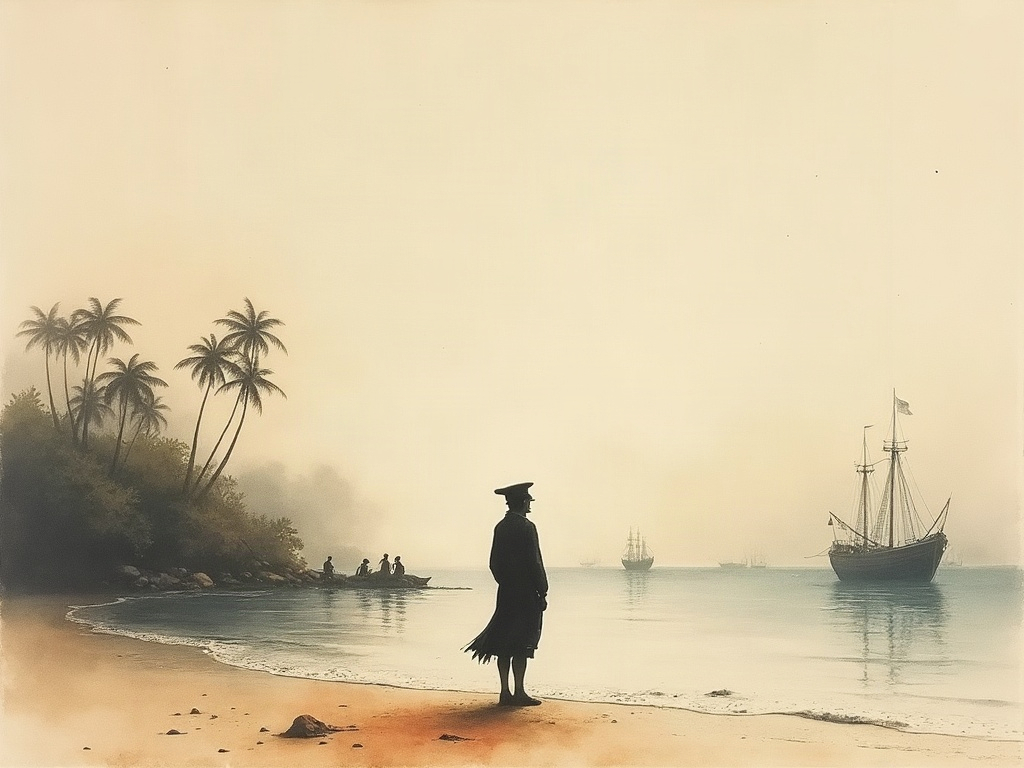
On a humid morning in the summer of 1767, a young sailor laboured up a hillside above Rio de Janeiro with a wooden plant press strapped to one shoulder and a canvas bag of cuttings on the other. The other men of the expedition knew this slight, tireless figure as Jean Baret, valet and assistant to the ship’s naturalist. What none of them yet knew — what would have been a scandal and a crime had they known it — was that Jean was a woman. Her name was Jeanne Baret, and she was in the middle of becoming the first woman in recorded history to sail all the way around the world.
The herb woman from Burgundy
Jeanne Baret was born in 1740 to a poor family in the Loire country of Burgundy, in a world that offered a peasant girl almost nothing. What it did give her was the countryside itself. She grew up among the people the French called herbiers — herb women who knew which plants healed, which poisoned, and where each one grew. This was real, unwritten botanical knowledge, and it made her valuable. By her mid-twenties she had entered the household of Philibert Commerson, a brilliant and sickly naturalist, first as his housekeeper and then as his assistant, his pupil, and his lover. When Commerson received a royal appointment that would take him to the far side of the planet, he could not imagine doing the work without her.
A woman on a king’s ship was a crime
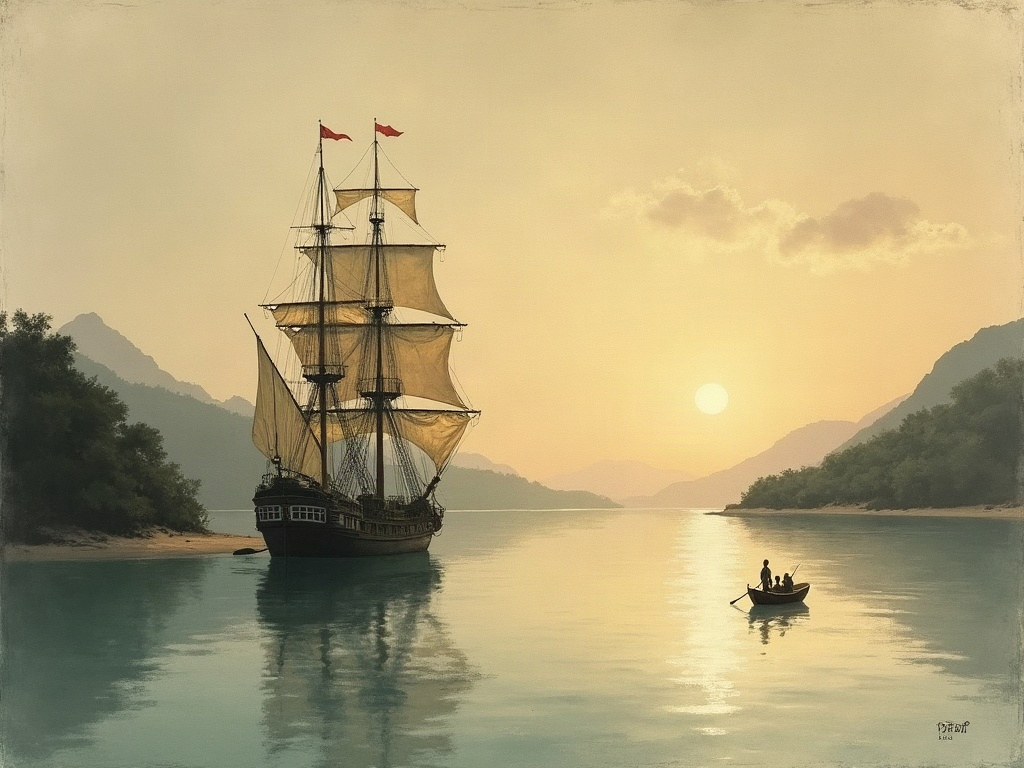
In 1766 the navigator Louis-Antoine de Bougainville set out to sail around the globe in the name of Louis XV, with two ships, the frigate Boudeuse and the store-ship Étoile. Commerson was to be the expedition’s naturalist. There was one immovable obstacle: a royal ordinance flatly forbade women aboard French navy vessels. For most people that would have been the end of it. Baret and Commerson simply decided to break the law.
She bound her chest tightly with linen bandages, cropped her approach to the world into that of a manservant, dressed in a sailor’s loose slops, and presented herself on the dock at the last moment as “Jean” Baret, a young man looking for work as the naturalist’s assistant. Commerson, conveniently, “hired” her on the spot. The deception was audacious precisely because it had to hold not for an evening but for years, in the crammed, sleepless intimacy of a wooden ship where privacy did not exist. She was not the only woman of her century to treat rigid gender rules as mere costume to be shrugged off — the sword-fighting French opera star Julie d’Aubigny scandalised the same era by dueling, dressing as a man, and living entirely on her own terms — but few sustained the disguise so long, or under such relentless exposure.
The work no one else could do
The disguise was not a stunt; it was the price of doing serious science. Commerson was chronically ill, often confined to his bunk by a wounded leg and recurring sickness, and much of the expedition’s botanical collecting fell to his “assistant.” It was Baret who scrambled up the hillsides, forded the streams, carried the heavy presses and the specimen bags, and gathered plants by the thousand as the ships worked their way down the Atlantic, around the storm-lashed tip of South America, and out across the Pacific. Between them they assembled one of the greatest botanical hauls of the age — a collection running to thousands of species, many of them entirely new to European science.
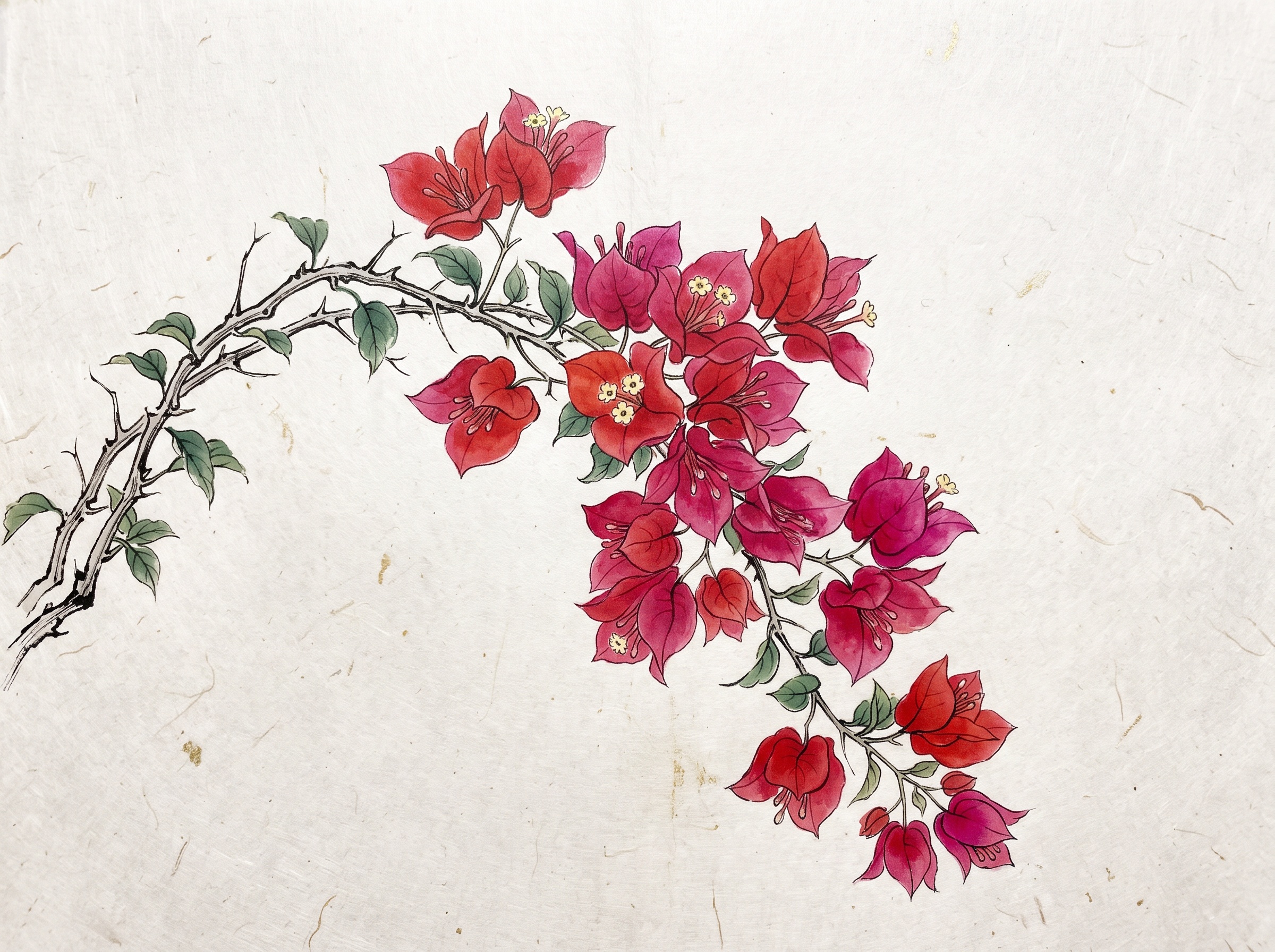
Among the finds, gathered on the hills above Rio, was a flamboyant climbing vine with papery magenta bracts. It would be named Bougainvillea after the commander — a quiet injustice, since the commander did not collect it. The person on her knees in the dirt doing the collecting was far more likely to have been Jeanne Baret. Her expertise, learned in a Burgundy hedgerow rather than a Paris academy, was exactly the kind of knowledge that formal science of the day was happy to use and slow to credit.
The unmasking
No secret survives a voyage around the world intact. Exactly how Baret’s sex came to light is disputed, and the disagreement matters. The romantic version, long repeated, holds that when the ships reached Tahiti in 1768 the islanders recognised her as a woman at once, calling out the truth the French had failed to see. Bougainville’s own journal tells a soberer story, recording that suspicions had circulated among the crew and that Baret eventually admitted the truth, having “conducted herself with the most scrupulous discretion.” Darker accounts, which some historians take seriously, suggest she was exposed violently — cornered and assaulted by sailors once the rumour hardened into certainty. We may never know which is closest to the truth. What is clear is that a woman who had spent two years as the most careful person on the ship was, at the moment of discovery, suddenly the most vulnerable.
To his credit, Bougainville did not punish her. In his journal he mused that she would be the first of her sex to circle the globe, and wrote of her conduct with something close to admiration. But the voyage could not continue with her secret in the open.
Marooned at the edge of the world
In late 1768 the expedition put in at the Isle de France — today’s Mauritius — and there Commerson and Baret left the ships, taken in by the island’s administrator, the naturalist Pierre Poivre. For Baret it meant exile on a speck of volcanic rock thousands of miles from France, her disguise spent, her protector failing. Commerson, never healthy, died on Mauritius in 1773. Alone and far from home, Baret did what survivors do: she adapted. She ran a tavern in Port Louis, and in time married a French soldier named Jean Dubernat. Her stubborn competence in the face of abandonment belongs in the company of other women whose endurance on brutal expeditions went long unrecorded — women like Ada Blackjack, the Inuit seamstress who survived two years alone in the Arctic after the men around her perished or fled.
The first woman around the world
Sometime around 1774 or 1775, Jeanne Baret and her husband boarded a ship bound for France. When she stepped ashore in her home country, she closed a circle that no woman had ever closed before: she had travelled all the way around the planet. She came back not as a legend but as a middle-aged widow of peasant birth — and yet the French state, for once, noticed. In 1785 the Ministry of the Marine granted her a pension of two hundred livres a year, the document itself calling her an “extraordinary woman” who had followed her naturalist across the world, done his collecting, and faced every danger “with courage and firmness.” For a woman of her origins, an official pension was an almost unimaginable honour. She lived out her years quietly and died in 1807.
Like other women who refused the small role their world assigned them — among them the Mongol princess Khutulun, who swore she would only marry a man who could beat her at wrestling, and never found one — Baret spent most of history as a footnote to someone else’s fame. The flower carried the commander’s name; the specimens bore the naturalist’s. It was not until 2012 that a botanist finally set the record straight by naming a plant species Solanum baretiae in her honour, two and a half centuries after she had earned it.
Why she still matters
It is easy to tell Jeanne Baret’s story as a costume adventure — the plucky girl who fooled a shipful of men. But the disguise was never the point. The point was that a woman with real knowledge and real skill lived in a world that would not let her use them in daylight, and so she used them in the dark, at enormous personal risk, and did the work anyway. Every hillside she climbed, every press she filled, every secret night she survived was a small rebellion against a rule that said her kind of person did not belong at the frontier of human understanding. She belonged there more than most. The next time a brilliant magenta bougainvillea spills over a wall in the sun, it is worth remembering the young woman in sailor’s clothes who may well have been the first European to kneel and gather it — and who, by the time her story was done, had quietly carried her botanist, her secret, and herself all the way around the world.
Sources & further reading:
- Jeanne Baret — first woman to circumnavigate the globe (Encyclopaedia Britannica)
- The Discovery of Jeanne Baret: A Story of Science, the High Seas, and the First Woman to Circumnavigate the Globe (Glynis Ridley)
Related Reading
More from the archive
- Ada Blackjack: The Inuit Seamstress Who Survived Two Years Alone in the Arctic
- The Little Curies: How Marie Curie Built X-Ray Trucks and Drove Them Into the First World War