The City the Jungle Kept: How Caracol Overturned Everything We Thought We Knew About the Maya

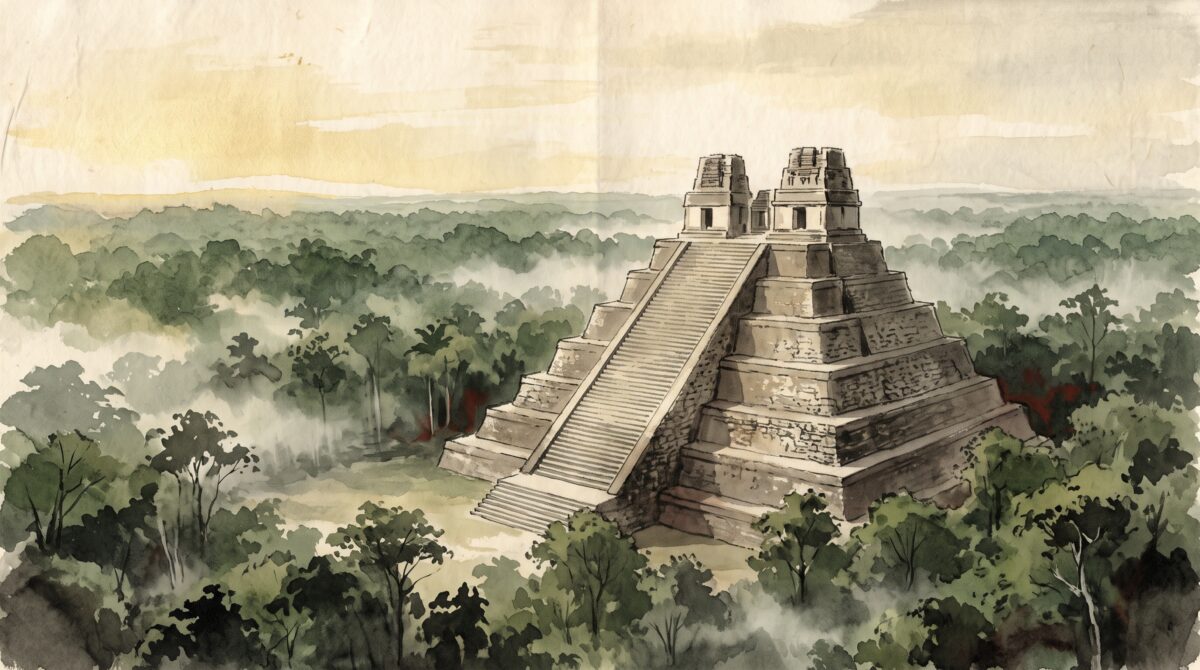
In 1937 a logger hunting mahogany in the remote Chiquibul forest of what was then British Honduras stumbled on something the trees had been hiding for the better part of a thousand years: carved stone monuments, half-buried platforms, the broken geometry of a city. The place was so thick with snail shells that the archaeologists who followed named it Caracol, Spanish for “snail.” For decades it was treated as a curiosity, a minor outpost on the southern edge of the Maya world. It was nothing of the kind. Beneath that canopy lay one of the largest cities the ancient Americas ever built, and the slow work of uncovering it has quietly demolished a century of assumptions about the Maya.
The couple who gave the city forty years
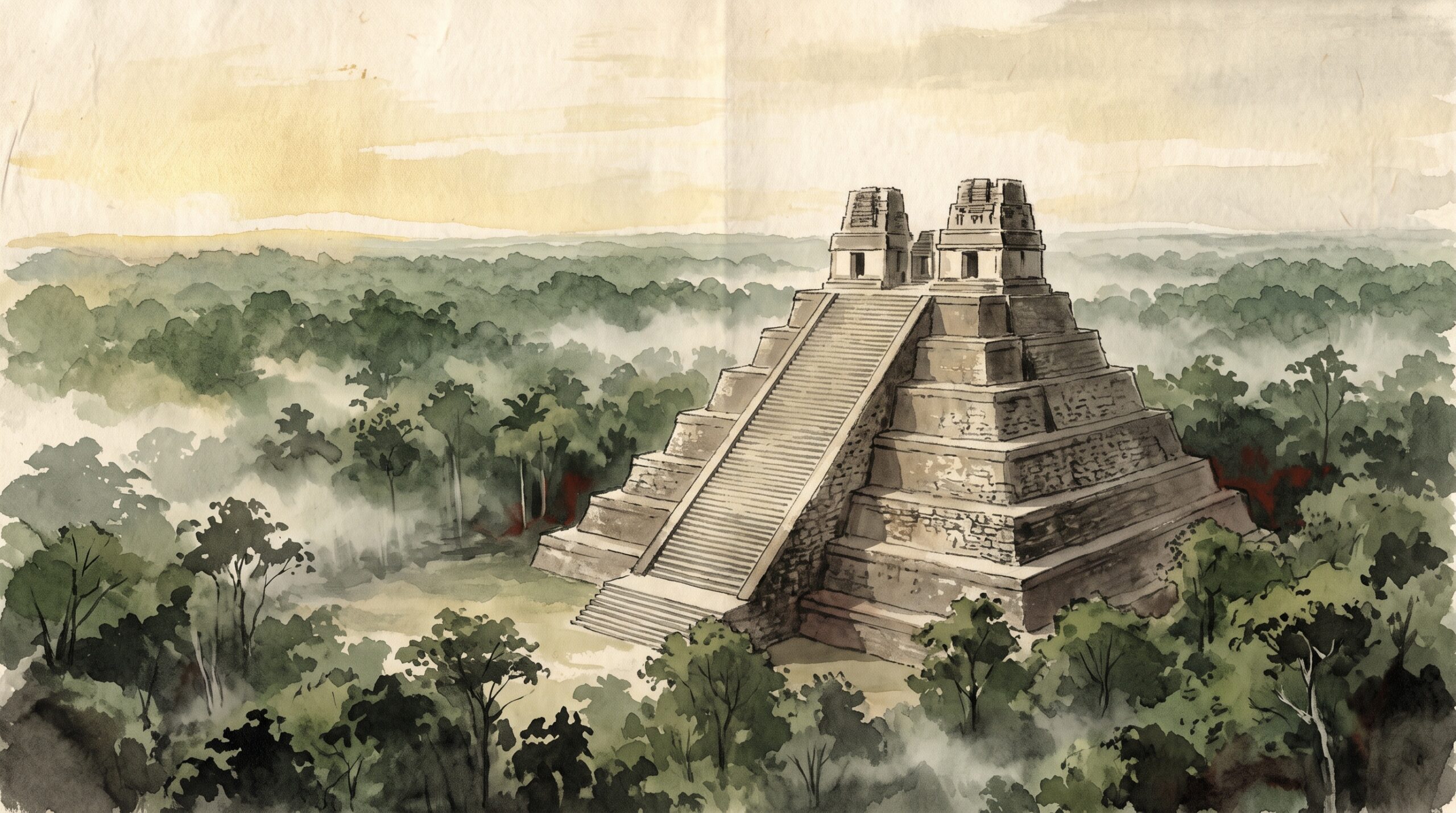
Much of what we now know about Caracol comes down to two people. In 1985 the archaeologists Arlen and Diane Chase began excavating the site, and they essentially never stopped. Over roughly four decades they and their teams mapped plazas and palaces, cracked the hieroglyphic record carved into Caracol’s stelae and altars, and pieced together a dynastic history reaching back to the fourth century. Field archaeology is rarely the stuff of single dramatic discoveries; it is the patient accumulation of a thousand small ones, season after humid season. The Chases’ great contribution was simply refusing to leave until the city had told its story.
What that story revealed was staggering in scale. At its height around A.D. 650, Caracol sprawled across something like 70 square miles and housed well over a hundred thousand people — a population density that would embarrass many a modern town. This was not a ceremonial center visited by scattered farmers. It was a true metropolis, and that single fact contradicted one of the most stubborn myths in the field.
The myth of the primitive village
For a long time the Maya were imagined as a loose scattering of villages clustered around empty ceremonial temples — impressive stonemasons, perhaps, but not builders of real cities. The lowland jungle, the thinking went, simply could not support dense urban life. Caracol is the emphatic rebuttal. Its engineers terraced entire hillsides into farmland, cut reservoirs to bank the rains against the dry season, and laid down a radiating network of raised stone roads, or sacbeob, binding outlying districts to the center like spokes to a hub. This was deliberate city planning on a grand scale, the kind of forgotten sophistication that also haunts other vanished cultures, as with the great Indus Valley civilization that engineered planned cities and then slipped out of memory without even leaving us its name.
The laser that saw through the trees
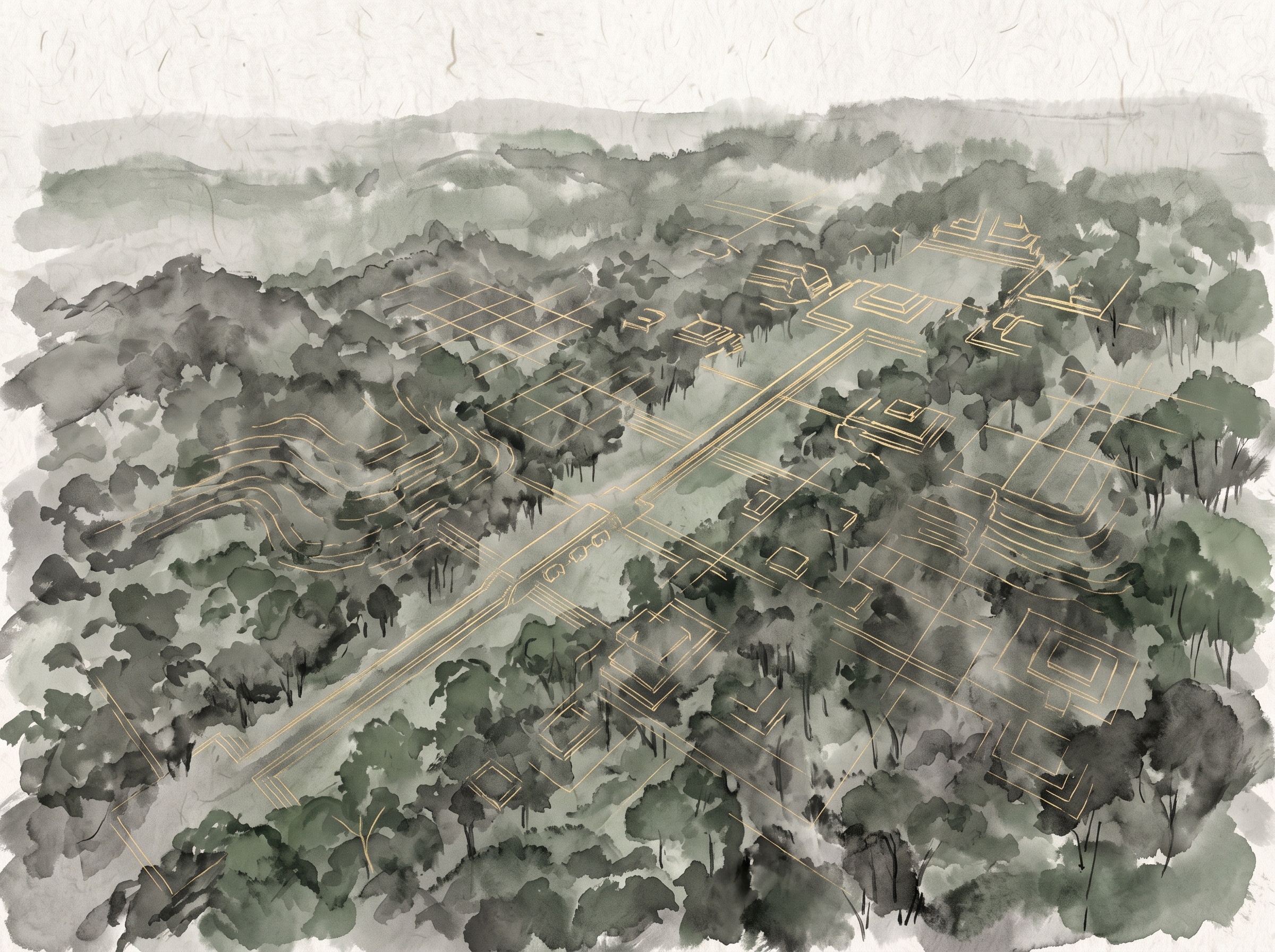
The breakthrough that turned suspicion into certainty came from the air. Beginning in 2009, researchers flew LiDAR surveys over Caracol — aircraft firing millions of laser pulses a second at the forest, measuring how each one bounced back. Most pulses hit leaves, but enough slipped through the gaps to map the ground itself. When software stripped away the digital canopy, the hidden city blazed into view: causeways, agricultural terraces, household platforms and plazas by the tens of thousands, far beyond anything decades of machete-and-trowel survey had found. LiDAR did for Maya archaeology what the telescope did for astronomy. It did not change what was there; it changed what we could see — and across the Maya lowlands it kept revealing that the old population estimates had been too small by an order of magnitude.
A king named Te K’ab Chaak
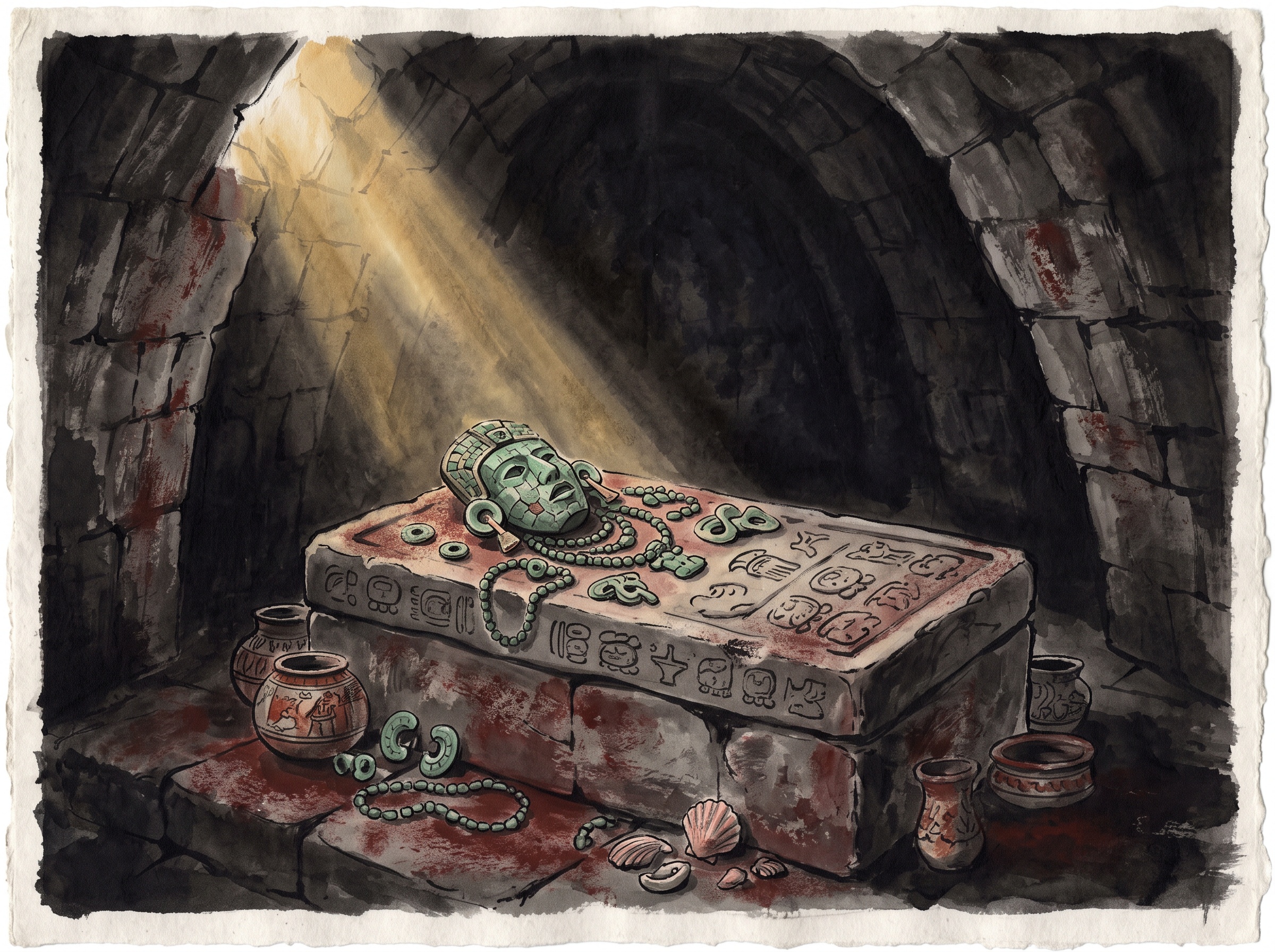
Then, in 2025, the ground gave up its greatest prize. Digging beneath a residential complex, the Chases opened an undisturbed burial chamber heavy with jade ornaments, painted ceramic vessels, shell offerings and the red dust of cinnabar. The remains dated to around A.D. 350, roughly nineteen years after a ruler named Te K’ab Chaak is recorded as taking the throne. “We’re 99 percent sure we found Te K’ab Chaak,” Arlen Chase told interviewers — the founder of Caracol’s royal dynasty, and the first ruler of the city ever identified in his own tomb. Archaeology magazine named it one of the top ten discoveries of 2025, and the world’s press came rushing into the jungle.
The tomb did more than furnish a name. Its date places Caracol’s founding dynasty squarely in an era when the distant central-Mexican superpower of Teotihuacan was extending its reach across Mesoamerica, hinting that this “peripheral” jungle city was plugged into a continent-spanning web of trade, diplomacy and ideas far earlier than anyone had assumed. A single grave, carefully read, can redraw a map. It is the kind of evidence that forces historians to reopen settled questions, in the same spirit as the archaeology that finally located the lost battlefield where Rome’s legions were annihilated in the Teutoburg Forest and rewrote where the empire’s frontier really lay.
How a city of 100,000 disappears
The harder question is how a metropolis on this scale could vanish so completely that a logger had to rediscover it by accident. The answer is the long, still-debated Maya collapse of the ninth century, when Caracol and its great rivals — above all Tikal, which Caracol defeated in war in A.D. 562 — were progressively abandoned. Drought, soil exhaustion, overpopulation, relentless warfare and the breakdown of the divine authority of kings all seem to have played a part, feeding on one another until the cities emptied. The people did not disappear; millions of Maya live in the region today. But the courts, the dynasties and the monument-carving stopped, and within a few centuries the rainforest had reclaimed the terraces and swallowed the pyramids whole.
It is worth remembering how recent and fragile our knowledge of all this really is. A century ago the Maya were half-legend; much of what filled the gaps was guesswork, and some of history’s received “certainties” turn out, on inspection, to rest on remarkably little — a problem that runs from ancient America to the stranger corners of the European record, including the fringe claim that nearly three centuries of medieval history were simply invented. Caracol is the healthier alternative to that kind of doubt: not tearing down the record, but patiently rebuilding it from the ground up, one terrace and one tomb at a time.
What the jungle was keeping
In 2026 the Smithsonian put Caracol back in the headlines, celebrating four decades of work that have turned a “minor” ruin into one of the defining cities of the ancient Americas. Visitors to Belize’s archaeology symposium that year could even walk around a full replica of Te K’ab Chaak’s tomb. The deeper lesson sits a little uneasily with how confidently we tend to narrate the past. For a thousand years, the single most important fact about this corner of the Maya world — that a city of over a hundred thousand people had stood here — was known to no one. It took a chance encounter, two archaeologists willing to give a site their entire careers, a laser that could see through leaves, and finally a king’s undisturbed grave to pull it back into the light. The forest is almost certainly still keeping other cities. Caracol is a reminder that history is not a finished book but an excavation, and that the jungle, patient as ever, is in no hurry to give up the rest of what it knows.
Sources & further reading:
- Archaeologists at This Ancient Maya Metropolis in the Forest of Belize Are Debunking Long-Held Myths (Smithsonian Magazine, Nov 2026)
- Archaeologists Unearth Treasure-Filled Tomb Belonging to the First Known Ruler of a Maya City in Belize (Smithsonian Magazine)
- Scientists find tomb of a Maya king and his ancient treasures (National Geographic)
Related Reading
- The Civilization That Forgot Itself: How the World’s Largest Ancient Culture Vanished Without a Name
More from the archive
- The Greatest Literary Hoax in History: How George Psalmanazar Invented an Entire Civilization
- Gobekli Tepe: The 10,000-Year-Old Mystery That Rewrites Human History