The Children’s Blizzard of 1888: The Storm That Hunted the Schoolhouses of the Plains

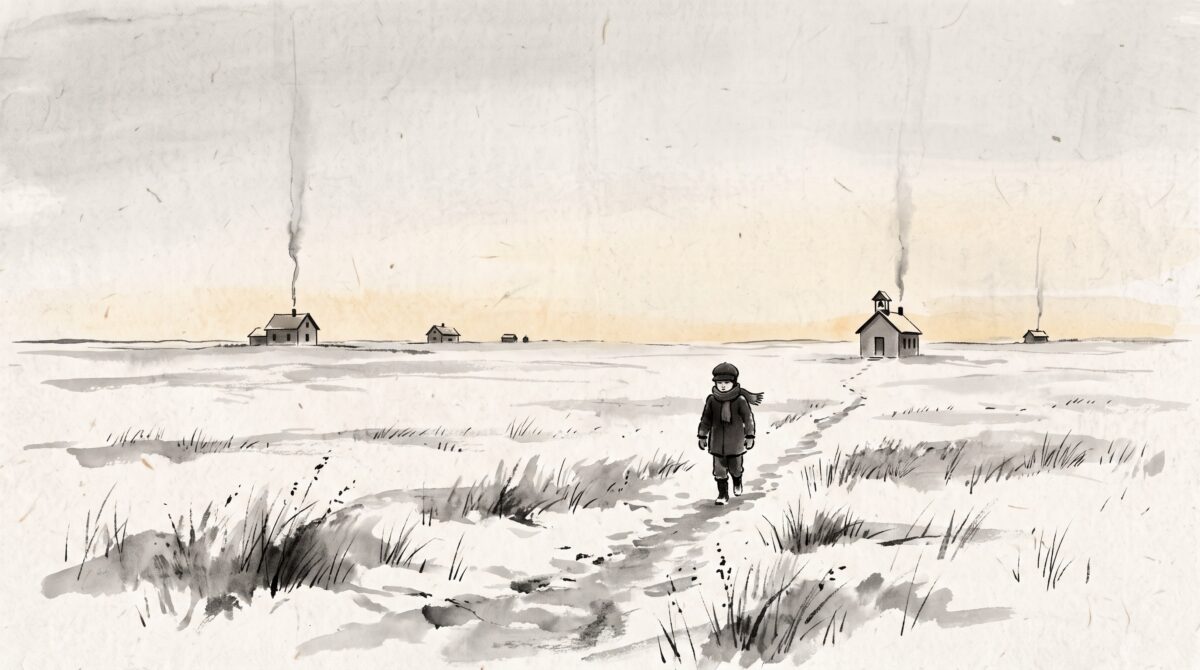
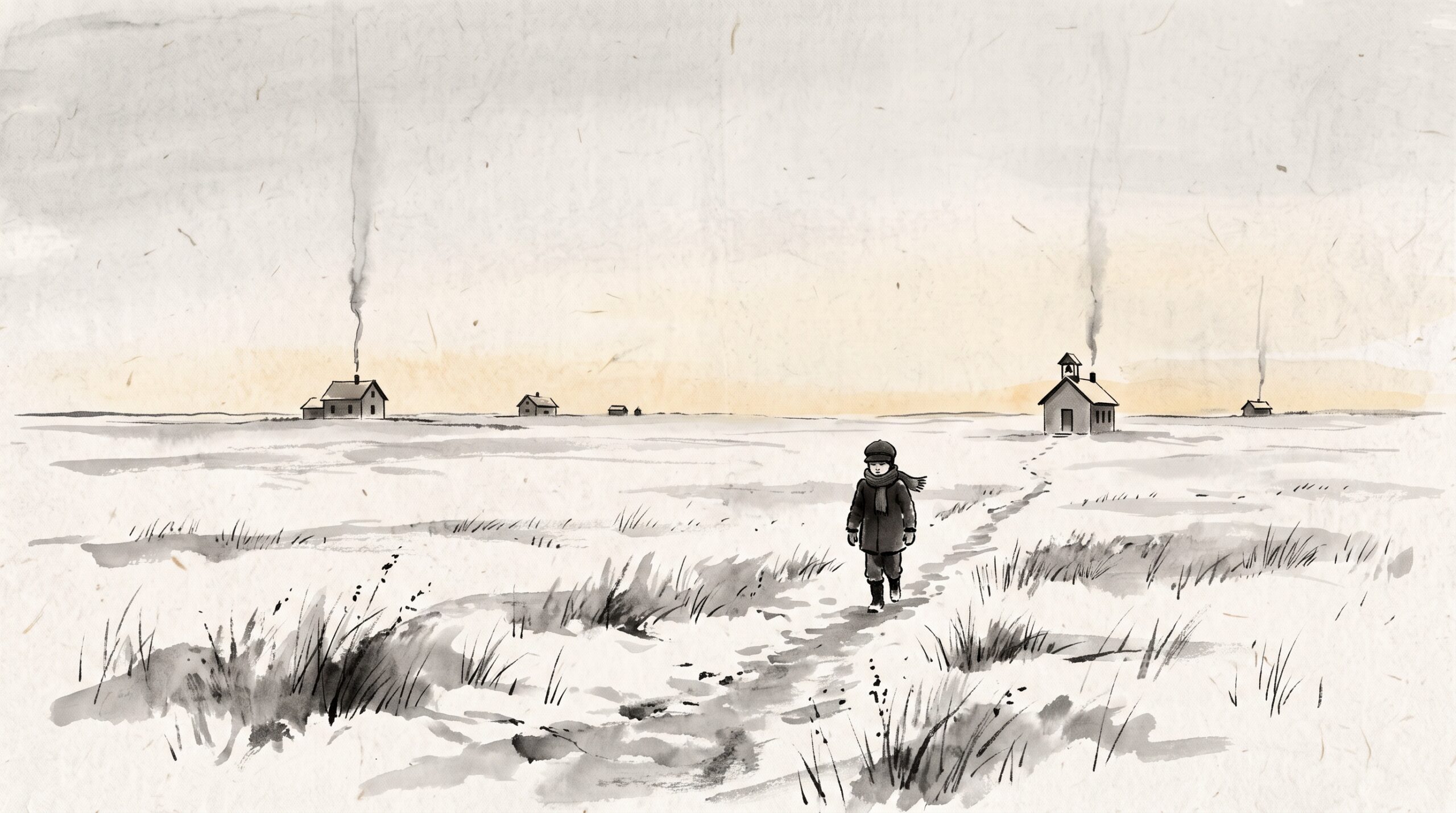
The morning of 12 January 1888 felt like a gift. For days a brutal cold had gripped the Great Plains, the kind of cold that keeps livestock in the barn and children by the stove. Then, overnight, the air softened. Across Dakota Territory, Nebraska, Minnesota and Kansas, settlers woke to a strangely mild, almost springlike morning, the temperature climbing above freezing, the wind gone quiet. After weeks of being trapped indoors, families seized the reprieve. Men went out to the far fields and the woodpiles. And children, thousands of them, set off for their one-room schoolhouses dressed for the thaw, many leaving their heavy coats and mittens hanging by the door.
They had no way of knowing that one of the deadliest storms in American history was already racing toward them, and that by nightfall the reason they would remember this day was the number of empty chairs.
A false spring on the prairie
The settlers of the northern plains in 1888 were, overwhelmingly, newcomers. Many were immigrants from Norway, Sweden, Germany and Ukraine, lured by the promise of free homestead land into a landscape utterly unlike the one they had left. They lived in isolated sod houses and timber shanties scattered miles apart, with no telephones, no radio, and no warning system beyond the sky itself. Weather forecasting was in its infancy; the fledgling U.S. Signal Corps issued only crude regional indications, and in much of the territory no one received them in time to matter.
So when the mercy of that warm morning arrived, people trusted it. It was the great cruelty of the Children’s Blizzard that it baited its trap with kindness. The mild air that coaxed children out in shirtsleeves was the leading edge of a collision. A mass of Arctic air, some of the coldest on the continent, was plunging south out of Canada and about to crash into the warmer, moisture-laden air sitting over the plains.
The wall of white
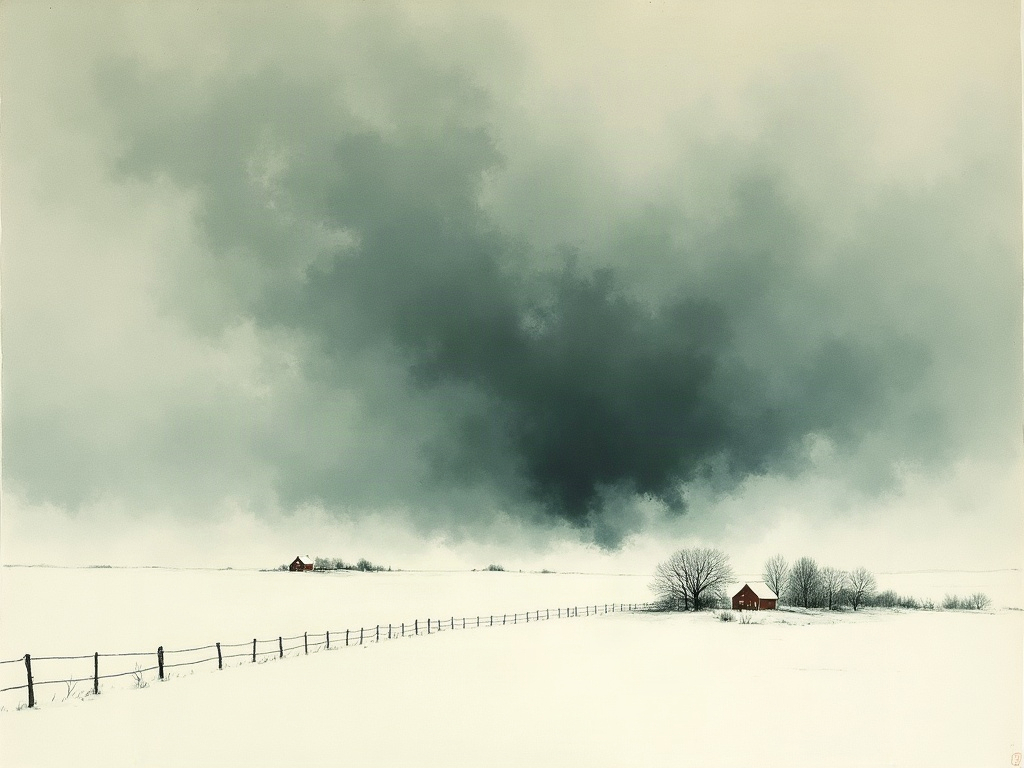
It came without preamble. In the early afternoon, witnesses across hundreds of miles described the same terrifying sight: a low, dark, roaring wall advancing across the flat horizon, moving faster than a horse could run. Some thought it was smoke or a dust storm. Then it hit, and the world vanished.
The temperature did not merely drop; it collapsed, in some places falling eighteen degrees in a matter of minutes and tumbling toward forty below over the hours that followed. Winds screamed to gale force, picking up the fine, dry, already-fallen snow and filling the air with it until visibility fell to nothing. This was the particular horror of the 1888 storm: little new snow fell, but the old snow became a blinding, suffocating fog of ice crystals. A person could not see their own outstretched hand. People froze to death a few dozen steps from their own front doors, unable to find them.
The schoolhouse decision
The storm’s timing is why it is remembered as the Children’s Blizzard. It struck in the window of the afternoon when country schools were in session or just letting out, when thousands of children were either sitting in flimsy one-room schoolhouses or walking the open miles between school and home.
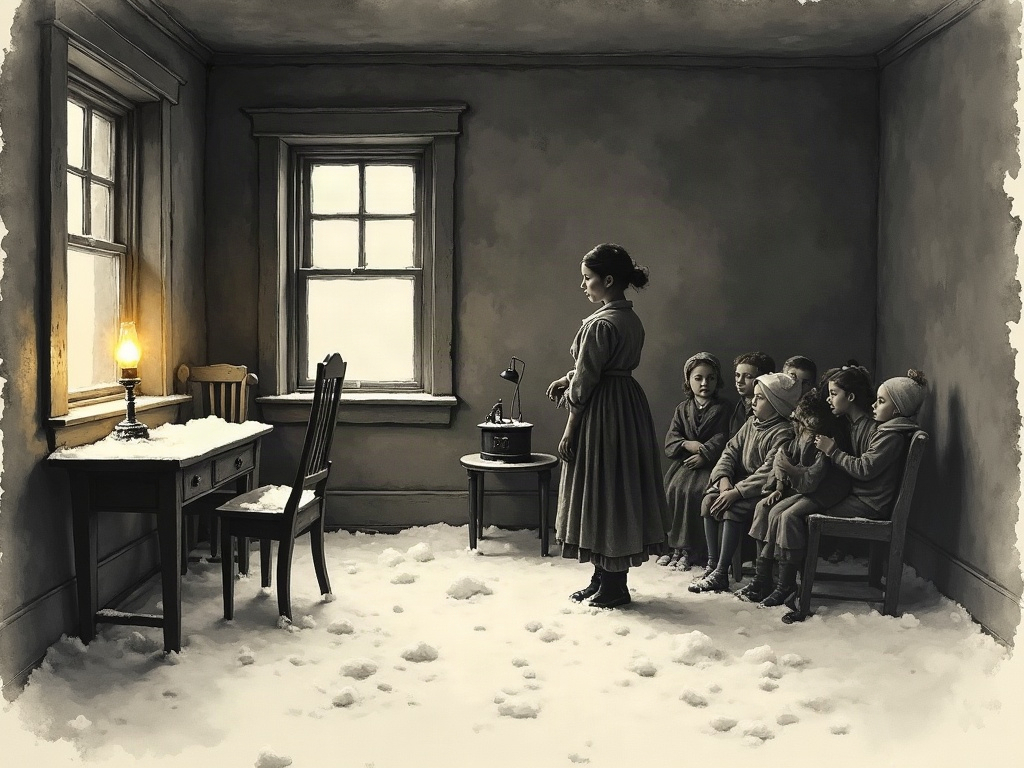
Inside those schoolhouses, teachers faced an impossible choice in an instant. Many of them were young women, some barely older than their eldest students, with no training for a catastrophe. Stay, and risk the fire in the stove burning out, the building itself being unable to hold back forty-below cold through a long night. Leave, and lead a line of small children into a whiteout where grown men were already dying. There was no right answer, only degrees of danger, and the decisions made in those few minutes meant life or death.
Some teachers chose to keep their pupils inside and fed the stove with everything that would burn, including the furniture and the fence, and all survived the night huddled together in the dark. Others made the agonizing gamble to move. The tragedies most often came when a teacher dismissed school early, or when children were already strung out along the roads, suddenly swallowed by the storm with no shelter and no landmark to steer by.
Acts of improvised courage
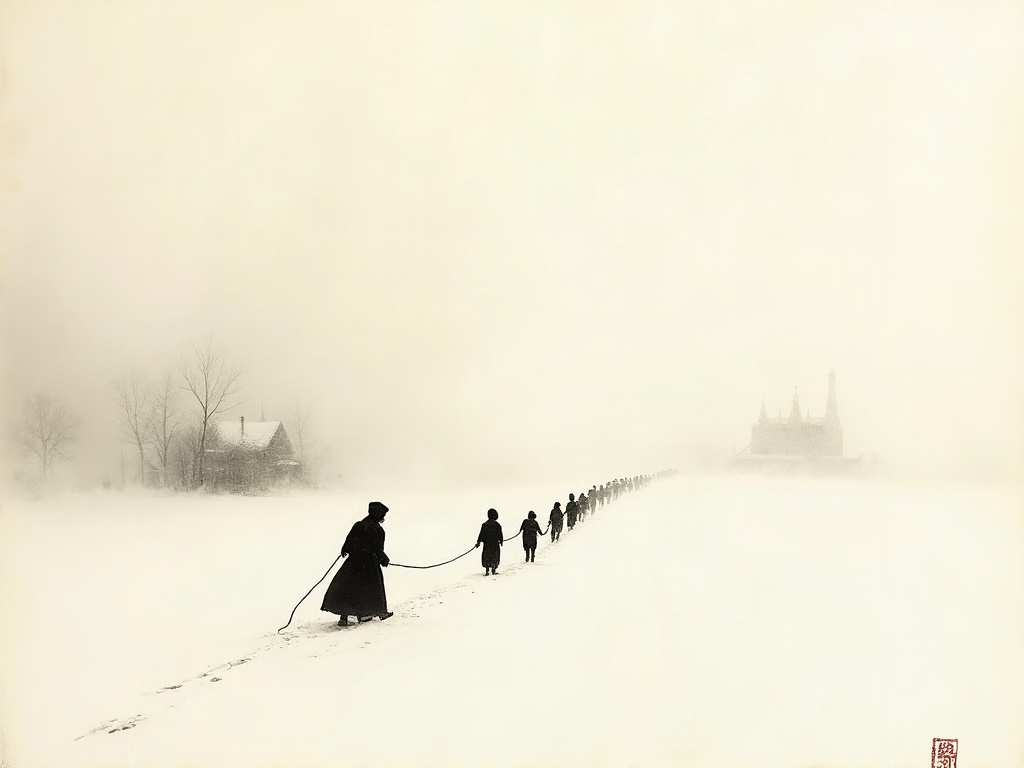
Out of the disaster came the stories that the plains would tell for generations. In Nebraska, a young teacher named Minnie Freeman kept her composure as the storm tore at her schoolhouse, and when the building could no longer be trusted she led her pupils out and brought them to safety through the blinding snow. Her feat was retold, embroidered and eventually turned into legend, with popular accounts claiming she had tied the children together with a rope so none could be lost. She became, almost overnight, a national heroine, and for the exhausted, grieving settlers she was proof that the storm had not taken everything.
There were countless quieter heroics that never made a newspaper: farmers who strung ropes from house to barn and hauled half-frozen neighbours inside, older children who carried younger siblings on their backs, a settler who kept his horses walking in a circle through the night so he would not freeze. These were ordinary people meeting an extraordinary horror with whatever they had, the same stubborn will to live that drove a mauled frontiersman like Hugh Glass to crawl two hundred miles home or carried a lone woman through a polar winter on the ice of Wrangel Island.
The morning after
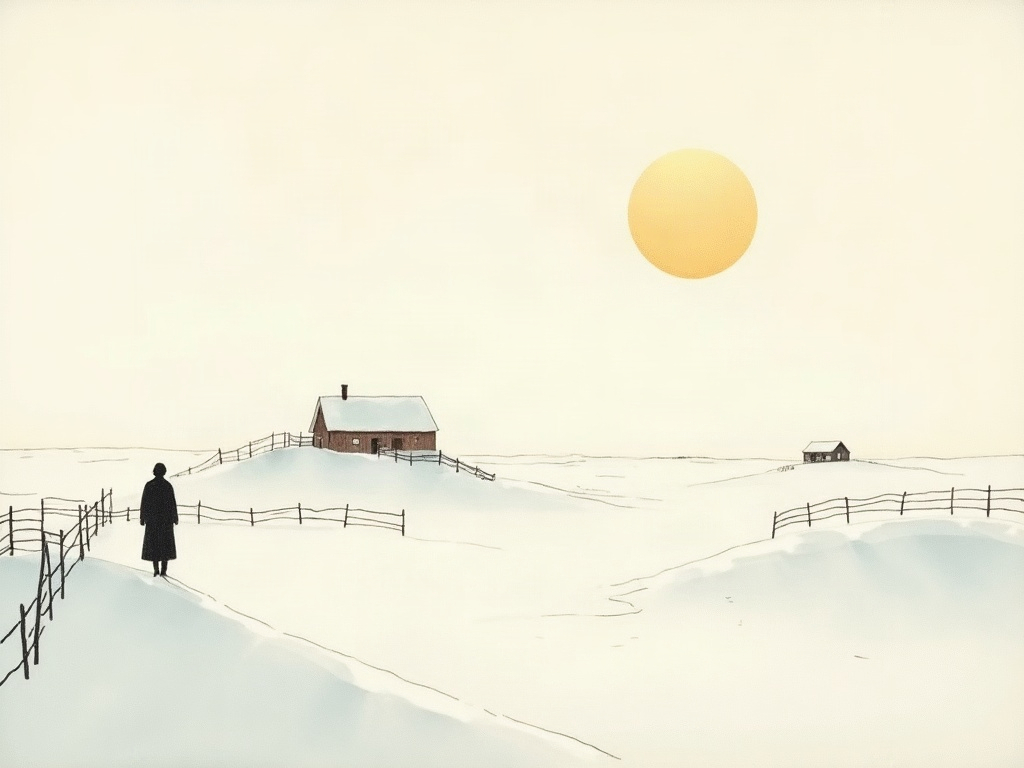
The storm blew itself out within a day, and the morning of 13 January dawned clear, brilliant and savagely cold. The light that returned was almost unbearable, a dazzling white world of smooth drifts that had buried fences, filled ravines and swallowed roads. And in that beautiful stillness, the plains began to count.
The exact death toll will never be known, but historians generally put it around 235 across the affected states and territories, a number that falls heavily because so many of the dead were young. Searchers found children frozen along the paths home, sometimes within sight of a farmhouse, sometimes clustered together where they had tried to shelter one another. The grief did not stay abstract; it had the small, unbearable shape of a child caught in the cold, a sorrow that echoes across history in figures like the young Leningrad girl Tanya Savicheva, who recorded a family lost to a different kind of winter.
What the storm left behind
The Children’s Blizzard changed how Americans thought about the weather. The sheer, sudden lethality of it, striking a settled country with no warning, helped drive the push to build a real national weather service and a telegraph-linked warning network, so that a killing front spotted in one place might be announced before it reached the next. It stands at the beginning of the long effort to see storms coming, an effort we now take so for granted that it is hard to imagine a world where a clear morning could simply turn murderous by lunchtime.
But the storm’s deepest legacy is in memory. For the immigrant families of the plains, 12 January 1888 became a dividing line, a before and after, the day the land they had gambled everything on showed them exactly how indifferent it could be. They had crossed an ocean and a continent chasing the promise of their own soil, and that soil had taken their children in an afternoon.
What endures is not only the horror but the response to it: the teacher who would not let go of her pupils’ hands, the neighbour who crawled out along a rope, the parents who kept a lamp burning in a window all night in the mad hope it might be seen. The Children’s Blizzard is remembered as a disaster, and it was. But it is also a record of how far ordinary people will go, in the worst hour imaginable, to keep each other alive. Sometimes the measure of a place is not the storm it suffers, but who it refuses to leave behind in it.
Sources & further reading:
- The Children’s Blizzard of 1888 (National Weather Service history)
- The Children’s Blizzard — David Laskin (overview and survivor accounts)
More from the archive
- The General Slocum: The Picnic Boat Fire That Erased a New York Neighborhood
- The Year Without Summer: When Snow Fell in July and Changed History Forever
- The Bath School Disaster: America’s Deadliest School Massacre, and the Man Who Planned It for a Year