The White Ship Disaster of 1120: The Shipwreck That Plunged England Into Anarchy

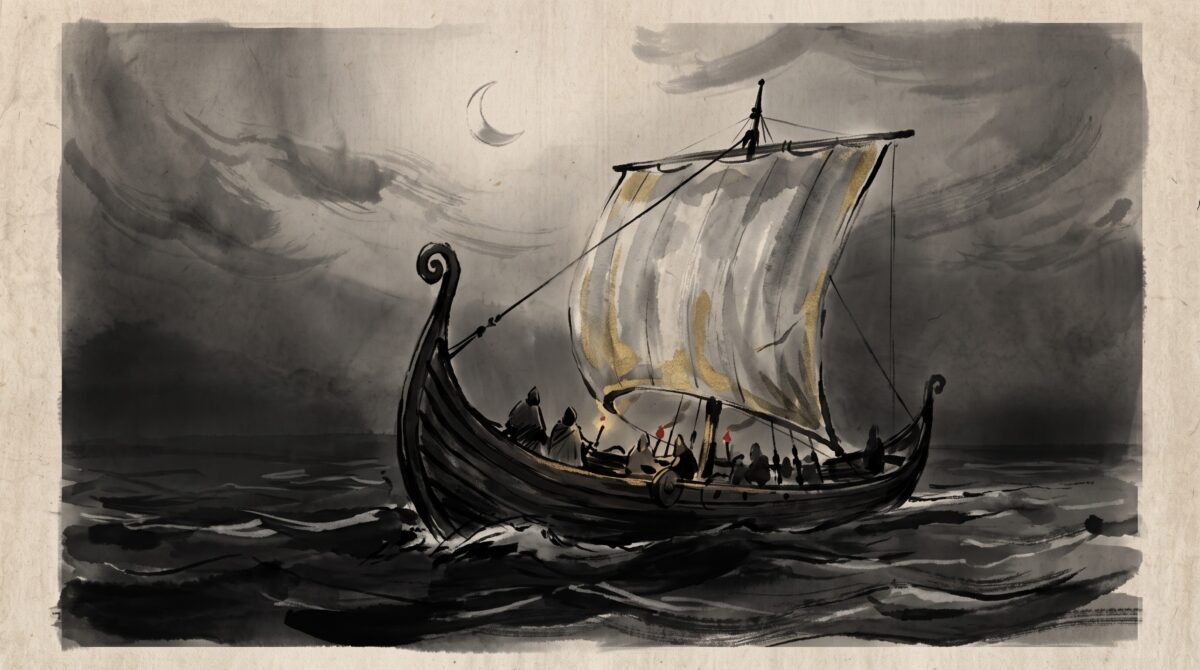
On the evening of 25 November 1120, the finest ship in the Norman world lay at anchor in the harbour of Barfleur, on the coast of Normandy, waiting to carry the heir to England home across the Channel. She was called the Blanche-Nef — the White Ship — newly fitted, fast, and crewed by fifty skilled oarsmen. Aboard were some three hundred people: the young prince, a glittering crowd of noble sons and daughters, knights and courtiers, the brightest of a whole generation. By the next morning all but one of them would be dead, and the course of English history would be bent for a century.
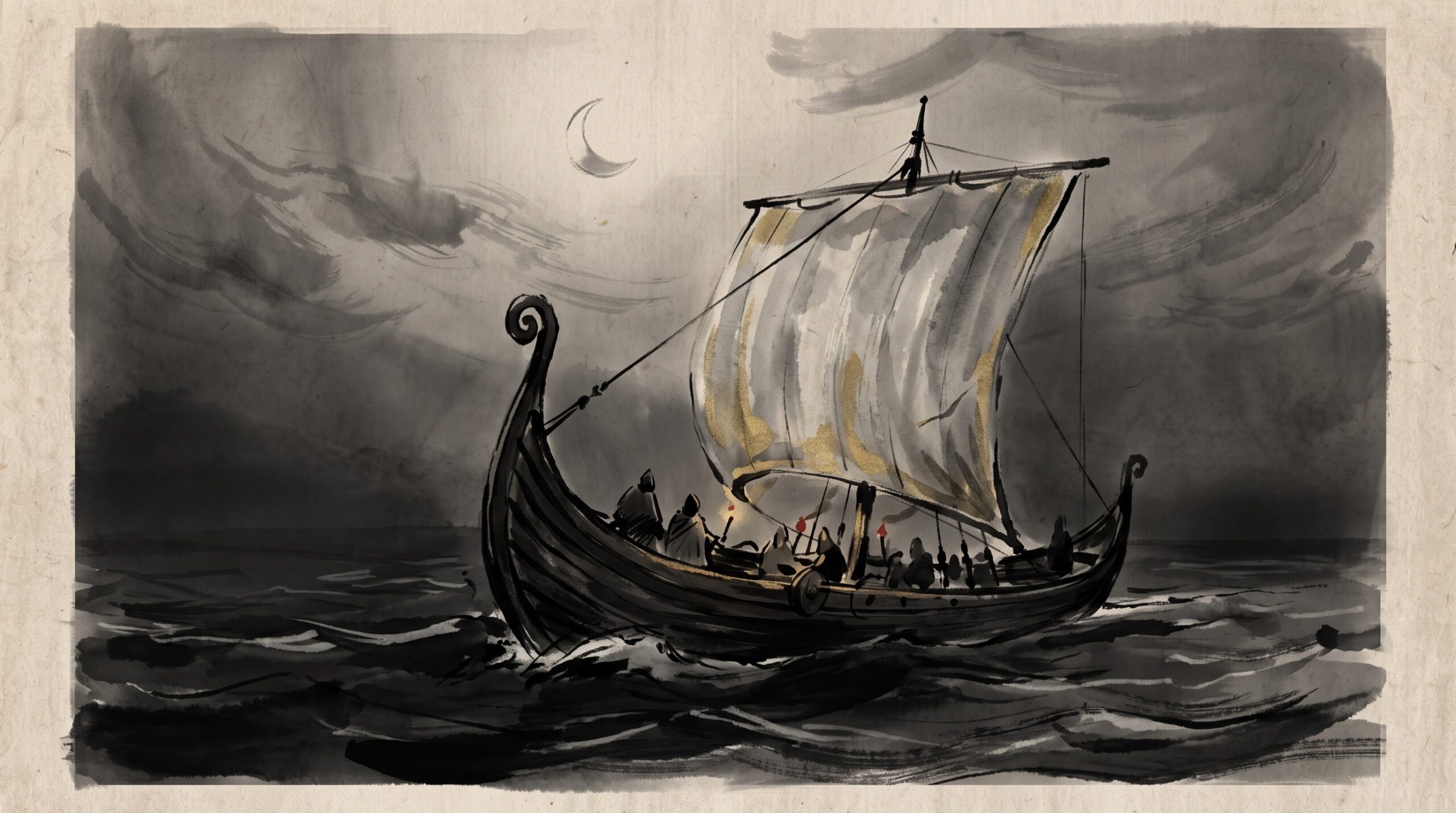
The prince who had everything
William Adelin was about seventeen years old, and he was the future. He was the only legitimate son of King Henry I of England, the youngest son of William the Conqueror, and from birth he had been groomed to inherit both the English crown and the Duchy of Normandy. The barons had already sworn fealty to him. His marriage had been arranged to secure Normandy’s borders. For a dynasty founded in blood at Hastings just fifty-four years earlier, William was the keystone — the single life on which an orderly succession depended.
That November the king and his court had been in Normandy, and now they were sailing for England. Henry had his own ship and his own plans. But a mariner named Thomas FitzStephen came to the king with a proud offer. His father, Stephen, had captained the very ship that carried William the Conqueror to England in 1066; it was, he said, his family’s hereditary honour to carry the king. Henry had already arranged his own passage — but he gave Thomas leave to carry his son William and the younger members of the court on the celebrated White Ship instead. It seemed a kindness. It was a death warrant.
A night of wine and bravado
The young passengers were in a holiday mood, and William ordered wine brought aboard in quantity for the crew and the revellers alike. The drinking was heavy and prolonged. When priests arrived at the quayside to bless the vessel before it sailed, as custom demanded, the laughing passengers waved them away with mockery and jeers. The ship would need no blessing; it would need only speed.
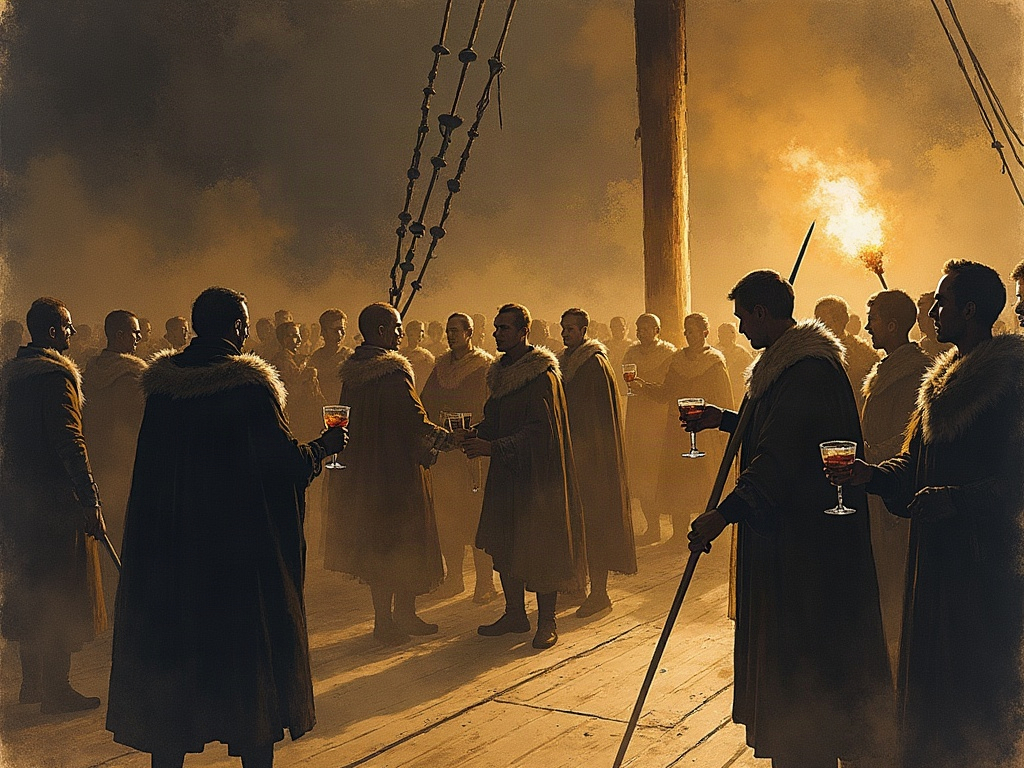
For speed was the night’s obsession. The king’s ship had already slipped out of the harbour ahead of them, and the drunken crew of the White Ship boasted that their vessel was so swift they would overtake it and reach England first. It was the kind of reckless confidence that has sunk proud ships before and since — the same hubris that, five centuries later, would send the Swedish flagship Vasa, the mighty warship that capsized minutes into its maiden voyage, to the bottom in front of a cheering crowd. The White Ship cast off late, in darkness, her oarsmen pulling hard and her passengers singing, and she drove straight out into a cold and moonlit Channel.
The rock beneath the water
Just outside Barfleur harbour lay a well-known hazard: a submerged rock, the Quilleboeuf, that showed itself only at certain tides. A sober helmsman in daylight would have given it a wide berth. But the night was dark, the crew was drunk, and the ship was being driven at full racing speed. The port side of the hull struck the rock with such force that the timbers stove in. Water poured through the breach. Within moments the great ship heeled over and began to sink, spilling its three hundred passengers into the black and freezing water.
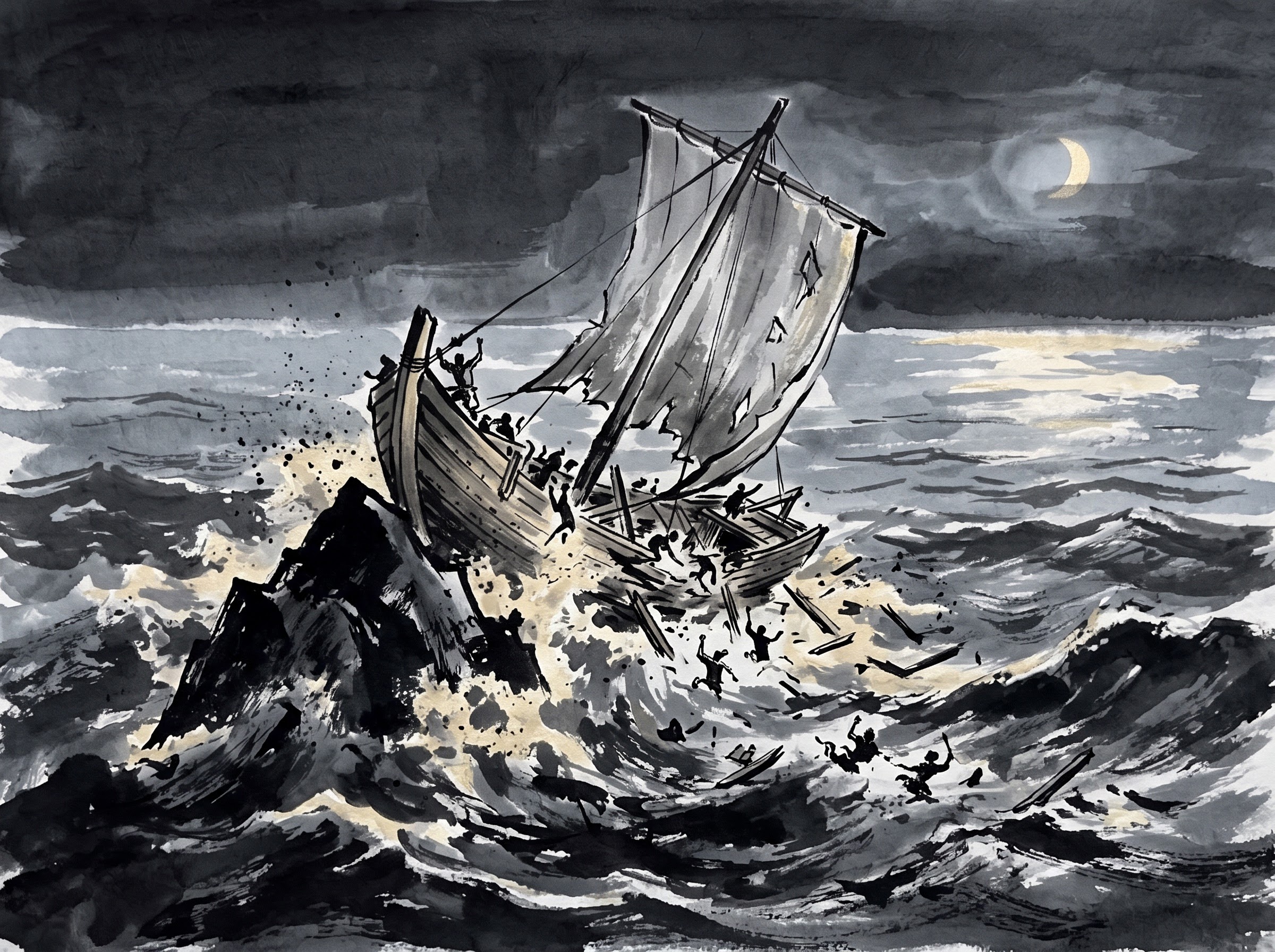
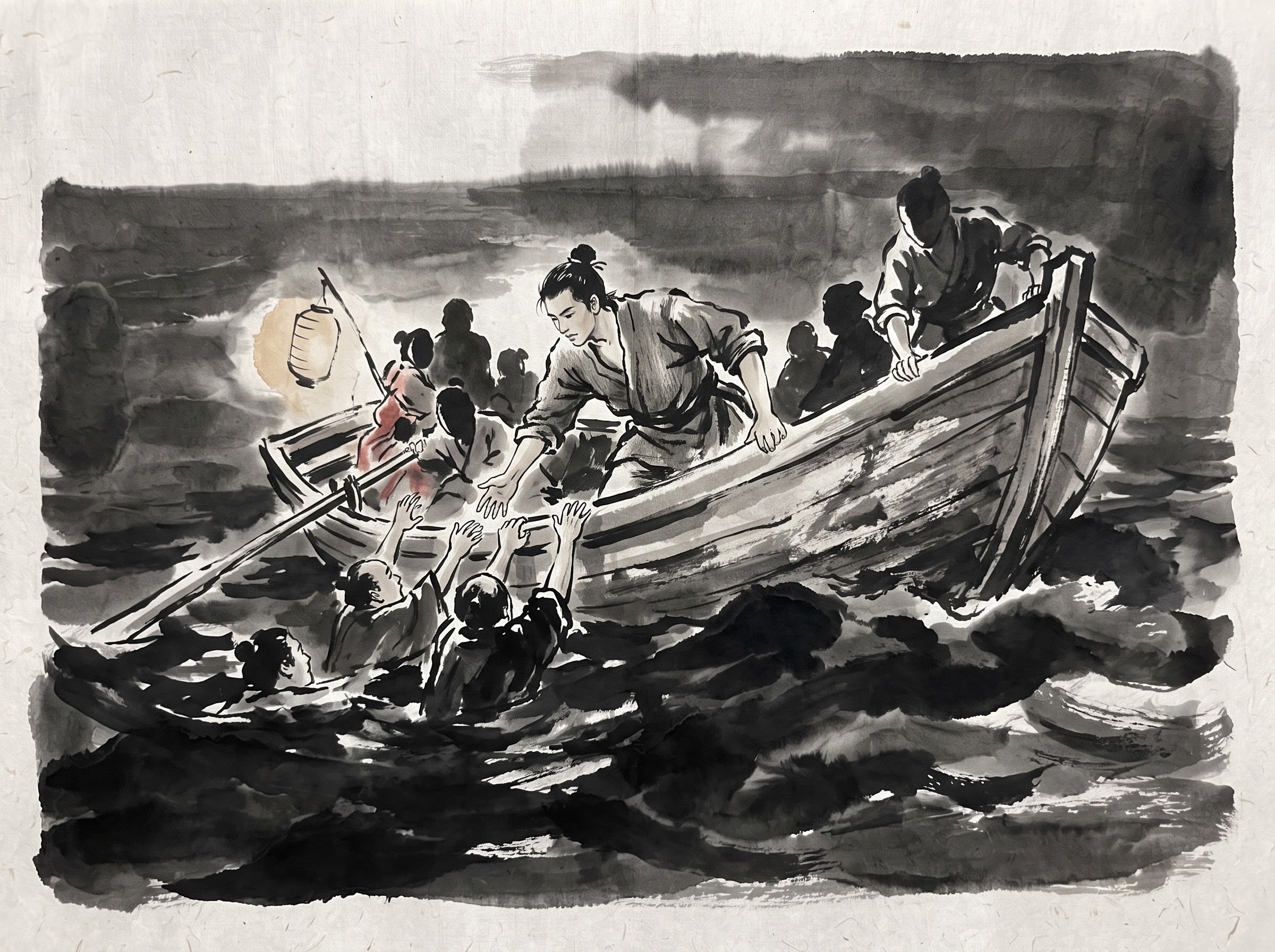
In the chaos, the crew managed to get William into a small boat and began to pull him clear of the wreck toward the shore. He was, for a few seconds, saved. Then, over the screams, he heard the voice of his half-sister — Matilda, Countess of Perche — crying out from the sinking ship, begging not to be left to drown. William ordered the little boat turned back for her.
It was his last decision. As the boat came close, the people still thrashing in the water flung themselves at it in a desperate mass, clawing at the sides, and the overloaded craft swamped and capsized. The heir to England disappeared beneath the surface and did not come up. The act that killed him was an act of love — the same doomed, human reflex to turn back for someone weaker that runs through so many disasters at sea, from the Titanic to the lifeboats of countless lesser wrecks, remembered in survivors like Violet Jessop, the stewardess who walked away from the Titanic and two other sinking ships.
One man on the water
The cold did the rest. Of roughly three hundred souls, the sea gave back a single living man. His name was Berold, and he was not a noble at all but a butcher from Rouen who had come aboard to collect debts owed to him. Wearing a thick ram-skin coat that held off the worst of the cold, he clung through the whole freezing night to a floating spar of the broken ship. By some accounts one other man, a young nobleman, clung on beside him for a time before the cold took him and he let go. At dawn, fishermen found Berold still alive and pulled him from the water. He lived for another twenty years, the sole witness to the night the realm’s future drowned.
The ship’s captain, Thomas FitzStephen, had actually surfaced and found something to hold. But when he learned from the men in the water that William, the king’s son, was already dead, he is said to have asked whether the prince still lived — and on hearing that he did not, chose not to survive the catastrophe he had helped cause. He let go and slipped back beneath the surface rather than face the king whose heir he had lost.
The king who never smiled again
Back in England, no one dared tell Henry I what had happened. For a full day the court kept the news from him, until at last a young boy was sent, weeping, to kneel before the king and tell him his son was dead. According to the chroniclers Orderic Vitalis and William of Malmesbury, Henry collapsed to the floor in grief — and it was written of him afterwards that he never smiled again. He had conquered, ruled, and schemed his way to one of the most secure thrones in Europe, and a single drunken half-hour on the water had taken his heir, two of his other illegitimate children, and much of the next generation of his nobility.
The grief was personal, but the crisis was dynastic. Henry had no other legitimate son, and though he married again in hope of another heir, no child came. In desperation he turned to his daughter, the Empress Matilda, and compelled his barons to swear that they would accept a woman as their ruler — an almost unheard-of thing in the Norman world.
The shipwreck that drowned a dynasty
The oaths did not hold. When Henry I died in 1135, his nephew Stephen of Blois raced to England, seized the treasury and the crown, and had himself proclaimed king before Matilda could act. Matilda did not accept it. What followed was nearly two decades of ruinous civil war — a period so bleak that a contemporary wrote the people said openly that Christ and his saints slept. Castles rose unlicensed across the land, mercenaries plundered the countryside, and England fractured between two rival courts. History remembers it simply as the Anarchy. It was the kind of succession crisis that could unmake a kingdom, the medieval nightmare that later boy-kings like Richard II, who faced down a rebel army at fourteen, would be raised to dread.
The war ground on until 1153, when exhaustion forced a settlement: Stephen would keep the crown for his lifetime, but his heir would be Matilda’s son, Henry. The following year that young man became Henry II — the first king of the house of Plantagenet, a dynasty that would rule England for more than three hundred years. In a sense, every Plantagenet king who followed owed his throne to a rock off Barfleur and a night of too much wine.
It is one of history’s great what-ifs. Had William Adelin lived, there would very likely have been no disputed succession, no Anarchy, perhaps no Plantagenets at all — a completely different England. Instead the whole future of a kingdom turned on the recklessness of a single evening. The twelfth century was full of such strange hinges of fate, moments where the ordinary and the uncanny met and the course of a nation quietly changed, like the enduring puzzle of the Green Children of Woolpit who appeared in an English village out of nowhere. But few were as costly as this one. A beautiful ship, a crowd of laughing young nobles, a race in the dark — and because of it, a king who never smiled again, and a kingdom that would bleed for a generation.
Sources & further reading:
- White Ship (Wikipedia, with primary citations to Orderic Vitalis and William of Malmesbury)
- The Anarchy (Wikipedia)
- William Adelin (Wikipedia)
Related Reading
- The Eastland Disaster: The Ship That Capsized at the Dock and Drowned 844 in the Chicago River
- The Wreck of the Whaleship Essex: The Real Disaster That Inspired Moby-Dick
- Miss Unsinkable: The Stewardess Who Walked Away From the Titanic, the Britannic, and the Sea Itself