The Devil’s Footprints of 1855: The Night Something Walked Across Devon in the Snow


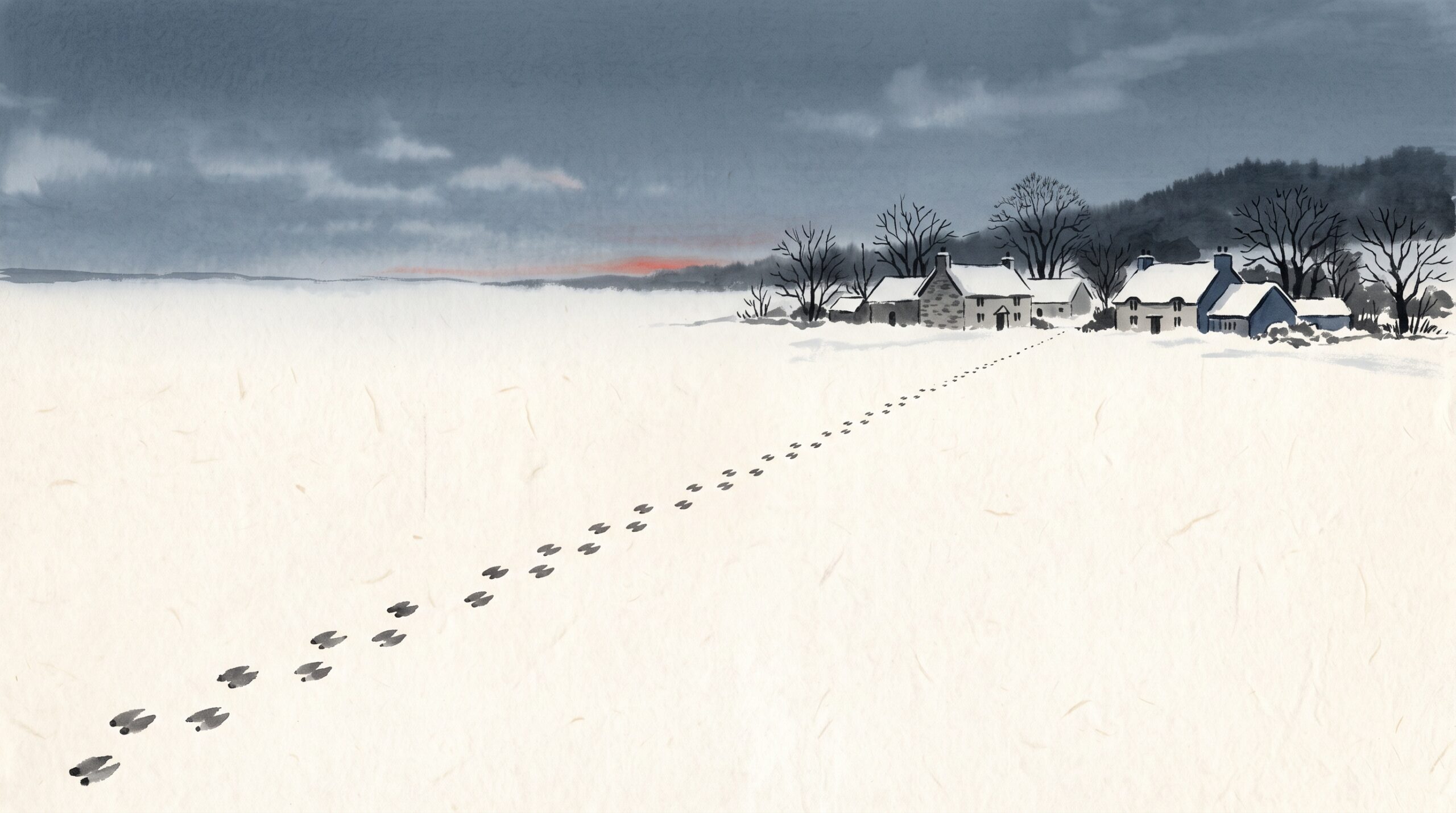
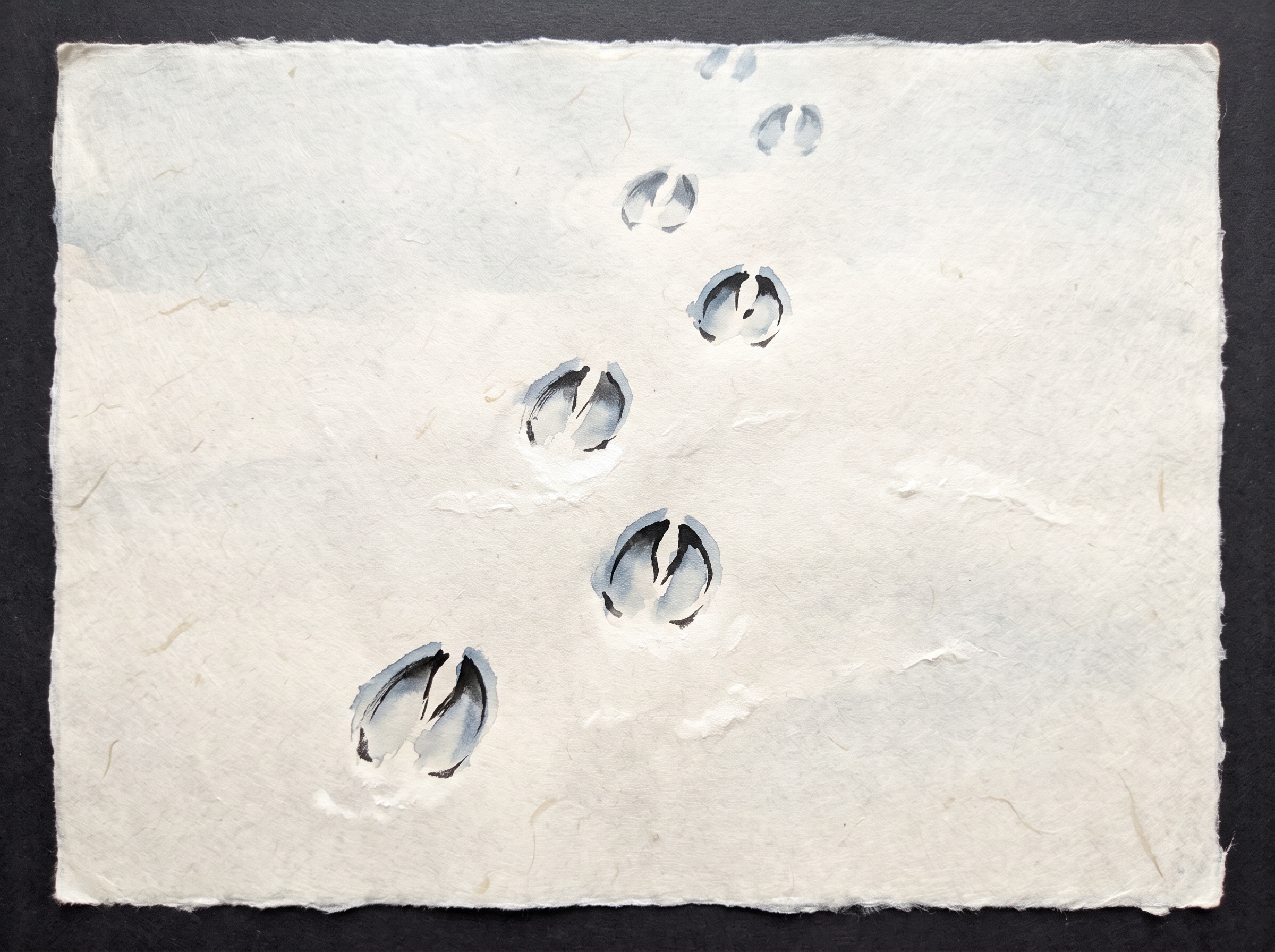
There had been heavy snow across south Devon on the night of 8 February 1855, and a hard frost behind it, so that by morning the whole country lay under a clean, unmarked sheet of white. It was into that blank page that the mystery was written. When the people of the little towns along the Exe estuary — Topsham, Lympstone, Exmouth, Dawlish, Teignmouth and a dozen villages besides — opened their doors at first light, they found a single line of prints stamped into the snow. The marks were small and neat, shaped like little cloven hooves, about four inches long and set some eight inches apart. And they ran, in a dead-straight line, as far as anyone dared to follow.
A Trail That Broke the Rules
What unsettled people was not the prints themselves so much as the way they behaved. A fox or a badger wanders; it circles, doubles back, meanders after a scent. These marks did none of that. They proceeded in single file, one in front of the other, as though left by a creature that walked upright on two legs and knew exactly where it was going. And they refused to be stopped by anything.
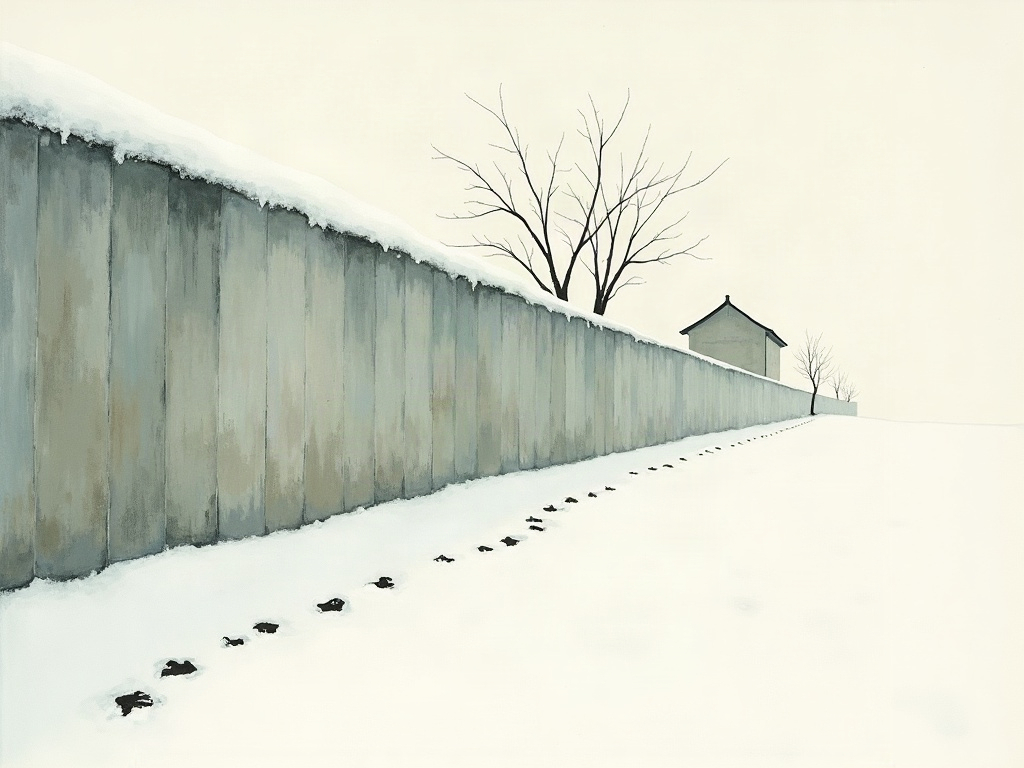
The trail reportedly ran straight up to high garden walls and continued, unbroken, in the snow on top of them and on the far side. It crossed the steep roofs of houses. It approached haystacks and resumed beyond them. In one of the most repeated accounts, the prints led to the mouth of a drainpipe barely wide enough for a cat and reappeared at the pipe’s far opening, as if whatever made them had simply passed through the solid obstacle rather than going around. Locked gates, hedgerows, the frozen estuary itself — nothing in the landscape seemed to turn the line aside. By the most excitable estimates the tracks stretched for something between forty and a hundred miles.
“The Devil Has Been Here”
To a largely rural, deeply religious population in the middle of a bitter winter, there was an obvious and terrifying candidate. The prints were cloven. They walked in a straight, purposeful, two-legged line. They went where no animal could go. Word spread from parish to parish before noon: the Devil had walked through Devon in the night.
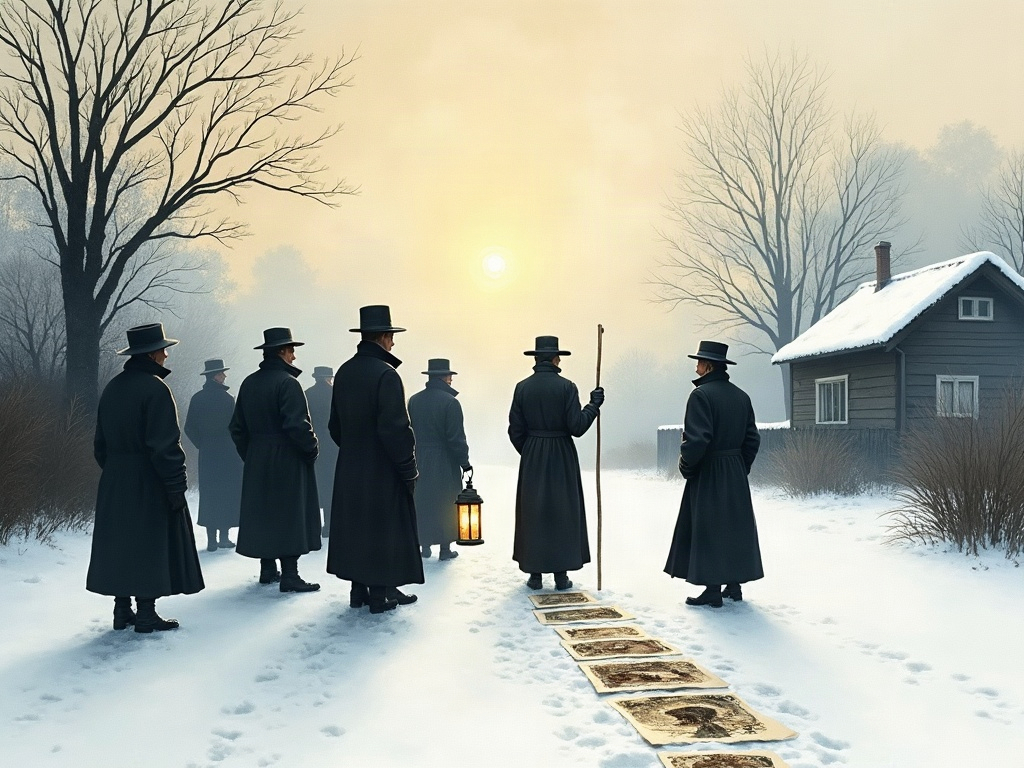
This was not an idle turn of phrase. Fear took hold quickly. Some people refused to leave their homes. Parties of men took down their guns, gathered cudgels, and set out along the tracks in daylight — braver in numbers, and determined to confront whatever they found at the end of the trail. They found nothing. The line simply went on, and on, and eventually faded as the snow began to thaw. Clergymen preached on it the following Sunday; one Devon vicar, the Reverend G. M. Musgrave, is said to have calmed his congregation partly to quiet the panic, half-suspecting a wandering kangaroo while privately wondering about far older explanations. The impulse to ward off the unseen was old and deep — the same instinct that, for centuries, had led people to bury witch bottles and hidden charms in the walls of their own homes to keep evil out.
The Explanations Begin
The story reached a national audience when The Times printed an account on 16 February 1855, followed by the Illustrated London News, and with publicity came a flood of theories. Almost every one of them stumbled on the same stubborn facts: the straight single-file line, the enormous distance, and the way the trail ignored walls and roofs.
The great naturalist Richard Owen, who had coined the word dinosaur, declared confidently that the culprits were badgers, whose hind feet can leave a roughly oval, hoof-like mark. Others blamed donkeys, ponies that had slipped their paddocks, otters, swans and wading birds whose wingtips or webbed feet might dimple the snow, or hopping wood mice leaving paired prints. One widely enjoyed suggestion held that a kangaroo had escaped from a private menagerie near Sidmouth and bounded across the county. Each idea explained a piece of the puzzle and failed the rest. Badgers do not march in a dead-straight line for miles. A kangaroo does not scale rooftops. Birds do not pass through drainpipes.
The Weather, and the Limits of Memory
More sober modern analysis tends to distribute the mystery rather than solve it. The likeliest reading is that there was never one single cause at all. On a night of fresh snow followed by a partial thaw and a hard refreeze, the tracks of many different ordinary animals — moving on their own errands across dozens of separate parishes — could have been reshaped by melting and refreezing into neat, rounded, hoof-like depressions. Add the natural human tendency to connect isolated sightings into one continuous trail, and the fervent retelling of a frightening story over cold February days, and a scattering of unrelated animal prints becomes a single demonic march across the county.
In the twentieth century the writer Geoffrey Household offered a quieter, almost melancholy theory: that an experimental balloon had broken free from a naval yard and drifted across Devon trailing two shackles or mooring ropes on the end of its line, which bumped along the snow leaving a line of regular marks before the balloon was recovered and the embarrassing accident hushed up. It is an elegant idea that accounts for the straightness — and it, too, struggles with the rooftops and the sheer, wandering length of the reported trail.
Why It Still Walks
The truth is that the Devil’s Footprints have never been explained to everyone’s satisfaction, and at this distance they almost certainly never will be. The snow melted within days. No photographs exist, only sketches and written testimony gathered after the fact, much of it second-hand and shaped by fear. What survives is not a solvable case but a near-perfect specimen of a certain kind of event: the inexplicable thing that appears overnight, is witnessed by many, and then dissolves before anyone can pin it down.
History is dotted with these open wounds in the record — moments that resist every tidy answer. There is the Mary Celeste, the ship found sailing itself with no one aboard and the cabin breakfast half-eaten, and the long terror of the man-eating Beast of Gévaudan that stalked 18th-century France, and the morning that fresh chunks of meat fell from a clear Kentucky sky. Each one has its sober candidate explanations; each one keeps a stubborn margin of doubt that no explanation quite closes.
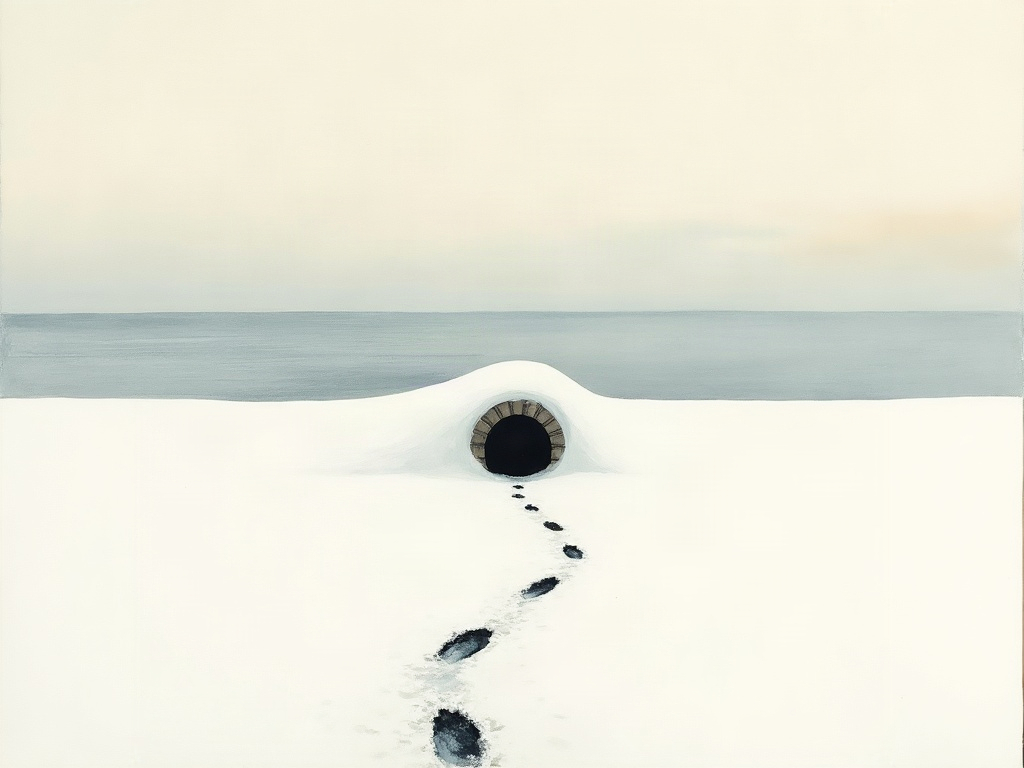
Perhaps that margin is the real subject. The people of Devon did not panic because they were stupid; they panicked because they had woken to a straightforward, physical fact — a line of prints in the snow — that their entire understanding of the world could not account for. We are, most of us, no braver. Strip away the gaslight and the superstition and what remains is deeply familiar: the small, cold dread of looking at something plain and ordinary, a set of marks on white ground, and realising you cannot say what made them. On that February morning, a whole county stood at its own front doors and felt it at once. More than a century and a half later, the footprints are still walking — straight across the snow, over every wall we build to explain them, and out the other side.
Sources & further reading:
Related Reading
More from the archive
- The Green Children of Woolpit: The Medieval Mystery of Two Children Who Wandered Out of a Land With No Sun
- Hugh Glass: The Frontiersman Who Crawled 200 Miles After a Grizzly Left Him for Dead