The Bat Bomb: America’s Plan to Win World War II With a Million Incendiary Bats

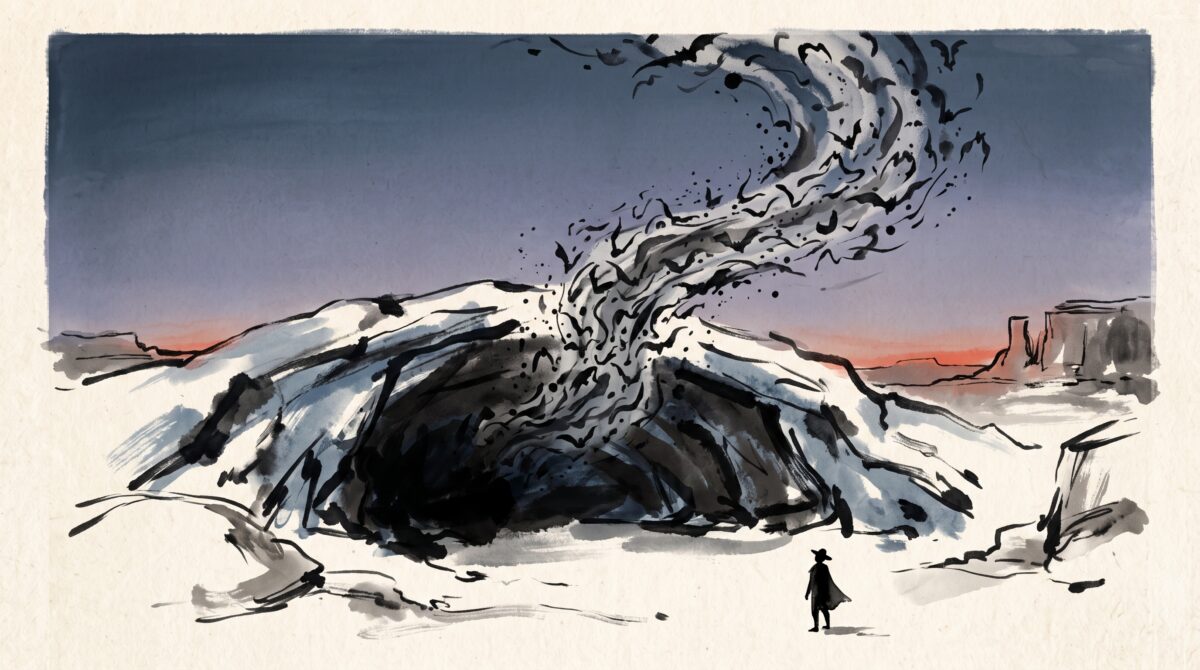
In the weeks after Pearl Harbor, the United States government was flooded with ideas for winning the war. Most were useless. A few were ingenious. And one, submitted in January 1942 by a dental surgeon from Irwin, Pennsylvania, was so strange that it should by rights have been filed in the wastebasket and forgotten. Instead it climbed, improbably, all the way to the desk of President Franklin Roosevelt, who scrawled a note to his aide: “This man is not a nut.” For the next two years, in deadly earnest, America tried to build a weapon out of bats.
A Dentist, a Cavern, and an Idea
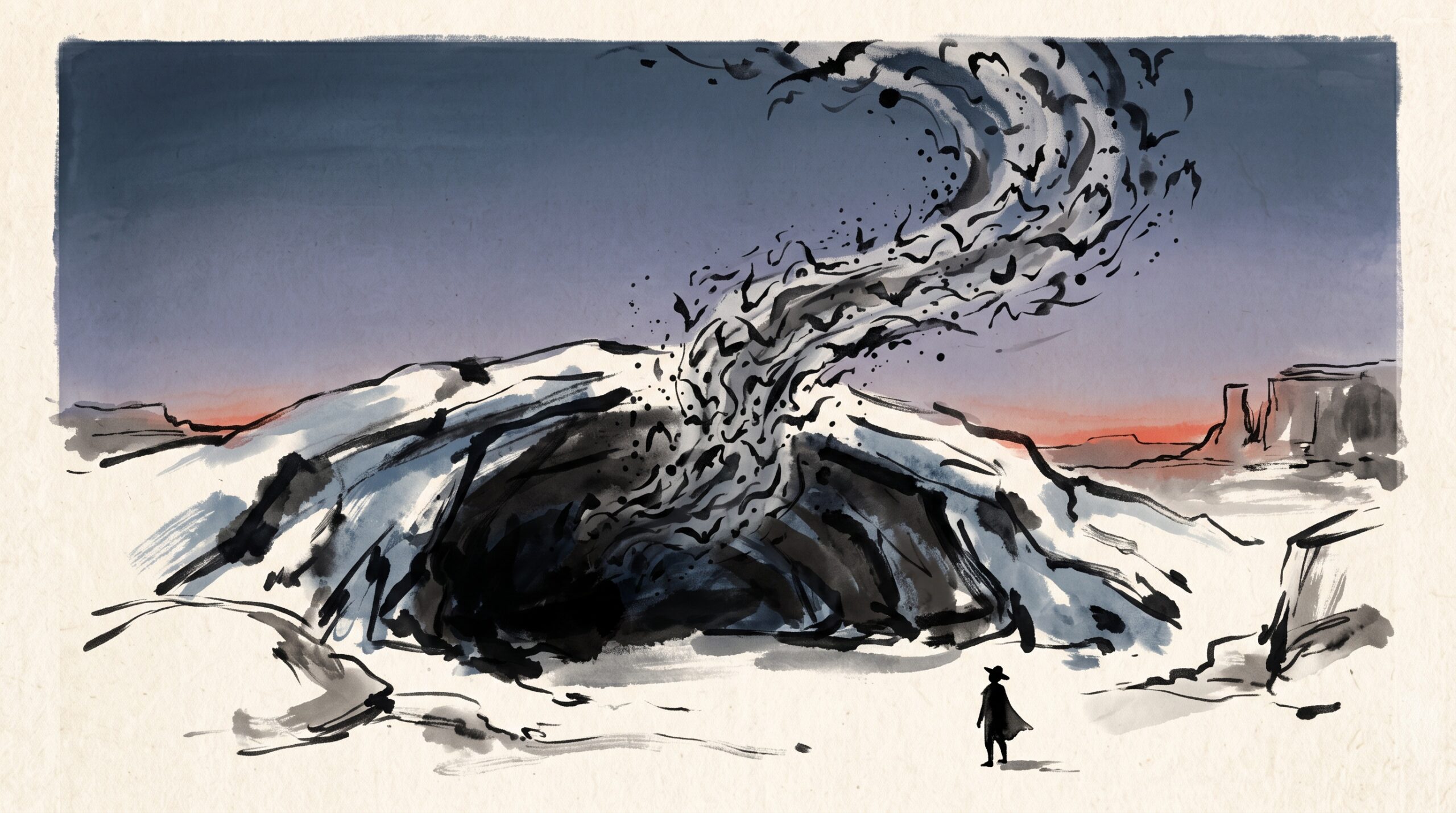
The man was Lytle S. Adams, and he had been touring Carlsbad Caverns in New Mexico, watching millions of Mexican free-tailed bats stream out of the rock at dusk, when news of the Japanese attack reached him. In the collision of those two images — the vast, swirling cloud of bats and the burning ships at Pearl Harbor — Adams found his inspiration. Japan’s cities, he knew, were built largely of wood, paper and bamboo. What if you could carry fire into every attic, eave and crawlspace of a city at once, not with a few huge bombs, but with a living, dispersing swarm?
The plan was this: capture bats by the million, fit each one with a tiny time-delayed incendiary, chill them into hibernation, pack them into a specially designed casing, and drop that casing from a bomber at dawn. The parachute-retarded container would open high over a Japanese city and release the bats. Waking as they fell, the animals would do what bats do — flutter down and tuck themselves into the nearest sheltered nook of the nearest building. Then the little charges would ignite. Thousands of small fires would bloom simultaneously across a city, deep inside its most flammable spaces, where no firefighter could reach them all at once.
The Government Says Yes
It was the kind of proposal that sounds like a tavern joke. Yet the logic held together, and in wartime even outlandish logic gets a hearing. Roosevelt forwarded the idea; the National Defense Research Committee took it up; and by 1943 the project — eventually codenamed Project X-Ray, after passing through the Army Air Forces to the Navy and Marine Corps — had real money, real scientists and a real deadline behind it.
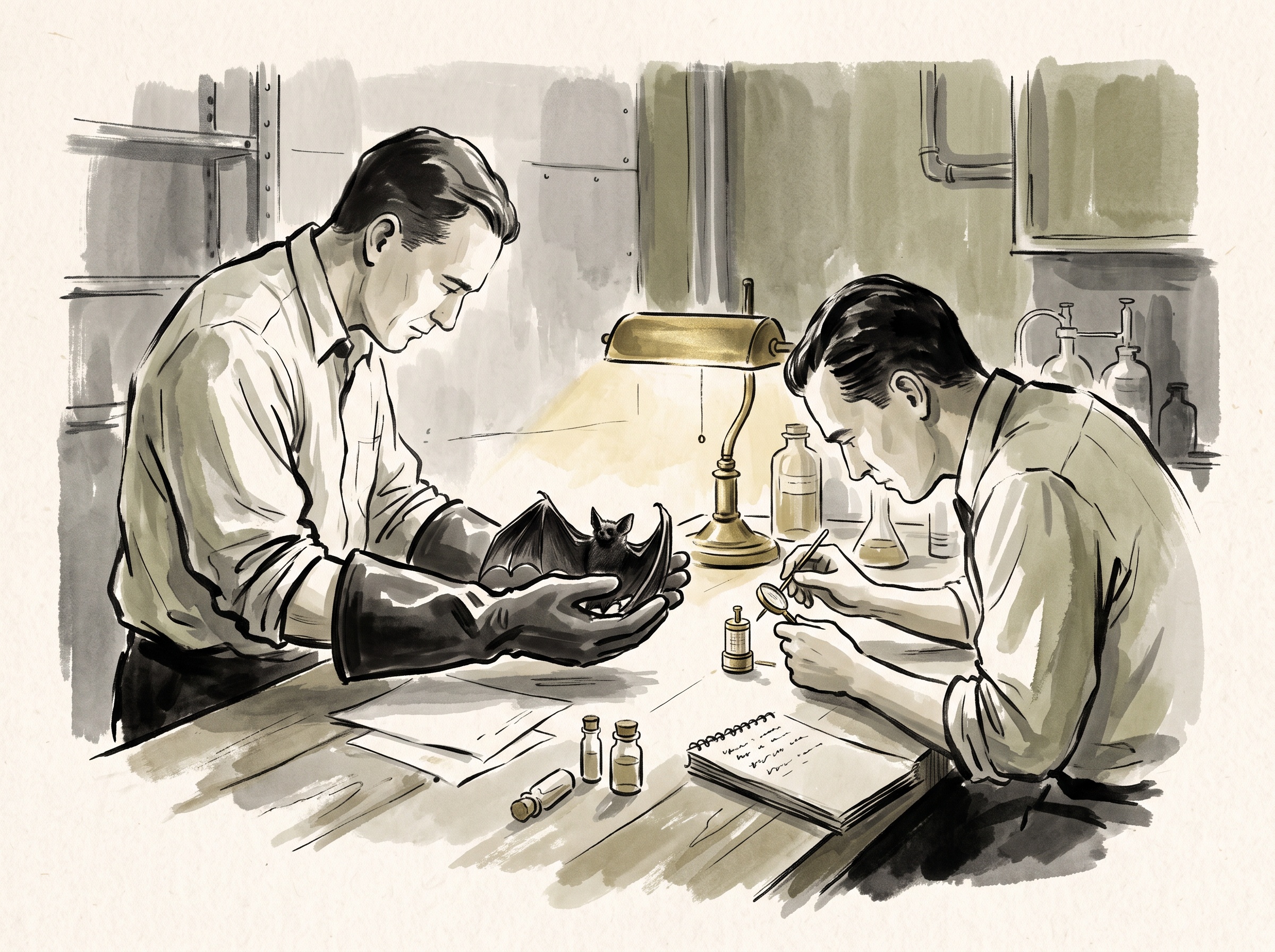
Among those recruited was Louis Fieser, the Harvard chemist who had just invented napalm. His job was to design an incendiary small and light enough for a bat to carry — a capsule of jellied gasoline weighing just a few grams, with a chemical delay fuse. The biologists, meanwhile, worked out the handling: the Mexican free-tailed bat was chosen for its abundance and strength, and the team learned that cooling the animals sent them into a torpid, hibernation-like state, making them easy to arm and stack in trays without harm.
Everything, It Turned Out, Was Difficult
Nothing about weaponizing a wild animal is simple, and Project X-Ray discovered every difficulty the hard way. Bats chilled for arming sometimes would not wake in time and plummeted, dead weight, to the ground. Bats roused too early flew off in the wrong direction. Collecting them in the numbers required — the planners spoke casually of millions — strained the imagination. The delivery canister itself, an elegant stack of trays that unfurled on a parachute, went through repeated redesigns.
And then there was the incident that has kept the bat bomb alive in memory ever since. During a test at the Carlsbad Army Air Field auxiliary base, a batch of armed bats escaped their handlers. True to their nature, they flew off and roosted — under the eaves of the hangar, and inside a visiting general’s car. The incendiaries worked exactly as designed. The hangar burned. The car burned. A good part of a United States military airfield was reduced to ash by its own secret weapon. In the grim accounting of wartime research, it was almost a triumph: the thing plainly did what it was supposed to do. It simply did it to the wrong country.

How Close It Really Came
For all the farce, the bat bomb was edging toward feasibility. Later tests suggested that a bat-borne attack could start a far larger number of fires per aircraft than conventional incendiary bombs of the day. Estimates circulated that a single mission of bat canisters might ignite thousands of separate blazes across a target city — a swarm attack no fire brigade could hope to contain. The Navy and Marines were sufficiently impressed to keep funding it, and a major demonstration was penciled in for the summer of 1944.
That demonstration never happened on the scale its champions wanted. By 1944 the project had consumed around two million dollars and the better part of two years, and the military’s patience — and its priorities — had shifted. The ambition to rain engineered fire onto Japan was not abandoned. It was simply handed to other, less whimsical programs. Mass firebombing raids with conventional incendiaries would soon devastate Tokyo and dozens of other cities. And in the deepest secret of all, another group of scientists was building something that would make every incendiary scheme obsolete at a stroke.
Eclipsed by a Bigger Secret
Project X-Ray was formally cancelled in early 1944. The official reason was that it was progressing too slowly and would not be ready in time to matter. The deeper reason, understood by only a handful of men, was that the Manhattan Project promised to end the war with a single weapon rather than a million winged ones. The same wartime appetite for extraordinary ideas that had funded the bat bomb had also funded the atomic bomb, and only one of them could be the war-ender.
It is worth sitting with that irony. The men who worked on fire and physics in those years produced inventions that ranged from the comic to the apocalyptic, and the line between the two was thinner than anyone was comfortable admitting. The atomic program’s own near-misses and lethal accidents are a sober chapter in that same story — as in the Demon Core, the plutonium sphere that killed two scientists with a slip of the hand. The bat bomb was the war’s dark comedy; the bomb that replaced it was its tragedy.

The War’s Great Age of Improbable Schemes
The bat bomb belongs to a particular moment — a time when governments, their survival at stake, would seriously fund almost any idea that might give an edge. It was the same spirit that produced elaborate deceptions and one-off gambles dreamed up in back rooms and taken all the way to the battlefield. Readers who relish that vein of wartime audacity will find kin to the bat bomb in Agent Garbo, the spy who invented an entire army and fooled Hitler on D-Day, and in the forgotten aerial inventiveness of campaigns like the one that produced the Candy Bomber, the pilot who dropped chocolate on a city the world was trying to starve. The bat bomb was the war’s strangest flight of that same restless, improvising mind.
No bat ever carried fire over Japan. The weapon was never used in combat, and most people have never heard of it. Yet it is more than a curiosity. It is a small, strange mirror held up to total war — a reminder of how far desperation will push the human imagination, and how a sober committee of serious men can spend years and a fortune trying to turn a cave full of harmless animals into an instrument of mass destruction. The bats, mercifully, were spared their part in it. They went on pouring out of their caverns at dusk, as they had for ten thousand years, indifferent to the war that had briefly, bizarrely, tried to conscript them.
Sources & further reading:
Related Reading
- The Night Saboteurs Blew Up New York Harbor: The Forgotten Black Tom Explosion of 1916
- The Man Who Survived Two Atomic Bombs: Tsutomu Yamaguchi at Hiroshima and Nagasaki
- The Demon Core: The Plutonium Sphere That Killed Two Scientists With a Slip of the Hand