The Beast of Gévaudan: The Man-Eating Terror That Stalked 18th-Century France

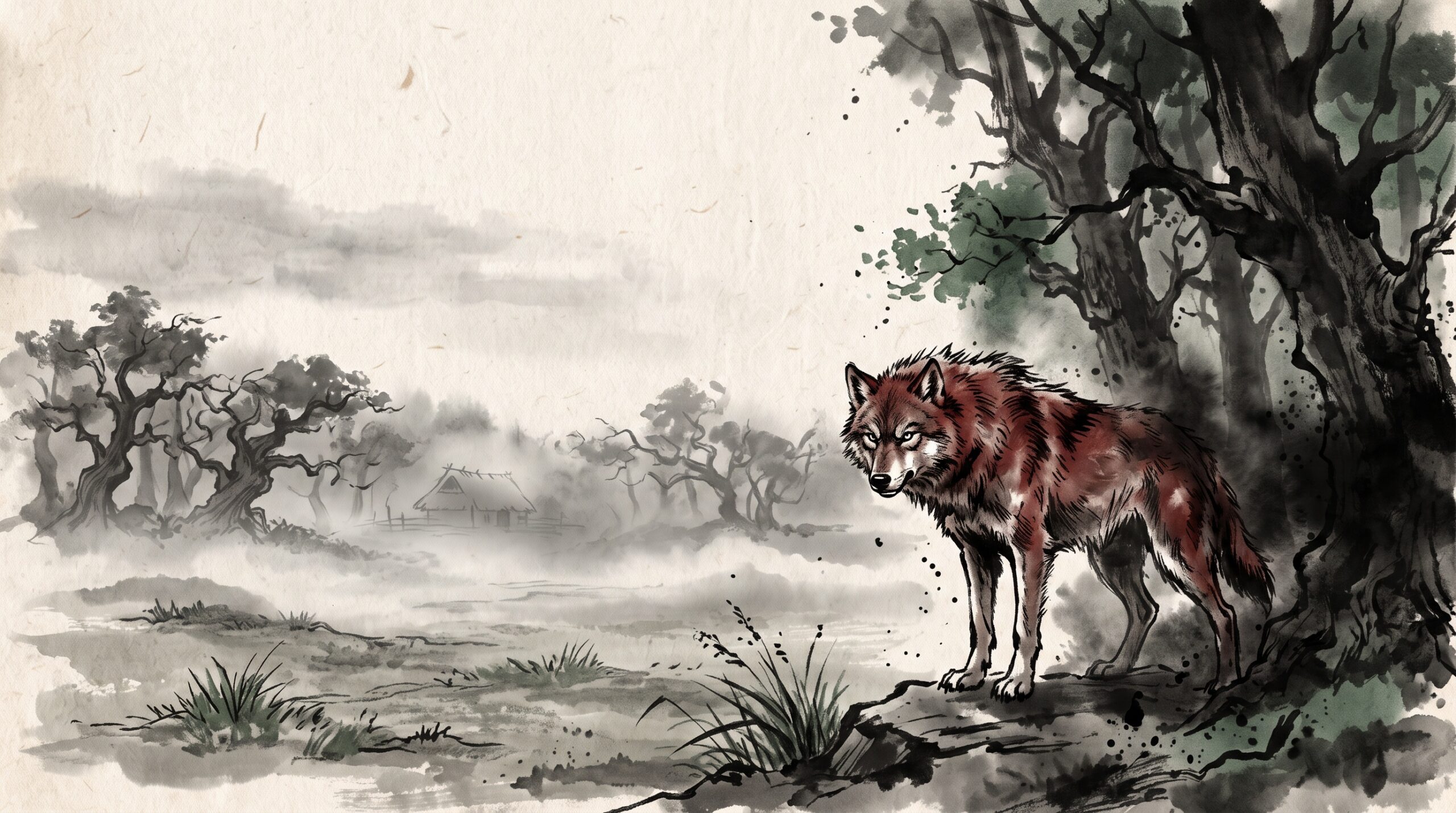
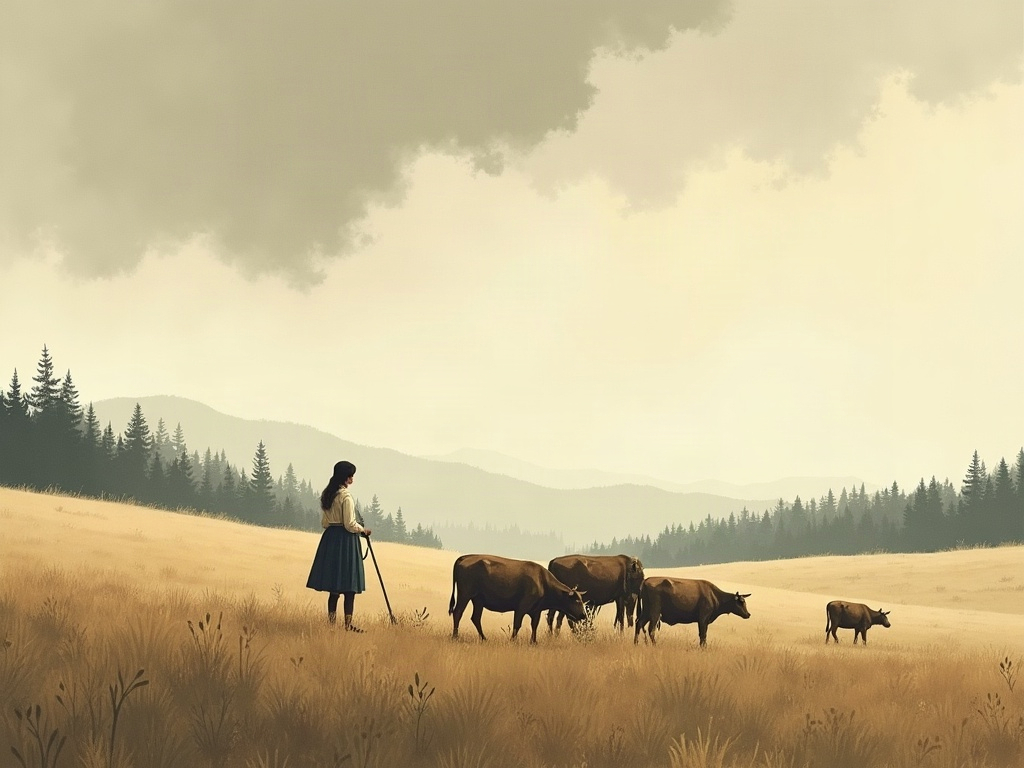
In the summer of 1764, in the cold green uplands of Gévaudan – a poor, remote district of south-central France, all bare pasture and dark pine and scattered farms – a young woman tending cattle looked up to see something come out of the trees toward her. Her dogs, it was said, shrank back rather than face it. The bulls in the herd lowered their horns and drove the thing off, and she survived to describe it: bigger than a wolf, reddish, broad in the chest, with a huge flat head and a mouth that seemed made for one purpose. Within weeks, others who met it were not so lucky. So began three years of terror that would reach all the way to the throne of France, and a mystery that has never truly been solved.
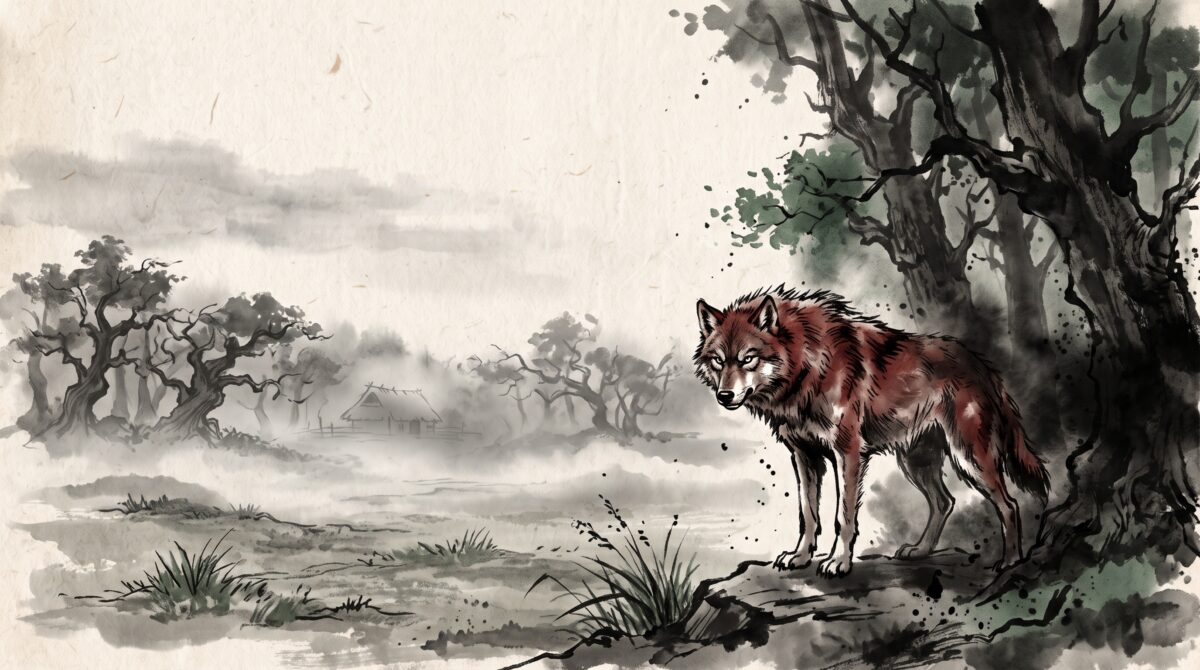
Between June 1764 and June 1767, La Bête du Gévaudan – the Beast of Gévaudan – is blamed for killing as many as a hundred people and mauling many more. It became the most famous monster of the eighteenth century, a creature that outwitted peasants, soldiers, professional hunters, and eventually the personal marksman of King Louis XV himself. This is the story of what it did, who tried to stop it, and why we still cannot say for certain what it was.
A predator that hunted people
What made the Beast so uniquely horrifying was not simply that it killed, but how and whom. This was not a wolf pulling down the occasional stray lamb. The Beast went after human beings, and it seemed to prefer them – striking again and again at the most exposed members of the community. Its victims were overwhelmingly women, children, and adolescents: the very people the rural economy sent out alone, day after day, to watch the cattle and sheep on open ground far from help.
The attacks were savage and often aimed at the head and throat, and eyewitnesses insisted the animal showed an unnatural boldness and cunning – approaching upright-standing shepherds, dodging blows, and slipping away from armed men. It was this apparent intelligence, this seeming taste for human prey, that transformed an animal problem into something that felt like malice. Terrified villagers began to speak of a creature that could not be a mere wolf. Some whispered of a loup-garou, a werewolf; others of a punishment sent by God. Fear on that scale distorts what people see, in the way that isolation and dread have shaped so many strange episodes in history, from lonely lighthouses to the frozen slope of the Dyatlov Pass. But in Gévaudan the bodies were real, and they kept coming.
When the king took notice
As the death toll climbed through late 1764 and into 1765, the panic outgrew the province. Reports reached Paris, then the court, and the Beast became a national sensation – the subject of pamphlets, lurid engravings, and gossip in the salons. For King Louis XV, this was more than a rural tragedy; it was becoming an embarrassment. A kingdom that could not protect its own peasants from a single animal looked weak, and the story was spreading across Europe. The crown decided to act.
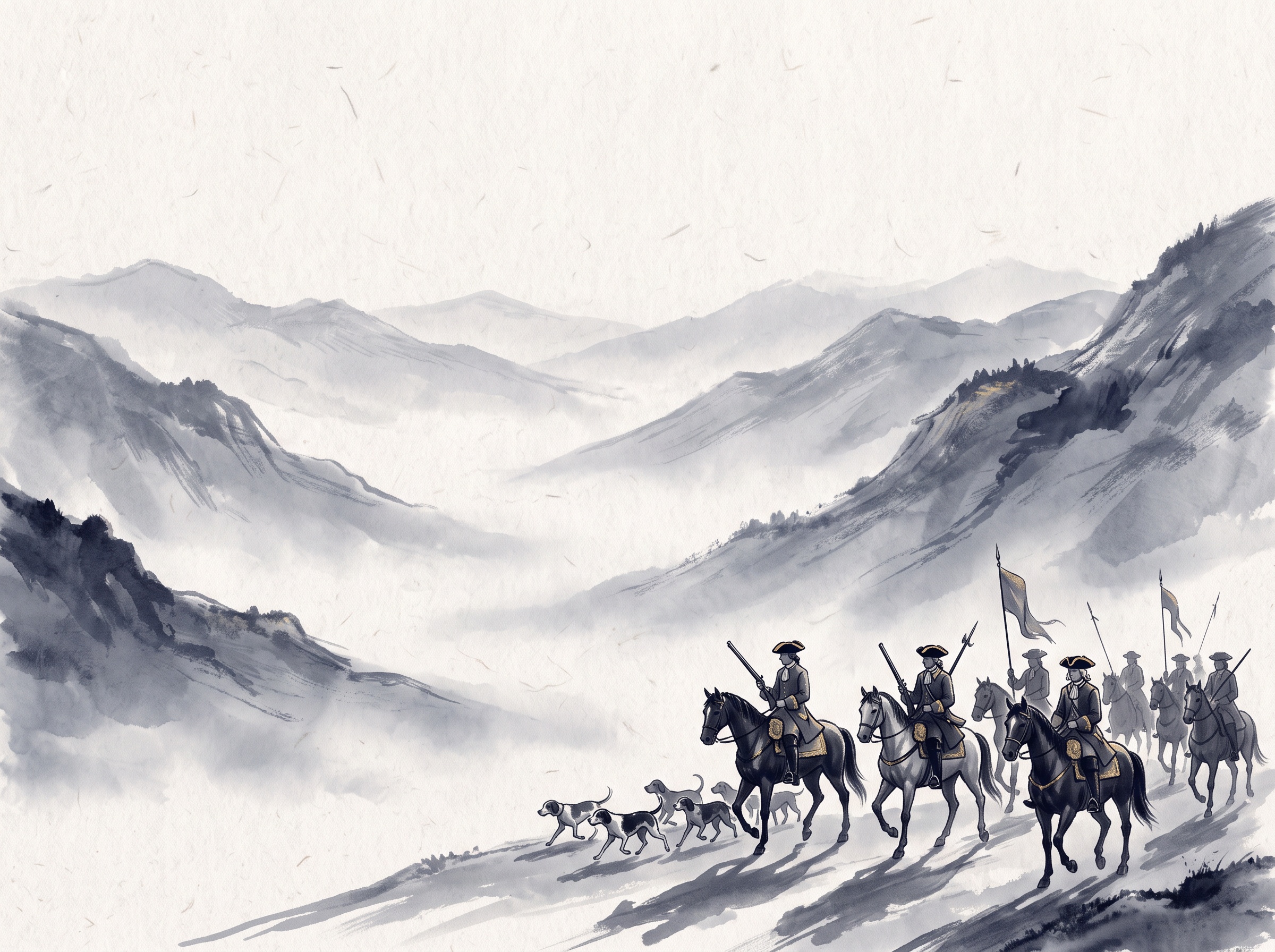
The king first sent a pair of renowned professional wolf-hunters, Jean-Charles-Marc-Antoine Vaumesle d’Enneval and his son, veterans who claimed to have killed hundreds of wolves. They arrived with their specially trained hounds, hunted for months across the difficult terrain – and failed. The Beast eluded them completely. Frustrated, Louis XV dispatched his own gun-bearer, François Antoine, a man of real skill and, crucially, of royal authority. In September 1765, Antoine finally shot an enormous wolf, an animal so large it seemed to fit the descriptions. Its carcass was stuffed, paraded, and sent to Versailles to be admired by the court. The king rewarded him handsomely. The Beast, officially, was dead.
Except it was not. After a lull, the killings began again.
The hunter, the hunt, and a silver bullet
With the court’s attention gone and the royal victory declared, the people of Gévaudan were left, once more, to face the thing themselves. The renewed attacks through 1766 and into 1767 fell on communities who now knew that no one was coming to save them. It was, in the end, a local nobleman – the Marquis d’Apcher – who organized the hunt that finished it, mustering hundreds of local men to comb the hills.
On the 19th of June 1767, on the slopes of Mont Mouchet, a local farmer and hunter named Jean Chastel shot and killed a large, strange animal, and after that day the attacks stopped for good. Around Chastel’s shot grew the most famous legend of the whole affair: that ordinary lead could not harm the Beast, and that Chastel brought it down only with a bullet cast from blessed silver, some say melted from a religious medal, fired as he calmly finished reading his prayers. It is almost certainly a folk embellishment – the werewolf-slaying detail grafted onto a real killing – but it is the piece everyone remembers, the moment the history tips over into fairy tale.

The carcass was displayed to the traumatized locals and then carried toward Versailles in the summer heat. By the time it arrived it had rotted so badly that it was useless as evidence and was discarded – a catastrophe for anyone who might later have wished to know exactly what species Jean Chastel had shot. And so the single best chance to answer the question was quite literally thrown away.
So what was it?
Here is where a well-documented historical event dissolves into permanent uncertainty. Strip away the werewolf talk and the theories still run in every direction. The most sober, and probably the most likely, explanation is the simplest: the Beast was one or more unusually large and bold wolves. Historians who have studied the period point out that wolf attacks on humans were far more common in pre-modern France than we now imagine, especially on unguarded children, and that a single striking animal – or a succession of them – could easily have been merged by rumor into one immortal monster.
But other candidates have never quite gone away. Some argue for a wolf-dog hybrid, larger and less fearful of humans than a true wolf. Others, pointing to the odd descriptions – the reddish coat, the dark stripe, the strange head – have proposed an exotic animal escaped or imported, perhaps a striped hyena or a big cat, a creature no French peasant would have recognized. And then there is the darkest theory of all: that behind some of the killings stood a human hand – a murderer using a trained or costumed animal as cover, which would explain the Beast’s uncanny cunning and its apparent focus on people. It is a chilling idea, and it belongs to the same shadowy category of unsolved human enigmas as the boy Kaspar Hauser, whose true origins Europe never learned. No theory fits every fact.
Why the story still stalks us
Nearly 260 years later, the Beast of Gévaudan endures because it sits exactly on the fault line between history and nightmare. Everything about it is real and recorded – the dates, the parish registers of the dead, the royal expenses, the hunters’ reports – and yet the thing at the center of it all remains faceless. We know precisely how many it killed and almost nothing about what it was. That combination is unbearable and irresistible in equal measure.
It also tells us something true about the age it haunted. This was the France of Enlightenment reason, of Voltaire and encyclopedias, and yet in its own remote hills it could not explain, catch, or even identify a predator that hunted its children for three years. The Beast was a reminder that the wild had not yet been fully tamed, that the map still had dark places on it – much as the eighteenth century’s other unsettling human oddities, like the ravenous soldier Tarrare, showed how much the era’s science still could not account for. That, in the end, is why the story still matters. It is not really about a monster. It is about the moment a confident world met something it could not name, sent its best men against it, declared victory, and was proven wrong – and then had to live, ever after, with not knowing. The fields of Gévaudan are quiet now. But somewhere in the gap between the hundred graves and the empty answer, the Beast is still out there, exactly where we left it: unexplained.
Sources & further reading:
- Did a ‘werewolf’ really terrorize France in the 1700s? (National Geographic)
- What Was the Beast of Gévaudan? (HISTORY)
- Beast of Gévaudan (Wikipedia)
More from the archive
- When Medieval Courts Put Animals on Trial: The Bizarre Legal System That Executed Pigs and Prosecuted Rats
- The Bear River Massacre: The Deadliest Day for Native Americans That America Forgot
- From Speared Warriors to Vampire-Proofed Corpses: History’s Most Bizarre Burial Rituals