Ea-Nasir: The World’s Oldest Complaint Letter and the Ancient Merchant Everyone Hated

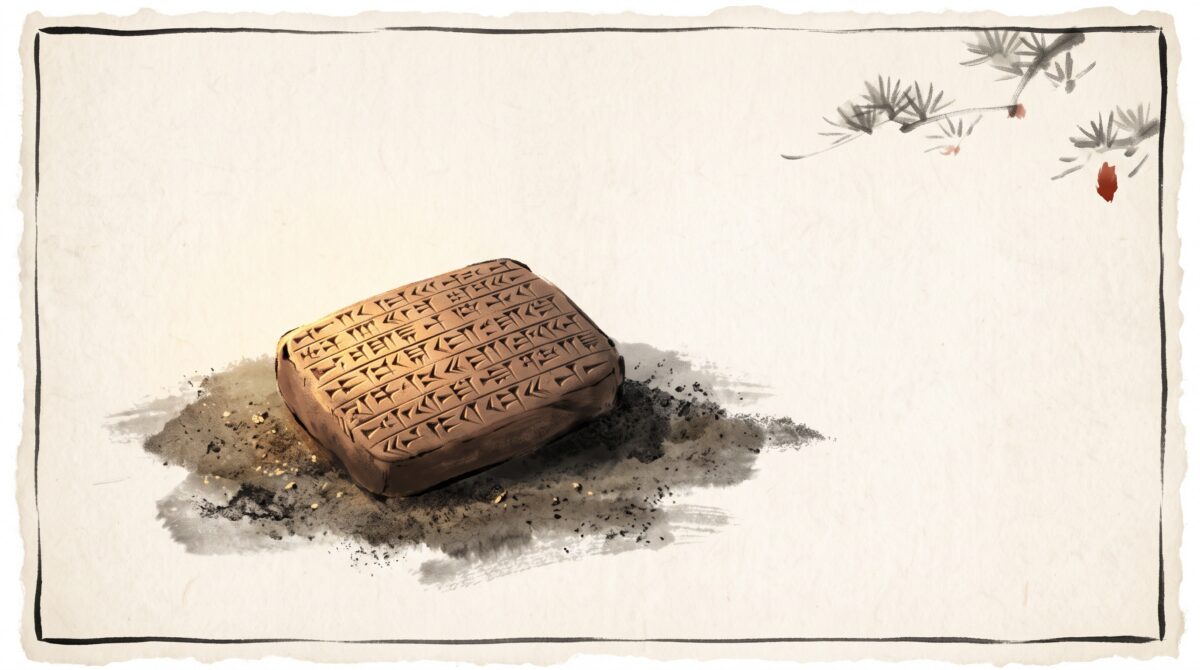
Somewhere in the crowded, sun-baked city of Ur, in what is now southern Iraq, a man named Nanni sat down with a lump of wet clay and a reed stylus and did something almost unbearably human: he complained. He was not angry about a war or a king or the will of the gods. He was angry about copper – a shipment of it, badly made, delivered late, and handed over with what he clearly felt was contempt. So he pressed his fury, wedge by wedge, into the soft clay, addressed it to the merchant who had wronged him, and let it dry. That was roughly 1750 BCE. Nearly 3,770 years later, we are still reading it.
Nanni’s tablet is, as far as anyone knows, the oldest written complaint in human history – the great-great-grandfather of every one-star review, every strongly-worded email, every “I would like to speak to your manager” ever uttered. And the merchant on the receiving end, a Babylonian trader named Ea-Nasir, has been dead for nearly four millennia and is somehow, right now, one of the most reviled small-business owners on the modern internet. This is the story of how that happened.
A voyage, a bad batch of copper
To understand the anger, you have to understand the trade. Ur in this era sat at the heart of a vast maritime network that reached down the Persian Gulf. Copper – the essential metal of the age, alloyed with tin to make bronze for tools and weapons – was not mined locally. It came by sea from Dilmun, the trading hub centered on what is now Bahrain, which in turn drew ore from mines further afield. Ea-Nasir was an alik Dilmun, a merchant licensed in the Dilmun copper trade: he financed voyages, took delivery of ingots off the boats, and sold them on to buyers like Nanni.

Every link in that chain was a matter of trust, because every link was slow and expensive and impossible to verify in advance. You handed over your silver, you waited for a ship to cross the gulf and back, and you prayed the ingots that finally arrived were the grade you had paid for. Nanni, it seems, had sent his agent with the money on the promise of fine copper. What came back was not fine copper. And, adding injury to injury, he says he was offered ingots he had every right to refuse, in a place where refusing them was dangerous – amid what he describes as enemy territory. For a man who moved in the same tightly bound commercial world that connected cities from the Gulf to the great lost cities of the Indus Valley, a reputation for honest dealing was everything. Nanni felt his had been insulted along with his purse.
What Nanni actually wrote
The tablet does not read like a dry receipt. It reads like a man who has been holding this in and finally lets go. He reminds Ea-Nasir of the promise: fine copper ingots, agreed upon, paid for. He reports that the merchant treated his messenger with contempt, sending him back empty-handed through hostile country not once but repeatedly. Then comes the line that has echoed down the ages, the sentence that turns a business dispute into a cry of wounded dignity: “Who is there among the Dilmun traders who has treated me in this way?”
He is not just out of pocket. He is disrespected, and he wants Ea-Nasir to know it. He announces that from now on he will personally inspect and select each ingot in his own yard before he accepts a single one – the ancient equivalent of “I will never buy from you again without reading the fine print.” It is a complaint that anyone who has ever been fobbed off by a company will recognize in their bones. The specifics are four thousand years old; the feeling is this morning’s.
The merchant everyone seems to have hated
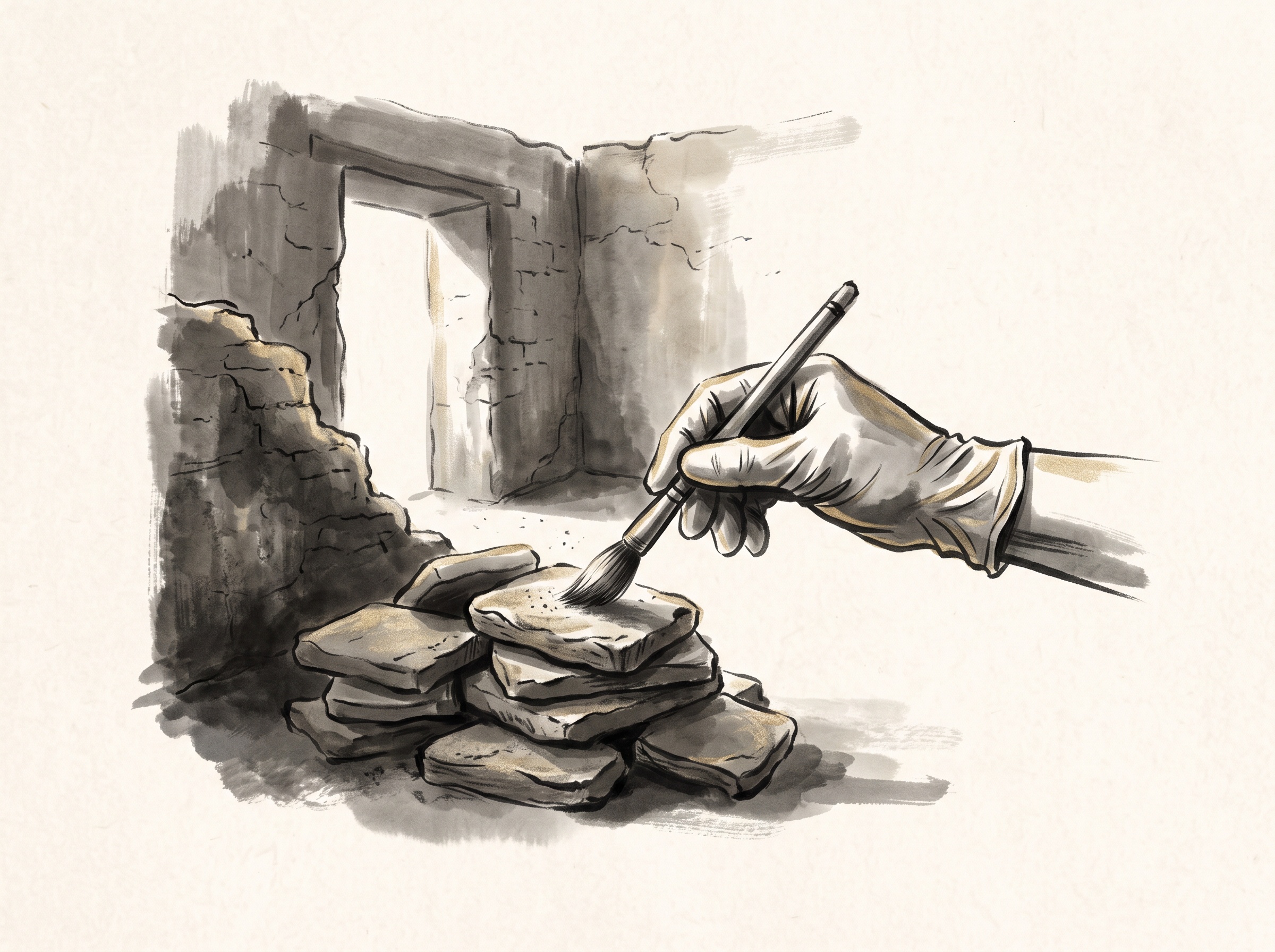
Here is the twist that lifts this from a curiosity to a comedy. When the British archaeologist Sir Leonard Woolley excavated Ur in the 1920s and 30s, he uncovered a private house – and in it, a cluster of tablets. Nanni’s furious letter was not the only complaint Ea-Nasir had kept. There were others, from other customers, griping about other bad deals: copper of the wrong grade, deliveries that never came, money owed and not returned.
We should be careful – a merchant’s archive naturally collects the records of disputes, and we are hearing only one side of very old arguments. But the pattern is hard to ignore, and it is why Ea-Nasir has been posthumously convicted in the court of the modern internet as history’s first documented con man. Whether he was a genuine scoundrel or simply an ordinary trader whose worst days happened to be baked into permanent clay, we will probably never know. What we do know is that he kept the letters. Perhaps for the accounts. Perhaps, in some very human way, because he could not quite let them go either.
How a lump of clay outlived empires
The real miracle here is not the anger – people have always been angry – but that we can still read it. Nanni’s rage survives for one gloriously mundane reason: he wrote it on the right material. The Egyptians wrote on papyrus, which rots. Later civilizations wrote on parchment and paper, which burn and crumble. Mesopotamians wrote on clay, and clay, once baked hard by fire or simply by the sun and the centuries, is nearly indestructible. A fire that would destroy a library of paper only fires a clay tablet harder.
So the throwaway paperwork of ordinary life – loan contracts, shopping lists, schoolboy exercises, and one man’s white-hot fury about copper – endured in the ground while palaces fell and languages died. The tablet is small, roughly the size of a modern phone, covered on both sides in dense Akkadian cuneiform. It sat unread for the better part of four thousand years, then spent the modern era in the collection of the British Museum, catalogued and quietly astonishing. It is the same accident of durable material that lets us glimpse how differently ancient minds worked at all – the same clay-and-stone record that reveals, for instance, how the ancient world saw and named color.
How a Babylonian grievance became a global meme
For decades the tablet was a footnote known mostly to scholars. Then the internet found it. Around the late 2010s, Nanni’s complaint went viral – shared, screenshotted, and rewritten as jokes precisely because it is so perfectly, timelessly relatable. Ea-Nasir became a punchline, cast as the eternal bad seller; fans left mock reviews, made merchandise, and even, in a tradition that would have baffled and possibly delighted him, took to leaving offerings of “one-star reviews” at the tablet’s display case in London.

There is something wonderful in the fact that of all the grand inscriptions Mesopotamia produced – the law codes, the royal boasts, the epics of kings and gods carved to impress eternity – the one that truly went global is a customer service complaint. It is a reminder that the machinery of high history, so much of it about power and money, ran on exactly the same anxieties we live with: a fair price, an honest deal, being treated with a little respect. The wealth that flowed through these trade routes could make and break fortunes on a continental scale, as it did centuries later when Mansa Musa’s gold rattled the markets of a continent – but at ground level it always came down to one person handing another person their money and hoping to be dealt with fairly.
Nanni never got the satisfaction he was after; we have no idea whether Ea-Nasir ever made things right. But in his fury he did something no king intended and no scribe was paid to preserve: he made himself immortal. Four thousand years from now, our own furious emails will be long gone, dissolved into the dead static of forgotten servers. Nanni pressed his bad day into clay – and that clay is still telling us, across an almost unimaginable gulf of time, that being human has always meant caring, deeply and a little absurdly, about getting what you paid for. That is why the story still matters: it collapses the distance between us and the ancient world entirely, and leaves us standing shoulder to shoulder with a stranger from Ur, both of us waiting on hold, both of us convinced we deserve better.
Sources & further reading:
- Complaint tablet to Ea-nasir (British Museum object W_1953-0411-71)
- Meet Ea-Nasir, a shady ancient merchant – and modern meme (National Geographic)
- The oldest complaint in the world: a trip to the British Museum (University of Liverpool)