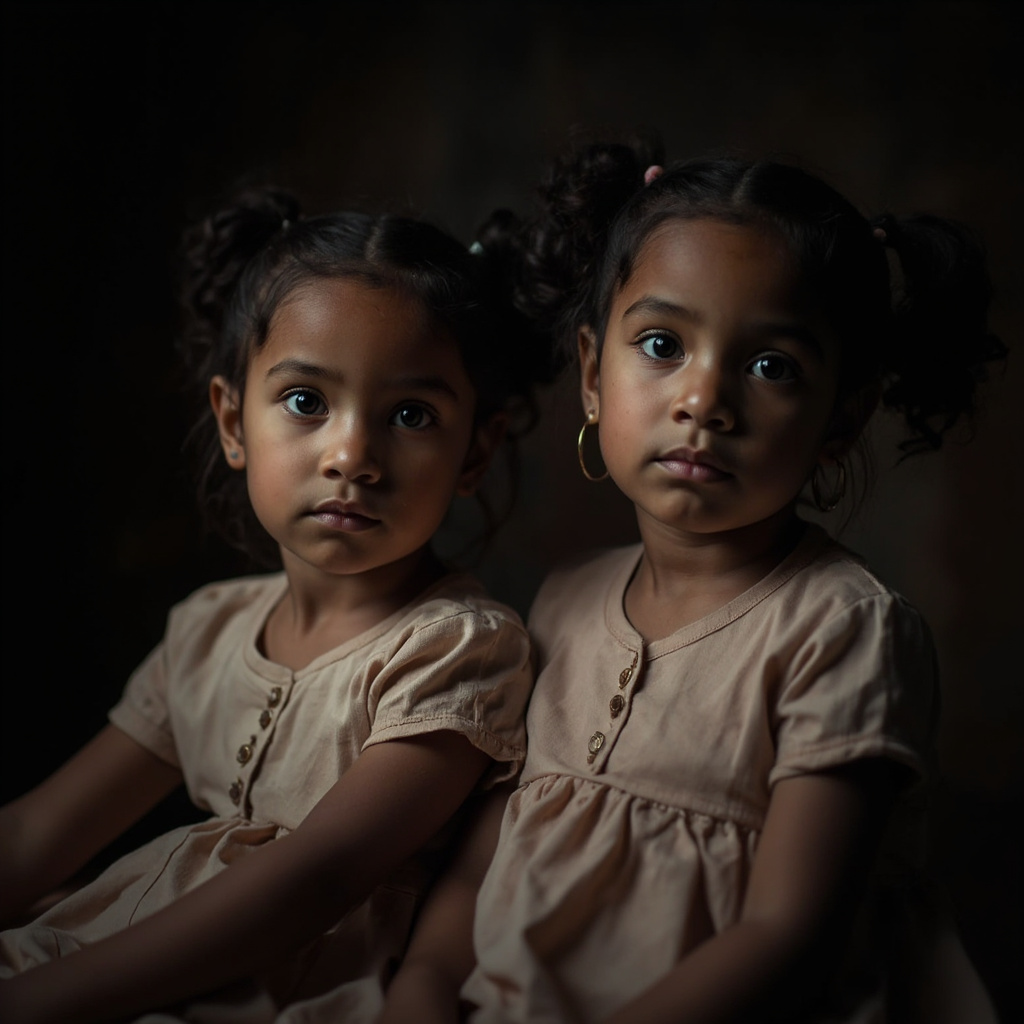
One harvest day in 12th-century Suffolk, the reapers found two children standing by an old wolf pit. Their skin was green, their clothes were strange, and they spoke a language no one had ever heard. This is the enduring medieval mystery of the Green Children of Woolpit.
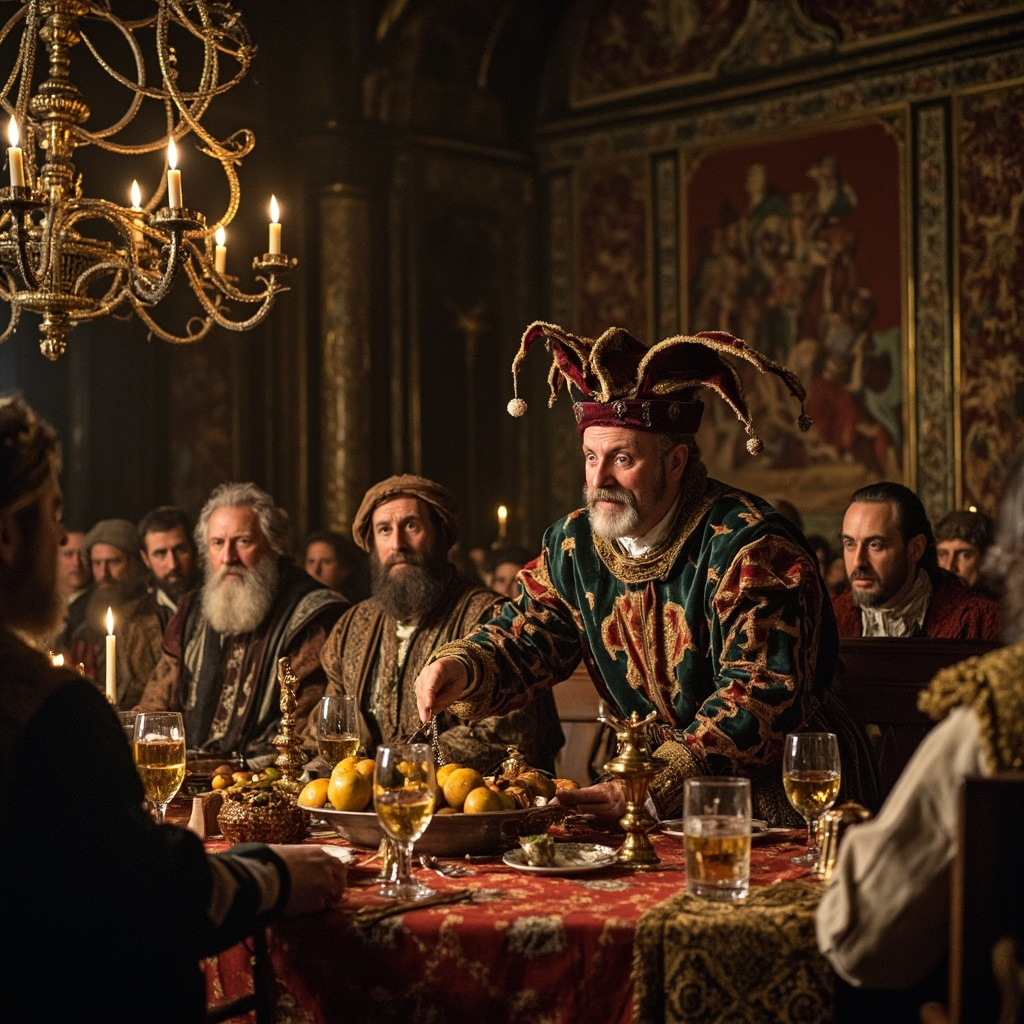
Imagine a world where servants ordered their masters around, peasants mocked nobility, and chaos reigned supreme – all with official approval. This wasn’t anarchy, but a carefully orchestrated medieval tradition known as the Lord of Misrule, where social hierarchies flipped upside down during the Christmas season.
This extraordinary custom, which persisted for centuries across Europe, offers a fascinating glimpse into how medieval society managed social tensions through institutionalized role reversal and sanctioned rebellion.
Ancient Roots in Roman Revelry
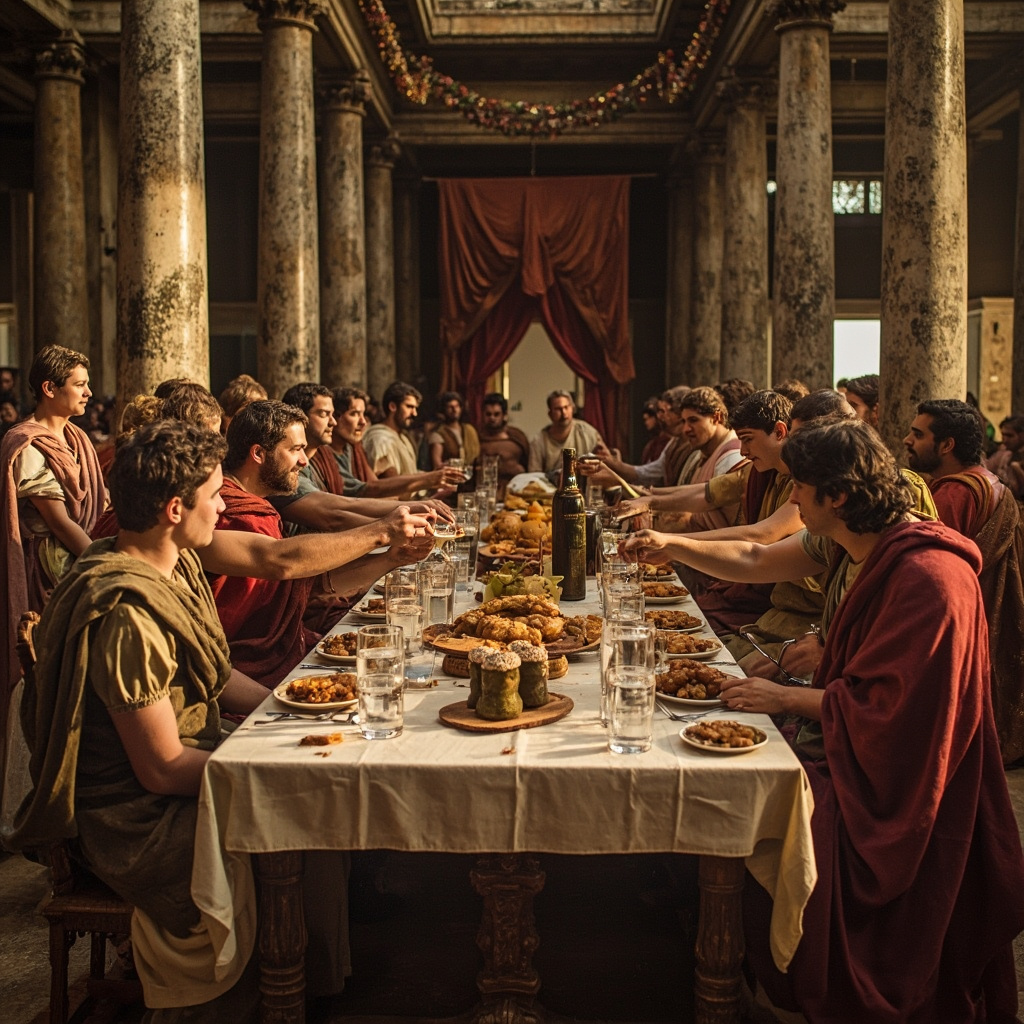
The Lord of Misrule tradition traces its origins to ancient Rome’s Saturnalia festival, held annually from December 17th for seven days of unprecedented social upheaval. During this winter celebration honoring the god Saturn, the rigid Roman class system temporarily dissolved into carnival-like chaos.
Masters waited on their slaves at banquet tables, gambling ran rampant through the streets, and moral restrictions lifted as citizens indulged in behaviors normally forbidden. The festival served as a pressure valve for social tensions, allowing the oppressed to briefly taste power while giving the powerful a temporary respite from responsibility.
This institutionalized inversion wasn’t mere entertainment – it was social engineering on a massive scale, designed to prevent real revolution by offering a controlled outlet for discontent.
Christian Adaptation and the Feast of Fools
When Christianity became Rome’s official religion in the 4th century, church leaders faced a dilemma: how to handle the deeply ingrained tradition of winter revelry that clearly contradicted Christian values of order and propriety.
Rather than abolish these customs entirely, the medieval church ingeniously adapted them into the Feast of Fools, celebrated between December 26th and 28th. Junior clergy temporarily assumed the roles of their superiors, conducting mock services that descended into theatrical farce.
Bishop John Grandisson of Exeter discovered this firsthand in 1329 when he found his cathedral clergy staging “irreverent mimes that descended into mud slinging,” causing the congregation to dissolve “into disorderly laughter and illicit mirth.” Despite his outrage, such festivities continued throughout medieval Europe.
The Rise of Boy Bishops
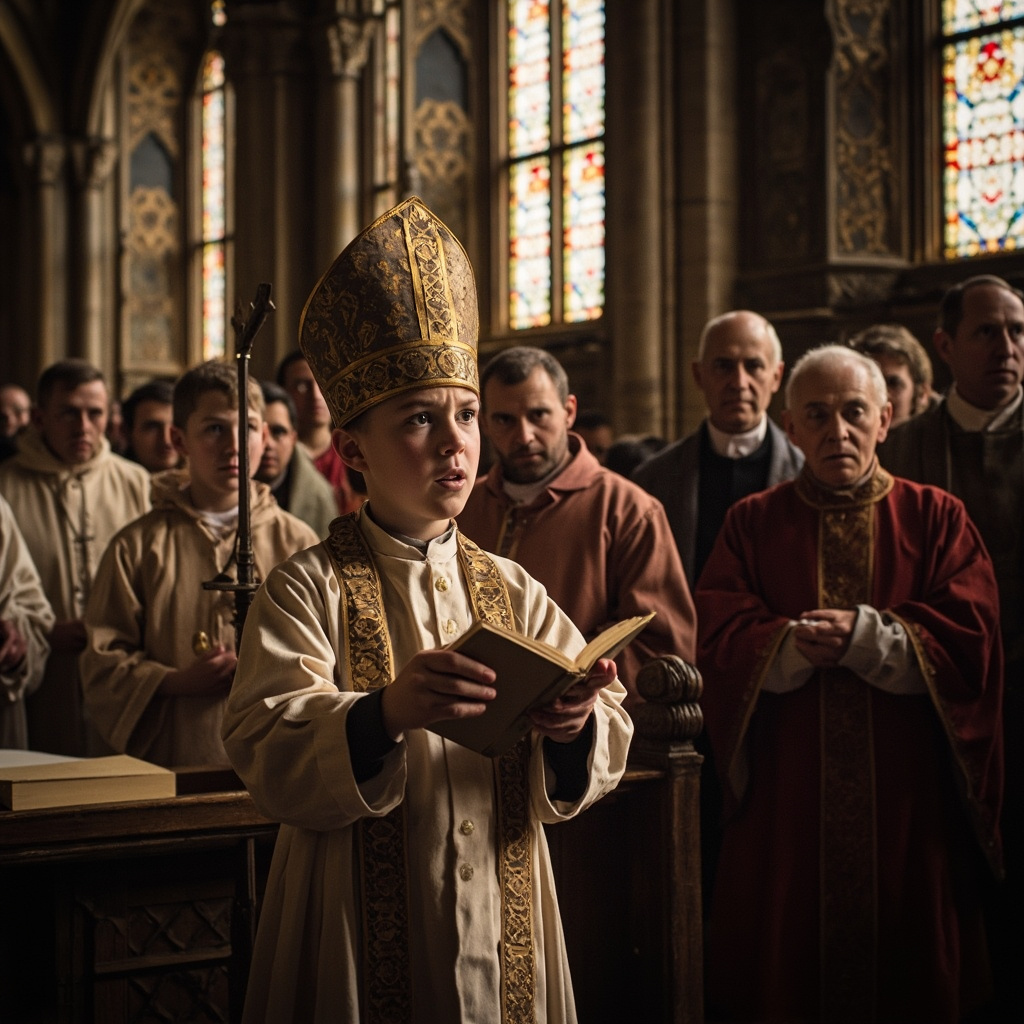
By the 15th century, one of the most popular manifestations of this tradition was the election of “boy bishops” – choirboys who temporarily assumed episcopal authority during feast days associated with children, particularly St. Nicholas Day (December 6th) and Holy Innocents Day (December 28th).
These young bishops, complete with miniature episcopal mitres and robes, led processions through cathedrals and even delivered sermons to adult congregations. The great Benedictine monastery at Bury St. Edmunds became particularly famous for this practice, with archaeological evidence suggesting boy bishops distributed special lead tokens to children and the poor, who could exchange them for treats at the abbey’s almonry.
These weren’t mere theatrical performances – the boy bishops wielded genuine, if temporary, authority within their religious communities, making decisions and issuing orders that adults were bound to obey.
Royal Courts and the Bean King
The tradition extended beyond churches into the highest levels of secular society. During the reigns of Edward II and Edward III, English royal courts featured a “Bean King” who presided over Christmas celebrations with all the pomp and circumstance of genuine royalty.
Henry VII revived this custom after ascending the throne in 1485, appointing a Lord of Misrule – typically a servant or minor court official – to oversee the Twelve Days of Christmas festivities. These temporary rulers came complete with their own courts, including jesters and even mock gibbets for the theatrical “execution” of those who displeased them.
The future Henry VIII spent much of his childhood at Eltham Palace, where Twelfth Night celebrations in 1516 featured elaborate pageants and mock battles, all orchestrated under the direction of a Master of Revels who wielded considerable authority over the proceedings.
The Limits of Acceptable Chaos
Despite encouraging temporary rebellion, medieval authorities carefully maintained boundaries on how far such behavior could extend. When students at Lincoln’s Inn in London staged Christmas pranks in 1516 that resulted in property damage, the perpetrators faced fines and expulsions, with future occurrences explicitly forbidden.
The preservation of fundamental social hierarchies remained paramount – these festivals provided controlled release valves, not genuine challenges to the established order. Participants understood that their temporary power was precisely that: temporary.
The End of an Era
The Protestant Reformation of the mid-16th century marked the beginning of the end for many aspects of the Lord of Misrule tradition. Religious reformers viewed such practices as corruptions of Christian worship, leading to the suppression of boy bishops and feast day revelries in reformed territories.
The final blow came during the English Civil Wars of the 17th century, when the very real disorder of political upheaval made the mock disorder of festival misrule seem dangerously inappropriate. Puritan authorities, viewing such customs as remnants of Catholic superstition, banned most remaining manifestations of institutionalized role reversal.
Modern Echoes of Ancient Traditions
While the formal Lord of Misrule tradition has largely vanished, its spirit survives in contemporary celebrations. The raucous festivities of “Mad Friday” – the weekend before Christmas when office workers across Britain engage in often spectacular public drinking – represents a direct descendant of medieval misrule traditions.
Similarly, modern carnival celebrations, office Christmas parties where employees mock their bosses, and various “world upside-down” festivals around the globe all echo the ancient human need for temporary social inversion and sanctioned rebellion.
The medieval Lord of Misrule tradition reveals sophisticated understanding of human psychology and social dynamics. By institutionalizing brief periods of chaos and role reversal, medieval society found a remarkably effective way to maintain long-term stability while acknowledging the universal desire for occasional escape from rigid social constraints.
In our own era of social media outrage and political polarization, perhaps there’s wisdom to be found in the medieval recognition that sometimes the best way to preserve order is to occasionally, safely, and temporarily turn the world upside down.
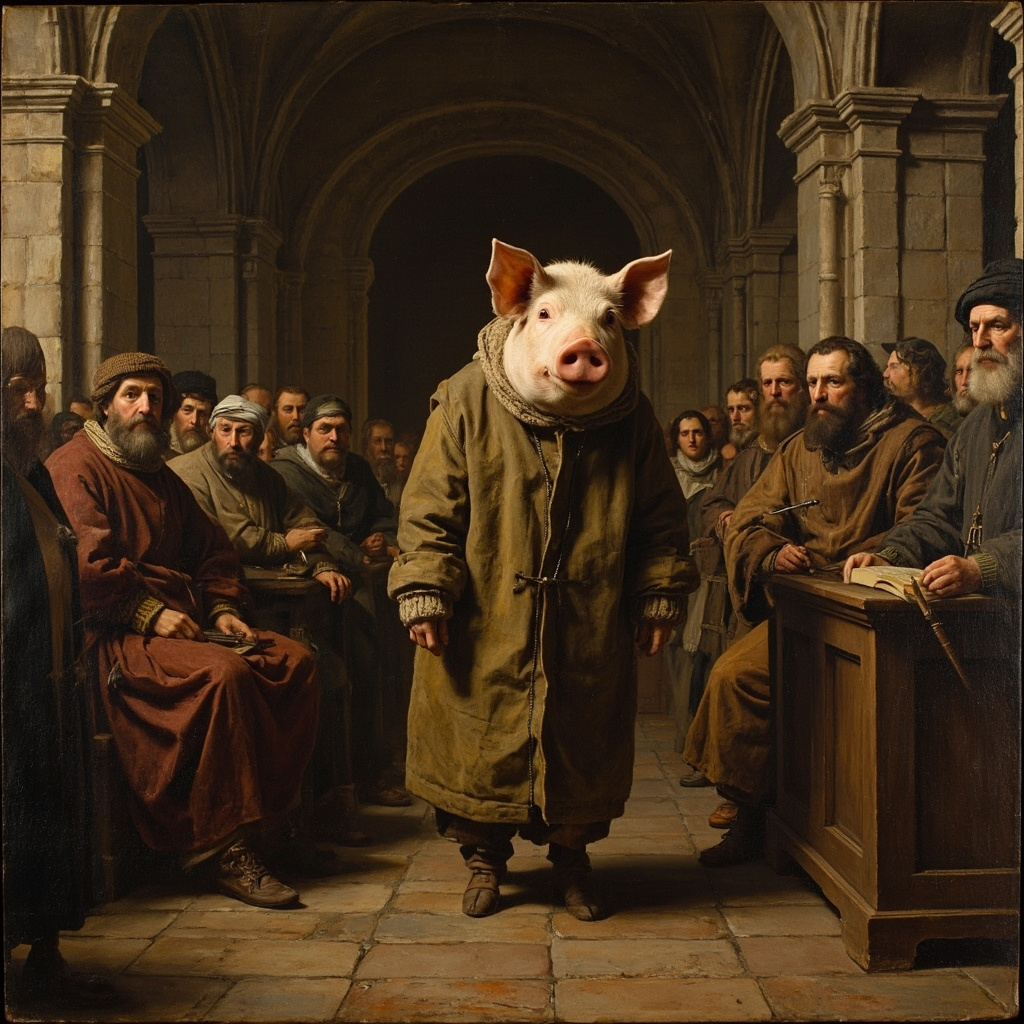
In 1386, in a Normandy market square, a pig dressed in human clothing was hanged for murder. This wasn’t a cruel joke or carnival spectacle—it was the solemn conclusion of a formal legal trial, complete with witnesses, evidence, and a court-appointed defense attorney. For centuries across medieval Europe, animals faced the same justice system as humans, resulting in some of history’s most bizarre courtroom dramas.
The Pig That Committed Murder
The legal records are chillingly detailed. In 1494, near Clermont, France, a young pig was arrested for having “strangled and defaced a child in its cradle.” Multiple witnesses testified that “on the morning of Easter Day, the infant being left alone in its cradle, the said pig entered during the said time the said house and disfigured and ate the face and neck of the said child… which in consequence departed this life.”
The judge, after weighing the evidence and finding no extenuating circumstances, delivered his verdict with the gravity befitting any capital case: “We, in detestation and horror of the said crime, and to the end that an example may be made and justice maintained, have said, judged, sentenced, pronounced and appointed that the said porker… shall be by the master of high works hanged and strangled on a gibbet of wood.”
A Legal System Gone Mad
These weren’t isolated incidents of medieval madness. From the 14th through 19th centuries, European courts regularly tried animals for crimes ranging from murder to obscenity. Dogs, pigs, cows, rats, flies, caterpillars, and even sparrows found themselves in the dock, facing charges that could result in execution, banishment, or excommunication.
The trials followed full legal protocol. Courts appointed lawyers at taxpayer expense to defend the accused animals. Witnesses were called, evidence was presented, and lengthy legal arguments were made. Some trials dragged on for months, featuring respected jurists making erudite arguments about animal culpability and divine justice.
When Rats Hired a Lawyer
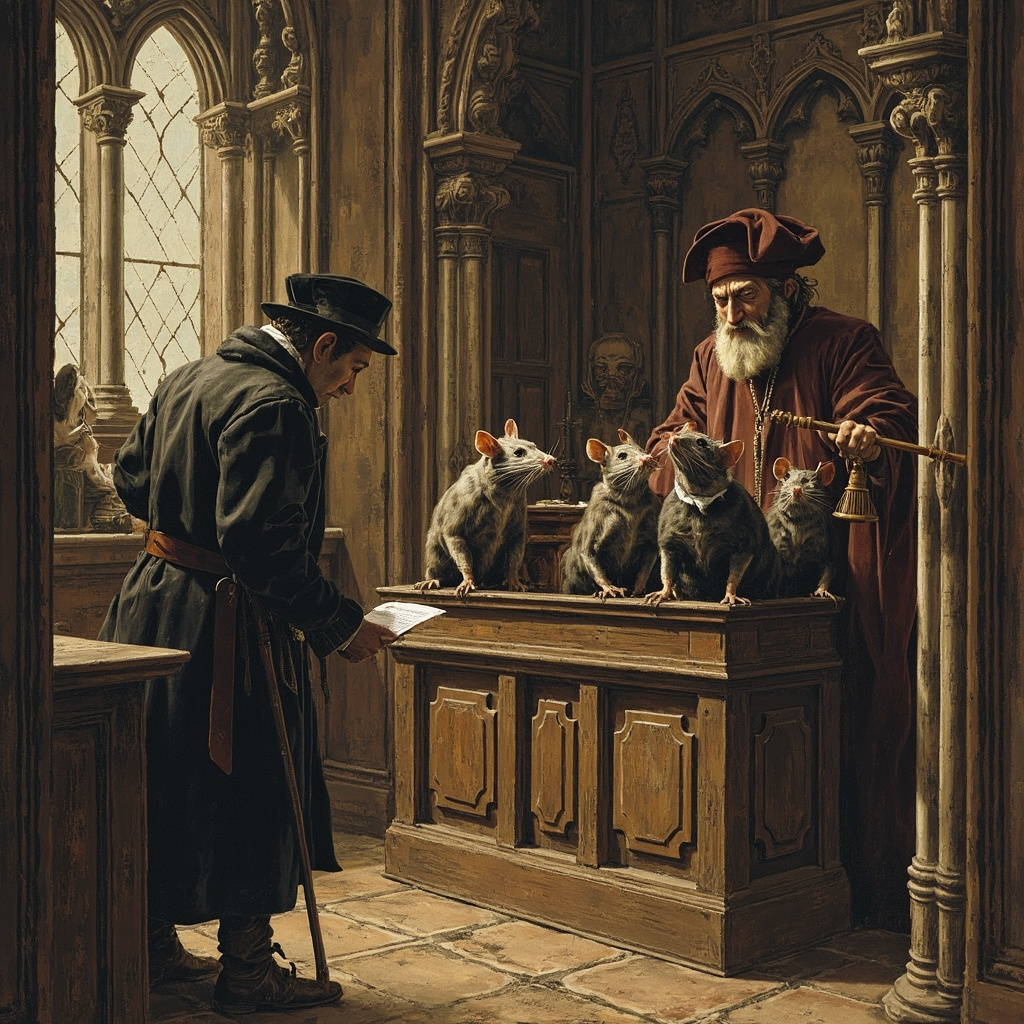
Perhaps the most famous animal defense attorney was Bartholomé Chassenée, a prominent French jurist who successfully defended a colony of rats in the early 16th century. The rats of Autun were charged with destroying local crops and summoned to appear in court.
Chassenée made a series of brilliant legal maneuvers. First, he argued that the summons was invalid because not all rats had been properly served—some lived too far away to receive notice. When the court agreed to re-issue a broader summons, Chassenée then argued his clients couldn’t safely travel to court due to the “unreasonable and unlawful” presence of cats along the route. The cats, he claimed, were “adversaries of the rat race” and made travel impossible.
Through such legal gymnastics, Chassenée successfully delayed proceedings indefinitely, essentially winning the case on a technicality. The rats were never executed.
The Religious Logic Behind Animal Trials
Medieval authorities genuinely believed these proceedings served divine justice. In their worldview, crimes committed by animals were the devil’s work, and failing to punish them properly would give Satan an opening to corrupt human affairs. Animals were seen as moral agents capable of sin, requiring the same legal accountability as humans.
Two distinct types of animal trials emerged. “Thierstrafen” were criminal proceedings against individual animals—usually domestic creatures that had killed humans. These cases invariably ended in execution. “Thierprocesse” were ecclesiastical proceedings against species or groups of animals—typically insects or vermin causing crop damage. These cases often resulted in religious excommunication or banishment.
Sparrows in the Dock
Even the tiniest creatures weren’t exempt. Church records show sparrows being prosecuted for chattering during religious services, disrupting the sacred atmosphere. Caterpillars faced charges for destroying vineyards. Flies were tried for contaminating food. In each case, the full weight of legal and religious authority bore down on creatures incapable of understanding the charges against them.
Some cases reached absurd extremes. A gang of weevils was once excommunicated by a Swiss court for damaging crops. Another French court formally banished a group of slugs from local gardens. The slugs, predictably, ignored the court order.
The End of an Era
As the Enlightenment took hold, animal trials gradually disappeared. The last recorded case occurred in Switzerland in 1906, when a dog was tried and executed for murder—a bizarre anachronism in the modern world. By then, most legal systems had recognized the fundamental absurdity of holding animals criminally responsible for their actions.
Yet for centuries, these trials represented the sincere attempt of medieval society to impose moral order on a chaotic world. In their own twisted logic, they reflected humanity’s deep need to believe that justice could triumph over nature’s apparent randomness—even if it meant putting a pig in a jacket and hanging it in the town square.
The elaborate legal records of these proceedings survive today as monuments to one of history’s strangest chapters—when the law truly was, as Charles Dickens later wrote, “an ass.”
Imagine if nearly three centuries of human history never actually occurred. According to a controversial theory proposed by German historian Heribert Illig, the years 614 to 911 A.D. were entirely fabricated by medieval elites to advance their political agendas. This audacious claim, known as the Phantom Time Hypothesis, suggests that Charlemagne never existed, the Carolingian Empire was a fiction, and nearly 300 years of medieval history is nothing more than an elaborate forgery.
The Birth of a Radical Theory
In 1996, Heribert Illig shocked the academic world with his book Das erfundene Mittelalter: Die grösste Zeitfälschung der Geschichte (The Invented Middle Ages: The Greatest Time-Falsification in History). Illig, a German publisher and amateur historian, claimed to have discovered massive inconsistencies in medieval chronology that pointed to a systematic manipulation of time itself.
Illig’s investigation began with a comparison between the Julian calendar (implemented by Julius Caesar in 45 B.C.) and the Gregorian calendar (introduced by Pope Gregory XIII in 1582 A.D.). According to his calculations, approximately 297 years appeared to be missing from the historical record. But rather than attributing this discrepancy to natural calendar drift, Illig proposed something far more sinister: a coordinated conspiracy to literally add centuries to human history.
The Alleged Conspiracy
According to Illig’s theory, this massive historical deception was orchestrated by two powerful medieval figures: Pope Sylvester II and Holy Roman Emperor Otto III. These men, supposedly living in the 8th century, allegedly wanted to fast-forward time so that their reigns would coincide with the year 1000—exactly one millennium after the birth of Jesus Christ.
To accomplish this audacious goal, the conspirators supposedly employed armies of scribes to create and copy medieval manuscripts detailing fictitious events and individuals. These forged documents were then distributed to monasteries and libraries across Europe, where they would eventually be mistaken for authentic historical records by later generations.
Famous Figures That Never Existed?
Perhaps the most shocking claim of the Phantom Time Hypothesis is that some of history’s most celebrated medieval figures were complete fabrications. According to Illig, Charlemagne—the King of the Franks often called the “Founder of Europe”—never actually lived. Similarly, Alfred the Great, the legendary English king who successfully defended against Viking invasions, was supposedly another fictional character created by medieval propagandists.
The theory doesn’t stop with European history. Illig’s hypothesis extends to suggest that much of what we know about the early Middle Ages, including the rise of Islam, Viking expeditions, and Byzantine politics, was either completely invented or significantly altered to fit the fabricated timeline.
Scientific Evidence Demolishes the Theory
While the Phantom Time Hypothesis might sound intriguing, it crumbles under scientific scrutiny. Multiple lines of evidence from around the world definitively prove that these “missing” centuries actually occurred.
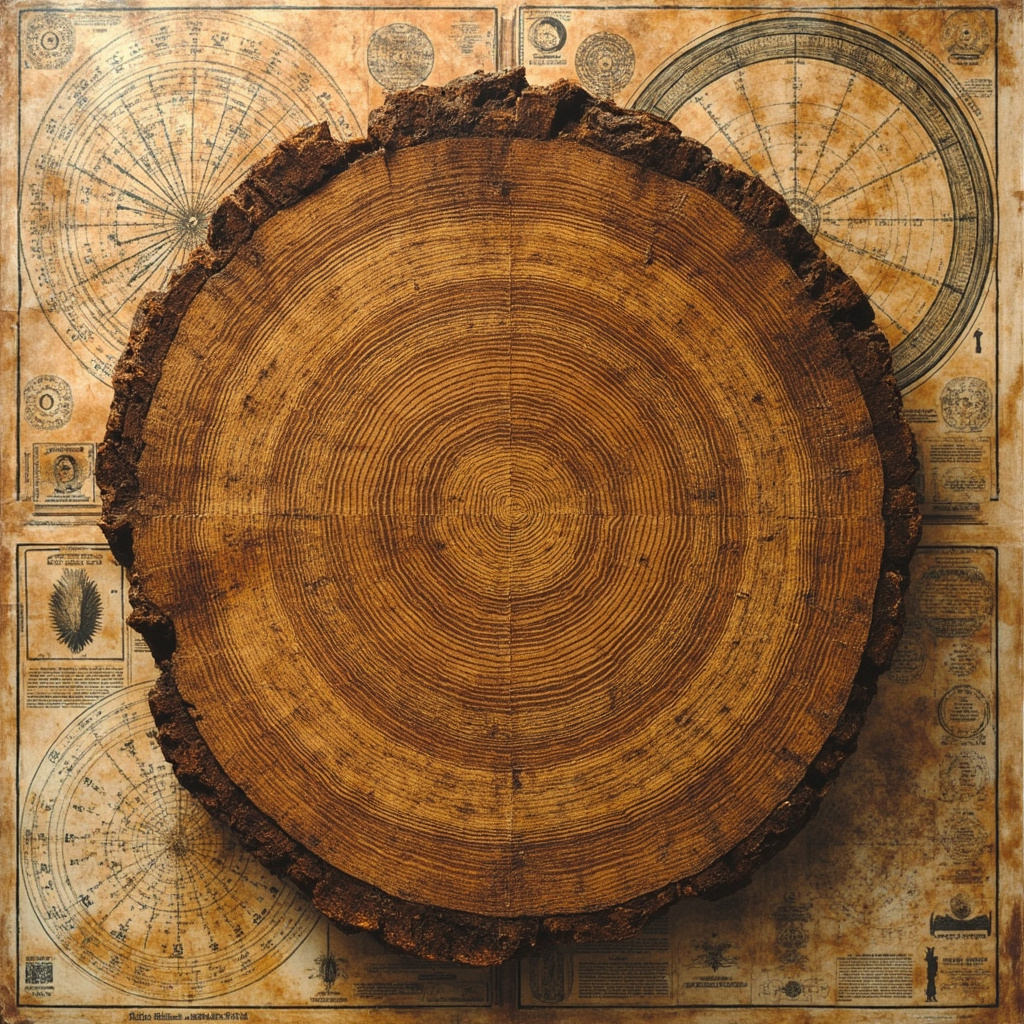
Tree ring chronologies provide perhaps the most compelling refutation of Illig’s claims. Dendrochronology—the science of dating tree rings—creates unbroken chronological sequences that span thousands of years. Ancient trees and preserved wood samples from the supposed “phantom” period show clear evidence of annual growth patterns, proving conclusively that these years actually passed.
Additionally, astronomical records from China, the Islamic world, and other civilizations document specific celestial events like solar eclipses and supernovae during the allegedly fabricated period. These observations correlate perfectly with modern astronomical calculations, providing independent confirmation that time progressed normally through the 7th, 8th, and 9th centuries.
Why Do Such Theories Persist?
Despite overwhelming evidence against it, the Phantom Time Hypothesis continues to attract adherents. Historians suggest this persistence stems from several psychological and cultural factors. The theory appeals to those who distrust authority and prefer alternative explanations to established facts. It also reflects a troubling Eurocentric bias that ignores or dismisses historical evidence from non-European civilizations.
As medievalist Paul Sturtevant notes, conspiracy theories like this one are “more emotional than logical.” The belief in phantom time cannot be dispelled through facts because it is based primarily on a deep-seated mistrust of scholarly authority rather than genuine historical inquiry.
The Broader Context
The Phantom Time Hypothesis exists within a broader ecosystem of historical revisionism and conspiracy theories. Similar to Holocaust denial or ancient alien theories, it selectively dismisses massive amounts of evidence while promoting alternative narratives that serve ideological rather than scholarly purposes.
Illig’s theory also has a Russian counterpart promoted by mathematician Anatoly Fomenko, who argues that most of ancient history actually occurred during the Middle Ages. These theories share common characteristics: they dismiss established chronologies, ignore international evidence, and propose vast conspiracies involving hundreds of scholars across different cultures and time periods.
Lessons for Modern Critical Thinking
While the Phantom Time Hypothesis may seem absurd to trained historians, it offers valuable lessons about the importance of critical thinking and scientific methodology. The theory demonstrates how cherry-picking evidence, ignoring contradictory data, and proposing unfalsifiable conspiracies can create compelling but ultimately false narratives.
As journalist Rex Sorgatz observes, “Every bit of counter-evidence offers a new plot from a crypto-historian.” This infinite regress—where each piece of debunking evidence is explained away by invoking an even larger conspiracy—is a hallmark of pseudoscientific thinking.
The next time you encounter claims that challenge established history, remember the Phantom Time Hypothesis. Ask yourself: Does this theory account for all available evidence? Does it rely on massive, unprovable conspiracies? Most importantly, what would it take to change the minds of its proponents?
In the case of phantom time, the answer is clear: no amount of evidence seems sufficient to convince true believers. Tree rings, astronomical records, archaeological findings, and documentation from multiple civilizations all converge on the same conclusion: those 297 years definitely happened, complete with all their triumphs, tragedies, and ordinary human experiences.
History, it turns out, is far too complex and messy to be the product of medieval conspiracy. The truth, as always, is both stranger and more wonderful than fiction.
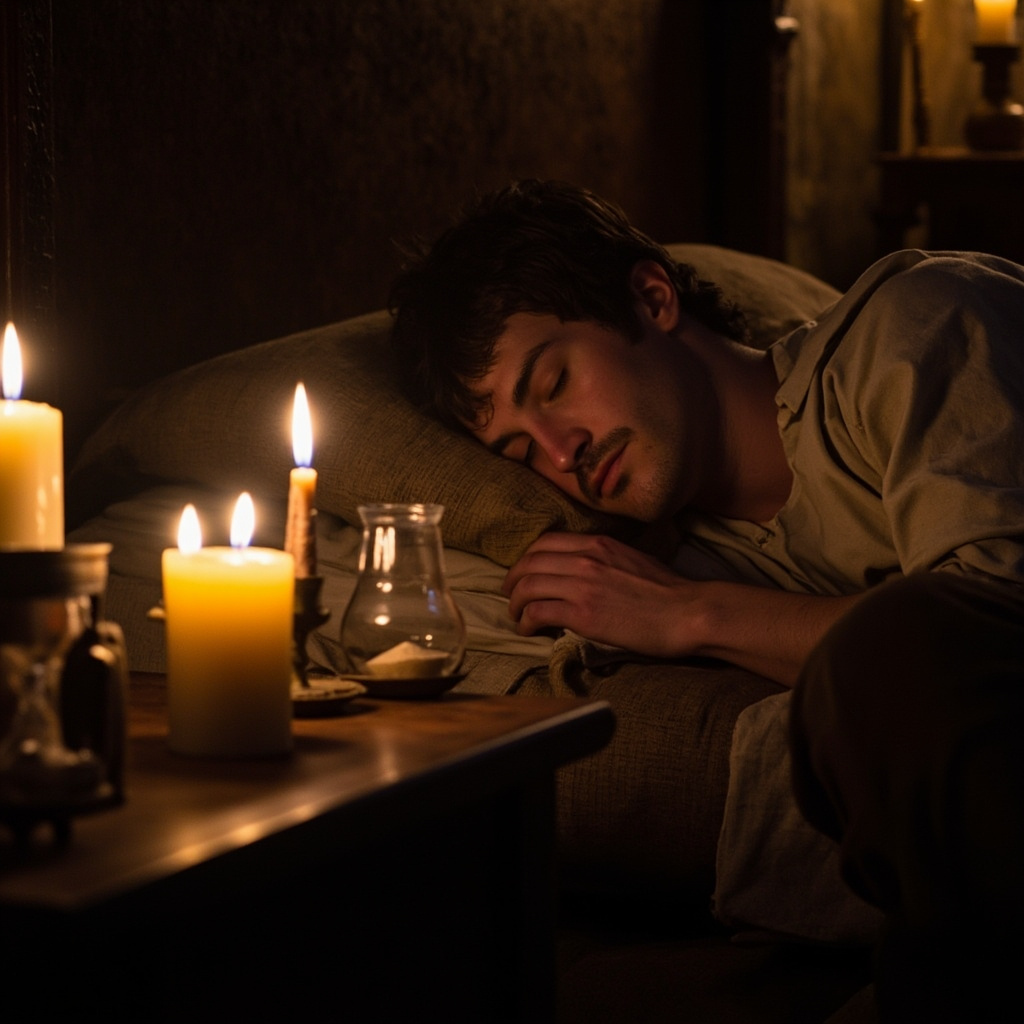
For over a thousand years, our ancestors lived by a sleep pattern that would seem alien to modern humans. Instead of sleeping through the night in one continuous stretch, medieval people regularly practiced what historians call “biphasic sleep” — dividing their rest into two distinct periods with an active wakeful interval in between.
This wasn’t the result of insomnia or poor sleeping conditions. It was the natural, accepted way humans organized their nights, and it shaped medieval society in ways we’re only beginning to understand. Everyday medieval life brims with customs that feel alien now — courts even put animals on trial and solemnly executed pigs — yet to the people of the age they were simply ordinary.
The Two-Sleep Cycle Explained
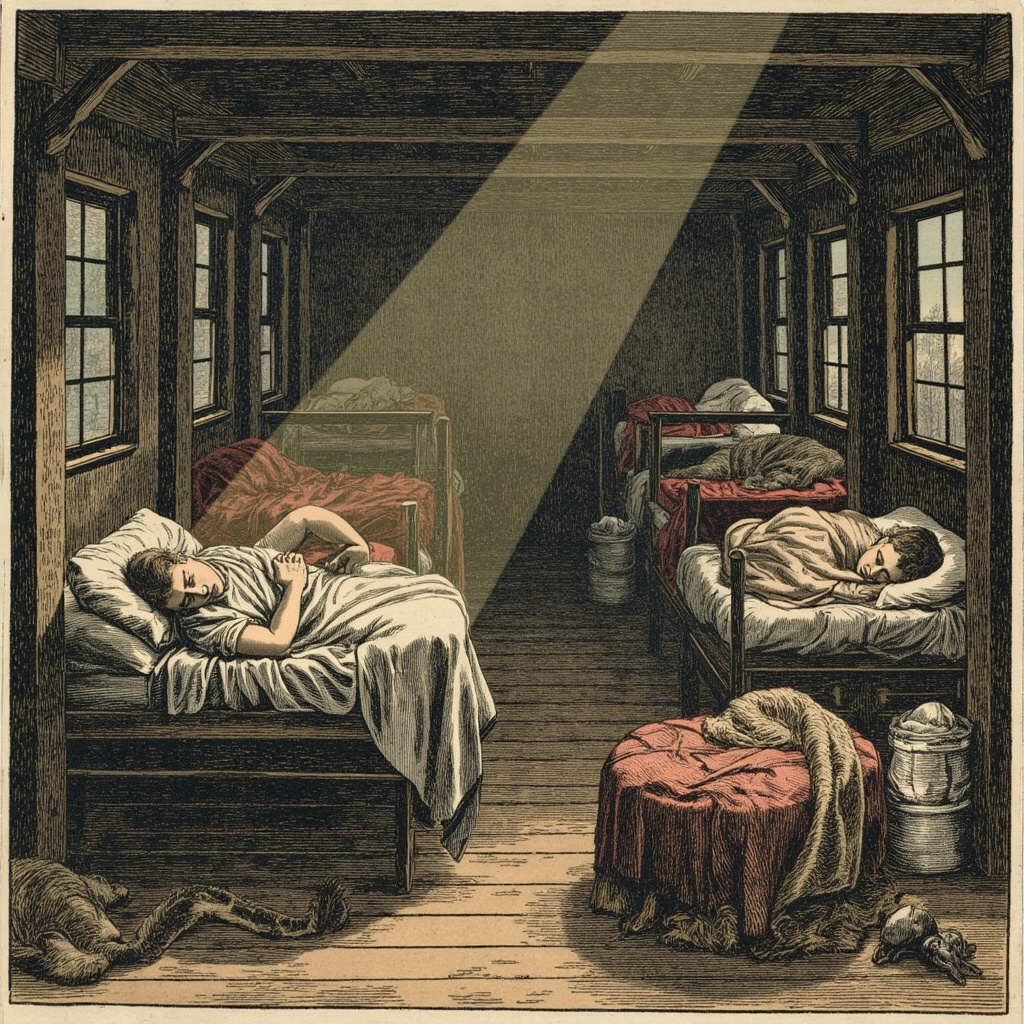
Medieval people typically went to bed shortly after sunset, around 9 or 10 PM. They would sleep for approximately four hours, then wake naturally around 1 AM. This period of wakefulness, known as “the watch,” lasted for one to three hours. Afterward, they would return to bed for their “second sleep,” waking at dawn.
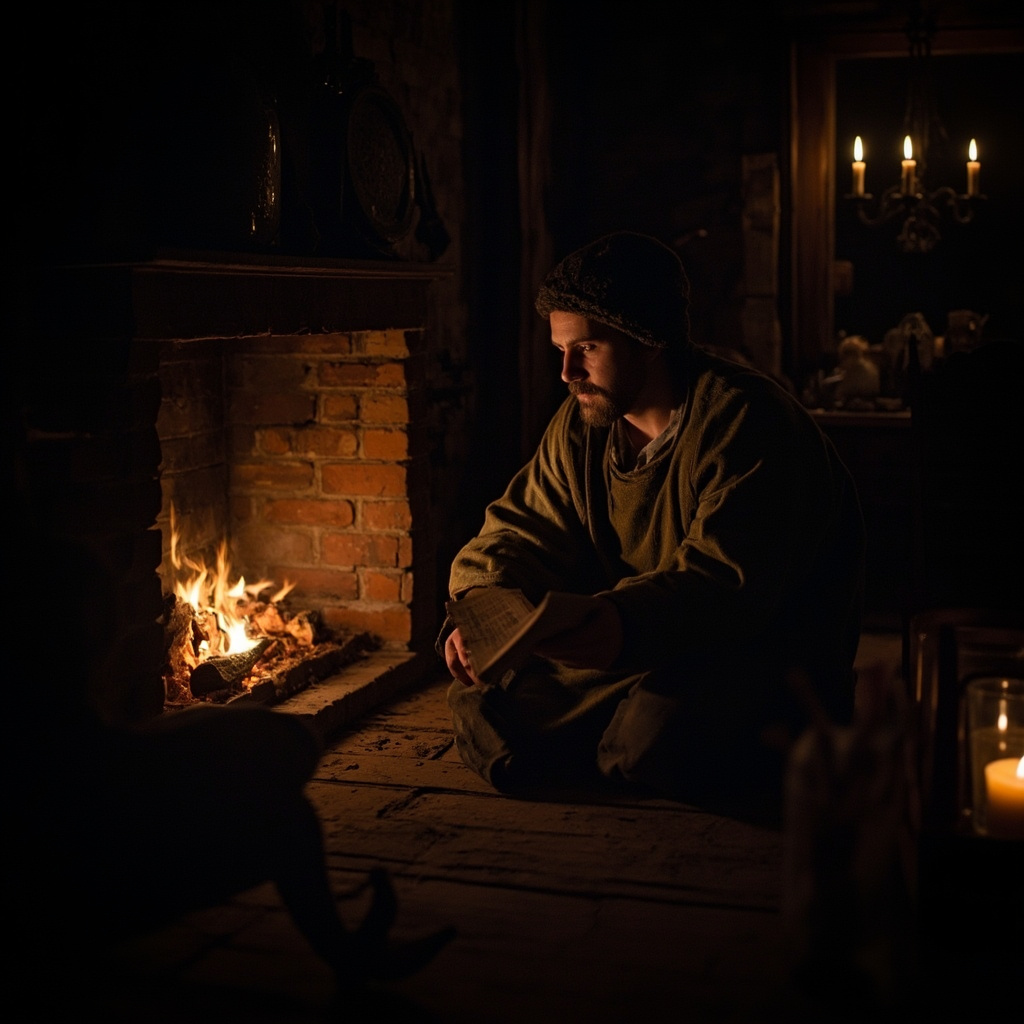
During the watch, people engaged in a variety of activities. Some would tend to the fire, check on livestock, or complete household chores by candlelight. Others used this quiet time for prayer, meditation, or intimate conversations with their spouse. The watch was considered a peaceful, contemplative period — a natural pause in the rhythm of life.
Evidence Across Cultures and Time
References to biphasic sleep appear in countless historical documents, literature, and medical texts from across Europe and beyond. The 16th-century physician Andrew Boorde wrote detailed instructions about “first sleep” and “second sleep.” Shakespeare’s plays contain multiple references to the practice, and court records from various countries document crimes committed during the watch hours.
This wasn’t unique to Europe. Similar sleep patterns have been documented in pre-industrial societies across Africa, South America, and Asia, suggesting that biphasic sleep may have been humanity’s default sleep pattern for millennia.
The Science Behind Natural Sleep
Modern sleep research supports the naturalness of this pattern. In laboratory studies where people are deprived of artificial light for extended periods, many naturally fall into a biphasic sleep cycle. Our circadian rhythms, when not influenced by electric lighting, seem to favor this two-phase approach.
During the watch period, people experienced what researchers call “quiet wakefulness” — a state of relaxed alertness that differs significantly from the stimulated wakefulness of our modern era. Brain scans show that this natural awakening produces different neural patterns than forced awakening, suggesting it served important biological functions.
The Industrial Revolution Changes Everything
The death of biphasic sleep began with the Industrial Revolution. Factory schedules demanded workers be present for long, continuous shifts. Urban growth meant people lived farther from work, requiring earlier wake times. Most importantly, the introduction of gas lighting and later electric lighting extended the evening hours.
By the late 19th century, sleeping through the night had become the new norm. Medical authorities began promoting “consolidated sleep” as healthier, despite thousands of years of evidence to the contrary. The watch period was rebranded as insomnia — a medical problem to be solved rather than a natural pattern to be embraced.
Social Implications of the Change
The shift from biphasic to monophasic sleep had profound social consequences. The watch had been a time for intimate family conversations, personal reflection, and spiritual contemplation. Its disappearance may have contributed to the social isolation that characterizes much of modern life.
Some historians argue that the loss of this quiet, contemplative period also affected human creativity and problem-solving abilities. Many great thinkers throughout history, from Dickens to Tesla, were known to use nighttime wakefulness as a period of heightened mental activity.
Modern Rediscovery and Applications
Today, sleep researchers are revisiting biphasic patterns with renewed interest. Some studies suggest that people suffering from insomnia might actually be experiencing a natural urge to return to humanity’s traditional sleep pattern. Rather than fighting middle-of-the-night wakefulness, some sleep specialists now recommend accepting it.
A small but growing number of people are experimenting with intentional biphasic sleep schedules. They report benefits including increased creativity, better dream recall, and a greater sense of being in tune with natural rhythms. However, the demands of modern society — particularly work schedules and artificial lighting — make it challenging to maintain consistently.
Lessons from Our Sleeping Past
The story of biphasic sleep reveals how quickly and completely humans can abandon even the most fundamental practices. For our ancestors, the watch was as natural as sunrise and sunset. Within just a few generations, it became so forgotten that we now treat natural nighttime wakefulness as a disorder.
This historical perspective offers valuable insights into our relationship with sleep, technology, and natural rhythms. Perhaps the medieval practice of accepting — even welcoming — periods of quiet wakefulness holds lessons for our hyperconnected, always-stimulated modern world.
While we may never fully return to the two-sleep pattern of our ancestors, understanding this lost practice reminds us that our current approach to sleep is neither universal nor necessarily optimal. The watch may be gone, but its memory challenges us to reconsider what we’ve gained — and lost — in our relentless march toward efficiency.
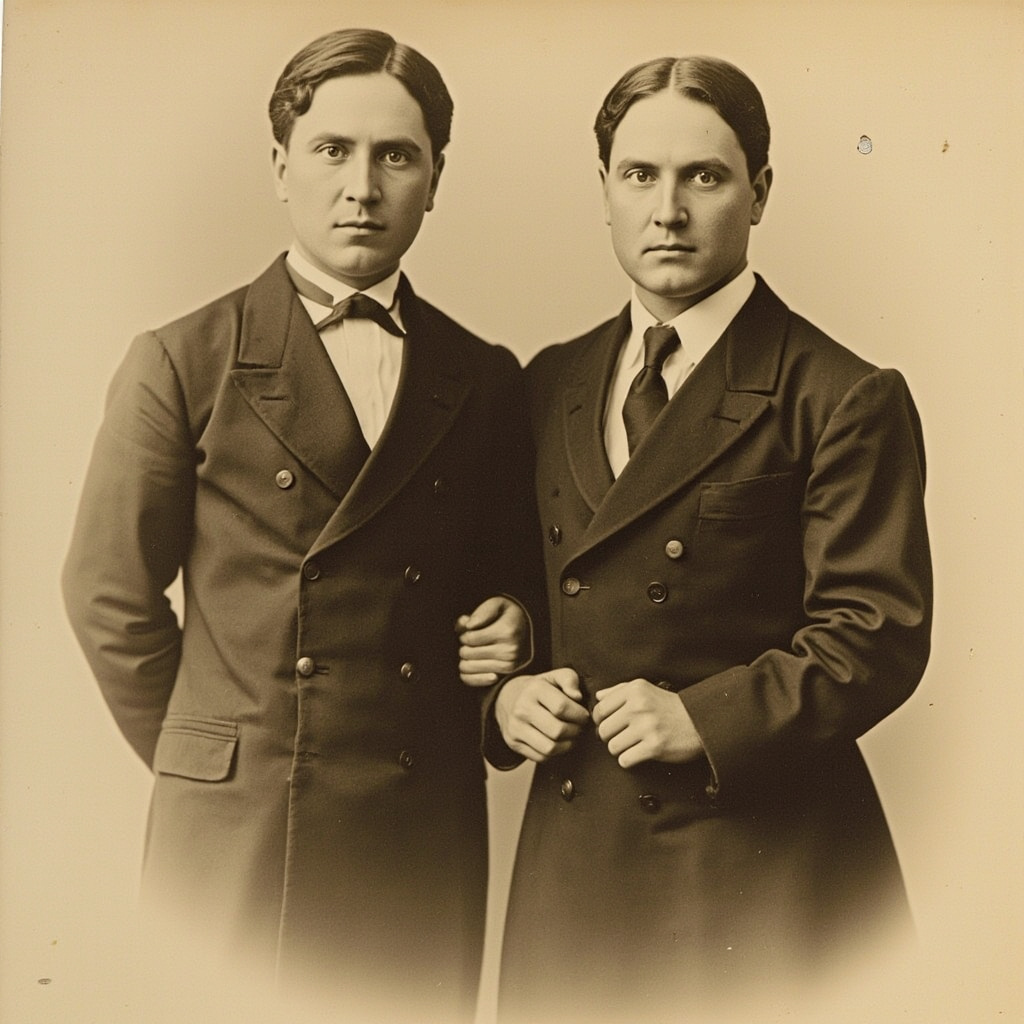
From the mythological founders of Rome to groundbreaking scientific subjects, twins have fascinated humanity for millennia. Their stories — sometimes triumphant, sometimes tragic — reveal deep truths about identity, connection, and what it means to share your life with someone who entered the world alongside you. Here are some of history’s most remarkable twin stories.
Romulus and Remus: The Twins Who Built an Empire
Perhaps no twins loom larger in Western civilization than Romulus and Remus, the legendary founders of Rome. According to myth, these twin brothers were born to Rhea Silvia, a Vestal Virgin, and Mars, the god of war. Their great-uncle, King Amulius, ordered them drowned in the Tiber River to eliminate any threat to his throne. But fate — or the gods — had other plans.
A she-wolf discovered the abandoned infants and nursed them in a cave called the Lupercal. Later, a shepherd named Faustulus found and raised them. When the brothers grew to manhood and learned their true origins, they overthrew Amulius and restored their grandfather to power. Then they set out to build their own city.
What happened next is one of history’s darkest twin stories. The brothers quarreled over where to build and how to rule. In a fit of rage, Romulus killed Remus and became the sole founder of Rome — a city that would grow to dominate the known world. The tale of Romulus and Remus isn’t just a founding myth; it’s a meditation on rivalry, ambition, and the terrible price of power, even between those who share the closest possible bond.
Chang and Eng Bunker: The Original “Siamese Twins”
Born in 1811 in Siam (modern-day Thailand), Chang and Eng Bunker were conjoined twins connected at the chest by a band of cartilage. Their story would give the world the now-outdated term “Siamese twins” — but their lives were far more interesting than any label.
Discovered by a British merchant, the brothers were brought to the West as curiosities and toured with P.T. Barnum’s circus. But Chang and Eng were no passive spectacles. They were shrewd businessmen who eventually bought their freedom, became American citizens, purchased a plantation in North Carolina, and married two sisters — Adelaide and Sarah Yates.
Between them, the brothers fathered 21 children. They developed a rotating schedule, spending three days at Chang’s home and three at Eng’s. Despite being physically inseparable their entire lives, the twins had distinctly different personalities: Chang was more outgoing and drank heavily, while Eng was quieter and more reserved. When Chang died in his sleep on January 17, 1874, Eng reportedly said, “Then I am going too,” and passed away hours later. Modern doctors believe surgical separation would have been possible — and relatively simple — with today’s techniques.
The Dionne Quintuplets: Canada’s Famous Five
While not twins in the strict sense, the Dionne quintuplets — Yvonne, Annette, Cécile, Émilie, and Marie — were born near Callander, Ontario, in 1934 as the first quintuplets known to survive infancy. What makes their story relevant to twin history is that they were identical siblings, all developed from a single fertilized egg, making them essentially twins multiplied.
Their birth was a sensation, but what followed was exploitation on a staggering scale. The Ontario government removed the girls from their parents and placed them in a specially built facility called “Quintland,” where they became a tourist attraction. Up to 6,000 people a day watched them play behind one-way glass. They generated an estimated $500 million in tourism revenue during the Great Depression — money they never saw.
The quintuplets were eventually returned to their parents, but the damage was done. In later years, the surviving sisters revealed they had suffered abuse at home and carried deep psychological scars from their childhood as exhibits. Their story remains a powerful cautionary tale about the exploitation of multiple births and the dark side of public fascination with twins and multiples.
The “Silent Twins”: June and Jennifer Gibbons
Of all the twin stories in history, few are as haunting as that of June and Jennifer Gibbons, known as the “Silent Twins.” Born in 1963 in Barbados and raised in Haverfordwest, Wales, the identical twins were the only Black children in their community and suffered severe bullying. They withdrew into each other completely, developing a secret language and refusing to communicate with anyone else.
Their bond was intense and suffocating. They made a pact: if one died, the other must begin to speak and live a normal life. They wrote novels — Jennifer authored The Pepsi-Cola Addict and June wrote The Pugilist — but their isolation eventually led to a crime spree of arson and theft that landed them in Broadmoor, Britain’s notorious high-security psychiatric hospital, where they spent 11 years.
The most chilling chapter came in 1993 when the twins were being transferred to a less restrictive facility. Jennifer suddenly became ill on the bus and died of acute myocarditis — inflammation of the heart — with no clear medical explanation. There were no drugs in her system, no obvious cause. June later told a reporter, “I’m free at last, liberated, and at last Jennifer has given up her life for me.” June has lived a quiet, independent life ever since, fulfilling their pact.
Twin Science: The Minnesota Twin Study
Beyond individual stories, twins have played a crucial role in advancing our understanding of human nature itself. The most famous scientific twin study — the Minnesota Study of Twins Reared Apart — began in 1979 under psychologist Thomas Bouchard. The study tracked identical twins who had been separated at birth and raised in different families, comparing their traits, behaviors, and life choices.
The results were astonishing. Jim Lewis and Jim Springer, separated at four weeks old and reunited at age 39, discovered they had both married women named Linda, divorced, and then married women named Betty. Both had sons named James. Both drove the same car, smoked the same cigarettes, and vacationed at the same Florida beach. Coincidence? The Minnesota study suggested that genetics played a far larger role in personality and behavior than scientists had previously believed — a finding that reshaped psychology, medicine, and our understanding of what makes us who we are.
Royal Twins and Political Power
Twins have also shaped political history. In 17th-century France, the birth of twin sons to Queen Anne of Austria in 1638 and 1640 (Louis XIV and Philippe, Duke of Orléans, who were not actually twins but were close in age) inspired Alexandre Dumas’s famous novel The Man in the Iron Mask, which imagined a secret twin imprisoned to prevent a succession crisis.
Real twin rulers have existed, too. Lech and Jarosław Kaczyński, identical twins from Poland, simultaneously held the positions of President and Prime Minister from 2006 to 2007 — one of the only times in modern history that twins controlled both the executive offices of a nation. Their political partnership and rivalry echoed, in democratic form, the ancient tensions of Romulus and Remus.
The Eternal Fascination
Why do twins captivate us so? Perhaps it’s because they challenge our deepest assumptions about individuality. In a world that prizes uniqueness, twins remind us that identity is more complicated than we think — that two people can share a face, a genome, even a womb, and still become entirely different people. Or, in some cases, remain so deeply connected that one cannot survive without the other.
From Roman myth to modern science, the stories of twins are really stories about all of us: about nature and nurture, love and rivalry, independence and connection. They are mirrors reflecting the fundamental question of what makes a person who they are — and whether any of us are truly alone in the world.