The 1904 Olympic Marathon: Rat Poison, Brandy, and the Most Chaotic Race Ever Run

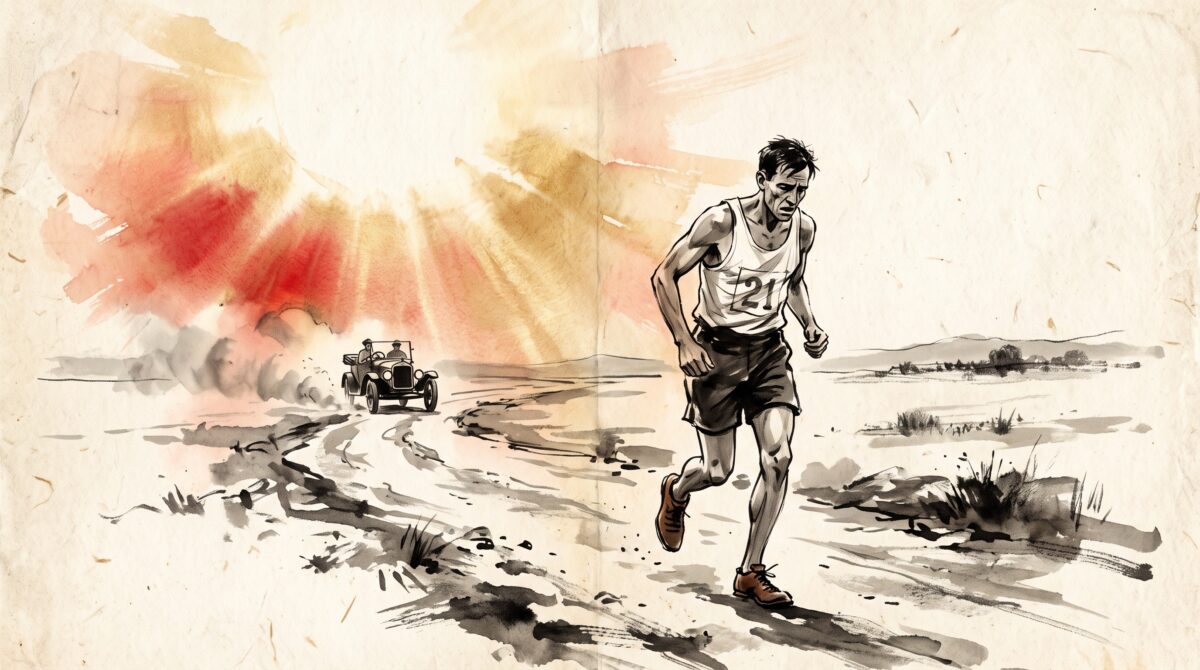
On the afternoon of August 30, 1904, a doctor stood at the finish line of the Olympic marathon in St. Louis and watched the winner being carried toward him. Thomas Hicks could no longer run, could no longer walk, could barely keep his eyes open. Two men held him upright, one under each arm, and moved his legs for him while his feet dragged the track. He was hallucinating. He had lost eight pounds of water in a few hours. And the men holding him up were not saving him from the race — they were the ones who had very nearly killed him, by feeding him a stimulant better known as rat poison.
This was the Olympic marathon of 1904, and more than a century later it is still, by common agreement, the strangest and most shambolic race ever run under five rings.
A Marathon Nobody Planned Properly
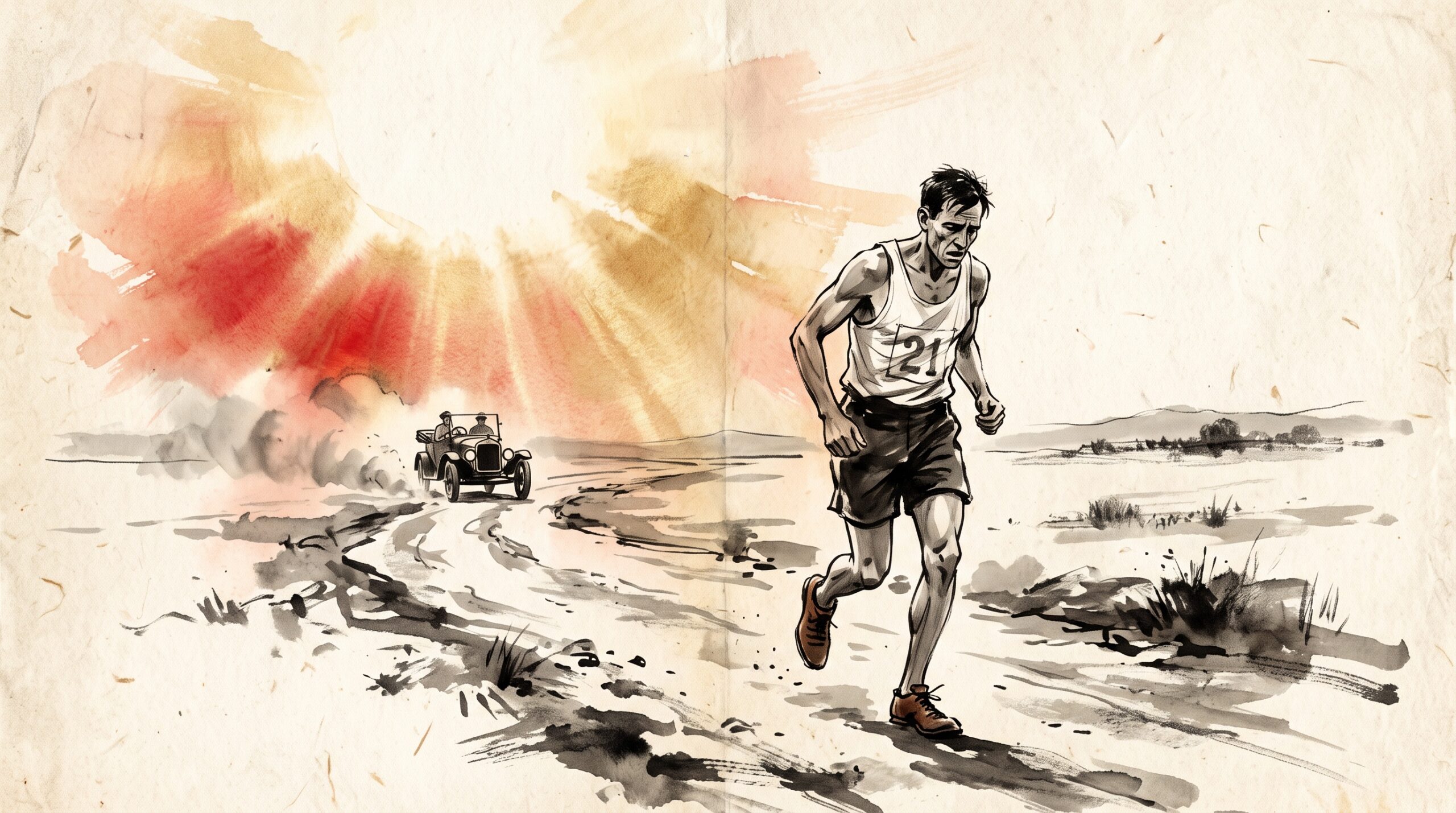
The 1904 Games were bolted onto the St. Louis World’s Fair almost as an afterthought, and the marathon inherited that carelessness. The organizers scheduled it for the hottest part of a hot afternoon, with temperatures around 90 degrees. The course ran roughly 24.85 miles over unpaved country roads choked with dust, which was churned into choking clouds by the officials, coaches, and doctors who followed the runners in early automobiles.
Most astonishing of all was the water. The chief organizer, James Sullivan, was fascinated by a fashionable pseudo-science of the day called “purposeful dehydration,” and he wanted to study how the human body coped with having almost nothing to drink. So along the entire course of nearly twenty-five miles, in ninety-degree heat, there was exactly one water stop — a single well at about the twelve-mile mark. The runners were, in effect, unwitting subjects in a cruel experiment.
The Field That Should Never Have Started
Thirty-two men lined up, and the field was as improvised as the course. Many were not serious marathoners at all. A good number had never run the distance in their lives and simply would not finish; of the thirty-two starters, only fourteen would make it to the end.
Among the entrants were two Tswana men from southern Africa, Len Tau (Len Taunyane) and Jan Mashiani, who happened to be in St. Louis as part of a Boer War exhibit at the Fair and were entered almost on a whim. They became the first Black Africans to compete in the Olympics. Len Tau ran respectably and finished ninth — a result made more remarkable by the fact that at one point he was chased nearly a mile off the course by a pack of wild dogs.
The Man Who Rode to Victory
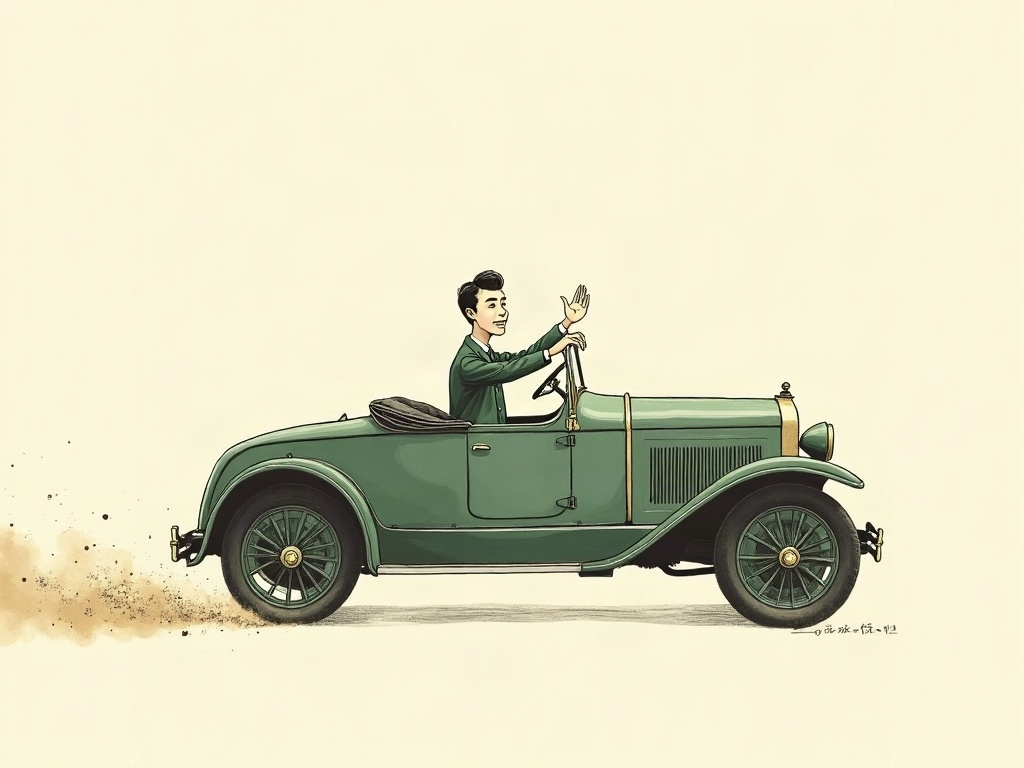
The first man to cross the finish line was an American bricklayer named Fred Lorz. The crowd roared, and Alice Roosevelt, the president’s daughter, posed for a celebratory photograph with the apparent champion. Officials were on the verge of hanging the gold medal around his neck.
There was only one problem. Lorz had stopped running at about nine miles, felled by cramps and the heat. His manager had picked him up in a car and driven him roughly eleven miles up the road. When the car itself broke down, a refreshed Lorz had hopped out and jogged the remaining distance to the stadium on his own two legs. He always insisted it had been a joke that spiraled out of control and that he never intended to claim the title. The officials were not amused: he was initially banned from competition for life, though the ban was lifted within a year. Vindicated or simply stubborn, Lorz went on to win the Boston Marathon in 1905 — on foot, the whole way.
Strychnine, Egg Whites, and Brandy
With Lorz exposed, the real leader proved to be Thomas Hicks, an English-born brass worker running for the United States. What the cheering crowds did not fully grasp was that Hicks was being kept upright by chemistry. Several miles from the finish he had begged to lie down and stop. His trainers refused. Instead, following the grim sports medicine of the era, they dosed him with a mixture of strychnine sulfate and raw egg whites, washed down with brandy.
In large amounts strychnine is a deadly poison — the active ingredient in rat killer. In tiny doses, it was believed to act as a stimulant that could fire the nervous system and keep flagging muscles moving. Hicks got more than one dose. By the final miles he was ashen, hallucinating, convinced the finish was still twenty miles away, and his trainers were essentially walking a poisoned man to the line. The dangers of pushing the human body past every natural limit run all through history, from the soldier in the famous case of Tarrare, the man whose appetite no amount of food could satisfy, to the ways the body can absorb punishment that should by rights be fatal.
Carried Across the Line
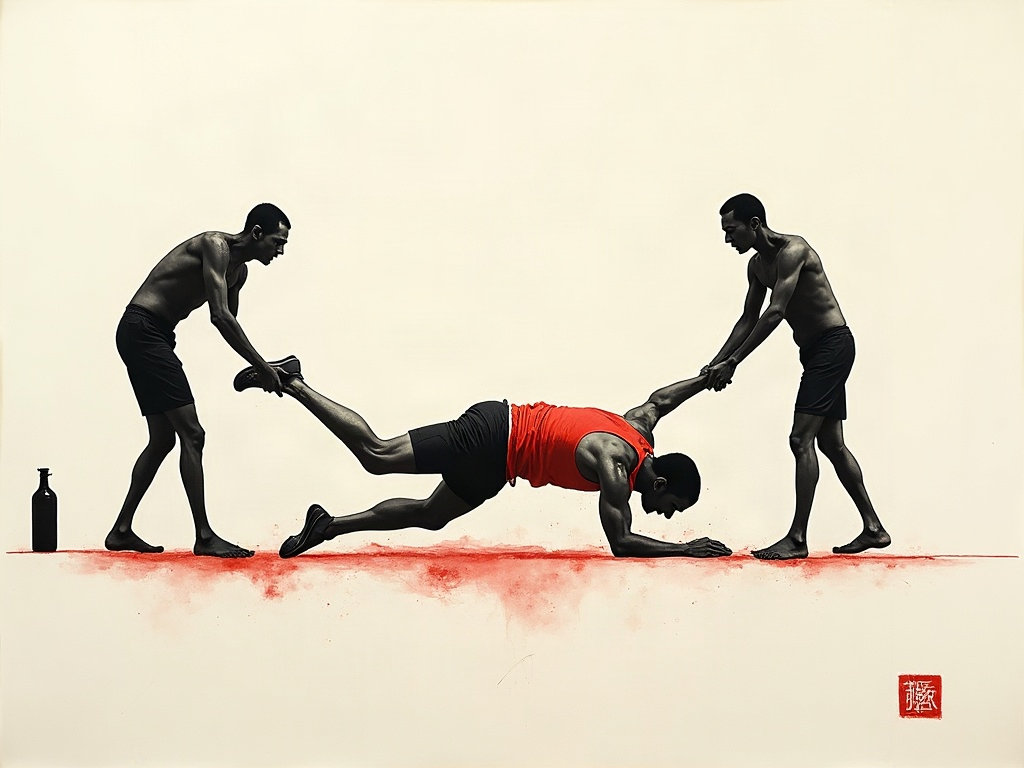
When Hicks finally reached the stadium he was incapable of finishing on his own. His handlers held him up and moved his legs so that his feet shuffled across the finish; by the strict letter of the rules it was barely a legal finish at all. He was carried off the track immediately and treated by doctors, and it was widely said afterward that a few more miles, or one more dose of strychnine, would have killed him outright. His winning time of 3 hours, 28 minutes, and 53 seconds remains the slowest in the history of the Olympic marathon — a fitting record for the slowest, strangest race of all.
Hicks never ran another marathon. The gold was his, but he had been poisoned nearly to death to claim it, a survival against the body’s own limits that belongs beside stories like that of Roy Sullivan, the park ranger who lived through being struck by lightning seven times.
The Napping Mailman and the Vanishing Field
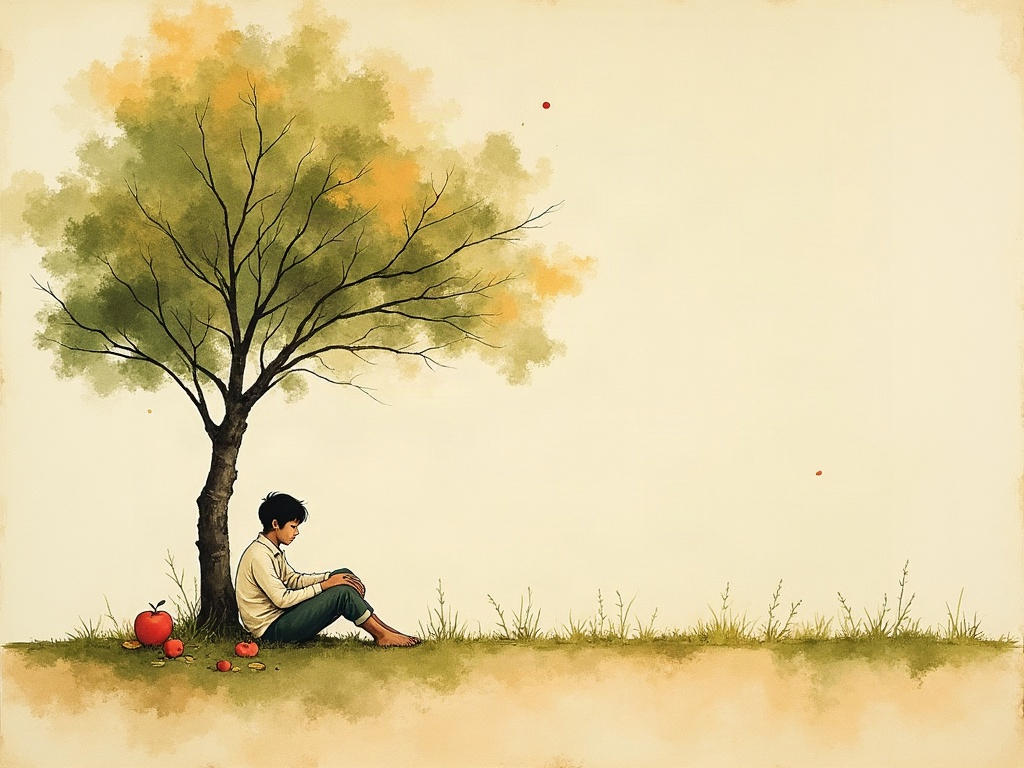
Perhaps the most beloved figure of the whole affair never came close to winning. Felix Carvajal was a Cuban mailman who had raised his passage by running laps around a public square until strangers paid to see him stop. He lost his travel money gambling in New Orleans and hitchhiked the rest of the way to St. Louis, arriving without proper kit; he ran in street shoes and a pair of long trousers he cut off at the knee with borrowed scissors at the start line.
Having not eaten in roughly two days, Carvajal grew hungry mid-race, stopped at a roadside orchard, and ate several apples that turned out to be rotten. Stricken with cramps, he lay down in the field and took a nap while the race went on without him. Then he woke up, dusted himself off, and ran well enough to finish fourth. Had he skipped the apples, he might well have won.
Why It Still Matters
The 1904 marathon was such a fiasco — the car, the poison, the dust, the wild dogs, the single well, the near-deaths — that it nearly killed off the Olympic marathon as an event. It stands in history alongside the great self-inflicted debacles, the kind of organized chaos that recalls the Battle of Karansebes, where an army managed to destroy itself in the dark. And yet, because it was so disastrous, it became a turning point. The outrage over strychnine and brandy helped push sport, slowly, toward the idea that there should be limits on what you do to an athlete’s body in pursuit of a medal — the distant ancestor of modern anti-doping rules. Water stations, medical oversight, and sane scheduling all trace part of their lineage to this cautionary summer afternoon.
What lingers, though, is not the reform but the humanity. A man who rode to glory as a joke. A mailman who napped under an apple tree and still came fourth. Two African runners entered on a whim, one of them outrunning a dog pack. And a winner carried across the line by the very people who had poisoned him, too delirious to know he had won. The 1904 Olympic marathon endures because it is gloriously, absurdly human — a reminder that even the grandest ideals, like the Olympic spirit itself, begin as something improvised, imperfect, and gropingly, stumblingly alive.
Sources & further reading:
- How the 1904 Marathon Became One of the Weirdest Olympic Events of All Time — Smithsonian Magazine
- Athletics at the 1904 Summer Olympics — Men’s marathon (Wikipedia)
More from the archive
- The Poison Squad: The Government Clerks Who Ate Poison for Breakfast to Make Food Safe
- The Ohio Penitentiary Fire of 1930: 322 Men Who Burned Behind Locked Doors
- The London Beer Flood of 1814: When a Tsunami of Porter Killed Eight People