Sergeant Stubby: The Stray Dog Who Became America’s Greatest War Hero

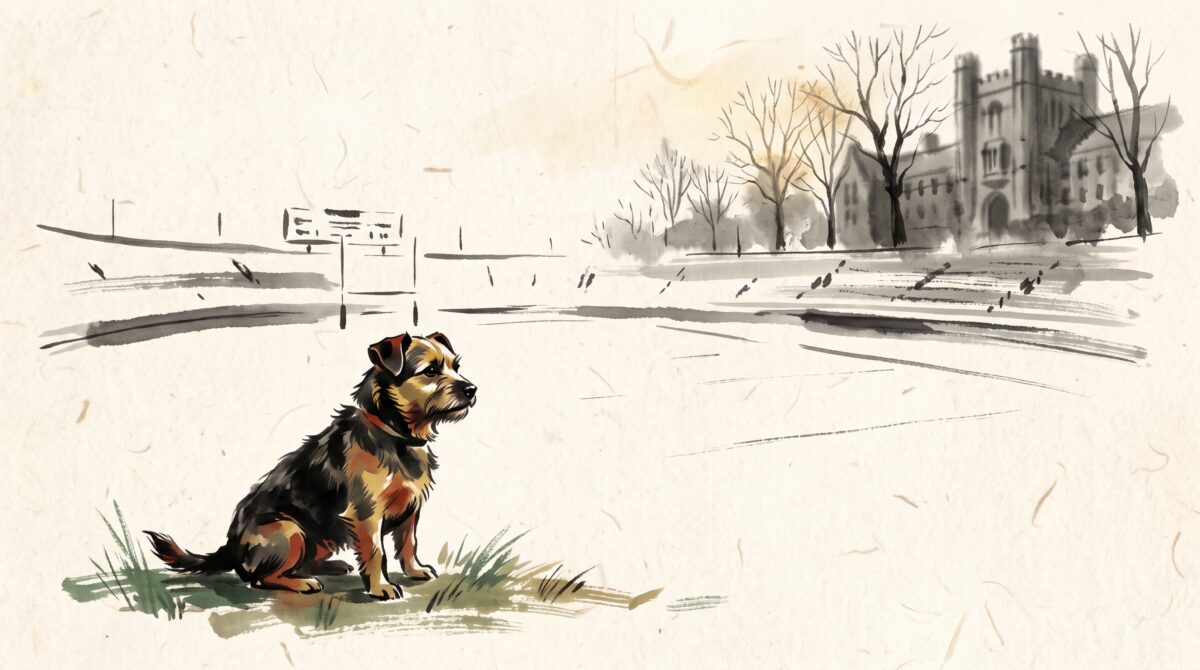
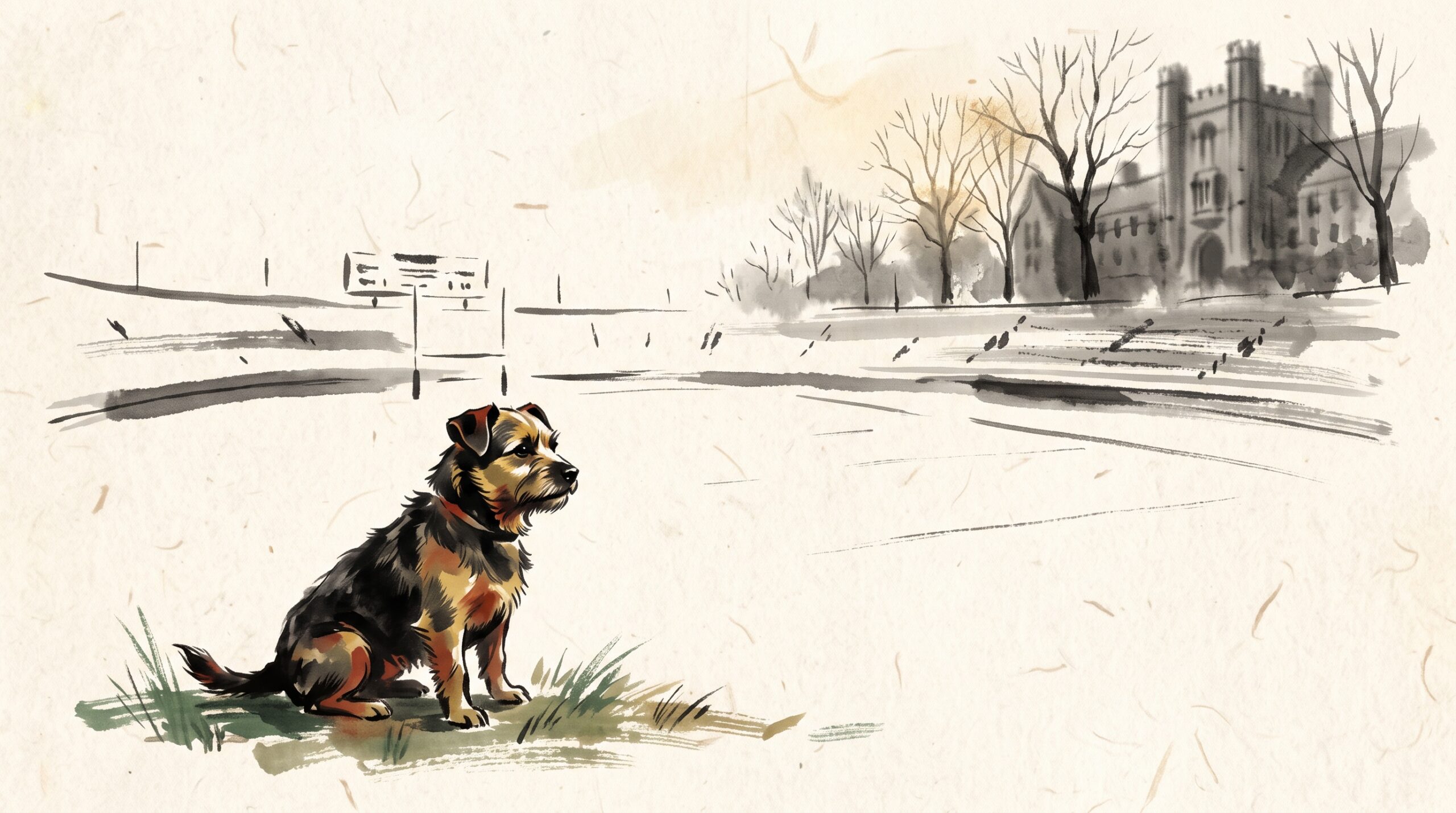
In the summer of 1917, as America prepared to send its young men into the slaughter of the First World War, the soldiers of the 102nd Infantry Regiment drilled on the athletic fields of Yale University in New Haven, Connecticut. One afternoon a small, homeless dog trotted onto the field and refused to leave. He was a muddy brindle mongrel with a broad head, a stump of a tail, and no pedigree worth the name. A young private named J. Robert Conroy gave him a scrap of food and a name for the tail that barely existed: Stubby. Within weeks the stray had become the unofficial mascot of the entire regiment, and within two years he would be the most famous dog in America.
A Stowaway Bound for France
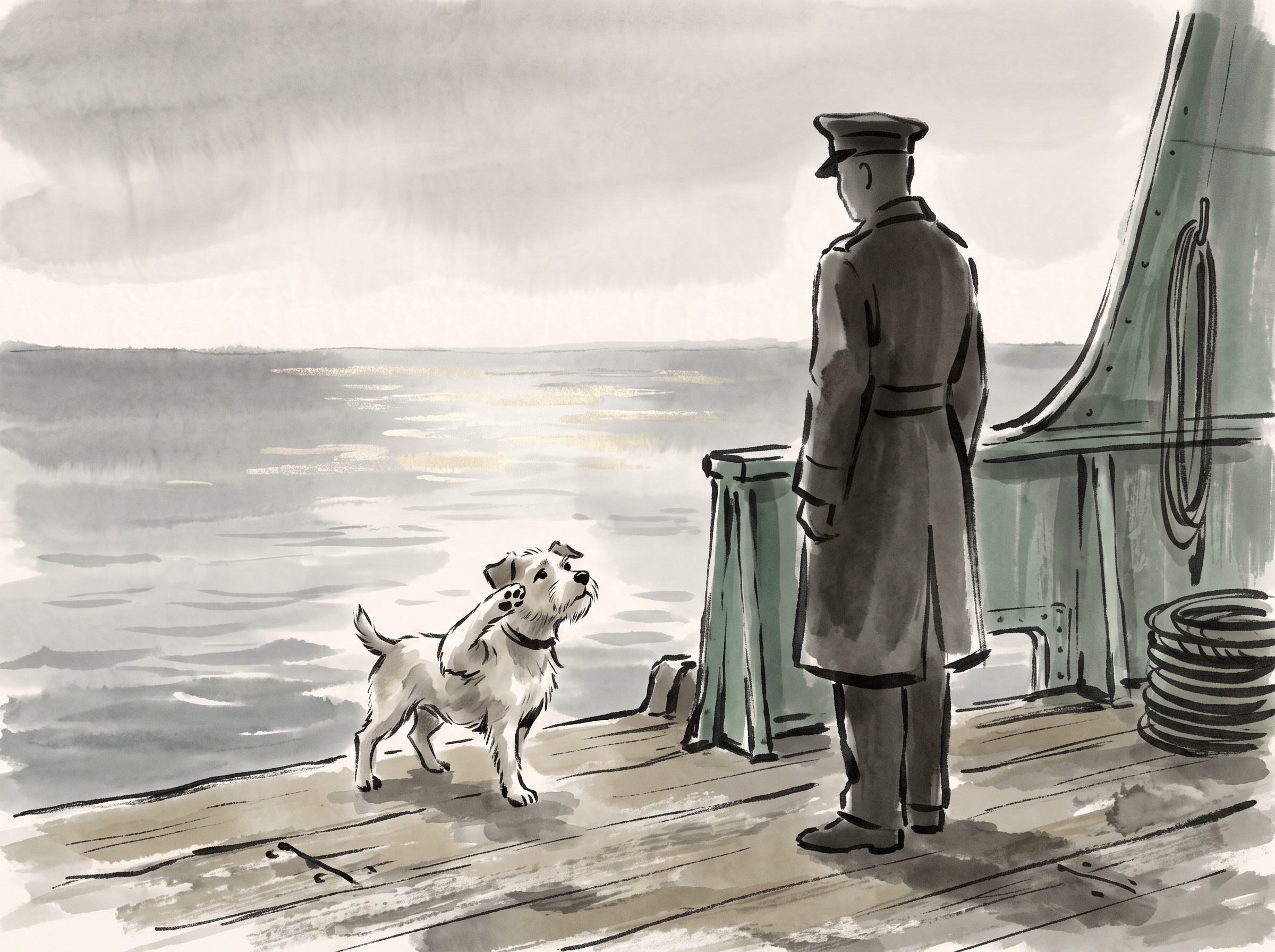
When the regiment shipped out for the trenches of the Western Front, dogs were most certainly not on the manifest. But Conroy could not bear to leave Stubby behind. He smuggled the dog aboard the troop ship Minnesota, hiding him in the coal bin until they were safely at sea. Eventually Stubby was discovered by a superior officer. According to the story the soldiers told for the rest of their lives, the little dog did the only sensible thing: he sat up and raised a paw to his brow in a passable imitation of the salute he had learned on the parade ground. The officer, charmed and perhaps a little astonished, allowed him to stay. Stubby went to war.
Eighteen Months in the Trenches
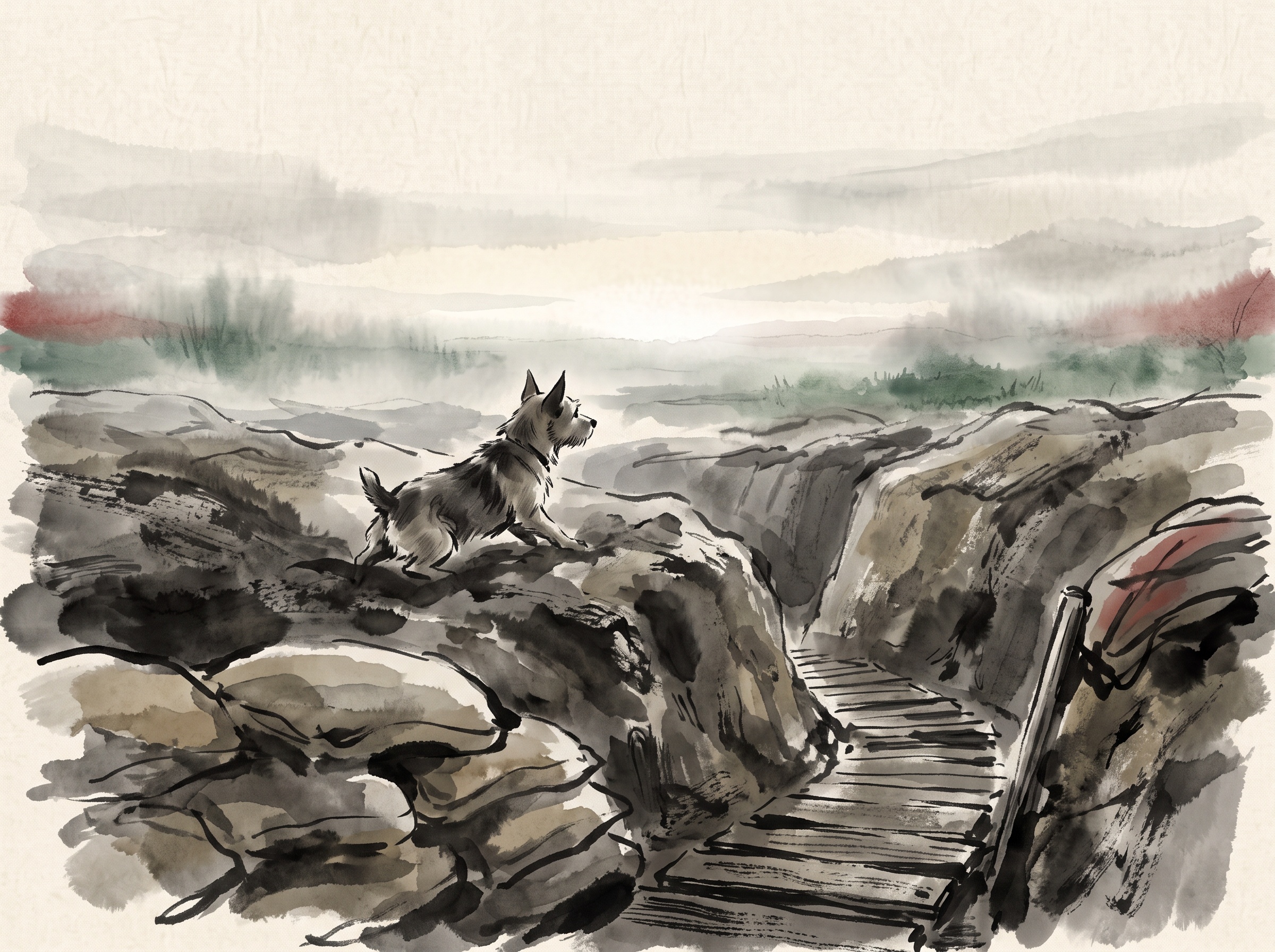
What followed was no gentle mascot’s tour. Stubby served on the front lines for eighteen months and lived through seventeen battles, enduring the mud, the cold, the shelling, and the constant terror that broke grown men. He quickly proved he was far more than a morale booster. His senses, so much keener than any human’s, turned out to be weapons in their own right.
The most feared killer of that war was poison gas, which could drift silently into a trench and suffocate a sleeping company before anyone stirred. Stubby, having survived an early gas attack himself, learned the smell. When gas came rolling over the lines he would race up and down the trench, barking and nipping at the soldiers to rouse them, giving them precious seconds to pull on their masks. He could also hear the whine of incoming artillery long before the men could, and would bolt for cover, teaching the soldiers to follow his lead. Out in the churned, deadly expanse of no man’s land between the trenches, he learned to find wounded men who had fallen and could not call out, standing over them and barking until stretcher bearers arrived, or leading the medics to them himself.
The Dog Who Took a Prisoner
The exploit that sealed his legend came one night when a German soldier crept into the Allied lines, almost certainly to map the trenches. Stubby caught the stranger’s unfamiliar scent and attacked, sinking his teeth into the man and seizing him by the seat of his trousers. The intruder stumbled and fell, and the little dog held on, raising such a racket that American soldiers came running and took the German prisoner. For capturing an enemy soldier more or less single-handedly, the men of the 102nd declared that Stubby had earned a promotion, and from then on he was Sergeant Stubby — said to outrank his own master, Corporal Conroy.
War spared him nothing. He was wounded in the foreleg and chest by a German hand grenade and was carried back to a field hospital, where he recovered among the human casualties and, by all accounts, lifted their spirits as he limped from bed to bed. He was gassed more than once. But each time he returned to the line, as devoted to the regiment as the day he had first refused to leave that football field.
Home a Hero
By the time the guns fell silent in November 1918, Sergeant Stubby had become something the public desperately needed after four years of horror: a hero with a happy ending. Conroy smuggled him home as he had smuggled him out, and the dog returned to a nation eager to love him. He wore a special chamois coat, made for him by grateful French women, that was soon weighed down with medals, ribbons, and badges — making him, by popular reckoning, the most decorated dog of the entire war.
His fame only grew. Stubby led parades up and down the country. He met Presidents Woodrow Wilson, Warren Harding, and Calvin Coolidge. He was made a lifetime member of the American Legion and the Red Cross. When Conroy went to study law at Georgetown University, Stubby came too and served as the mascot of the Hoyas, reportedly entertaining the crowds at halftime by nudging a football around the field. For a mongrel stray who had started life with nothing, it was a remarkable second act.
Stubby’s story belongs to a strange and moving tradition of the First World War, the same conflict that produced other improbable heroes the world has never quite forgotten — like the Spanish double agent whose courage ran in the opposite direction of self-preservation, or the snipers and soldiers who became legends for refusing to break. In the next war, ordinary people would again do extraordinary things, from a young woman who became the deadliest sniper of her generation to a pilot who turned bombers into instruments of kindness. Stubby’s particular genius was simpler and, in its way, purer: unquestioning loyalty, sharpened by instinct, offered freely to the men who needed it.
The Watch That Never Ended
Sergeant Stubby died in his sleep in 1926, in the arms of the soldier who had fed him on a college field nine years before. He was perhaps ten years old. Conroy could not bear to simply bury him. Instead he had Stubby’s hide preserved, mounted over a plaster cast, and the result — along with his medal-covered coat — was eventually given to the Smithsonian Institution. There he remains to this day, on display at the National Museum of American History in Washington, D.C., a small, sturdy, short-tailed figure still wearing his decorations.
It is easy to smile at the idea of a dog with a rank and a chest full of medals, and the men of the 102nd surely meant some of it as affectionate fun. But the record underneath the legend is real enough. A stray with no home and no name waded through the worst war the world had yet seen, woke sleeping men before the gas could take them, found the wounded in the dark, and asked for nothing but to stay close to the humans he had chosen. More than a hundred years later, Stubby still stands his post in a glass case in Washington — a reminder that heroism does not always wear a uniform that fits, and sometimes it arrives wagging what little tail it has.
Sources & further reading:
Related Reading
More from the archive
- The Day Napoleon Was Defeated by Rabbits: The Most Humiliating Military Retreat in History
- The Ghost Army: The WWII Con Artists Who Fooled Hitler With Inflatable Tanks