Agnodice: The Woman Who Cut Her Hair, Dressed as a Man, and Became Athens’ First Female Physician

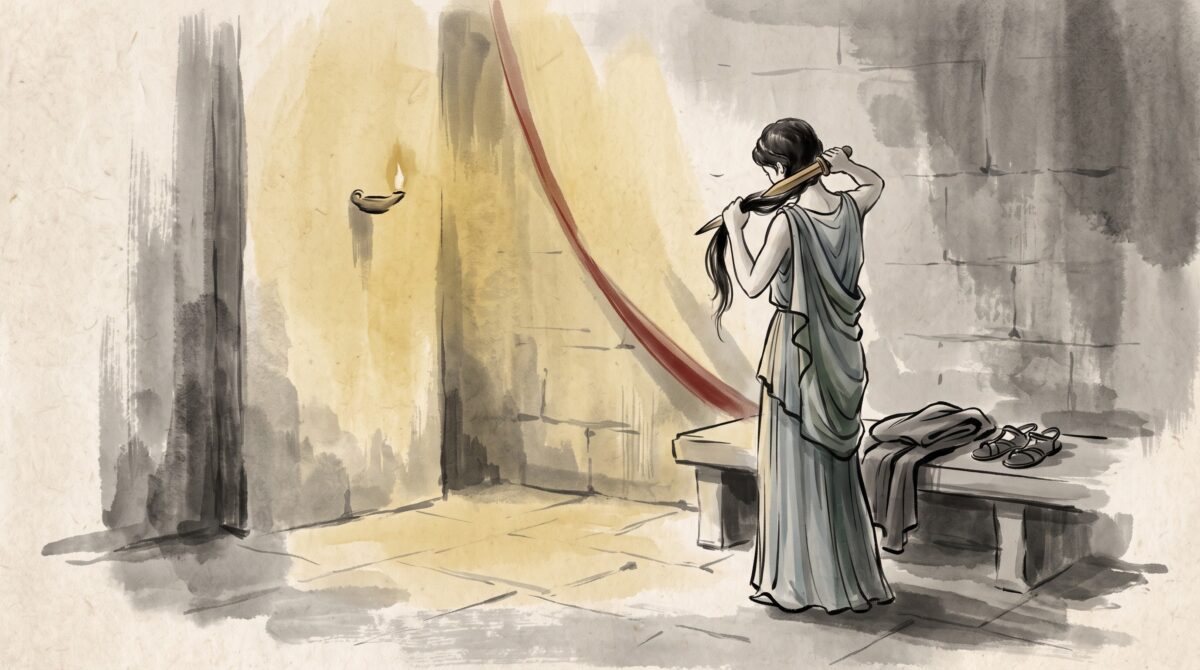
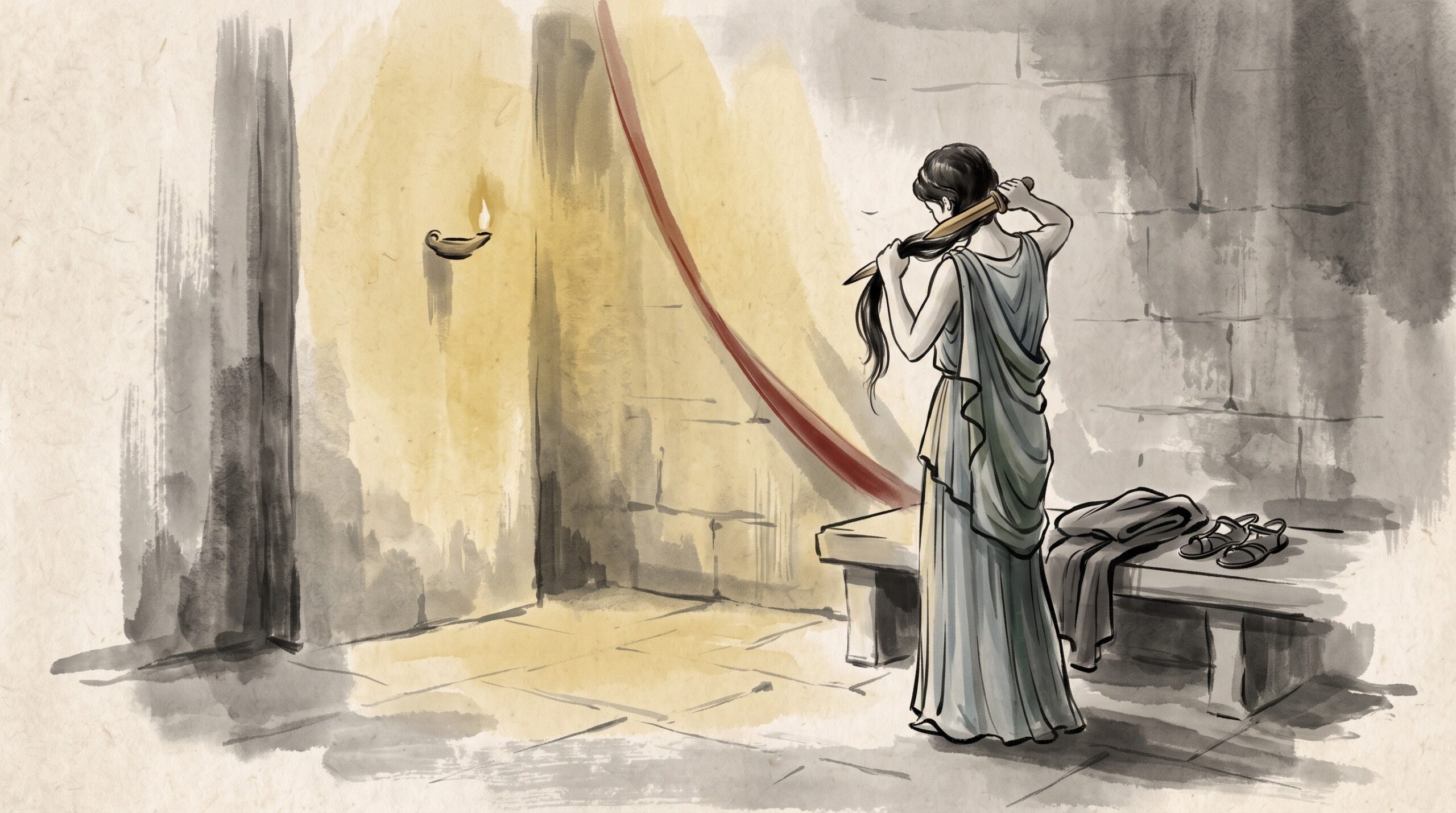
In the Athens of more than two thousand years ago, the story goes, a woman could be put to death for practicing medicine. Healing the body — setting bones, mixing remedies, easing a hard childbirth — was work reserved for men, closed to women by law and custom alike. And yet the most famous physician in the oldest surviving tale of Greek medicine is a woman: Agnodice, who is said to have cut off her hair, wrapped herself in a man’s cloak, and walked into that forbidden world to become the first female doctor in the city’s history.
A law against healing
The story comes to us from a Roman writer named Gaius Julius Hyginus, who set it down in a collection of myths and tales around the turn of the first century. By his account, the Athenians had at some point forbidden women — and enslaved people — from studying medicine, and enforced the ban with the threat of death. The consequence, Hyginus tells us, was quietly terrible. Many women, overcome by modesty, would rather suffer or die of illnesses of the body than be examined and treated by a male physician. In childbirth and in private sickness, the law meant to protect propriety was costing women their lives.
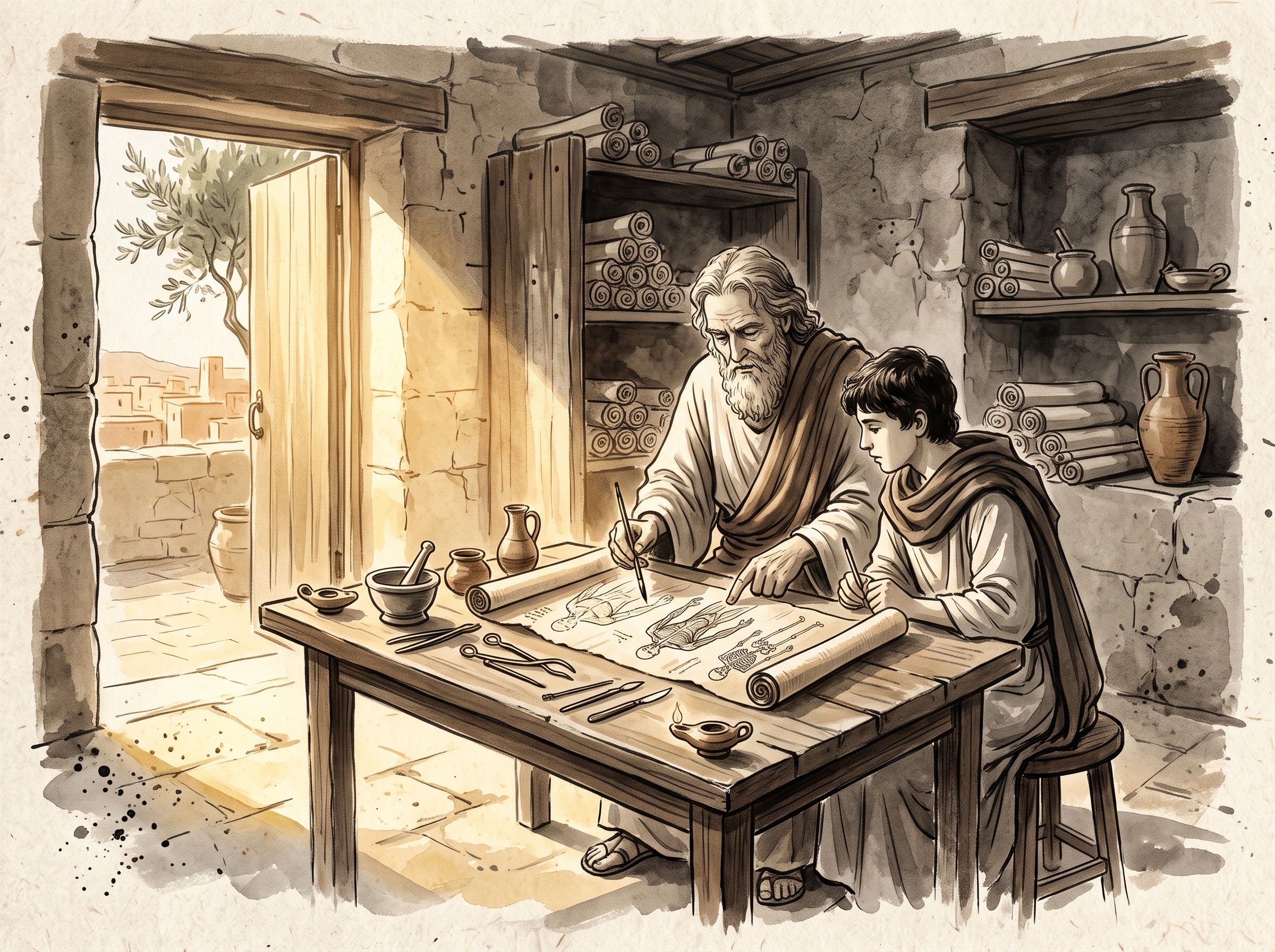
Into this grim arithmetic steps Agnodice. She was, in the telling, a freeborn Athenian woman who resolved to learn the very art her city forbade her. Her solution was disguise. She cut her hair short, dressed in the clothes of a man, and in that guise made herself the student of a renowned teacher of medicine — named in the story as Herophilus, the great anatomist whose real work in Alexandria helped found the scientific study of the human body. Hidden inside a man’s cloak, she learned everything a physician could be taught.
The disguise that worked too well
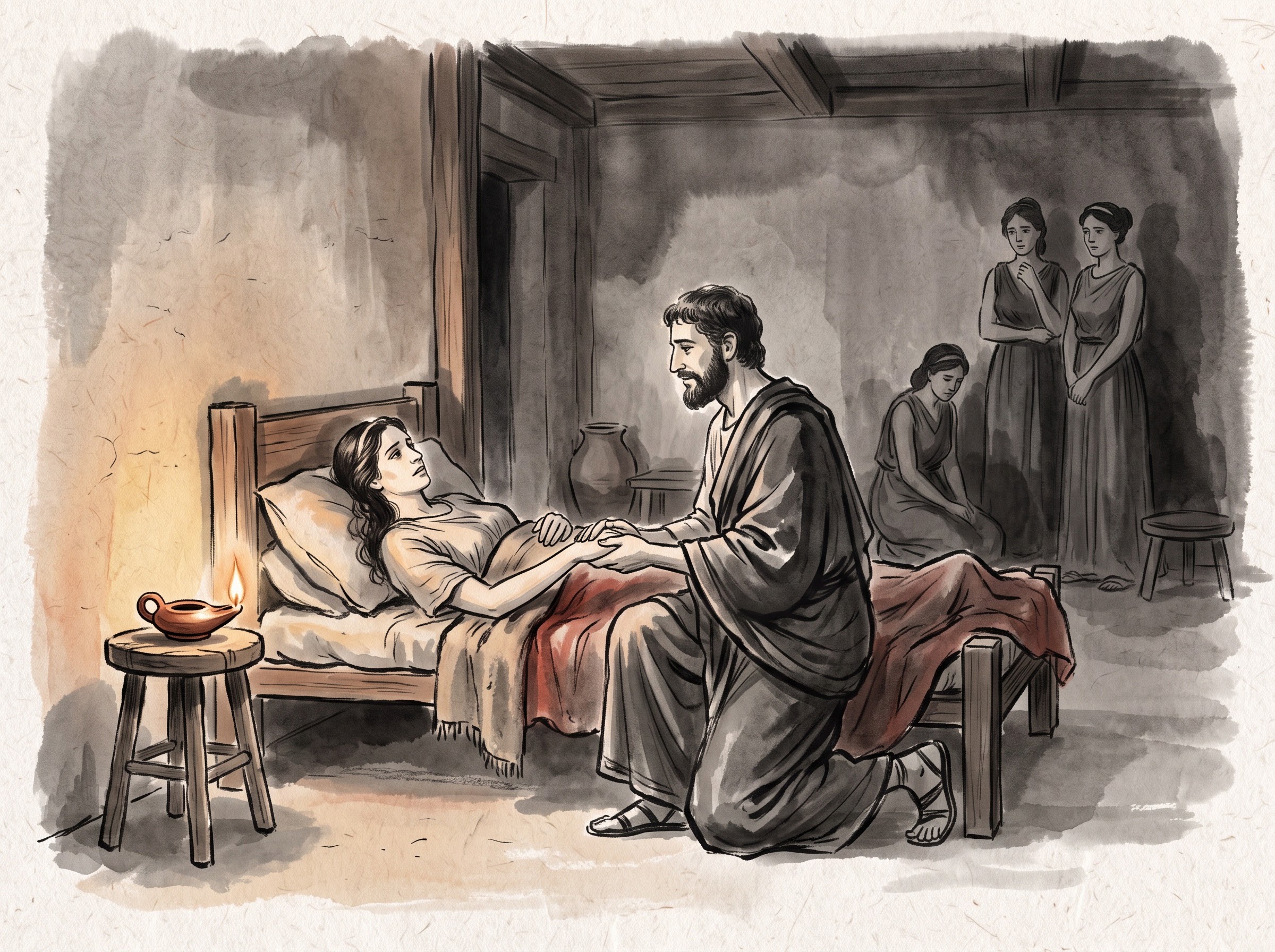
Trained and disguised, Agnodice began to practice. One day, the story runs, she came upon a woman in the agony of a difficult labor who refused to be helped — because she believed the physician standing over her was a man. Agnodice lifted her tunic enough to reveal the truth: she was a woman too. Reassured, the patient let herself be treated, and the birth was saved.
Word spread among the women of Athens that this particular physician could be trusted as no male doctor could, and they came to her in numbers. To each who hesitated she quietly revealed the same secret, and her practice flourished. It is a detail that gives the legend its real power: she did not simply beat the system by hiding. She built the trust of her patients by letting them, and only them, in on who she truly was. Like Jeanne Baret, who bound herself in bandages and took a man’s name to become the first woman to sail around the globe, Agnodice found that the disguise was only the beginning — what mattered was the skill and nerve beneath it.
The jealousy of rivals
Her very success became the trap. The male physicians of Athens, Hyginus says, grew envious: here was a newcomer whom the women of the city preferred to all of them, who was summoned to the bedsides they could not reach. Unable to compete, they reached for slander. They accused the young doctor — whom they still believed to be a man — of seducing the women he treated, and charged the patients, in turn, with feigning illness to be visited by him. It was an accusation calculated to destroy a reputation, and it carried Agnodice before the Areopagus, the ancient and fearsome court of Athens.
There, cornered before the assembled elders of the city and facing ruin, Agnodice did the one thing that could answer the charge. She lifted her clothing and revealed to the court that she was a woman. The accusation of seduction collapsed in an instant — but it collapsed straight into a second, graver crime. For if the accused was a woman, then she had broken the law that forbade women to practice medicine at all. The trap had merely changed its shape. Having escaped the charge of adultery, Agnodice now stood condemned for the far older offense of being a healer while female.
The women of Athens rise
And here the story turns, in the way the best ones do, on the people no one in power thought to count. As the court moved to condemn her, the wives of Athens’s leading men — the very women she had treated and saved — came pouring into the Areopagus. They would not stand to see her punished. In the line that has echoed down the centuries, they told the assembled husbands and magistrates that they were behaving not as husbands but as enemies, condemning the one person who had given them back their health.
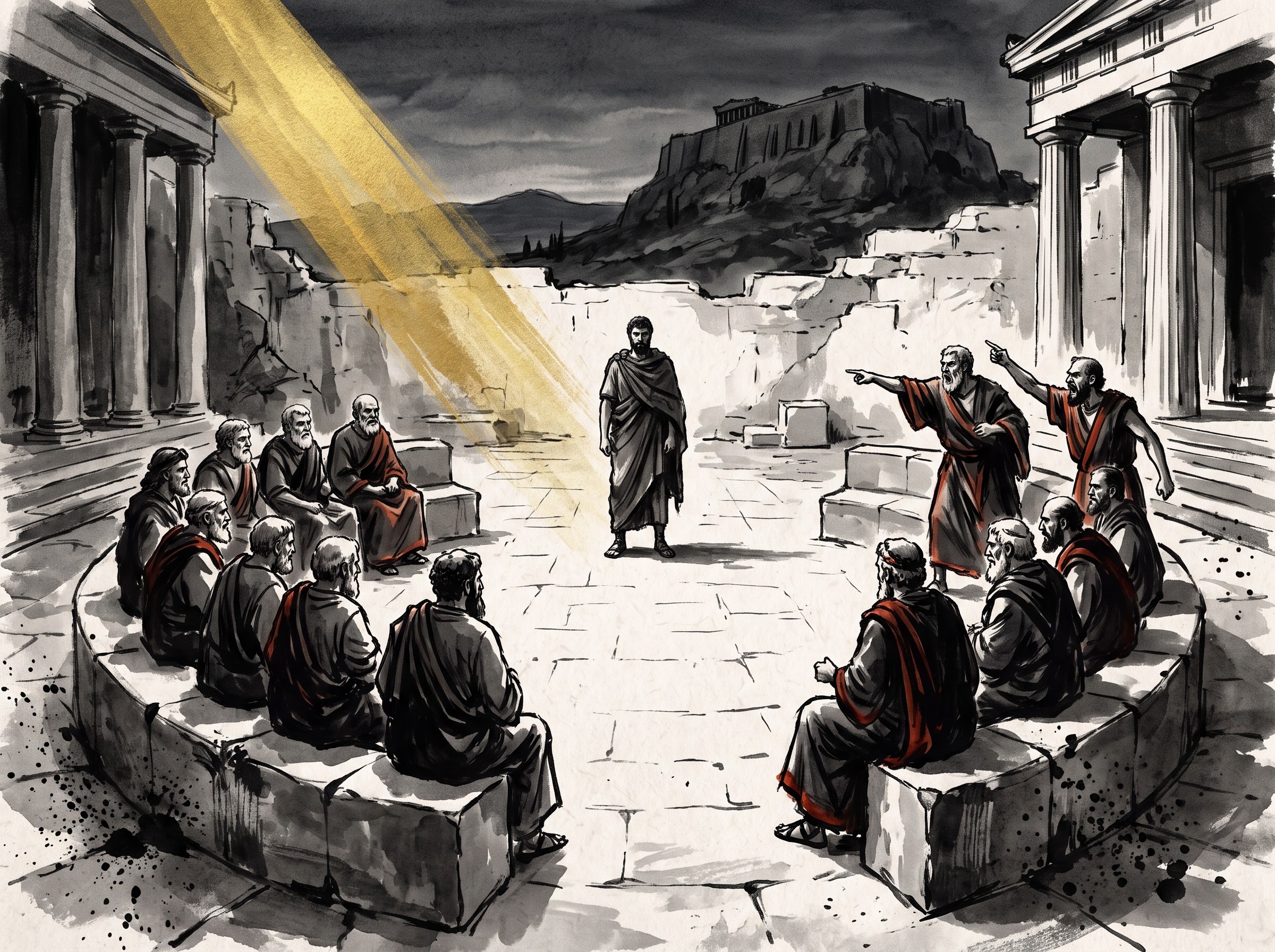
It was a confrontation between the law of the city and the loyalty of the women it governed, and the women won. Faced with the open revolt of the wives of Athens’s most powerful citizens, the court relented — not only acquitting Agnodice, but changing the law itself. From that day, Hyginus tells us, freeborn women were permitted to study and practice medicine. One woman’s disguise, exposed in open court, had cracked open a profession that had been sealed shut against her entire sex. The courage of a crowd refusing an unjust verdict runs through history, from that Athenian courtroom to women like Olga of Kiev, who bent the brutal politics of her age to her own will.

Legend, history, and the truth inside both
How much of this really happened? Honesty compels a caution: Agnodice’s tale survives from a single source, Hyginus, writing centuries after the events he describes, in a book full of myth and moralizing. No Athenian document records her name, and some historians read the story less as biography than as an origin-myth — an explanation, told after the fact, for why women in the Greek world could serve as midwives and healers. The mention of Herophilus, who lived generations apart from the Athens the tale imagines, only deepens the sense that we are dealing with legend as much as with history.
And yet the story has never lost its grip, because the truth it carries does not depend on the paperwork. Across the ancient world, real women did heal, did deliver babies, did carry medical knowledge that the official record ignored — and real laws and customs did try to shut them out of it. Agnodice is the figure the centuries chose to hang that reality on: the woman who refused to accept that her sex should cost other women their lives, who walked into a forbidden profession in disguise, and who, when she was finally unmasked, found that the patients she had served would not let her fall. Whether she lived or not, she has become the patron story of every woman who was told that healing was not hers to do — and who did it anyway.
Sources & further reading:
Related Reading
More from the archive
- The Most Bizarre Death in Ancient History: How an Eagle Killed the Father of Greek Tragedy
- Tarrare: The Soldier Who Could Not Stop Eating