The Collyer Brothers: The Recluses Who Died Buried in Their Own Mansion

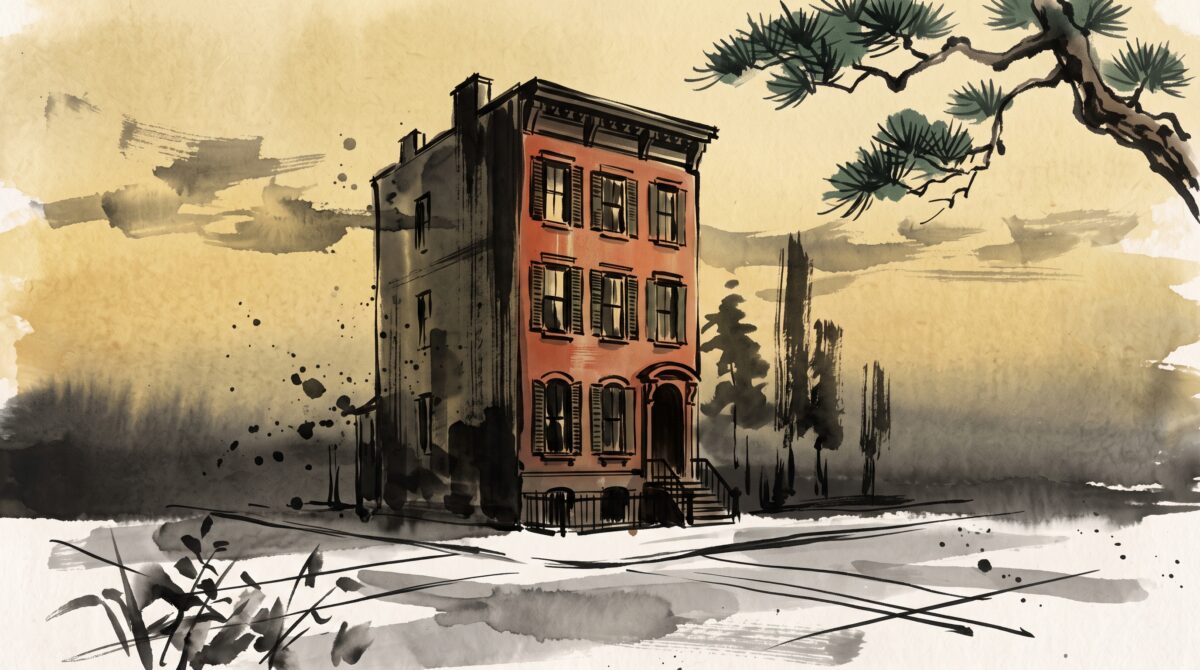
On the morning of March 21, 1947, an anonymous caller told the New York City police that there was a dead man inside a decaying brownstone at the corner of Fifth Avenue and 128th Street in Harlem. It should have been a simple call to answer. It was not. When officers arrived at 2078 Fifth Avenue, they found the front door locked and, when they forced it, an immovable wall of junk behind it. There was no floor to step onto, no hallway to walk down — only a solid, ceiling-high mass of newspapers, boxes, and unnameable debris. To get inside their own city’s house, the police had to climb through an upstairs window and lower themselves into a labyrinth.
What they found over the next two and a half weeks would fix the name Collyer in the American imagination forever — shorthand, ever since, for a life swallowed whole by the things it refused to throw away.
Sons of a Vanished New York
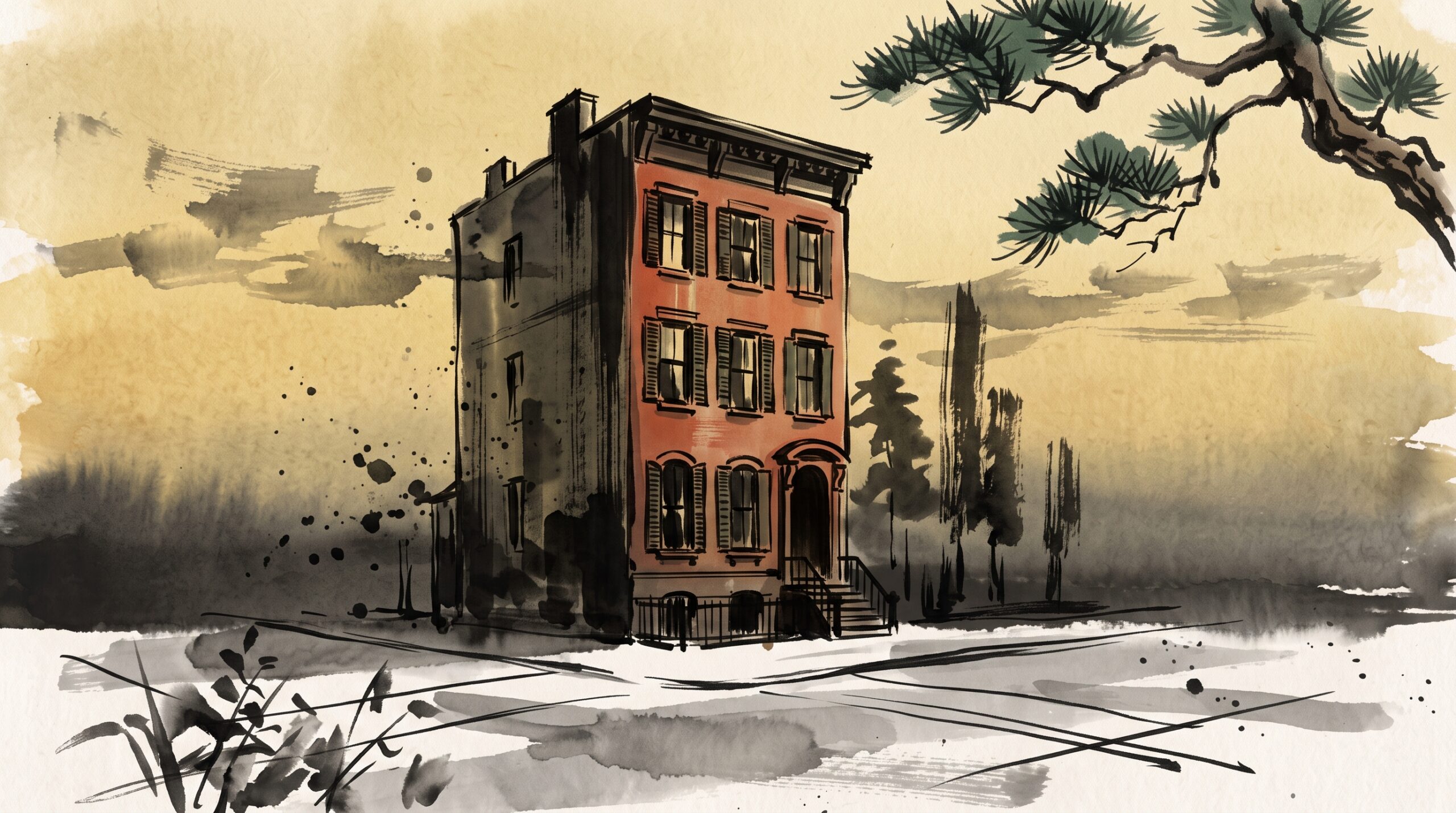
It is easy to imagine the Collyer brothers as ragged strangers to the world they hid from. They were nothing of the kind. Homer and Langley Collyer were born into a prominent, cultured New York family in the 1880s. Their father was a respected gynecologist; their mother, an opera singer. Both brothers were exceptionally educated. Homer earned a law degree from Columbia; Langley studied engineering there and was, by many accounts, a gifted concert-level pianist who once reportedly performed at Carnegie Hall.
They moved into the four-story Harlem brownstone in 1909, when the neighborhood was still an enclave of the well-to-do. For a time they lived ordinary, even genteel lives. But as the decades turned and the world around their door changed, the brothers turned inward instead. They stopped paying for utilities and had the gas, water, and electricity shut off. They boarded the windows. They withdrew, degree by degree, until the mansion became a sealed vessel and the two of them the only crew.
The House That Ate Everything
The retreat had a turning point, and its name was Homer. Around 1933 Homer went blind, and later suffered a stroke that left him paralyzed and bedridden. Langley appointed himself his brother’s sole nurse, refusing all outside help. He devised a diet of a hundred oranges a week, believing the vitamin C would one day restore Homer’s sight. And he began, in earnest, to gather.
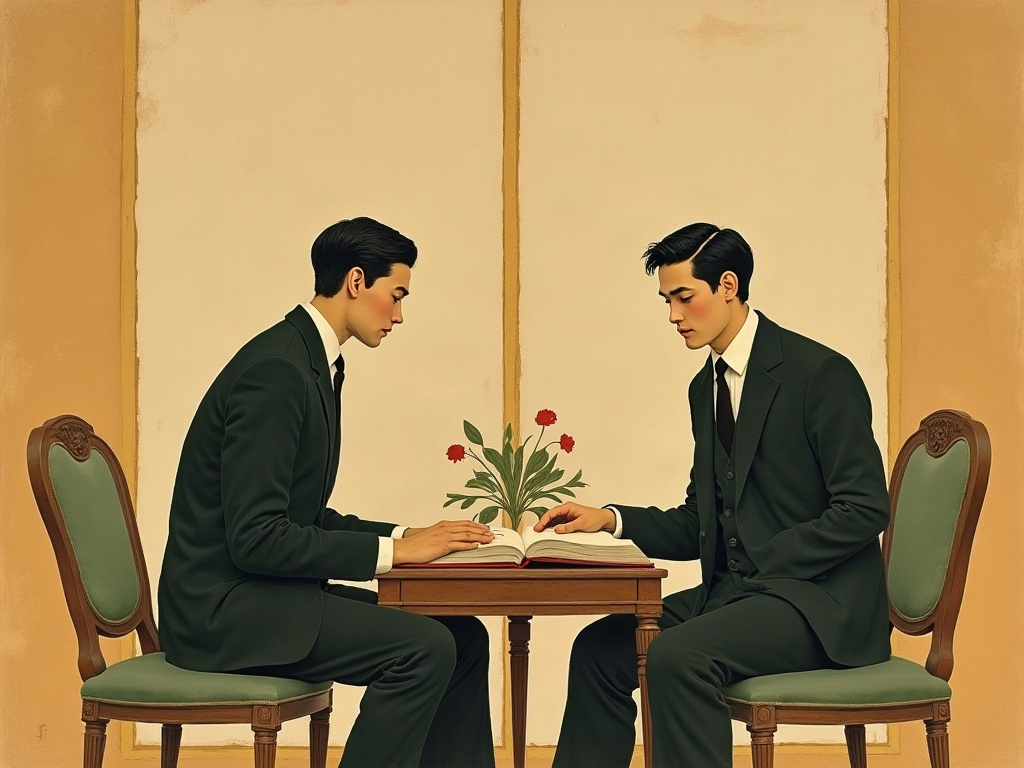
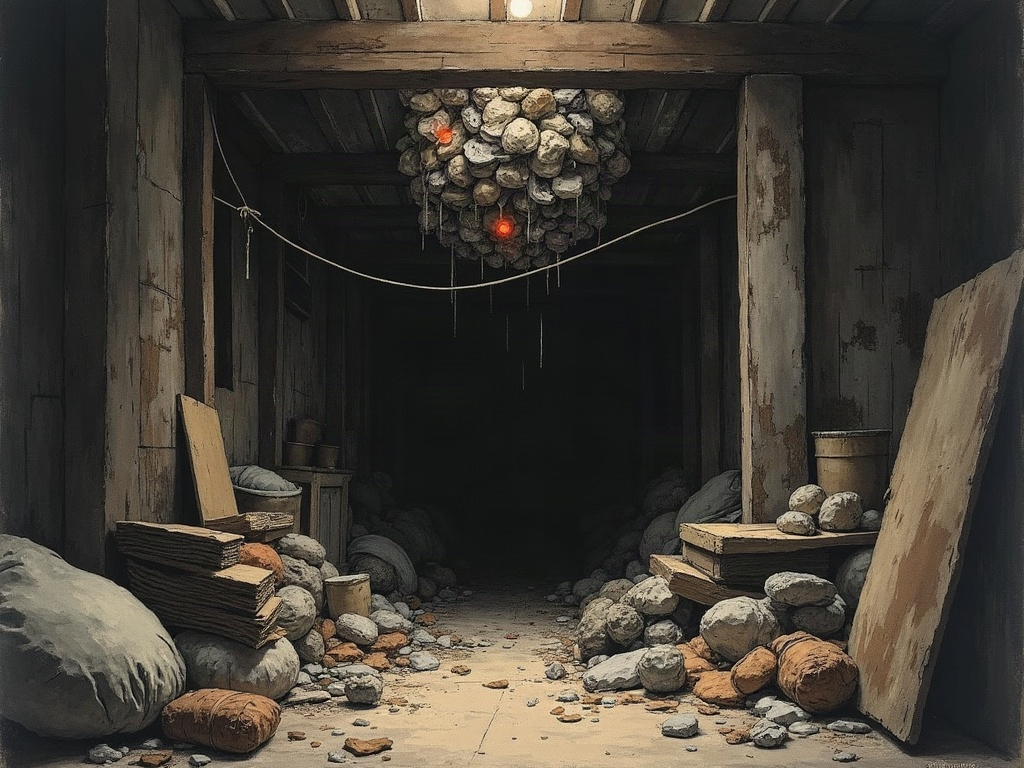
Langley hoarded newspapers by the thousands — bundled, stacked, and saved, he said, so that Homer could catch up on all the news once his vision returned. But it did not stop at newsprint. Into the house came a chassis of a Model T Ford, the pieces of a horse-drawn carriage, thousands of books, fourteen grand and upright pianos, an X-ray machine, glass chandeliers, baby carriages, rusted bicycles, the folding top of a carriage, and endless anonymous salvage hauled home on his nighttime walks. Nothing left. The mansion swelled from the inside until the brothers lived in the narrow gaps between their possessions, moving through hand-dug tunnels of debris to reach one another.
Traps in the Dark
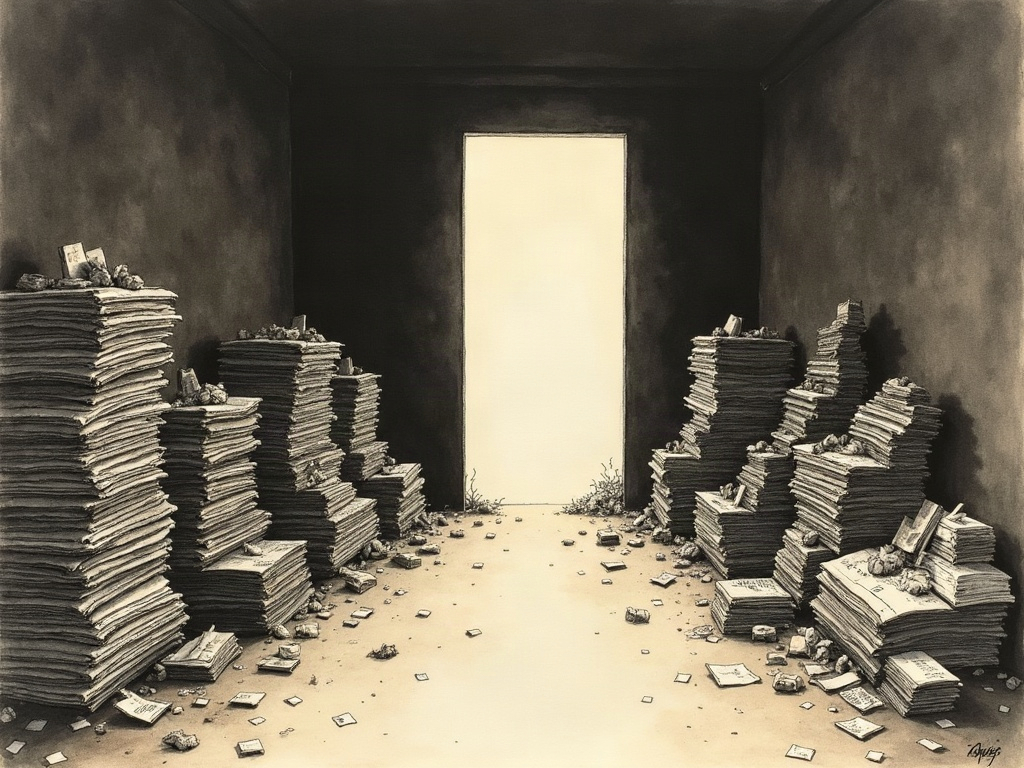
Langley was an engineer, and he applied that mind to the one thing he feared most: intruders. Rumors had spread that the reclusive brothers were sitting on a fortune, and there had been break-in attempts. So Langley rigged his tunnels with defenses. He built teetering barricades and set booby traps — trip-wires and balanced masses of junk designed to bury anyone who forced their way through the wrong passage under an avalanche of newspaper and iron.
He navigated this maze in near-total darkness, feeding and tending his blind, helpless brother deep inside the wreckage. It was, in its own grim way, an act of devotion carried to a monstrous extreme — a fortress of love and paranoia so complete that it finally turned on its own architect. There is something in that self-made prison that echoes other lives warped by fixation, like the widow who built an endless house to outrun her ghosts in the story of Sarah Winchester and her mystery mansion.
The Search Inside the Maze
When police recovered Homer’s body that March morning, the mystery only deepened, because Langley was nowhere to be found. He had, by all accounts, gone out into the city on his nightly rounds and simply vanished. For weeks a strange manhunt unfolded. Sightings of Langley poured in from across the country — a bus in Atlantic City, a boat, a train platform — while at the house, workers hauled load after load of debris out onto the street to a growing crowd of gawkers. In the end they would remove roughly 140 tons of material from the brownstone.
The answer was never far away. On April 8, 1947, workers digging through the wreckage found Langley’s decomposing body just a few feet from where Homer had died. He had been crawling through one of his own tunnels, carrying food to his brother, when he triggered one of his own booby traps. The falling debris crushed and pinned him. Langley suffocated where he lay — and Homer, blind, paralyzed, and utterly dependent on the brother who never returned, had starved to death beside him, unable even to call for help. The compulsion that had ruled Langley’s life had, at the last, killed them both, the way a body’s own drives can turn fatal in tales like that of the soldier who could not stop eating.
An American Warning Word
The Collyer mansion was condemned and torn down soon after; the lot sat empty for years before the city turned it into a small pocket park that, fittingly, bears the brothers’ name. But the real monument they left was linguistic. To this day, New York City firefighters use the phrase “a Collyer” or “Collyer’s mansion” as radio shorthand for a residence so packed with clutter that entering it is a danger to life — a hoarded space where a rescuer can be trapped, a floor can give way, or a fire can feed on decades of paper.
Long before compulsive hoarding was a recognized psychiatric condition, the Collyers had put a human face on it, and it was not the face anyone expected: not the destitute, but the brilliant and the privileged, undone by an inward turn that no one outside could see. Their story sits alongside history’s other unsettling riddles of isolation and the human mind, like the strange, unplaceable figure in the account of the boy who came from nowhere.
Why It Still Matters
It would be comfortable to file the Collyer brothers away as a freak show, a curiosity from a stranger age. But their story keeps its grip because it is, underneath the spectacle, achingly recognizable. Here were two intelligent men who loved each other, who began with every advantage the world could offer, and who slowly built a wall — object by object, day by day — between themselves and everyone else, until the wall closed over their heads.
We keep things because things carry meaning: a newspaper we mean to read, a memory we cannot bear to discard, a fear of the day we might need what we let go. The Collyers simply followed that ordinary impulse past every reasonable stopping point, into the dark. What killed them was not junk, exactly. It was the human tendency to hold on too tightly — to the past, to each other, to the illusion of safety behind a locked door. And that is why, nearly eighty years later, in a city that has forgotten almost everything else about them, their name still means something: a quiet warning that the things we cannot let go of can, in the end, bury us alive.
Sources & further reading:
- Collyer brothers – Wikipedia
- The Collyer Brothers – New York Public Library / NYC history
- Homer and Langley Collyer – The New York Times archive
- The Collyer Brothers’ Mansion of Junk – Smithsonian
More from the archive
- The House That Grief Built: Sarah Winchester and the Mansion Meant to Confuse the Ghosts
- From Speared Warriors to Vampire-Proofed Corpses: History’s Most Bizarre Burial Rituals
- Shanawdithit: The Last of the Beothuk