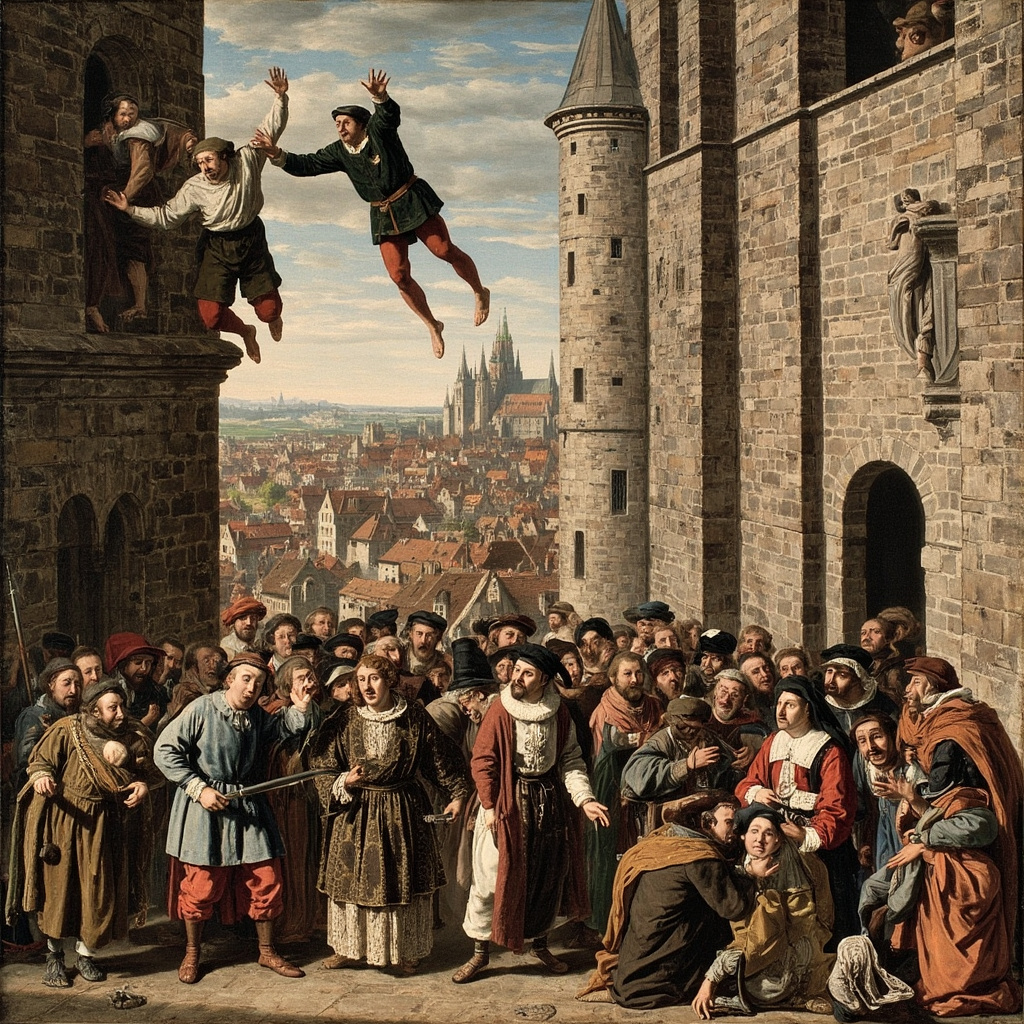
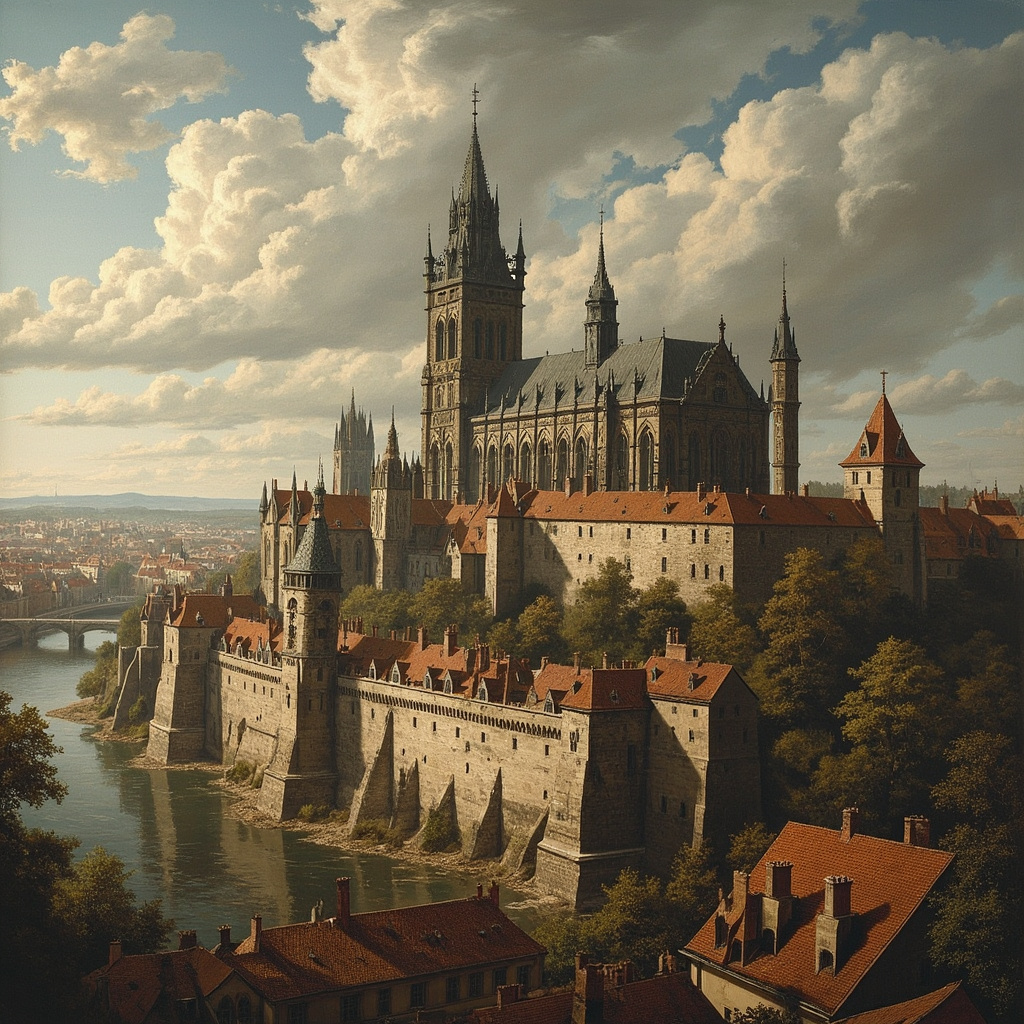
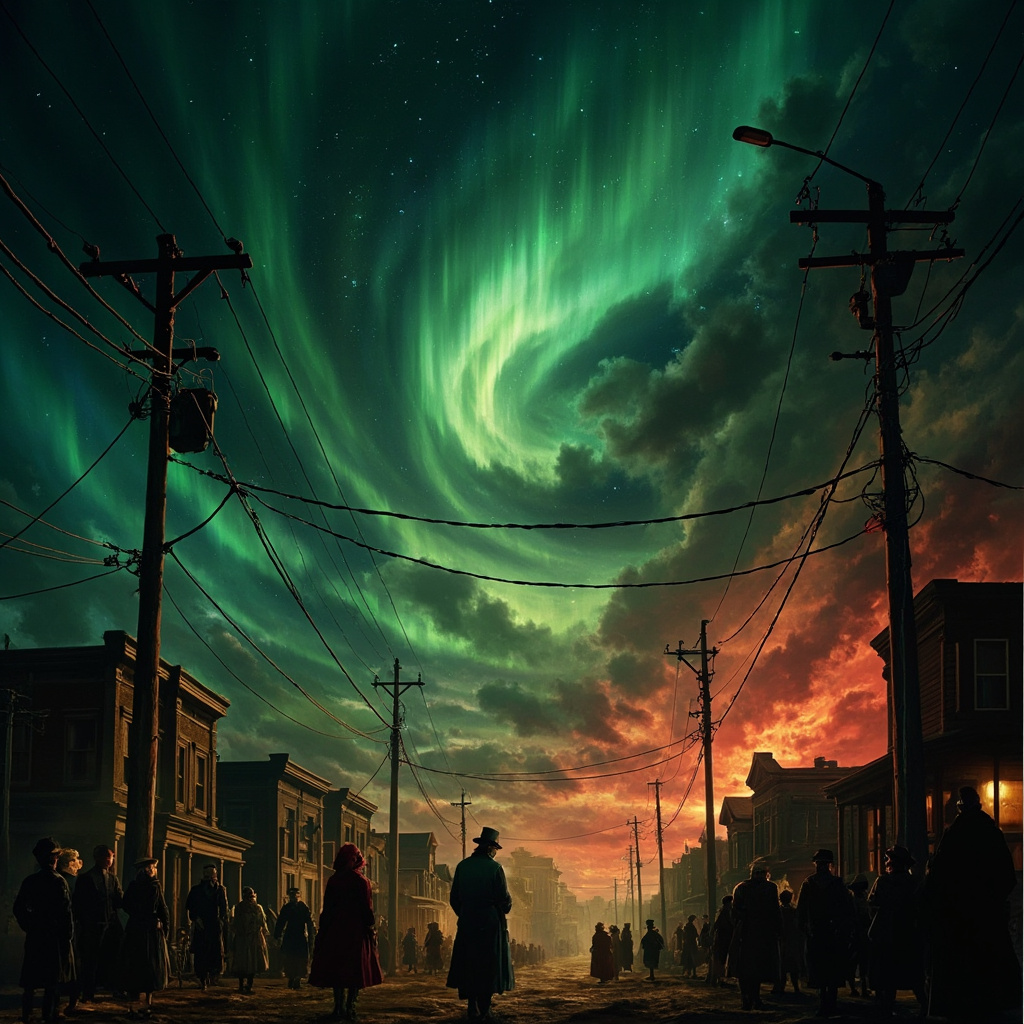
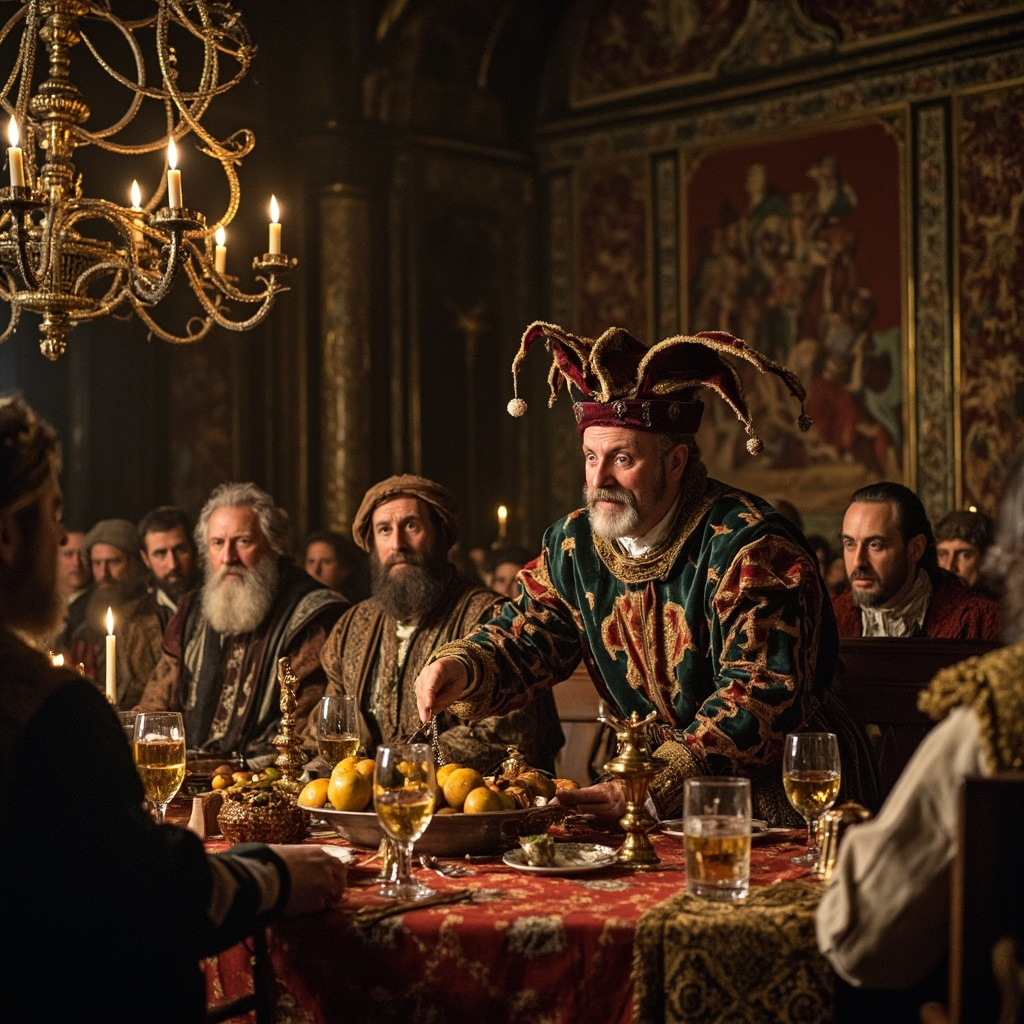
On May 23, 1618, a group of angry Protestant nobles did something so dramatic it would plunge Europe into three decades of devastating warfare. They threw three Catholic officials out of a third-story window at Prague Castle—an act that became known as the Defenestration of Prague and sparked the Thirty Years’ War, one of the most destructive conflicts in European history.
The Religious Powder Keg
The Kingdom of Bohemia in the early 17th century was a religious and political tinderbox. The Holy Roman Emperor Ferdinand II, a devout Catholic, was systematically rolling back Protestant rights that had been granted under the previous emperor. In Bohemia, where Protestantism had deep roots dating back to the reformer Jan Hus, tensions were reaching a breaking point.
The immediate crisis began when Ferdinand’s Catholic regents in Prague began restricting Protestant church construction and religious practices. This violated the Letter of Majesty, a 1609 agreement that had guaranteed religious freedom to Bohemian Protestants. The Protestant nobles, led by Count Heinrich Matthias von Thurn, decided they had endured enough.
The Fateful Meeting
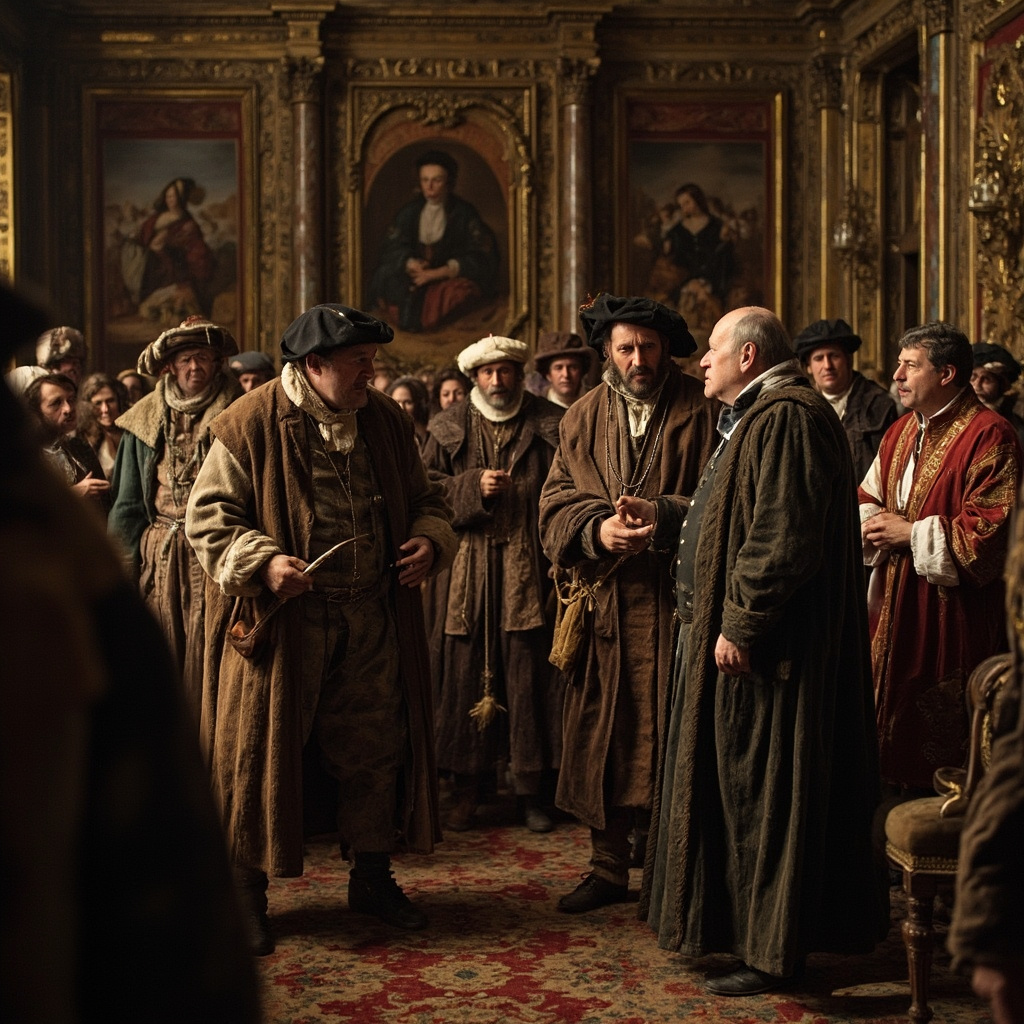
On that spring morning in 1618, the Protestant nobles stormed into the meeting room at Prague Castle where the Catholic regents were holding session. They singled out two particular targets: Jaroslav Bořita von Martinicz and Wilhelm Slavata, both staunch Catholics whom they accused of orchestrating the religious persecution.
The confrontation was brief but explosive. The Protestants accused the regents of plotting to subvert Bohemian religious liberty and of betraying their oaths. When the regents refused to back down, the nobles decided on a dramatic punishment that deliberately echoed Bohemian history.
Out the Window They Went
The defenestration wasn’t random violence—it was a calculated political statement. In 1419, Prague had witnessed its first famous defenestration when Hussite revolutionaries threw seven city councillors from the windows of Prague’s New Town Hall. By recreating this act, the Protestant nobles were invoking a powerful symbol of Bohemian resistance to foreign rule.
Along with the two regents, the Protestants also threw out their secretary, Philipp Fabricius. All three men plummeted from the third-story window—a fall of approximately 70 feet that should have been fatal.
The Miracle of Manure
Remarkably, all three men survived their dramatic flight. Catholic propagandists immediately claimed this was divine intervention—that angels had swooped down to save the righteous officials. The reality was more mundane but no less fortunate: the window opened directly above a large pile of manure and garbage that had accumulated below the castle walls.
This soft, if malodorous, landing cushioned their fall and saved their lives. Martinicz and Slavata were able to walk away with only minor injuries, though their dignity suffered considerably more damage than their bones.
Europe Goes to War
The defenestration was far more than a symbolic gesture—it was a declaration of rebellion. The Bohemian estates rejected Ferdinand II as their king and elected Frederick V, Elector Palatine, in his place. This act of defiance triggered a conflict that would rage across Europe for thirty years.
What began as a religious dispute in Bohemia soon drew in every major European power. Catholic Spain and the Holy Roman Empire faced off against Protestant powers including Sweden, Denmark, and France (which supported the Protestant cause despite being Catholic, purely to weaken Habsburg power). The war would ultimately kill millions and reshape the political map of Europe.
The Power of a Single Act
The Defenestration of Prague demonstrates how a single dramatic moment can change the course of history. The Protestant nobles couldn’t have imagined that their act of rebellion would lead to three decades of warfare, economic collapse, and social upheaval across central Europe. The Thirty Years’ War wouldn’t end until 1648 with the Peace of Westphalia, which established new principles of national sovereignty that still influence international relations today.
Ferdinand II eventually regained control of Bohemia and imposed harsh Catholic rule, but the broader war had shown that religious unity could no longer be imposed by force. The age of religious wars was ending, and the modern state system was being born—all because some angry nobles decided to throw their enemies out a window rather than negotiate.
On September 1, 1859, amateur astronomer Richard Carrington witnessed something extraordinary while observing sunspots from his private observatory near London. A brilliant white light erupted from the sun’s surface—the first recorded observation of what we now call a solar flare. Little did Carrington know that this seemingly distant celestial event would soon unleash chaos across the globe.
What followed was the most powerful geomagnetic storm in recorded history: the Carrington Event. This solar superstorm would shut down the world’s telegraph systems, set fire to telegraph poles, and create auroras so bright that people could read newspapers by their light as far south as the Caribbean.
The Amateur Astronomer Who Witnessed History
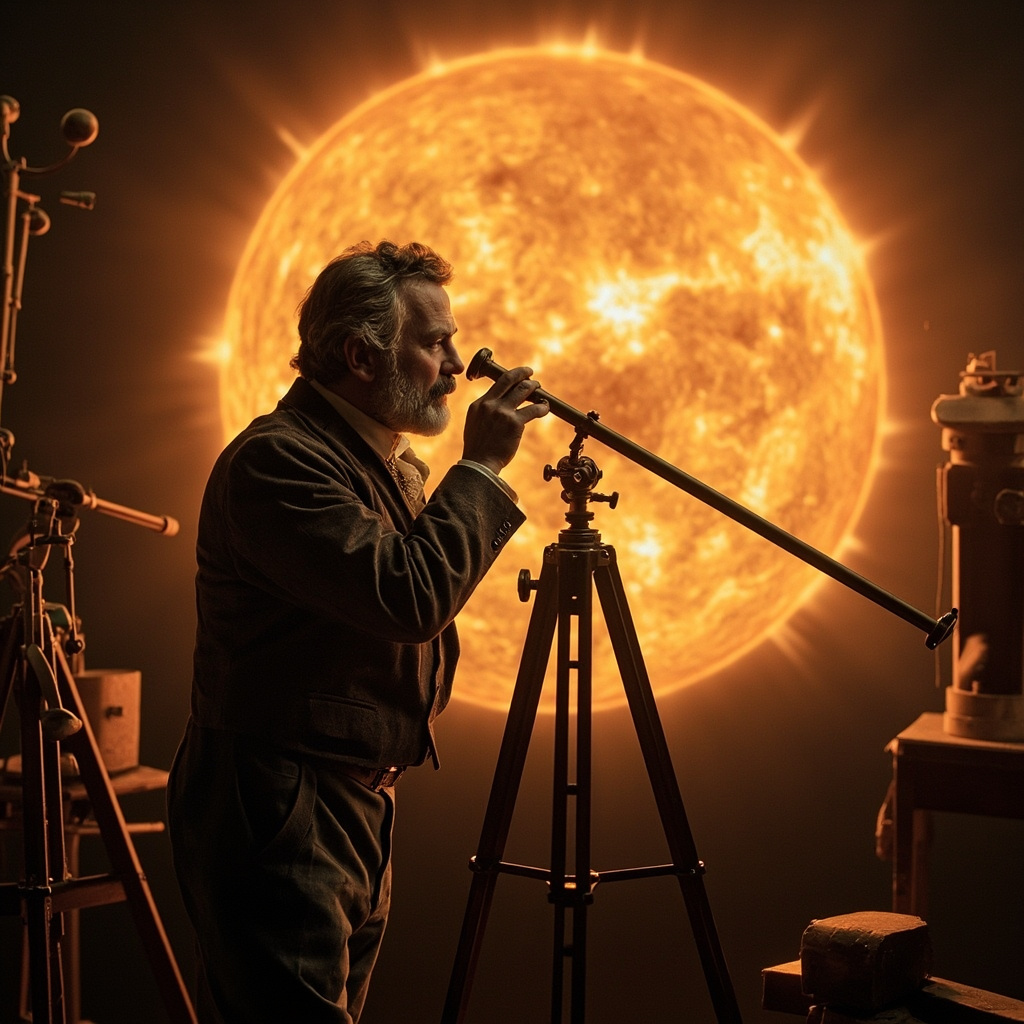
Richard Carrington was a 33-year-old brewery owner with a passion for astronomy. From his private observatory in Redhill, Surrey, he meticulously tracked sunspots—dark patches on the sun’s surface that were still poorly understood in the Victorian era. On that fateful morning, as Carrington projected the sun’s image onto a screen to safely observe it, he witnessed something unprecedented.
“Two patches of intensely bright and white light broke out,” Carrington later wrote to the Royal Astronomical Society. The flare lasted only about five minutes, but Carrington intuited that this solar explosion might be connected to the strange atmospheric phenomena that would soon follow.
His suspicion proved correct. What Carrington had observed was a massive coronal mass ejection—an enormous burst of solar wind and magnetic fields released from the sun’s corona. This cloud of charged particles was racing toward Earth at speeds exceeding one million miles per hour.
When Technology Met Its Match
Eighteen hours later, the solar storm struck Earth with unprecedented fury. The planet’s magnetosphere—our natural shield against space weather—was overwhelmed. The consequences were immediate and dramatic.
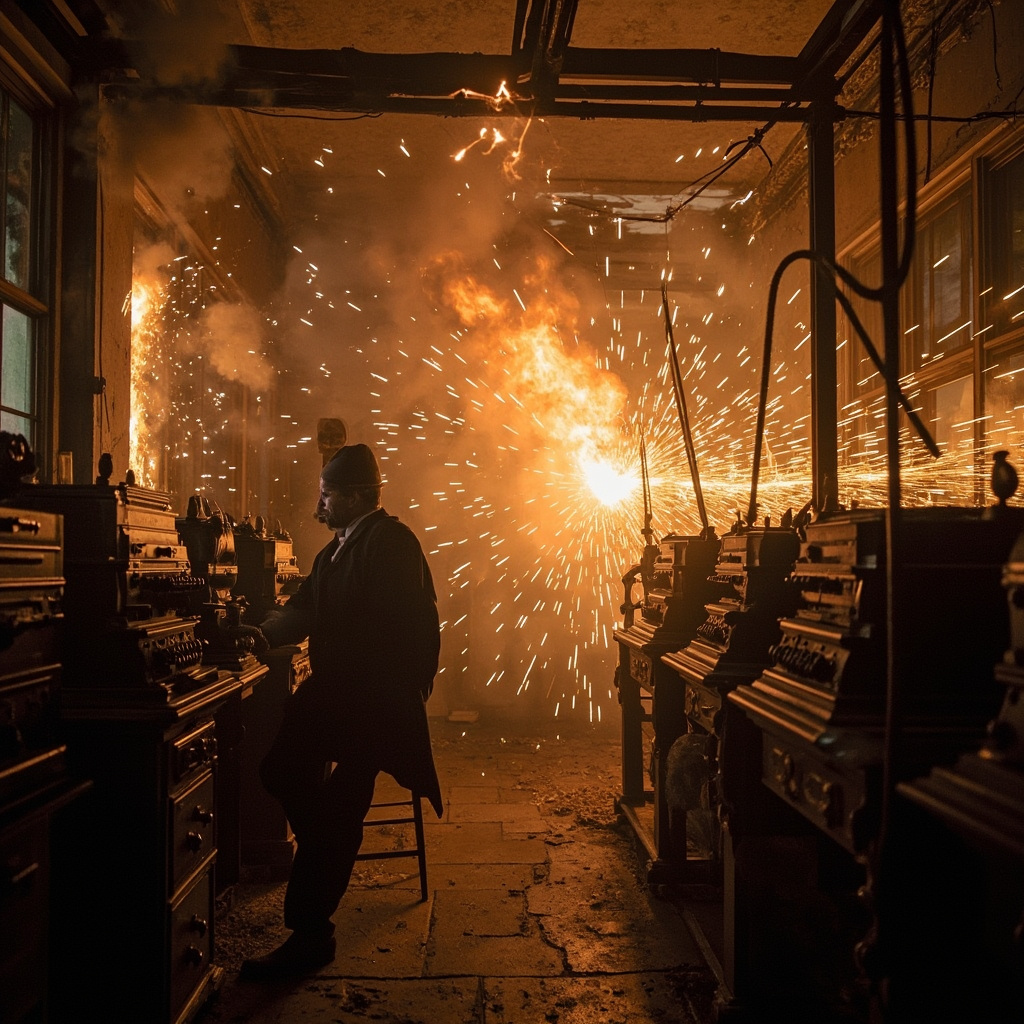
Telegraph systems across North America and Europe went haywire. In Boston, telegraph operators received electric shocks so severe they were thrown from their chairs. Telegraph lines caught fire, and some telegraph poles burst into flames from the induced electrical currents. In many cities, telegraph paper ignited, creating small fires in telegraph offices.
But perhaps most remarkably, some telegraph operators discovered they could continue sending messages even after disconnecting their power sources. The solar storm itself was providing enough electrical current to power the telegraph lines. Operators in Boston successfully sent messages to Portland, Maine, for two hours using only the electricity induced by the geomagnetic storm.
The Night the Sky Burned
The most spectacular consequence of the Carrington Event was the display of aurora borealis—the northern lights—visible far from their usual Arctic home. Witnesses reported auroras as far south as the Caribbean, Hawaii, and southern Italy. In the Rocky Mountains, miners woke up thinking it was dawn because the aurora was so bright.
The colors were extraordinary. Accounts describe not just the typical green aurora, but brilliant reds, yellows, and whites that painted the entire sky. One witness in Boston wrote that “the whole sky appeared as a sheet of red light.” In New York, people gathered on rooftops to watch the celestial light show, and many could read newspapers by the aurora’s glow.
Some people were terrified, believing the end times had arrived. Churches filled with congregants convinced they were witnessing signs of the apocalypse. Others were simply amazed by the beauty of nature’s most spectacular light show.
The Science Behind the Chaos
The Carrington Event was the perfect storm of solar activity. The sun was near the peak of its 11-year solar cycle, making it particularly active. The solar flare Carrington observed was what scientists now classify as an X-class flare—the most powerful category. But it was the accompanying coronal mass ejection that caused the real damage.
When this cloud of charged particles reached Earth, it compressed our planet’s magnetic field and induced powerful electrical currents in conductive materials—including the primitive telegraph networks of the 1850s. The storm’s intensity measured between -850 and -900 nanoteslas on modern scales, making it roughly twice as powerful as the strongest geomagnetic storm in modern memory.
A Glimpse of Vulnerability
The Carrington Event offers a sobering glimpse into our technological vulnerability. In 1859, the most advanced technology was the telegraph system, and even that was overwhelmed. Today, a similar solar storm would likely cause catastrophic damage to our electronic infrastructure.
Satellites would fail, GPS systems would go offline, and power grids across the globe could collapse. The economic damage from a Carrington-level event today is estimated at over $2 trillion worldwide. Communication systems, banking networks, and internet infrastructure could be crippled for months.
Scientists estimate that solar superstorms like the Carrington Event occur roughly every 150-500 years. The last comparable event was in 1859, making another major solar storm increasingly likely in the coming decades.
Carrington’s Legacy
Richard Carrington’s careful observations during that September morning established the first scientific link between solar activity and geomagnetic storms on Earth. His meticulous records provided crucial data for understanding space weather—a field of study that didn’t even have a name in 1859.
The Carrington Event stands as both a testament to the awesome power of our sun and a warning about the fragility of our technological civilization. As we become increasingly dependent on electronic systems, understanding and preparing for space weather has never been more critical.
Today, space weather monitoring systems keep constant watch on the sun, providing early warning of dangerous solar storms. But even with our modern understanding and technology, a repeat of the Carrington Event would test the limits of our preparedness.
The next time you see the aurora dancing across the night sky, remember Richard Carrington and that extraordinary September day when the sun reminded humanity just how connected we are to the cosmos—and how vulnerable our technology can be to the awesome forces of nature.
On the morning of August 27, 1896, a single Thursday changed the record books forever. What began as a succession dispute in the Sultanate of Zanzibar would conclude just 38 minutes later, earning the dubious honor of being the shortest war in recorded history. The Anglo-Zanzibar War proved that sometimes the most dramatic conflicts are measured not in years or months, but in minutes.
The Spark That Lit the Fuse
The crisis began two days earlier when Sultan Hamad bin Thuwaini, a British-friendly ruler, died suddenly at 11:40 AM on August 25, 1896. Within hours, his cousin Khalid bin Barghash had seized the palace and declared himself sultan, directly violating British expectations. The British had supported Hamad specifically because of his cooperative stance, and they weren’t about to let his replacement ignore their authority.
Khalid’s bold move put him on a collision course with the British Empire at its height. The British consul-general, Basil Cave, immediately demanded that Khalid step down and allow British-preferred candidate Hamoud bin Mohammed to take the throne. When Khalid refused and began fortifying the palace with his small army of about 2,800 men, armed with rifles, cannons, and one ancient cannon called “Glasgow,” the die was cast.
A Ticking Clock
British Rear-Admiral Harry Rawson wasn’t playing games. He assembled a naval force of five warships and about 900 marines and sailors, then issued an ultimatum: Khalid had until 9:00 AM on August 27 to vacate the palace or face the consequences. The British were confident in their superior firepower, including modern naval guns that could reduce the wooden palace to rubble in minutes.
As the deadline approached, tensions mounted. Khalid had gathered his forces in and around the palace, hoping his show of strength might deter British action. Meanwhile, curious civilians gathered at a safe distance to witness what everyone sensed would be a historic confrontation.
38 Minutes of Destruction
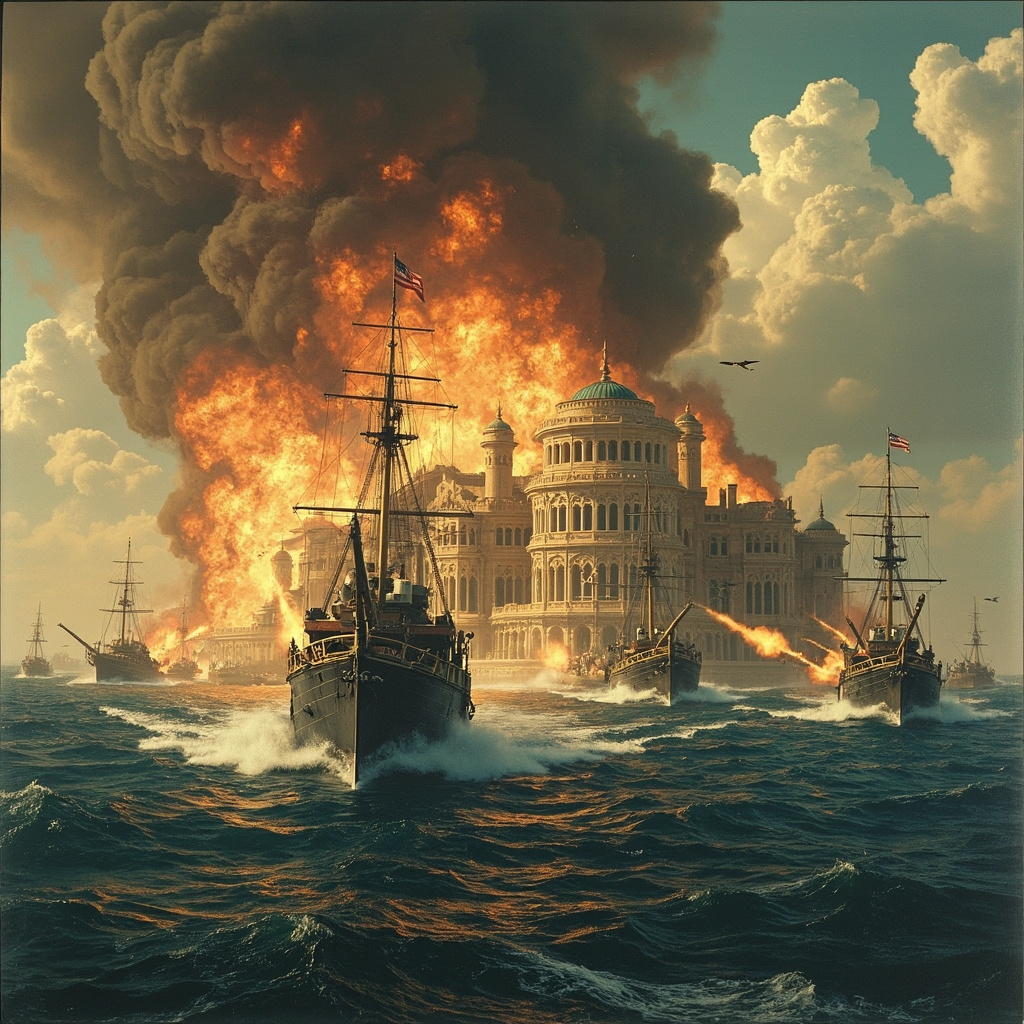
At exactly 9:02 AM, when Khalid failed to lower his flag and surrender, Admiral Rawson gave the order to commence firing. The British warships HMS St. George, HMS Philomel, and HMS Thrush opened fire on the palace with devastating effect. The wooden structure, despite being defended by stone walls, was no match for modern British naval artillery.
The palace burst into flames almost immediately. Khalid’s forces fought back bravely but hopelessly, their outdated weapons and single small gunboat proving utterly inadequate against British firepower. The royal yacht HHS Glasgow was sunk within the first few minutes, and the palace’s defenses crumbled under the relentless bombardment.
The Aftermath: Victory in Record Time
By 9:40 AM, exactly 38 minutes after the first shot was fired, the sultan’s flag was hauled down in surrender. Khalid himself had fled to the German consulate seeking asylum, leaving his forces to face the British alone. The shortest war in history was over, but the human cost was significant despite the brief duration.
British casualties were remarkably light—just one sailor wounded. The sultan’s forces, however, paid a much heavier price. Approximately 500 of Khalid’s men were killed or wounded in the brief but intense bombardment. The palace lay in ruins, and the sultan’s cause was utterly destroyed.
The New Sultan and British Control
With Khalid in exile, the British immediately installed their preferred candidate, Hamoud bin Mohammed, as the new sultan. Hamoud would rule under British protection and guidance, ensuring that Zanzibar remained firmly within Britain’s sphere of influence. The new sultan’s first official act was to outlaw slavery in Zanzibar, a move that aligned with British interests and humanitarian goals.
A War for the Record Books
The Anglo-Zanzibar War holds several distinctions beyond its brevity. It was one of the first conflicts to be recorded with precise timing, thanks to the British military’s attention to detail and the presence of war correspondents. It also demonstrated the overwhelming technological advantage that European powers held over local rulers in Africa during the colonial period.
Perhaps most remarkably, the war began and ended on a single Thursday morning, allowing British officers to return to their ships for lunch as if nothing extraordinary had happened. Yet in those 38 minutes, the political landscape of East Africa was permanently altered, and a place was secured in the history books for the most efficient military victory in human history.
The Anglo-Zanzibar War serves as a stark reminder that in the age of empire, superior technology and firepower could resolve conflicts with shocking speed. It also highlights how quickly political situations could escalate when colonial powers felt their interests were threatened. While lasting less than an hour, this “war” encapsulated the brutal efficiency of 19th-century imperial power and left an indelible mark on the history of both Britain and Zanzibar.
In the annals of bizarre military conflicts, few can match the sheer absurdity of the War of Jenkins’ Ear. This nine-year struggle between Britain and Spain (1739-1748) has the distinction of being named after a severed human ear—specifically, the ear of British sea captain Robert Jenkins, which was allegedly cut off by Spanish coast guards in 1731.
The story begins with Jenkins, a British merchant captain whose ship Rebecca was stopped and searched by Spanish customs officers in the Caribbean. According to Jenkins’ later testimony, the Spanish guards accused him of smuggling and, during the confrontation, one of them sliced off his ear while shouting “Take this to your King!” Jenkins claimed he picked up his severed ear and preserved it in a jar of brandy.
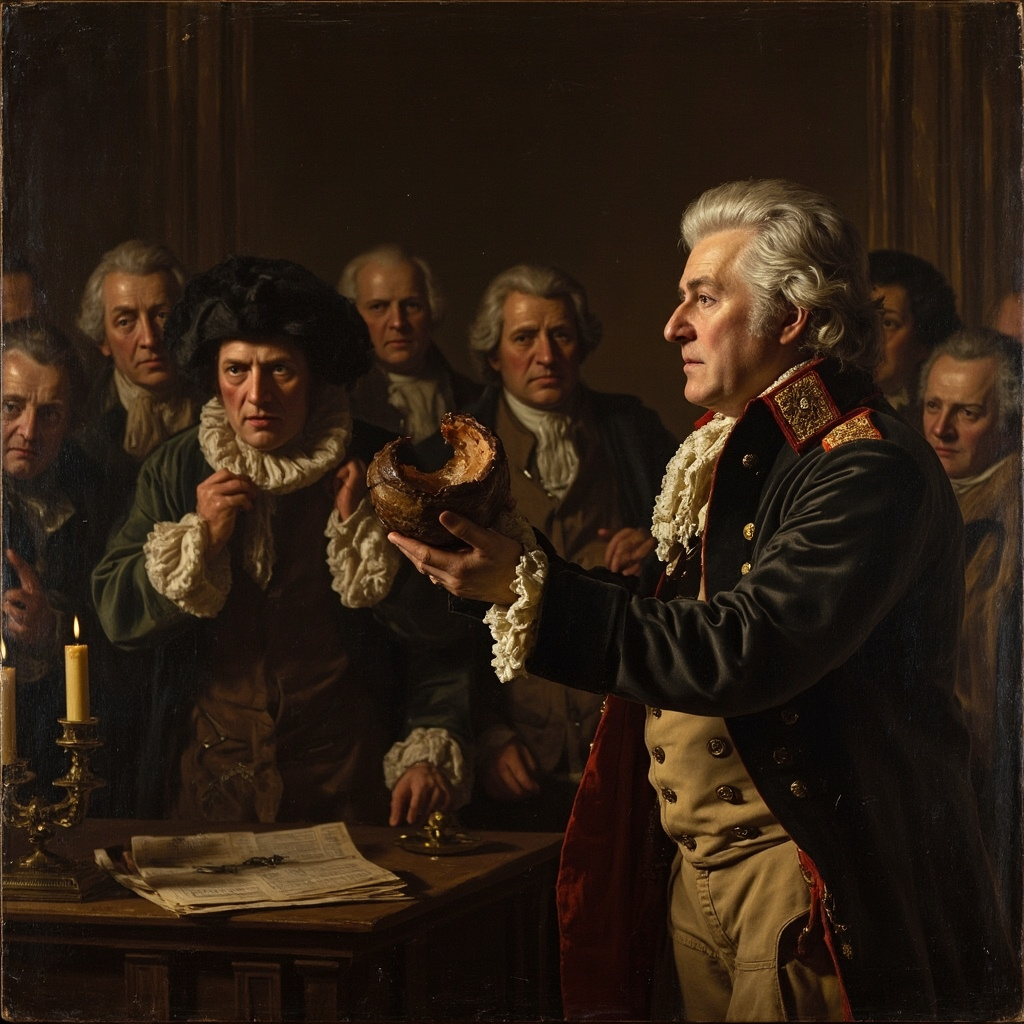
For seven years, this incident remained relatively obscure. However, in 1738, British opposition politicians—eager to undermine Prime Minister Robert Walpole’s peaceful foreign policy—dragged Jenkins before Parliament. In a dramatic performance, Jenkins allegedly produced his preserved ear from the jar and declared that when the Spanish guard cut it off, he had commended his soul to God and his cause to his country.
The Spark That Ignited War
The exhibition of Jenkins’ ear in Parliament was a masterful piece of political theater. The opposition Tories, who wanted war with Spain to expand British trade in the Americas, used the grisly artifact to whip up anti-Spanish sentiment. The incident became a symbol of Spanish arrogance and British humiliation, despite the fact that such searches were legal under the 1729 Treaty of Seville, which allowed Spanish officials to board British ships suspected of smuggling.
The reality was more complex than the propaganda suggested. British merchants had been systematically violating Spanish trade restrictions in the Caribbean, using legal trading licenses as cover for extensive smuggling operations. The Spanish, trying to protect their colonial monopoly, had stepped up enforcement—leading to numerous confrontations at sea.
Vernon’s Early Victories
When war was declared in October 1739, the British public expected quick victories. Admiral Edward Vernon delivered exactly that, capturing the Spanish port of Portobelo (in present-day Panama) in November 1739 with remarkable ease. The victory was so celebrated that the famous song “Rule Britannia” was written to commemorate it, and numerous places in Britain were named after Portobelo.
Vernon’s success led to wild celebrations and the premature minting of commemorative medals showing Spanish defenders surrendering. The ease of the victory convinced British leaders that Spain’s American empire was ripe for conquest.
The Disaster at Cartagena
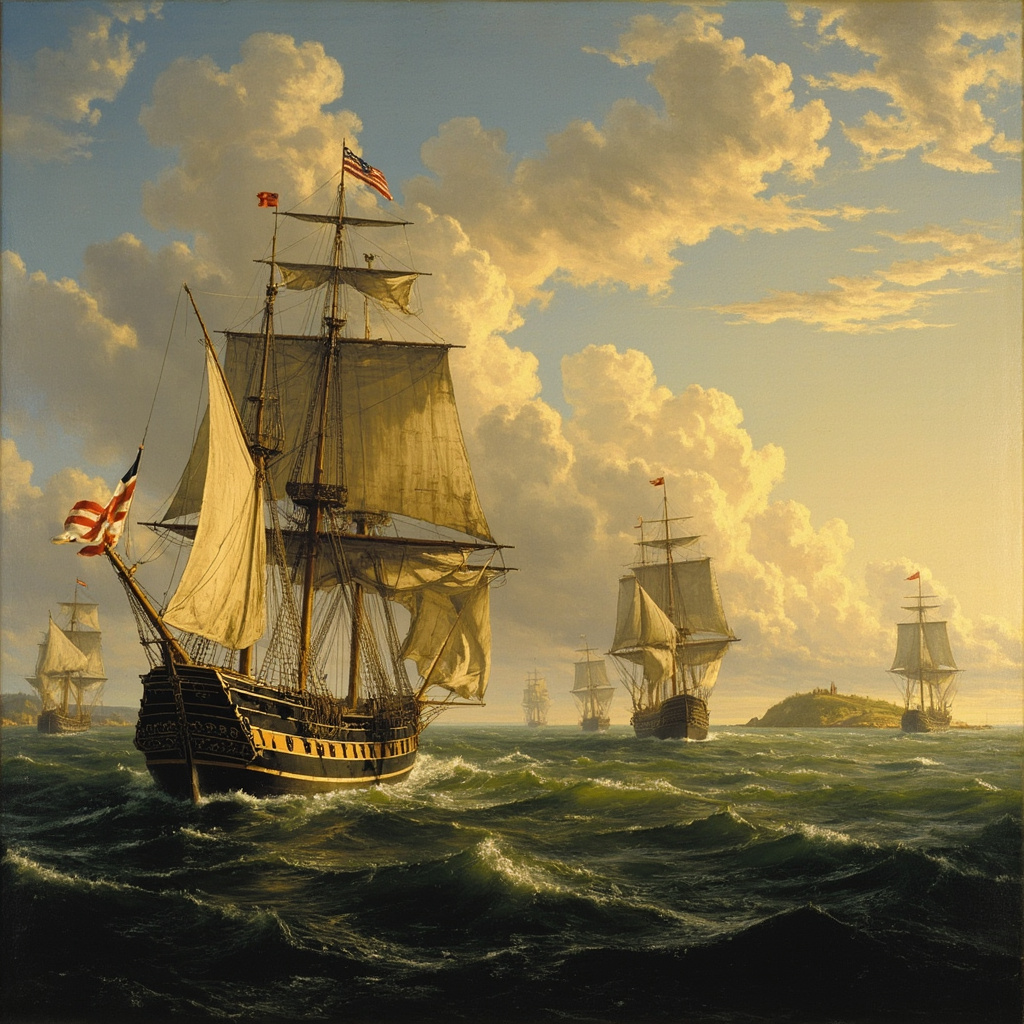
Emboldened by success, the British assembled one of the largest fleets ever sent to the Americas—186 ships carrying over 27,000 men, including soldiers, sailors, Jamaican slaves, and colonial volunteers from North America. Among these volunteers was Lawrence Washington, older half-brother of future U.S. President George Washington.
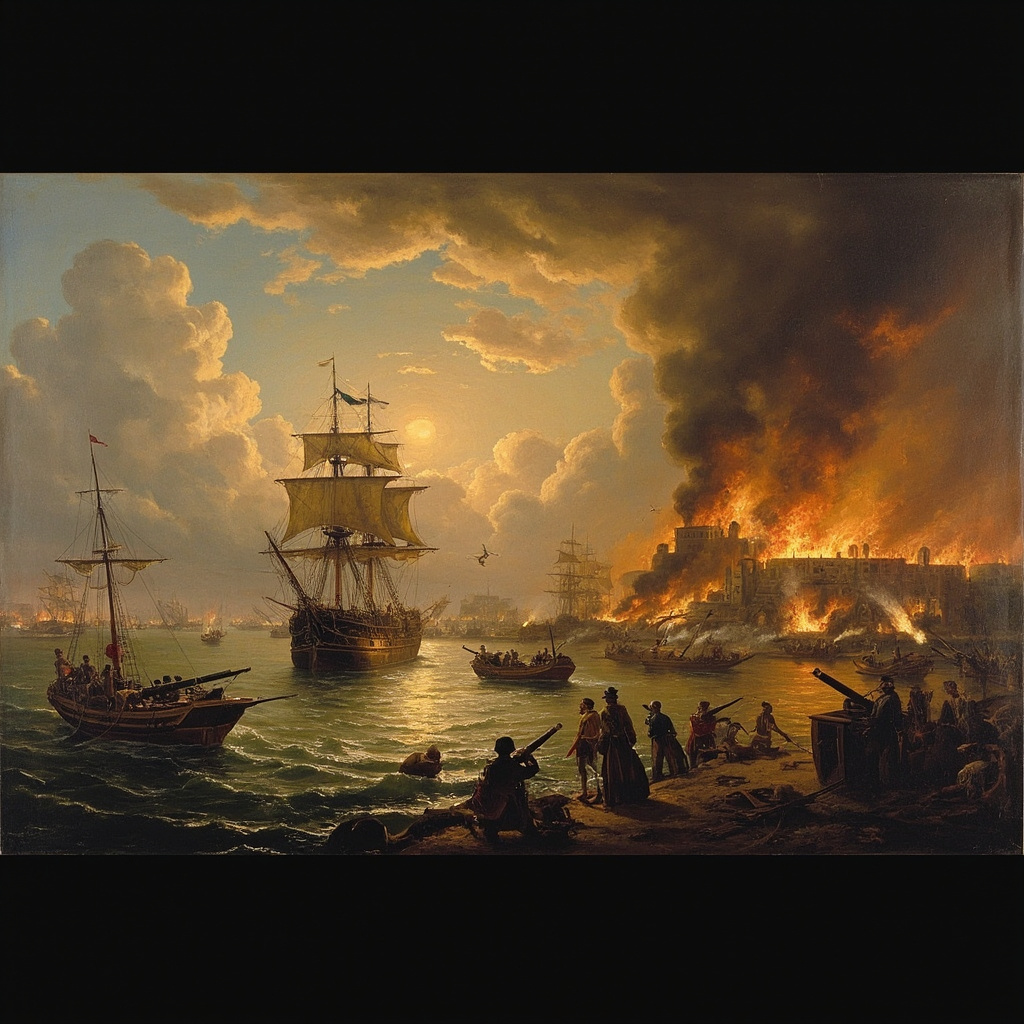
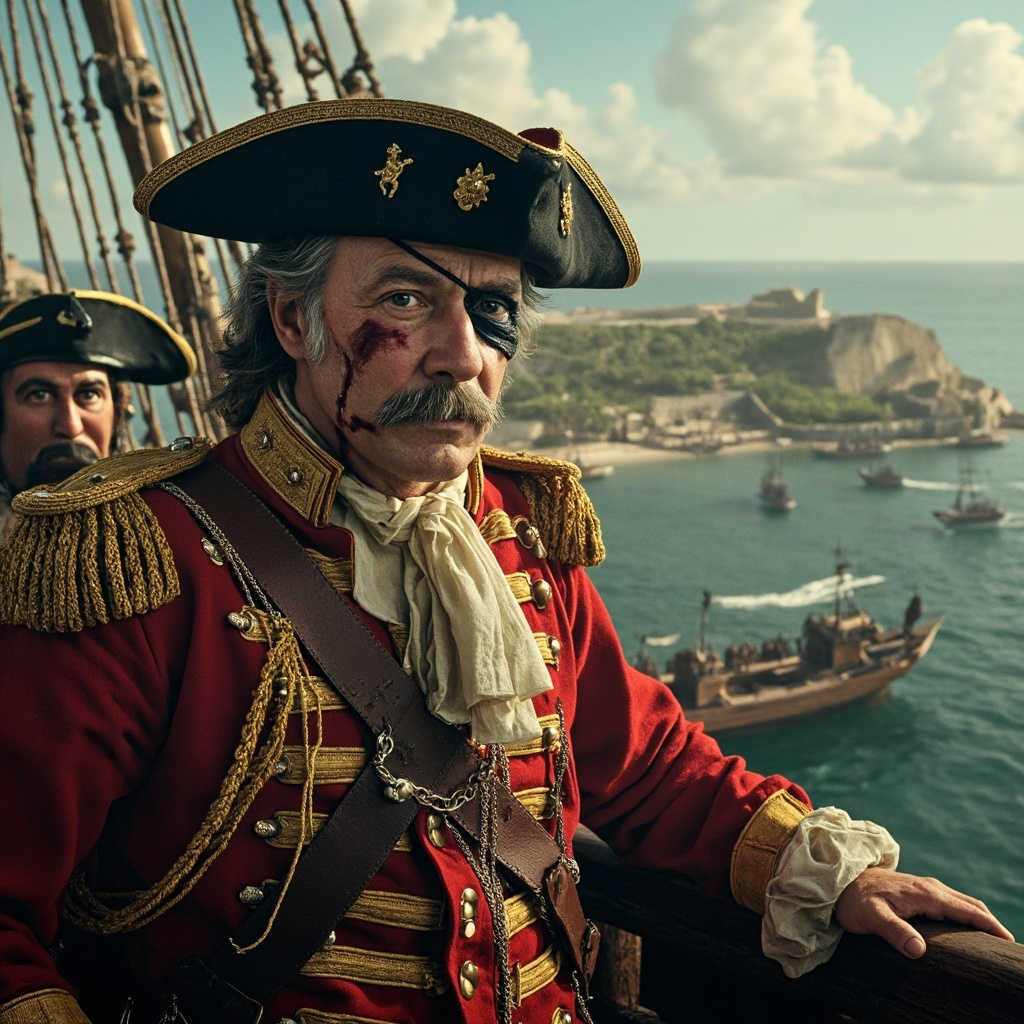
In March 1741, this massive armada attacked Cartagena de Indias (in modern-day Colombia), one of Spain’s most important ports in the Americas. Defending the city was Admiral Blas de Lezo, a remarkable Spanish officer who had lost an eye, a leg, and the use of one arm in previous battles—earning him the nickname “Mediohombre” (Half-man).
Despite being vastly outnumbered, Lezo’s brilliant defense turned the British siege into a catastrophe. The British forces, commanded jointly by Vernon and General Thomas Wentworth (who despised each other), suffered from poor coordination, inadequate supplies, and devastating tropical diseases. Yellow fever and other illnesses killed more British soldiers than Spanish bullets ever would.
After two months of futile attacks, Vernon was forced to withdraw. Of the 27,000 men who had arrived, only about 7,000 were still fit for duty. The Spanish defenders had lost fewer than 1,000 men. News of this disaster helped bring down Prime Minister Walpole’s government and shocked British confidence in their naval supremacy.
The War’s Strange Legacy
The War of Jenkins’ Ear eventually merged with the larger War of the Austrian Succession and formally ended with the Treaty of Aix-la-Chapelle in 1748. Despite nine years of conflict, the treaty restored the status quo—Britain had failed to achieve any of its territorial or trade objectives in Spanish America.
The war left several curious legacies. Lawrence Washington, who survived the yellow fever outbreak at Cartagena, named his Virginia estate Mount Vernon in honor of Admiral Vernon. This estate would later become famous as George Washington’s home. Meanwhile, the South Sea Company, which had held Britain’s trading privileges with Spanish America, quietly ceased operations.
Perhaps most remarkably, the war that began with a severed ear ultimately proved that Spain’s American empire was far more resilient than British politicians had assumed. The treasure fleets continued to sail, the colonies remained Spanish, and Britain’s dreams of Caribbean conquest would have to wait for another day.
The War of Jenkins’ Ear stands as a testament to how the most trivial incidents can escalate into major conflicts when political ambition and national pride are involved. In the end, a preserved ear in a jar of brandy had launched a thousand ships and cost tens of thousands of lives—all for remarkably little strategic gain.
Imagine living through the most defining war in American history, only to discover that fate had chosen your property as both the opening act and final curtain. This was the extraordinary reality for Wilmer McLean, a Virginia grocer who could rightfully claim, “The war began in my front yard and ended in my front parlor.”
McLean’s story represents one of history’s most remarkable coincidences, where a single man became an unwitting bookend to the American Civil War. His experience spans from the first major battle at Bull Run to the surrender at Appomattox Court House, making him perhaps the only civilian to witness both the war’s violent beginning and its peaceful conclusion on his own property.
When War Came to the Kitchen
In July 1861, Wilmer McLean was a prosperous wholesale grocer living at Yorkshire Plantation near Manassas Junction, Virginia. His two-story brick home sat peacefully in the Virginia countryside, complete with a well-maintained yard and outbuildings typical of a successful merchant’s estate.
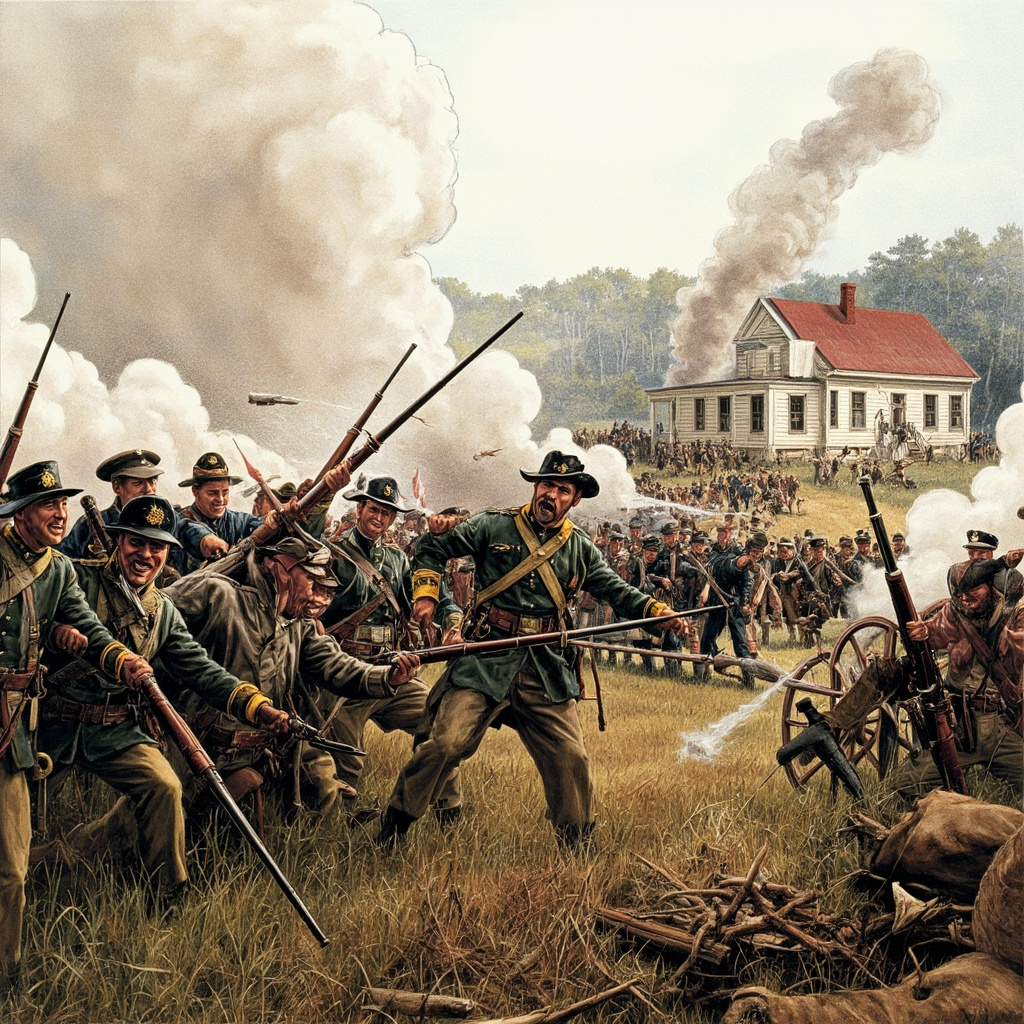
On July 18, 1861, McLean was enjoying breakfast in his kitchen when a cannonball from Union artillery crashed through his fireplace. This wasn’t just an unlucky shot—it marked the opening bombardment of what would become the First Battle of Bull Run, the Civil War’s first major engagement. Great wars often ignite from a single dramatic moment in one place — the Thirty Years’ War began when rebels hurled royal officials out of a Prague window — yet McLean’s land would host both a war’s opening shot and its final surrender.
For the next three days, McLean’s property became ground zero for the conflict that would define America’s future. Confederate General P.G.T. Beauregard established his headquarters in McLean’s house, using the dining room as his command center while coordinating the defense against advancing Union forces.
The battle raged across McLean’s fields and beyond, with soldiers trampling his crops and artillery positions dotting his landscape. When the smoke cleared on July 21, the Confederates had achieved a stunning victory, sending Union troops retreating in panic toward Washington D.C. But for McLean, the victory felt hollow as he surveyed the destruction of his peaceful home.
Seeking Peace in Appomattox
Understandably shaken by having his breakfast interrupted by cannonballs and his home commandeered as a military headquarters, McLean decided he’d had quite enough of war. In 1863, he made a decision that seemed perfectly logical: move his family far away from the fighting.
McLean sold his Manassas property and relocated 120 miles south to the small village of Appomattox Court House, Virginia. The tiny settlement seemed like the perfect refuge—isolated, rural, and far from any strategic military value. What could possibly happen in such an obscure backwater?
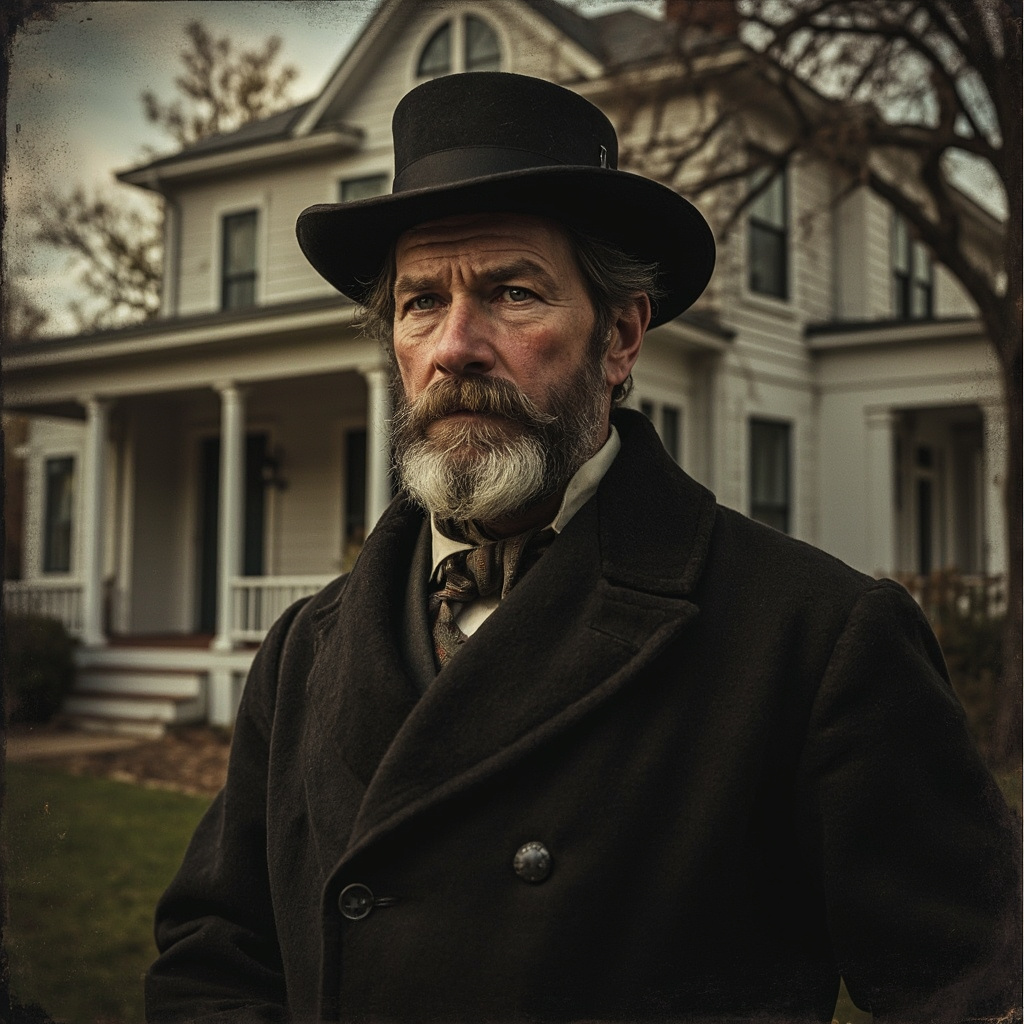
For nearly two years, McLean’s gamble paid off. He purchased a comfortable two-story brick home with white columns and established himself in the quiet community. The war seemed mercifully distant as he went about his business, surely convinced he’d made the right choice in seeking safety in this remote corner of Virginia.
April 9, 1865: History Knocks Again
On the morning of April 9, 1865, McLean thought he was facing just another routine day in peaceful Appomattox Court House. By that afternoon, his parlor would host the most consequential meeting in American history.
Confederate Colonel Charles Marshall approached McLean’s home around 1:00 PM, desperately seeking a suitable location where General Robert E. Lee could meet with Union commander Ulysses S. Grant. The Confederate Army of Northern Virginia was surrounded, supplies exhausted, and Lee had decided to surrender rather than see his men slaughtered in a hopeless final battle.
Marshall’s first choice was a dilapidated building, but McLean protested that it wasn’t suitable for such an important meeting. When pressed for an alternative, McLean reluctantly offered his own home. “Perhaps my house will do,” he said, having no idea he was about to host the end of the Civil War.
At approximately 1:30 PM, Lee entered McLean’s parlor, resplendent in his dress uniform with ceremonial sword. Grant arrived shortly after in his muddy field uniform, and the two generals spent about 25 minutes discussing terms. When Lee formally surrendered the Army of Northern Virginia, the Civil War effectively ended in the same modest room where McLean likely read his evening newspaper.
The Price of History
The meeting’s conclusion brought an unexpected consequence for McLean. Union officers, recognizing the historic significance of the moment, began purchasing his furniture as souvenirs. General Philip Sheridan bought McLean’s small wooden table for $20 in gold, intending to present it to General George Custer’s wife. Other officers purchased chairs, candlesticks, and various items, essentially stripping McLean’s parlor bare.
McLean found himself in the surreal position of watching Union officers dismantle his home’s contents while celebrating the war’s end. One can only imagine his thoughts as he witnessed both the beginning and conclusion of America’s bloodiest conflict from his own property.
A Singular Place in History
Wilmer McLean’s experience represents more than mere coincidence—it embodies the random way history touches individual lives. A successful merchant seeking nothing more than a peaceful existence found himself at the epicenter of his nation’s greatest crisis, not once but twice.
When McLean died in 1882, he carried with him memories no other American could claim. As one Union officer noted, McLean was “perhaps the only man who ever had the first major pitched battle of a war fought in his front yard and the surrender signed four years later in his parlor.”
His story serves as a reminder that history often unfolds in the most unexpected places, touching ordinary lives in extraordinary ways. McLean sought to escape war by moving to one of Virginia’s most isolated corners, only to discover that sometimes, you can’t run from destiny—it has a way of following you home.
Today, both of McLean’s homes are preserved as historical sites, bookends to the American Civil War. Visitors can stand in the same rooms where America’s bloodiest conflict began and ended, all thanks to one man’s remarkable—and remarkably unlucky—encounters with history.
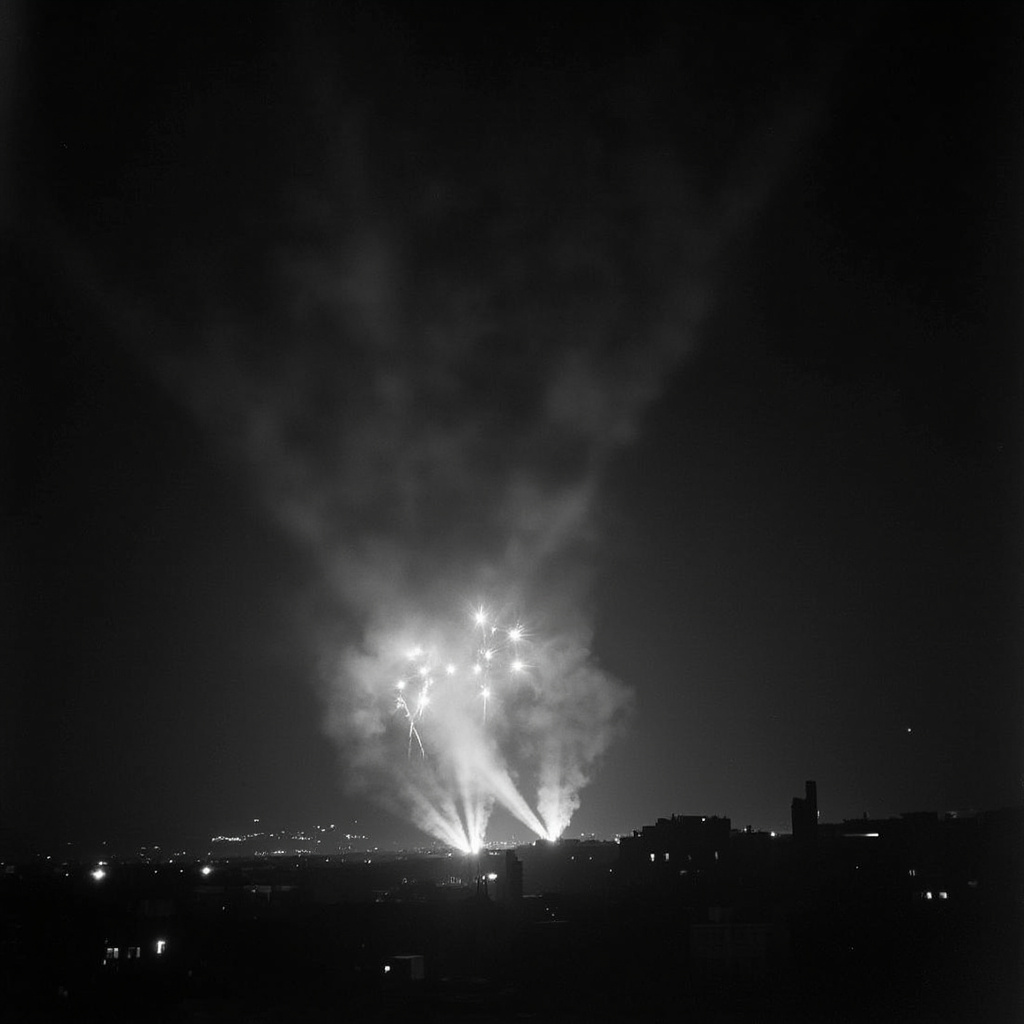
On the night of February 25, 1942, Los Angeles became the stage for one of World War II’s most bizarre military incidents. For over an hour, American forces unleashed a thunderous barrage of anti-aircraft fire into the dark California sky, convinced they were repelling a Japanese air raid. The reality was far stranger—they were shooting at absolutely nothing.
The Prelude to Panic
The attack on Pearl Harbor had left Americans on edge, particularly those living on the West Coast. Just two months after December 7th, paranoia gripped the nation. Reports of enemy submarines lurking offshore and phantom aircraft filled newspapers daily. Inexperienced radar operators mistook fishing boats, logs, and even whales for Japanese warships.
Secretary of War Henry Stimson had warned that American cities should prepare to accept “occasional blows” from enemy forces. That warning proved prophetic just days before the Los Angeles incident, when a Japanese submarine surfaced off Santa Barbara on February 23, 1942, and shelled an oil refinery—the first enemy bombardment of the mainland United States during World War II.
The Night the Guns Roared
The stage was set for disaster. On the evening of February 24, naval intelligence warned coastal units to prepare for a potential Japanese attack. All remained quiet until 2:00 AM on February 25, when radar picked up what appeared to be an enemy contact 120 miles west of Los Angeles.
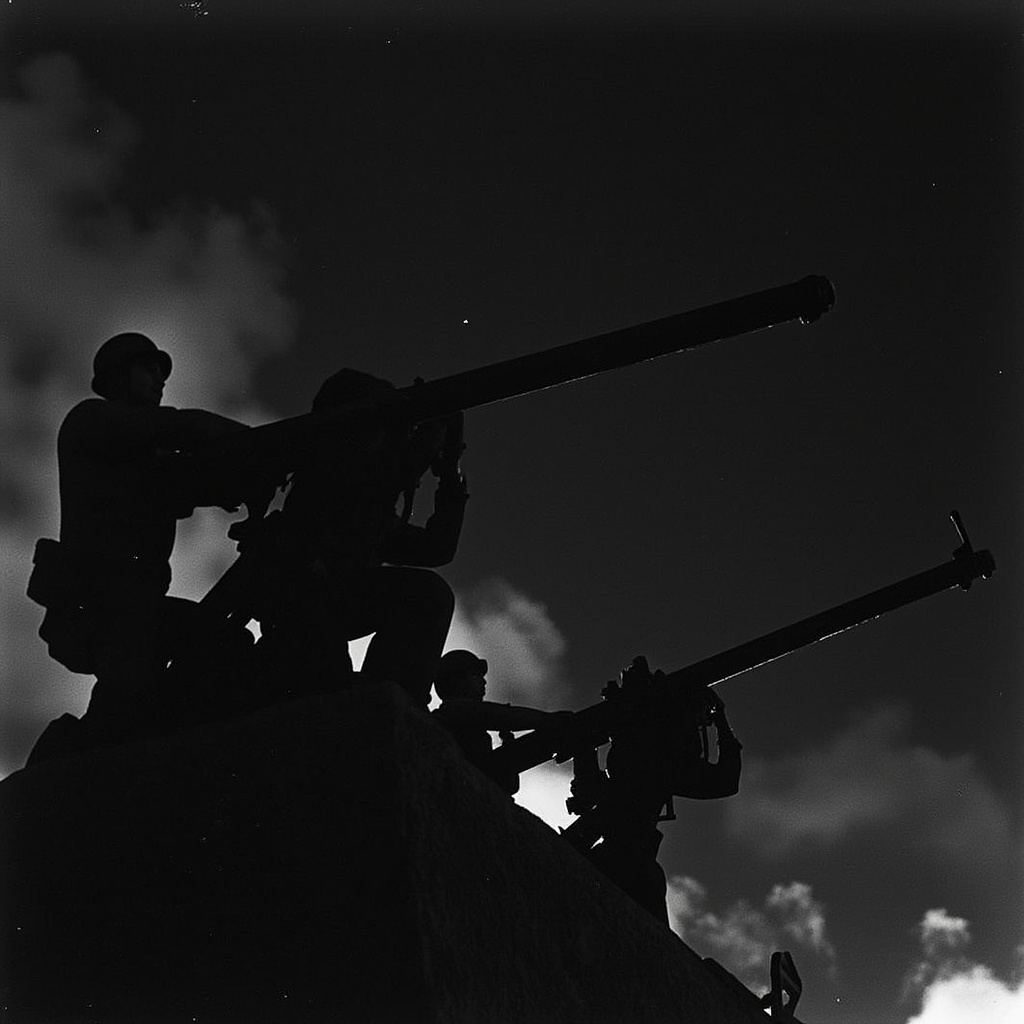
Soldiers manning anti-aircraft guns during the Battle of Los Angeles
Air raid sirens wailed across the city. A complete blackout was ordered. Within minutes, troops had manned their positions and searchlights began sweeping the sky. At 3:16 AM, following reports of an unidentified object over Santa Monica, the shooting began.
“Powerful searchlights from countless stations stabbed the sky with brilliant probing fingers,” the Los Angeles Times reported, “while anti-aircraft batteries dotted the heavens with beautiful, if sinister, orange bursts of shrapnel.”
For the next hour and eight minutes, Los Angeles artillery batteries pumped over 1,400 rounds of anti-aircraft ammunition into the empty sky. Reports flooded in from across the city: Japanese aircraft flying in formation, bombs falling, enemy paratroopers descending. One witness claimed a Japanese plane had crash-landed in Hollywood.
“I could barely see the planes, but they were up there all right,” coastal artilleryman Charles Patrick later wrote. “I could see six planes, and shells were bursting all around them. Naturally, all of us fellows were anxious to get our two-cents’ worth in.”
The Morning After: A Puzzling Discovery
When the “all-clear” finally sounded that morning, military officials made a disturbing discovery: there had been no enemy attack. No bombs had been dropped. No planes had been shot down. The only damage came from American shells raining down on their own city.
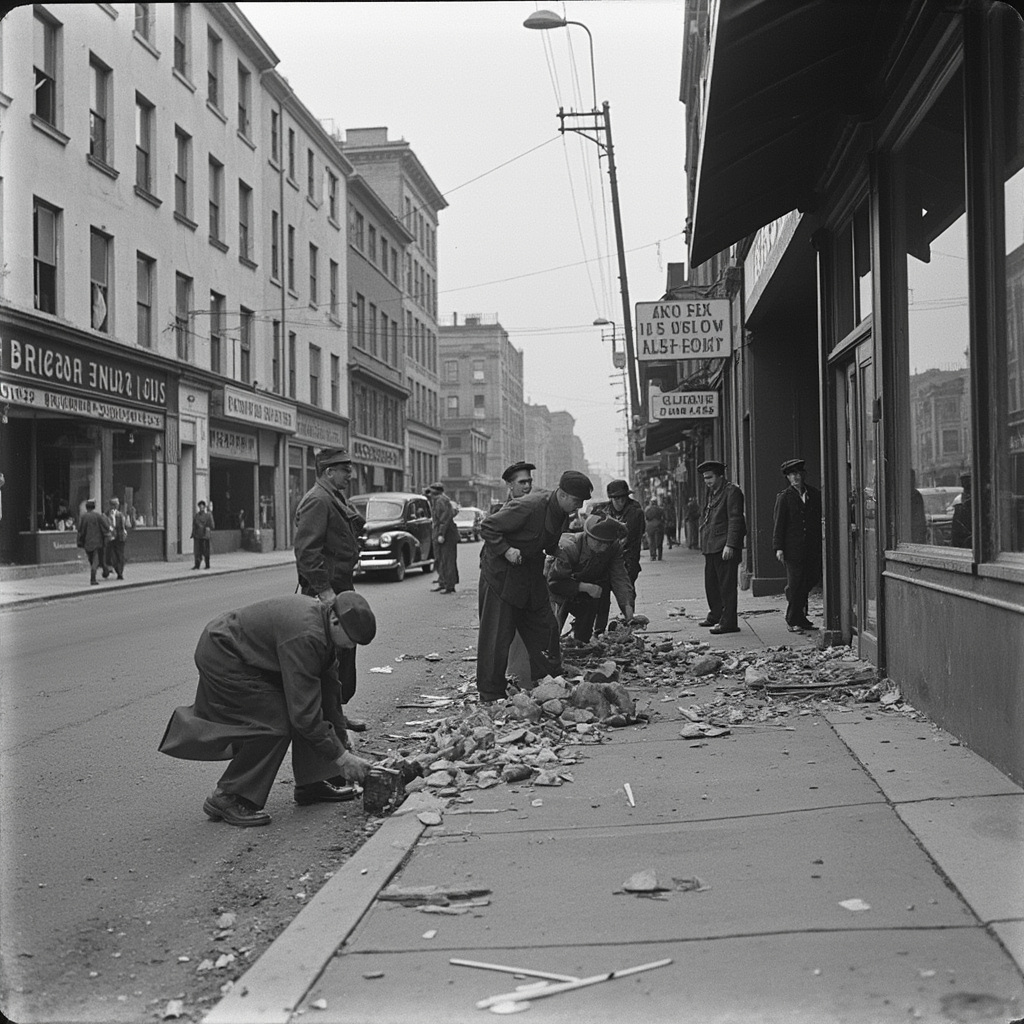
Residents cleaning up shrapnel damage after the Battle of Los Angeles
Anti-aircraft shrapnel had shattered windows and torn through buildings across Los Angeles. One unexploded shell careened into a Long Beach golf course. Several homes were partially destroyed by 3-inch artillery shells. Though no serious injuries occurred from the barrage itself, five people died from heart attacks and car accidents during the extended blackout.
In a chilling preview of the hysteria that would soon accompany Japanese internment, authorities arrested twenty Japanese-Americans for allegedly trying to signal the nonexistent aircraft.
Contradictory Explanations
Government officials offered wildly conflicting explanations for the incident. Secretary of the Navy Frank Knox dismissed it as a false alarm caused by “jittery nerves.” But Secretary of War Henry Stimson insisted that at least fifteen planes had buzzed the city, suggesting they might have been “commercial aircraft operated by enemy agents” trying to spread fear.
The New York Times noted the absurdity: “Some eyewitnesses had spied a big floating object resembling a balloon, while others had spotted anywhere from one plane to several dozen. The more the whole incident is examined, the more incredible it becomes.”
The Truth Behind the “Battle”
What really happened over Los Angeles that February night? The Japanese military later confirmed they had never flown aircraft over the city during the entire war. The most logical explanation involves a perfect storm of wartime paranoia, inexperienced personnel, and equipment failures.
In 1983, the Office of Air Force History revealed that meteorological balloons had been released before the barrage to determine wind conditions. Their lights and reflective surfaces likely triggered the initial alerts. Once the shooting began, the disorienting combination of searchlights, smoke, and exploding shells created phantom targets that convinced gunners they were firing on enemy planes.
Hollywood’s Perfect Illusion
The incident occurred in the heart of America’s entertainment capital, and journalists didn’t miss the irony. The New York Times wrote that as “the world’s preeminent fabricator of make-believe,” Hollywood had played host to a battle that was “just another illusion.”
The Battle of Los Angeles stands as a stark reminder of how fear and inexperience can transform shadows into enemies. While no Japanese aircraft ever threatened the city that night, the phantom attack succeeded in achieving what real bombers might have struggled to accomplish—complete panic, military chaos, and a city shooting at itself.
In the end, America’s first “UFO incident” was neither aliens nor enemies, but something far more human: the fog of war meeting the power of suggestion in a city already on edge.
Imagine a world where servants ordered their masters around, peasants mocked nobility, and chaos reigned supreme – all with official approval. This wasn’t anarchy, but a carefully orchestrated medieval tradition known as the Lord of Misrule, where social hierarchies flipped upside down during the Christmas season.
This extraordinary custom, which persisted for centuries across Europe, offers a fascinating glimpse into how medieval society managed social tensions through institutionalized role reversal and sanctioned rebellion.
Ancient Roots in Roman Revelry
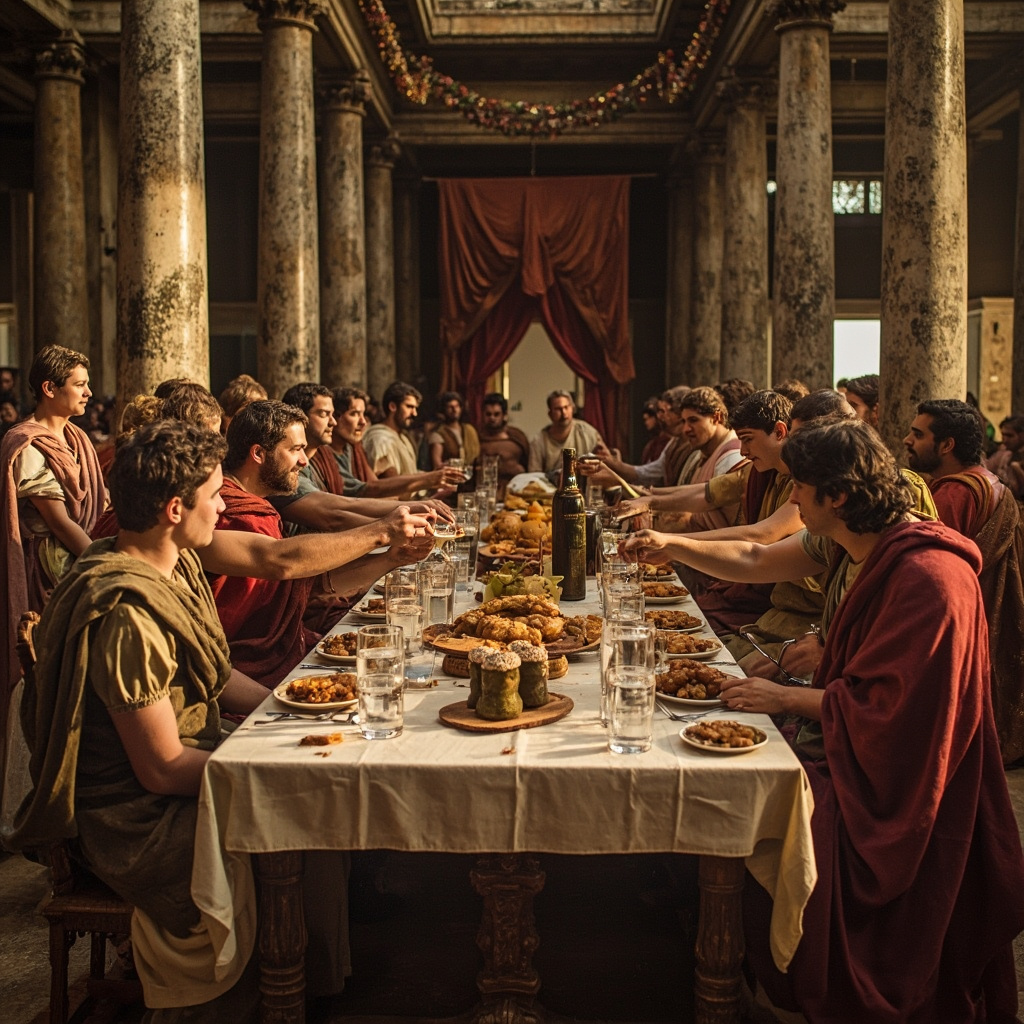
The Lord of Misrule tradition traces its origins to ancient Rome’s Saturnalia festival, held annually from December 17th for seven days of unprecedented social upheaval. During this winter celebration honoring the god Saturn, the rigid Roman class system temporarily dissolved into carnival-like chaos.
Masters waited on their slaves at banquet tables, gambling ran rampant through the streets, and moral restrictions lifted as citizens indulged in behaviors normally forbidden. The festival served as a pressure valve for social tensions, allowing the oppressed to briefly taste power while giving the powerful a temporary respite from responsibility.
This institutionalized inversion wasn’t mere entertainment – it was social engineering on a massive scale, designed to prevent real revolution by offering a controlled outlet for discontent.
Christian Adaptation and the Feast of Fools
When Christianity became Rome’s official religion in the 4th century, church leaders faced a dilemma: how to handle the deeply ingrained tradition of winter revelry that clearly contradicted Christian values of order and propriety.
Rather than abolish these customs entirely, the medieval church ingeniously adapted them into the Feast of Fools, celebrated between December 26th and 28th. Junior clergy temporarily assumed the roles of their superiors, conducting mock services that descended into theatrical farce.
Bishop John Grandisson of Exeter discovered this firsthand in 1329 when he found his cathedral clergy staging “irreverent mimes that descended into mud slinging,” causing the congregation to dissolve “into disorderly laughter and illicit mirth.” Despite his outrage, such festivities continued throughout medieval Europe.
The Rise of Boy Bishops
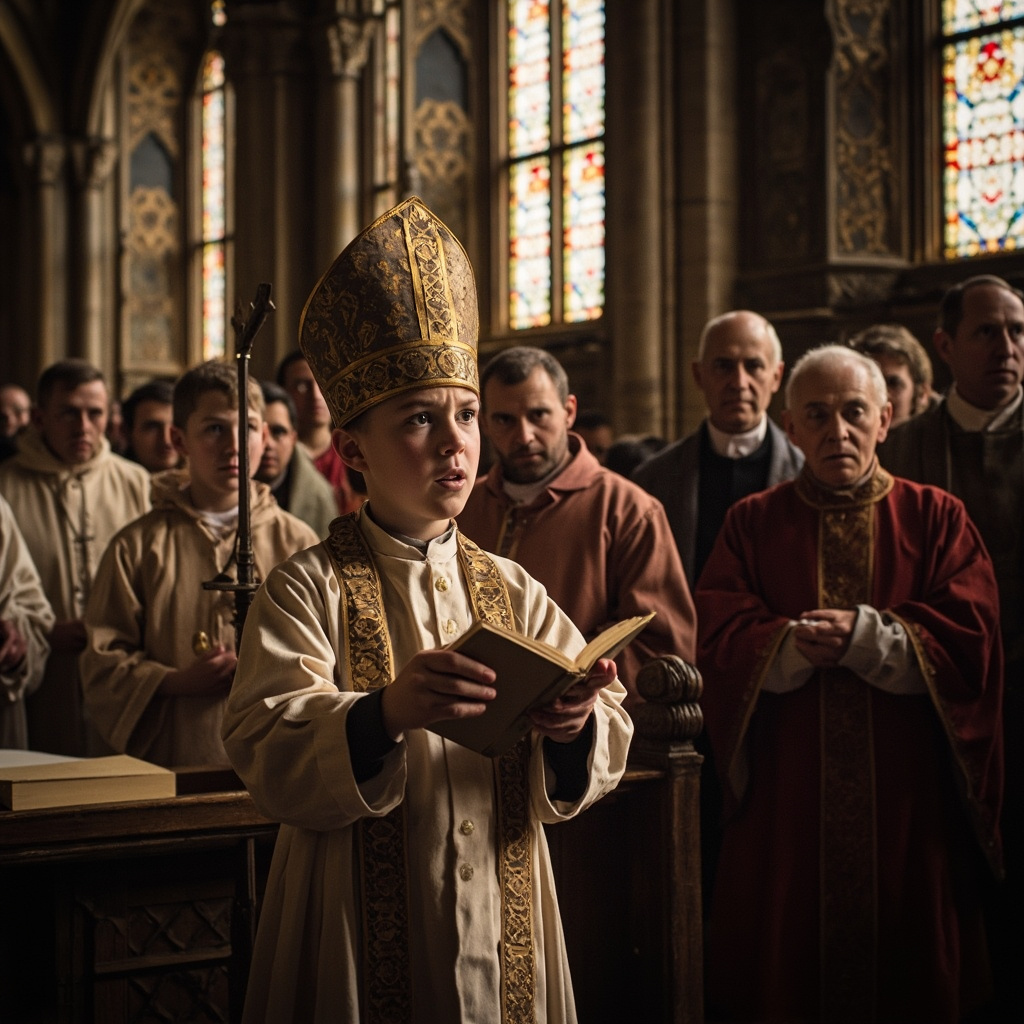
By the 15th century, one of the most popular manifestations of this tradition was the election of “boy bishops” – choirboys who temporarily assumed episcopal authority during feast days associated with children, particularly St. Nicholas Day (December 6th) and Holy Innocents Day (December 28th).
These young bishops, complete with miniature episcopal mitres and robes, led processions through cathedrals and even delivered sermons to adult congregations. The great Benedictine monastery at Bury St. Edmunds became particularly famous for this practice, with archaeological evidence suggesting boy bishops distributed special lead tokens to children and the poor, who could exchange them for treats at the abbey’s almonry.
These weren’t mere theatrical performances – the boy bishops wielded genuine, if temporary, authority within their religious communities, making decisions and issuing orders that adults were bound to obey.
Royal Courts and the Bean King
The tradition extended beyond churches into the highest levels of secular society. During the reigns of Edward II and Edward III, English royal courts featured a “Bean King” who presided over Christmas celebrations with all the pomp and circumstance of genuine royalty.
Henry VII revived this custom after ascending the throne in 1485, appointing a Lord of Misrule – typically a servant or minor court official – to oversee the Twelve Days of Christmas festivities. These temporary rulers came complete with their own courts, including jesters and even mock gibbets for the theatrical “execution” of those who displeased them.
The future Henry VIII spent much of his childhood at Eltham Palace, where Twelfth Night celebrations in 1516 featured elaborate pageants and mock battles, all orchestrated under the direction of a Master of Revels who wielded considerable authority over the proceedings.
The Limits of Acceptable Chaos
Despite encouraging temporary rebellion, medieval authorities carefully maintained boundaries on how far such behavior could extend. When students at Lincoln’s Inn in London staged Christmas pranks in 1516 that resulted in property damage, the perpetrators faced fines and expulsions, with future occurrences explicitly forbidden.
The preservation of fundamental social hierarchies remained paramount – these festivals provided controlled release valves, not genuine challenges to the established order. Participants understood that their temporary power was precisely that: temporary.
The End of an Era
The Protestant Reformation of the mid-16th century marked the beginning of the end for many aspects of the Lord of Misrule tradition. Religious reformers viewed such practices as corruptions of Christian worship, leading to the suppression of boy bishops and feast day revelries in reformed territories.
The final blow came during the English Civil Wars of the 17th century, when the very real disorder of political upheaval made the mock disorder of festival misrule seem dangerously inappropriate. Puritan authorities, viewing such customs as remnants of Catholic superstition, banned most remaining manifestations of institutionalized role reversal.
Modern Echoes of Ancient Traditions
While the formal Lord of Misrule tradition has largely vanished, its spirit survives in contemporary celebrations. The raucous festivities of “Mad Friday” – the weekend before Christmas when office workers across Britain engage in often spectacular public drinking – represents a direct descendant of medieval misrule traditions.
Similarly, modern carnival celebrations, office Christmas parties where employees mock their bosses, and various “world upside-down” festivals around the globe all echo the ancient human need for temporary social inversion and sanctioned rebellion.
The medieval Lord of Misrule tradition reveals sophisticated understanding of human psychology and social dynamics. By institutionalizing brief periods of chaos and role reversal, medieval society found a remarkably effective way to maintain long-term stability while acknowledging the universal desire for occasional escape from rigid social constraints.
In our own era of social media outrage and political polarization, perhaps there’s wisdom to be found in the medieval recognition that sometimes the best way to preserve order is to occasionally, safely, and temporarily turn the world upside down.
In the annals of warfare, most conflicts are remembered for their devastating battles, heroic charges, and tragic casualties. But there exists one war that stands apart from all others—not for its violence, but for its complete absence of it. The Three Hundred and Thirty-Five Years War between the Netherlands and the Isles of Scilly lasted from 1651 to 1986, making it one of the longest wars in recorded history, yet not a single shot was fired, and no blood was shed.
The Forgotten Declaration
The origins of this peculiar conflict trace back to the turbulent period of the English Civil War. By 1651, Oliver Cromwell had successfully pushed the Royalist forces to the very edges of England, with Cornwall becoming their final mainland stronghold. When even Cornwall fell to the Parliamentarians, the Royalist navy retreated to the Isles of Scilly, a small archipelago off the Cornish coast under the command of Royalist John Granville.
The Dutch, who had allied themselves with the Parliamentarians during the English Civil War, found their merchant ships under constant attack from the Royalist fleet based in Scilly. These raids were causing significant losses to Dutch commerce, and patience was wearing thin in Amsterdam. On March 30, 1651, Lieutenant-Admiral Maarten Harpertszoon Tromp arrived at the islands with a simple demand: reparation for the Dutch ships and goods seized by the Royalist pirates.
When the Royalists refused to provide satisfactory compensation, Tromp made a fateful decision. According to historical records, specifically Bulstrode Whitelocke’s Memorials, Tromp declared war specifically upon the Isles of Scilly. This wasn’t a declaration against England as a whole—most of which was now under Parliamentarian control—but against this tiny collection of islands that had become a thorn in the side of Dutch maritime commerce.
The War That Wasn’t
As wars go, this one ended almost before it began. Just two months after Tromp’s declaration, in June 1651, the Parliamentarian Admiral Robert Blake arrived with a formidable fleet and forced the Royalist navy to surrender. With the threat eliminated, the Dutch fleet sailed away without firing a single shot. The immediate crisis was resolved, but here’s where the story becomes truly extraordinary: nobody remembered to officially declare peace.
When the Dutch Republic and the Commonwealth of England signed the Treaty of Westminster in 1654, ending the First Dutch War, this peculiar local conflict was simply overlooked. The treaty dealt with the major issues between the two nations but made no mention of the specific state of war that supposedly existed between the Netherlands and the tiny Isles of Scilly.
335 Years of Forgotten War
For over three centuries, this technicality remained buried in the annals of history. The Isles of Scilly continued their peaceful existence, their residents completely unaware that they were theoretically still at war with an entire European nation. The Netherlands, meanwhile, went through dramatic political transformations—from the Dutch Republic to the Batavian Republic, then the Kingdom of Holland, and finally the modern Kingdom of the Netherlands—all while technically maintaining a state of war with a cluster of small islands they had probably forgotten existed.
The war might have remained forgotten forever if not for Roy Duncan, a local historian and chairman of the Isles of Scilly Council. In 1985, while researching local history, Duncan stumbled upon the old legend that the islands were still technically at war with the Netherlands. Intrigued by this historical curiosity, he decided to investigate.
Peace at Last
Duncan wrote to the Embassy of the Netherlands in London, explaining the situation and asking whether there was any truth to the local legend. To everyone’s surprise, embassy staff confirmed that no peace treaty had ever been signed between the Netherlands and the Isles of Scilly. The war that everyone had forgotten was, technically speaking, still ongoing.
Seeing the humor in the situation, Duncan invited the Dutch Ambassador to Britain, Jonkheer Huydecoper, to visit the islands and officially end this marathon conflict. On April 17, 1986—exactly 335 years and 19 days after Tromp’s original declaration—peace was finally declared in a ceremonial signing on the Isles of Scilly.
Ambassador Huydecoper, clearly enjoying the absurdity of the situation, joked during the ceremony that it must have been “horrifying to the Scillonians to know we could have attacked at any moment.” The comment was made with a wink, of course—the Dutch had long since forgotten about the conflict, and the peaceful islands had certainly never lived in fear of an invasion that was never going to come.
The Debate Over Reality
While the story of the 335-year war makes for delightful historical trivia, scholars debate whether this “war” ever truly existed in any legal sense. Some historians argue that Tromp, as an admiral rather than a sovereign nation, lacked the authority to declare war on behalf of the Netherlands. Others point out that the Isles of Scilly, as part of England, couldn’t be considered an independent entity capable of being at war with another nation.
Author Graeme Donald has dismissed the entire affair as “a great PR coup for the island’s tourist board,” suggesting that the story was more legend than historical fact. However, the Dutch Embassy’s confirmation that no peace treaty existed lent enough credibility to the tale that both sides were willing to play along with the ceremonial ending.
A War Like No Other
Whether legally valid or not, the Three Hundred and Thirty-Five Years War stands as a unique chapter in military history. If we accept it as genuine, it represents the longest war in recorded history, the most peaceful conflict ever fought, and certainly the most forgotten. It’s a war with no battles, no casualties, no heroes, and no villains—just a bureaucratic oversight that lasted for over three centuries.
In an age when we’re constantly reminded of the devastating costs of warfare, there’s something wonderfully refreshing about a conflict that harmed absolutely no one. The “war” between the Netherlands and the Isles of Scilly serves as a charming reminder that sometimes the most interesting historical events are the ones where absolutely nothing happened at all.
Today, the Netherlands and the Isles of Scilly maintain the most peaceful of relationships, their “conflict” having been resolved with handshakes, smiles, and probably a fair amount of Dutch cheese shared among new friends. It’s perhaps the only war in history that ended with everyone having a good laugh.
In 1858, British Prime Minister William Ewart Gladstone made a startling discovery that would challenge everything we thought we knew about human perception. While studying Homer’s epic poems as a classical scholar, Gladstone noticed something profoundly unsettling: the ancient Greeks seemed to live in a world without blue. Homer described the sea as “wine-dark” (oînops póntos), oxen as “wine-looking,” and sheep as violet. Most remarkably, in thousands of lines describing the heavens, seas, and natural world, the color blue appeared nowhere.
Gladstone’s observation wasn’t merely academic curiosity—it suggested that the very way humans perceive color might not be fixed and universal as we assume. His 1858 work “Studies on Homer and the Homeric Age” proposed that ancient Greeks categorized colors primarily by brightness and darkness rather than hue, lacking the sophisticated color vocabulary we take for granted today.
What Gladstone couldn’t have known was that he had stumbled upon one of the most profound questions in cognitive science: does language shape the way we literally see the world?
The Missing Blue Epidemic
A German philologist named Lazarus Geiger decided to test whether this “blue blindness” was unique to the Greeks. What he discovered was even more extraordinary. After analyzing ancient texts from across the world—Vedic hymns from India, Icelandic sagas, the Quran, ancient Chinese stories, and the original Hebrew Bible—Geiger found the same pattern everywhere.
Of the Hindu Vedic hymns, which contained more than ten thousand lines describing the heavens in elaborate detail, Geiger wrote that they were “brimming with descriptions of the heavens” yet contained not a single reference to blue. Ancient Chinese texts described everything from jade-green mountains to golden palaces, but the azure sky remained linguistically invisible. The pattern held across civilizations: humans seemed to develop words for black and white first, then red, then yellow and green, and finally—almost reluctantly—blue.
This wasn’t simply an oversight or poetic preference. These ancient cultures were describing the same physical world we see today, with the same blue skies and seas, yet somehow failing to linguistically capture what seems to us the most obvious color in nature.
The Universal Color Hierarchy
The mystery deepened in 1969 when anthropologists Brent Berlin and Paul Kay published their groundbreaking study “Basic Color Terms: Their Universality and Evolution.” After analyzing color vocabularies across 98 languages from around the world, they discovered something remarkable: colors don’t appear randomly in languages. Instead, they follow a strict, universal hierarchy.
Every language starts with words for black/dark and white/bright. If a language has three color terms, the third is always red. Languages with four terms add either yellow or green. Those with five include both yellow and green. Six-term languages add blue. Seven-term languages include brown. Finally, languages with eight or more terms incorporate purple, pink, orange, and gray.
This wasn’t just correlation—it was a linguistic law as rigid as any in physics. No language Berlin and Kay studied had a word for blue without also having words for red, yellow, and green. The implications were staggering: human color perception seemed to unfold according to a universal script, with blue consistently arriving last to the linguistic party.
When Words Create Reality
The idea that language might shape thought wasn’t new. Linguists Edward Sapir and Benjamin Lee Whorf had proposed in the early 20th century that the structure and vocabulary of our language influences how we conceptualize and understand the world. The strong version of this hypothesis suggested that language determines thought entirely, while the weaker version proposed that language merely influences thinking.
For decades, this “linguistic relativity” remained largely theoretical. Then came the experiments that would prove language doesn’t just describe reality—it helps create it.
The Russian Blues Breakthrough
In 2007, researchers led by Lera Boroditsky conducted a landmark experiment with Russian speakers that would provide the first concrete evidence of language shaping color perception. Russian, unlike English, has two distinct words for what English speakers call “blue”: “goluboy” for light blue and “siniy” for dark blue. These aren’t merely shades—they’re as linguistically distinct as red and green are in English.
The experiment was elegantly simple. Researchers showed Russian and English speakers blue squares on a computer screen and asked them to identify which square was different from the others. When the odd square fell across the goluboy/siniy boundary, Russian speakers were 10% faster at spotting it than when all squares fell within the same Russian color category. English speakers showed no such advantage.
This wasn’t just about vocabulary—it was about perception itself. The Russian language had literally trained its speakers brains to see distinctions that were invisible to English speakers. Language wasn’t just describing color; it was creating perceptual boundaries.
The Himba Color Revolution
Even more dramatic evidence came from studying the Himba people of Namibia. Psychologist Jules Davidoff and his colleagues discovered that the Himba language divides the color spectrum very differently from English. Where English speakers see distinct blues and greens, Himba speakers use a single term. But where English speakers see uniform green, the Himba language distinguishes several categories.
In carefully controlled experiments, Himba speakers could easily identify subtle green distinctions that English speakers struggled with, but they had difficulty distinguishing between blues and greens that seemed obviously different to Western observers. Even more remarkably, Himba children who hadn’t yet learned color terms behaved exactly like English children who didn’t know their colors—they showed no cross-category advantage for any color distinctions.
The implications were profound: color categories aren’t hardwired into human perception. They’re learned, cultural constructs that literally reshape how we see the world.
Beyond Color: The Spatial Mind
The influence of language on perception extends far beyond color. The Guugu Yimithirr people of Australia speak a language with no words for “left” or “right”—instead, they use absolute cardinal directions. A Guugu Yimithirr speaker doesn’t say “move your right hand” but “move your north hand” or “the cup is southeast of the plate.”
Remarkably, Guugu Yimithirr speakers maintain perfect spatial orientation at all times. They can point accurately north even in unfamiliar environments, having developed a kind of internal compass that most humans lack. Their language has quite literally given them a superpower—perfect directional sense—that the rest of us can barely imagine.
Japanese Blue-Green and Traffic Light Diplomacy
The power of linguistic color categories plays out in unexpected ways in modern life. Japanese traditionally used the word “ao” (青) to describe both blue and green. When Japan adopted international traffic signals, they faced a linguistic crisis: how do you tell people to “go on green” when green is called “blue”?
Rather than change their language, Japan changed their traffic lights. A 1973 cabinet order mandated that traffic lights be “the bluest shade of green possible”—green enough to satisfy international standards, yet blue enough to still be called “ao.” To this day, Japanese traffic lights remain noticeably bluer than those in other countries, a permanent testament to the power of linguistic categories over technological standards.
The Rarity of Blue
Why does blue consistently appear last in human color vocabulary? The answer lies in the natural world around us. Blue is remarkably rare in nature—aside from the sky and deep water, there are few naturally occurring blue objects that early humans would have needed to distinguish and name.
Throughout most of human history, creating blue pigments was extraordinarily difficult and expensive. The ancient Egyptians developed the first synthetic blue pigment around 3300 BCE, but it required complex chemical processes and high-temperature kilns. For millennia afterward, the only sources of blue pigment were rare minerals like lapis lazuli, which had to be imported from remote mines in Afghanistan at costs that often exceeded gold.
This scarcity explains why medieval European paintings often depicted golden skies rather than blue ones—artists simply couldn’t afford blue paint. When Vermeer used costly ultramarine blue in his paintings, he was often painting with pigments worth more than the subjects entire wardrobe. The phrase “true blue” comes from this era, referring to expensive blue dyes that wouldn’t fade, unlike cheaper alternatives.
The Neuroscience of Color Categories
Modern neuroscience has revealed exactly how language creates perceptual boundaries in the brain. When we categorize colors linguistically, we literally strengthen neural connections that enhance our ability to distinguish between different categories while reducing our sensitivity to differences within categories.
Brain imaging studies show that color discrimination activates language regions in the left hemisphere, but only when colors cross linguistic boundaries. When Russian speakers distinguish between goluboy and siniy blues, their language centers light up. When they distinguish between two different shades of goluboy, those same regions remain quiet.
This “categorical perception” isn’t limited to color—it’s how the brain handles all kinds of sensory input. By creating discrete categories out of continuous spectra, language helps us navigate a world of infinite variation by focusing our attention on differences that matter.
The Gladstone Legacy
Guy Deutscher, in his 2010 book “Through the Language Glass,” synthesized decades of research to argue that Gladstone’s original observation was more prescient than anyone realized. Language doesn’t determine what we can see, but it profoundly influences what we choose to notice and remember.
The ancient Greeks weren’t colorblind—they could see blue as clearly as we can. But without a word for blue, they had no reason to treat it as a distinct category worthy of attention. Their “wine-dark sea” wasn’t a failure of perception but a different way of organizing visual experience, one that prioritized darkness and luminosity over hue.
Colors in the Digital Age
Today’s debates over whether a viral dress is “blue and black” or “white and gold” reveal that Gladstone’s questions remain surprisingly relevant. Our digital age has created new color experiences—RGB displays, CMYK printing, Pantone color matching—that require ever more precise color vocabularies.
Meanwhile, languages continue to evolve their color systems. English has gained new terms like “cyan” and “magenta” from printing technology, while fashion and design industries constantly coin new color names. Each new term potentially creates new perceptual boundaries, subtly reshaping how we see the world.
The story of blues emergence in human language isn’t just historical curiosity—it’s a window into how our minds construct reality from raw sensation. Every time we name a color, were participating in the same process that led ancient humans to distinguish red before yellow, yellow before blue, and blue before all the subtle variations we now take for granted.
In the end, Gladstone’s “wine-dark sea” reminds us that the world we see isn’t just shaped by our eyes—its sculpted by our words, one color term at a time. The next time you look at a blue sky or green forest, remember: somewhere in your brain, language is quietly deciding what you notice, what you remember, and what youll describe to others. The colors you see are not just physics—they’re the accumulated vocabulary of thousands of years of human experience, crystallized into categories that shape perception itself.
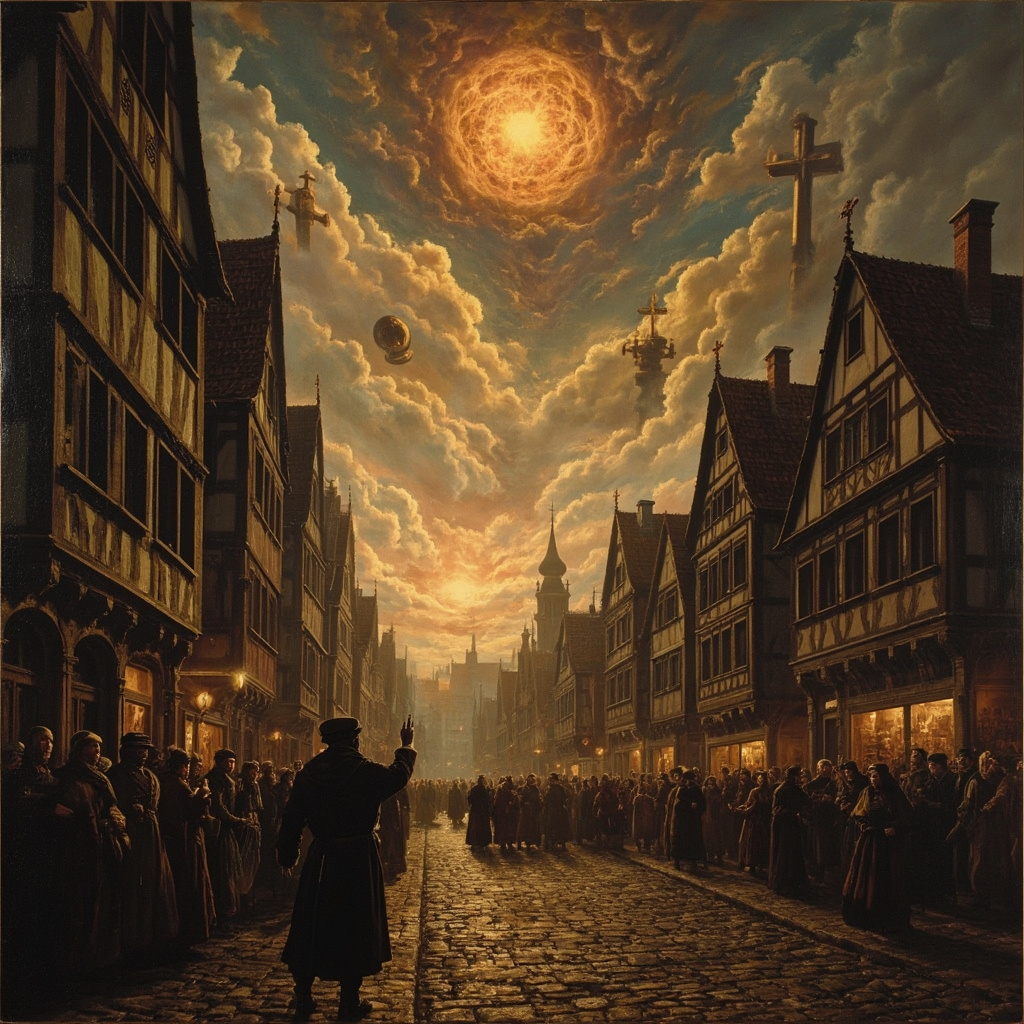
On the morning of April 14, 1561, the residents of Nuremberg, Germany, witnessed one of history’s most extraordinary and well-documented celestial phenomena. As dawn broke between 4 and 5 AM, the sky above this medieval city erupted into what appeared to be an aerial battle involving hundreds of mysterious flying objects.
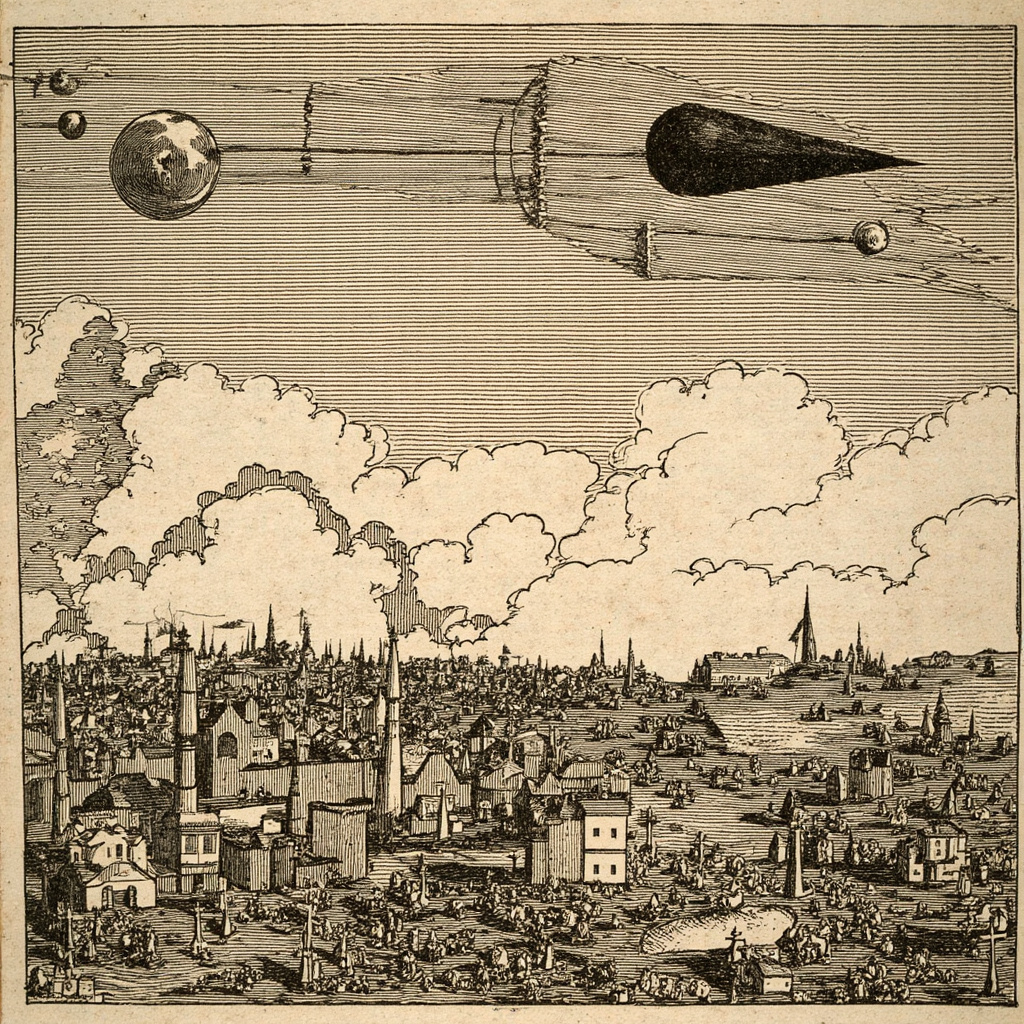
This remarkable event was so significant that it was immortalized in a detailed broadsheet—a printed news bulletin of the day—complete with woodcut illustrations depicting the strange objects that filled the sky. The incident has puzzled historians, astronomers, and researchers for over four centuries.
The Dawn of Terror
According to eyewitness accounts recorded in the famous broadsheet, the citizens of Nuremberg were confronted with “a dreadful apparition” as the sun rose. The sky filled with objects of various shapes and sizes: spheres, crosses, cylinders, crescents, and rod-like formations. Most remarkably, these objects appeared to be engaged in combat, darting around each other in seemingly organized patterns.
The broadsheet, printed and distributed throughout the region, described how “many men and women” witnessed cylinders from which “several small spheres emerged and darted around the sky.” Most ominously, witnesses reported seeing a large, black, spear-like or arrow-shaped object among the aerial combatants.
Contemporary Documentation
What makes the Nuremberg incident particularly compelling is its thorough documentation. The broadsheet was created by Hans Glaser, a prominent printer in Nuremberg, who was known for producing reliable news reports. The detailed text provides specific information about the timing, appearance, and behavior of the mysterious objects.
The account describes how the objects “fought among each other for over an hour.” After this aerial battle concluded, many of the objects allegedly fell to earth “as if they all burned,” though no physical remains were reportedly found. Most intriguingly, witnesses claimed that the large black arrow-shaped object crashed somewhere outside the city walls.
Theories and Explanations
Modern researchers have proposed various explanations for what the people of Nuremberg witnessed that April morning. Some meteorologists suggest the phenomenon could have been an unusual atmospheric display, possibly involving sun dogs (parhelia) or other optical illusions created by ice crystals in the atmosphere.
Others propose that the residents may have witnessed a meteor shower or multiple meteors breaking up in the atmosphere, which could explain the various shapes and the apparent “battle” as objects moved across the sky in different directions. The morning timing aligns with when certain meteor showers are most visible.
Religious and Cultural Context
The 16th century was a time of significant religious upheaval in Europe, with the Protestant Reformation in full swing. Many people interpreted unusual natural phenomena as divine omens or warnings. The Nuremberg broadsheet itself frames the event in religious terms, suggesting that citizens should “be warned” and “repent” in response to this celestial sign.
This religious interpretation was typical of the era, when astronomical events were often seen as messages from God about earthly affairs. The detailed documentation of such phenomena served both as news reporting and as religious commentary on contemporary events.
Historical Significance
The 1561 Nuremberg incident represents one of the earliest mass UFO sightings in recorded history, predating the modern UFO phenomenon by centuries. While the true nature of what occurred remains a mystery, the event demonstrates the human impulse to document and attempt to understand unusual phenomena.
The broadsheet itself has become an invaluable historical document, providing insight into both 16th-century printing practices and the way extraordinary events were communicated to the public. It serves as a fascinating example of early mass media responding to a breaking news story.
Legacy and Modern Interest
Today, the Nuremberg sky battle continues to captivate researchers and enthusiasts interested in unexplained historical phenomena. The incident has been referenced in numerous books about anomalous events and has found its way into discussions about historical UFO encounters.
Whether the citizens of Nuremberg witnessed an unusual atmospheric phenomenon, an astronomical event, or something else entirely, their detailed documentation has preserved one of history’s most intriguing mysteries. The 1561 sky battle remains a testament to the enduring human fascination with the unknown and our drive to record and share extraordinary experiences.
The Nuremberg broadsheet stands as a remarkable piece of historical evidence—a window into a world where the line between the natural and supernatural was far thinner than it is today, and where a single morning’s strange events could captivate an entire city and echo through the centuries.