The Angola Horror: The Christmas-Week Train Wreck That Forced America to Rebuild Its Railroads

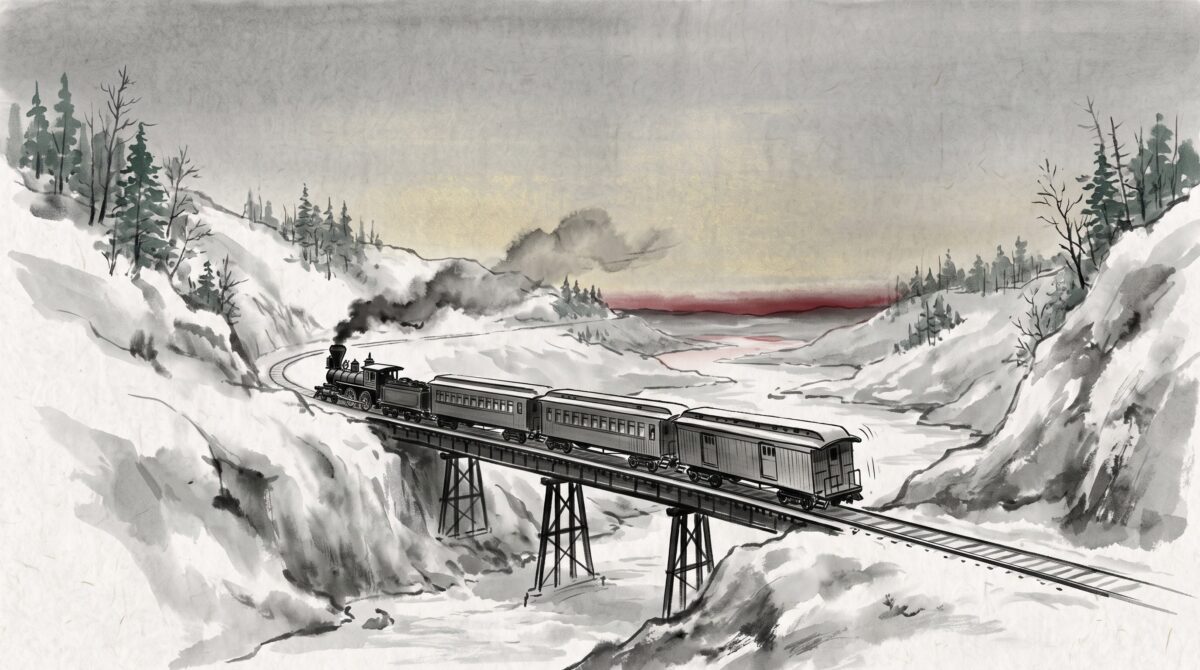
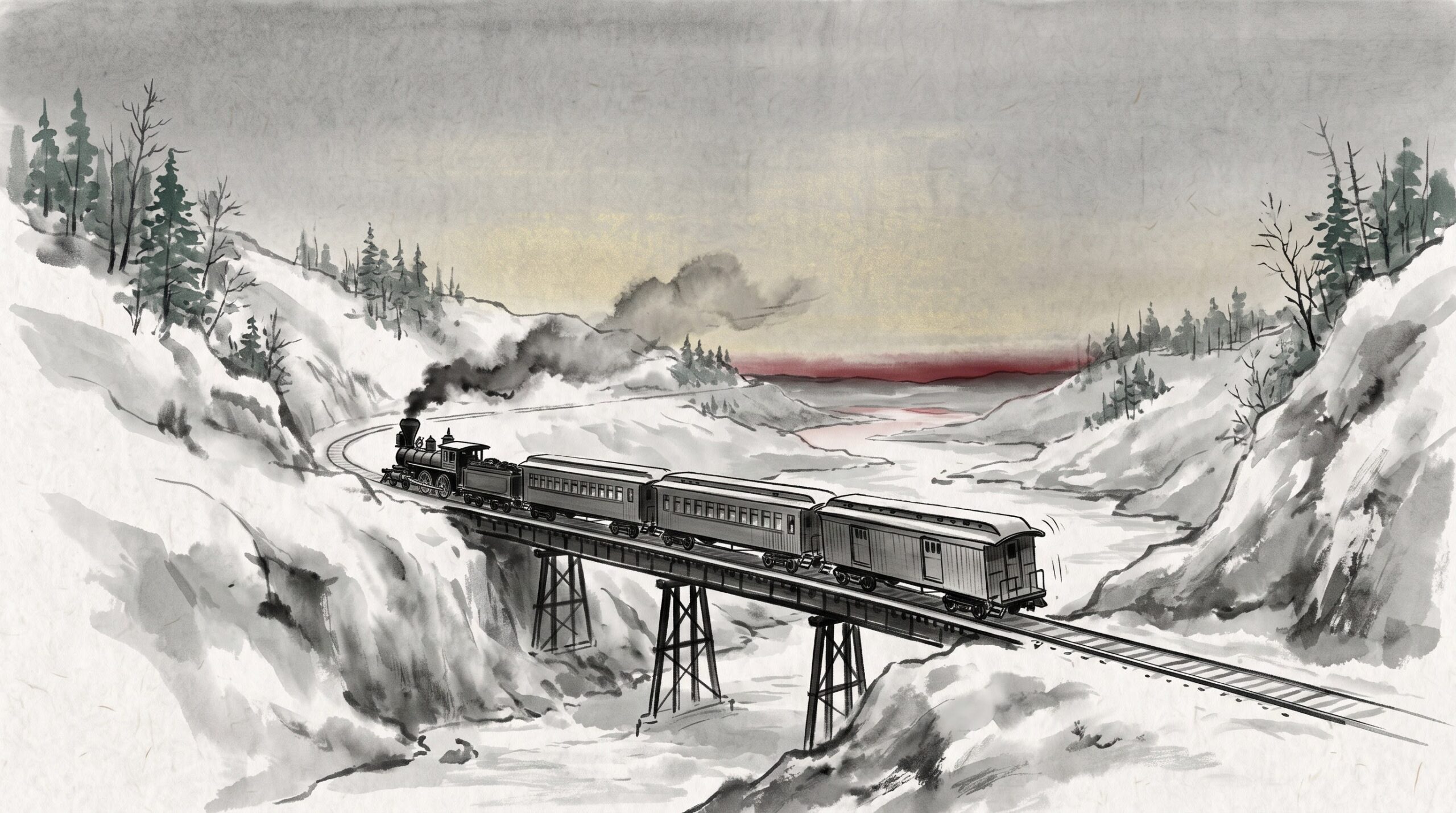
A week before Christmas in 1867, a crowded train was running east through the cold toward Buffalo, carrying people home for the holidays. It was called the New York Express, part of the booming web of rails that was knitting a young, confident country together. At the small village of Angola, New York, the line crossed a narrow, steep-sided gorge on a short iron bridge over a stream called Big Sister Creek. The train had almost made it across when the last two cars began to shudder and jump on the rails. One tore loose, swung out over nothing, and plunged down the frozen bank into the ravine. Then the stoves that heated it spilled their coals across the splintered wood, and the car caught fire with the passengers still trapped inside. What happened in the next terrible minutes seared itself into the nation’s memory as the Angola Horror.
A few feet from the far side
The disaster turned on something almost unbearably small. The rails of that era were not yet built to a single uniform width, and where tracks of slightly different gauge met, the wheels had to be guided through an iron fitting at the junction. As the express approached the Angola bridge, a wheel on one of the rear cars — worn, or mismatched, or simply unlucky — failed to track true through one of these points and climbed off the rail. For a few seconds the cars bounced along on the ties, the couplings straining, the whole train shivering with the wrongness of it. The engine and the forward cars dragged across the bridge and onto solid ground. The very last car did not. It snapped free at the lip of the gorge and rolled down into it, and the second-to-last car was dragged partway after.
Had the wheel left the rail a hundred yards earlier or later, the cars might have come to rest upright on open ground, and the day would be a forgotten footnote about a derailment that bruised and frightened a few travellers. Instead it happened at the one place on that stretch of line where a fall waited — and it happened in the dead of winter, in wooden cars warmed by fire.
The fire in the gorge
Nineteenth-century passenger coaches were essentially long wooden boxes, and in winter each was heated by one or two cast-iron stoves burning coal or wood at the ends of the car. It was a system that worked well enough until the moment a car was thrown violently off the rails. When the rear coach smashed down into the gorge and rolled, its stoves tore loose and burst open, scattering live coals and burning embers across shattered seats, splintered panelling, and the people tangled among them.
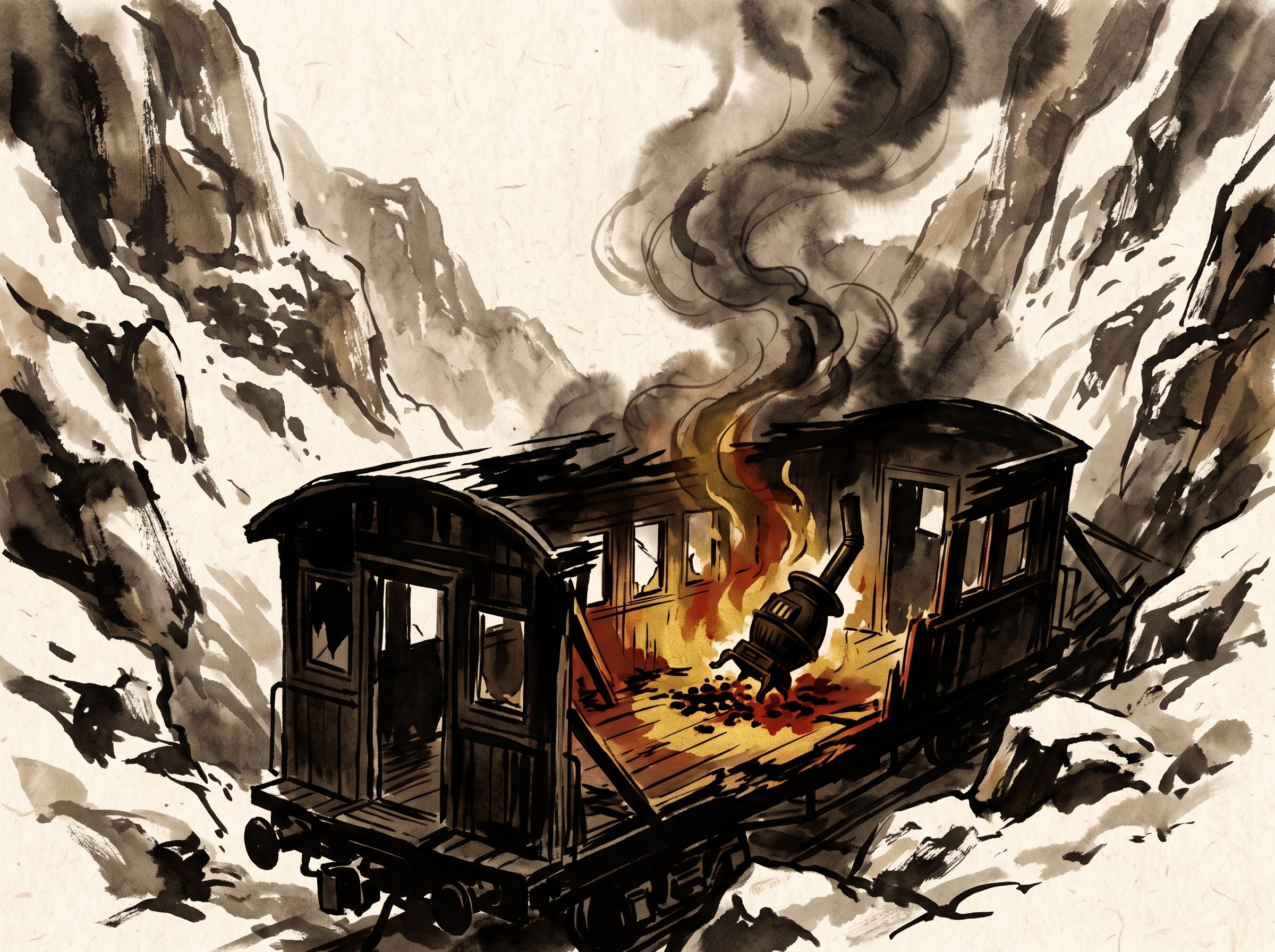
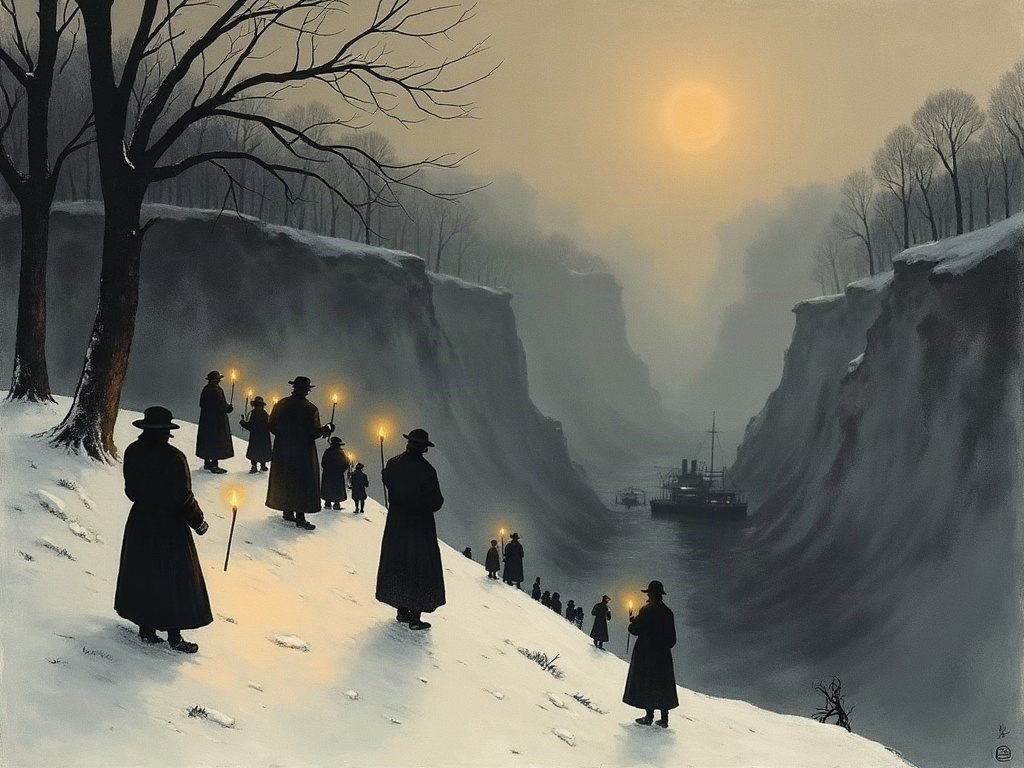
The wreckage caught almost at once. Passengers from the surviving cars and farmers from the nearby village came running and half-sliding down the icy banks, but the heat beat them back before they could reach most of those trapped below. They could hear what was happening and could do almost nothing to stop it. By the time the flames died, the rear car and most of the people in it were simply gone, many burned so completely that they could never be identified. The number of dead has never been fixed with certainty — accounts put it somewhere between about forty and fifty — and a great many of the victims were buried together, nameless, in a single grieving ceremony while the country looked on in shock.
The man who was late
Among the countless people whose lives brushed against the Angola Horror was one who would become one of the most powerful men in American history. A young Cleveland merchant named John D. Rockefeller — then still building the oil business that would make him the richest man of his age — had planned to travel on that very New York Express. As the story has come down to us, he was delayed that day, held up by his work, and missed the train. He reached Buffalo later, on a following train that was halted at Angola because the line ahead was blocked by the catastrophe he had so narrowly avoided.
It is one of history’s quiet what-ifs. The man who would go on to build Standard Oil, reshape American industry, and give away one of the largest fortunes ever amassed came within a few lost minutes of dying anonymously in a burning railway car in rural New York. He was not the only passenger of note spared by chance that day, but his near-miss is the one that still makes people pause — a reminder of how much of history hangs on things as trivial as running late.
The reckoning that followed
What lifts the Angola Horror above the grim roll call of nineteenth-century accidents is what it helped set in motion. The disaster arrived at a moment when Americans were beginning to demand that the railroads — enormously profitable, and until then largely free to run as they pleased — be made to answer for the safety of the people they carried. Angola became a byword for everything that was wrong with how trains were built and run, and a rallying point for change.
The hard lessons were plain. Wooden cars heated by open stoves were death traps in a wreck, and over the following decades they gave way to stronger construction and to steam heat piped from the locomotive, doing away with the loose fire that had turned a survivable fall into a holocaust. The patchwork of incompatible track gauges that had helped throw the car from the rails was gradually hammered into a single national standard. And the era’s crude, dangerous methods of stopping and joining cars gave way to new inventions — the automatic air brake and safer couplers — that let a train be halted quickly and its cars held together in a crisis. None of these changes came overnight, and none came because of Angola alone. But the horror in the gorge was one of the loud, undeniable warnings that pushed a careless industry, slowly, toward making travel something a family could survive.
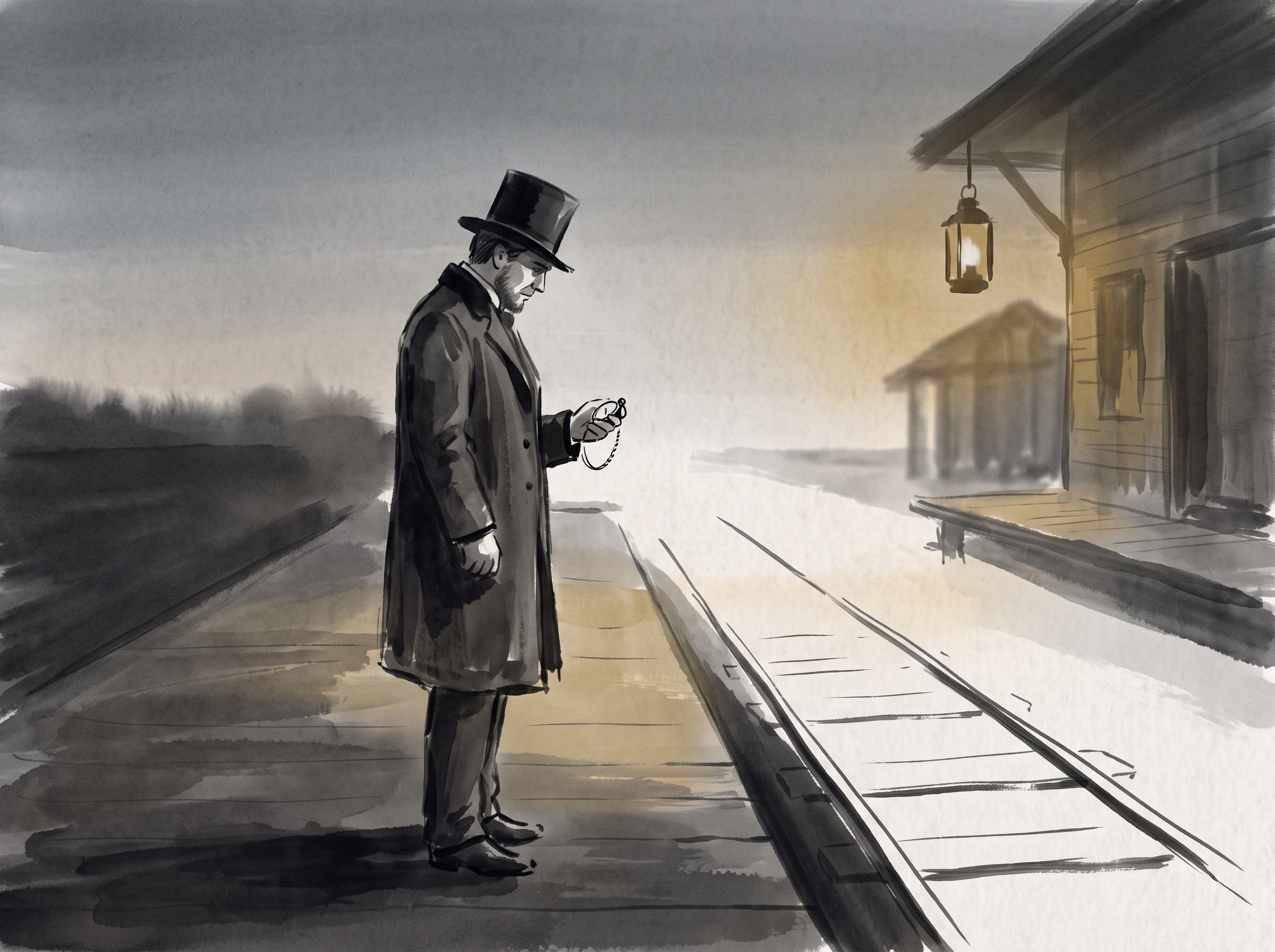
The disaster America almost forgot
For all the noise it made in its own moment, the Angola Horror has faded from popular memory in a way that seems unjust to the people who died there. It belongs to a strange category of American catastrophe: enormous, terrible, consequential — and then quietly let go of, crowded out of the national story by wars and by disasters with more famous names. In that it keeps company with other calamities that cost staggering numbers of lives and then slipped from the textbooks, like the Sultana, America’s worst maritime disaster, which the nation barely paused to notice, or the fires that forced reform only after they had killed in numbers that are hard to comprehend, as happened when an “absolutely fireproof” Chicago theatre burned six hundred people in fifteen minutes and when a holiday picnic boat called the General Slocum caught fire and erased an entire New York neighborhood.
The people who boarded the New York Express a week before Christmas were doing the most ordinary thing in the world: going home for the holidays. They could not have known that the little bridge at Angola, the mismatched rails, the glowing stoves, and the fifty-foot drop into the gorge were waiting to turn that journey into one of the defining horrors of its age. We remember them best not through the lurid details of how they died, but through what their deaths helped change — the brakes, the steel, the steady, grinding insistence that a train should not be a gamble with one’s life. Every passenger who has since ridden the rails in reasonable safety owes a small, unknowing debt to the dead of Big Sister Creek.
Sources & further reading:
Related Reading
- The Sultana: America’s Worst Maritime Disaster, and the Nation That Barely Noticed
- The Man-Eaters of Tsavo: The Lions That Brought an Empire’s Railway to a Halt
- The Bear River Massacre: The Deadliest Day for Native Americans That America Forgot