Thomas Midgley Jr.: The Inventor Who Poisoned the Sky Twice

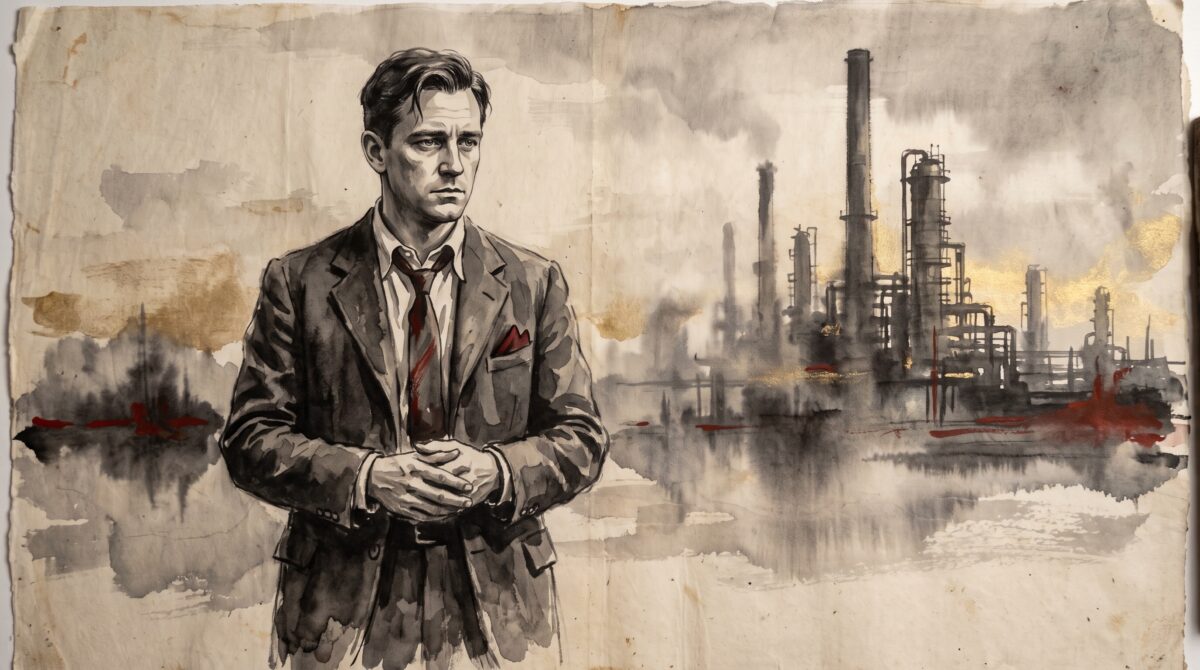
In the 1920s and 1930s, if you had asked who was making the modern world run more smoothly, one name would have come up again and again. He held more than a hundred patents. He collected the highest honors American chemistry could bestow. He was, by every measure of his own era, a genius and a benefactor of humankind. His name was Thomas Midgley Jr., and he is now remembered for a darker distinction: the environmental historian J.R. McNeill would later write that Midgley ‘had more impact on the atmosphere than any other single organism in Earth’s history.’ It was not a compliment.
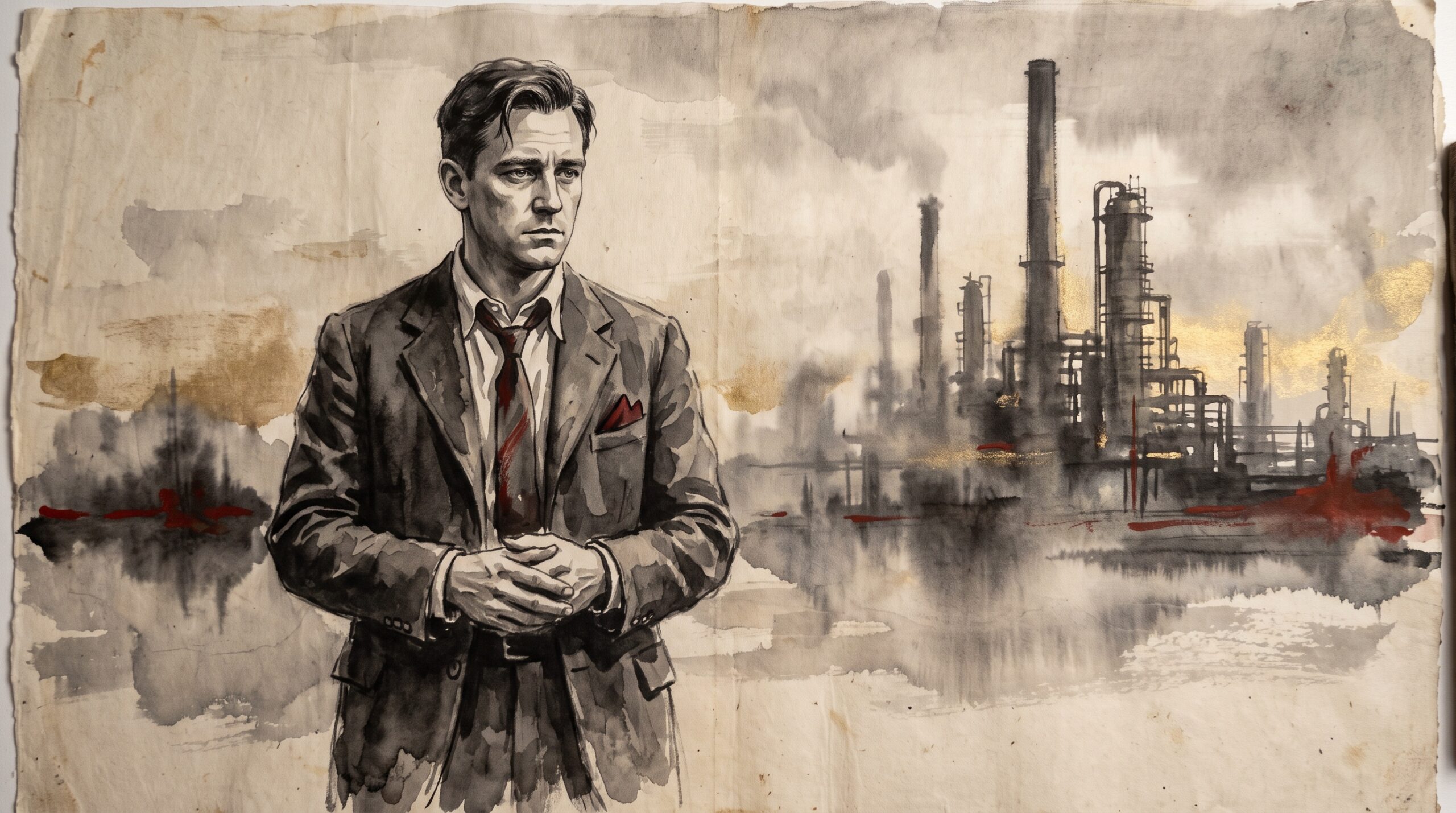
Midgley was born in Pennsylvania in 1889, trained as a mechanical engineer, and had the restless, practical brilliance that defined the American inventor of his day. He went to work under Charles Kettering at the research arm of General Motors, and it was there, chasing a problem that seemed purely technical, that he set the first of his two catastrophes in motion.
The knock, and the miracle that stopped it
The problem was engine knock. Early automobile engines shuddered and pinged, wasting power and threatening to tear themselves apart. Midgley was tasked with finding an additive that would let fuel burn smoothly. He and his team tested compound after compound, and in December 1921 they found their answer: tetraethyl lead. A tiny amount dissolved in gasoline made the knock vanish. It was, commercially, a triumph. Leaded gasoline would go on to power the automobile age across the entire planet.
There was only one problem, and everyone involved knew about it. Lead was a known poison, and had been for centuries. The industry understood the danger so well that it scrubbed the word ‘lead’ out of the product’s public name, marketing it instead as ‘Ethyl.’ Behind that clean brand name, the reality at the plants where the additive was made was horrifying.
The ‘loony gas’ building
At the facilities producing tetraethyl lead, workers began to hallucinate, convulse, and lose their minds. Several died. The buildings where they worked earned a grim nickname among the men: the ‘loony gas’ building. The acute lead poisoning was so severe and so public that it threatened to derail the entire enterprise.
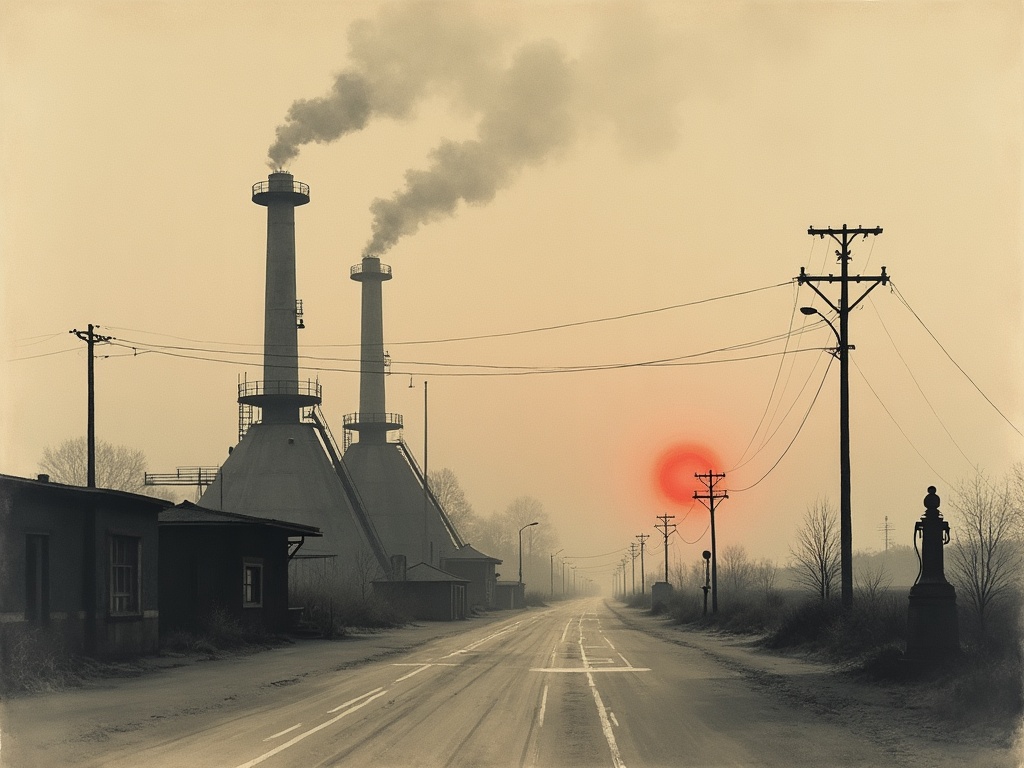
Midgley’s response has become infamous. He himself had already been sickened by lead exposure and had taken a leave to recover. Yet at a 1924 press conference called to reassure a nervous public, he poured tetraethyl lead over his own hands and inhaled its vapor for a full minute, declaring that he could do this every day without harm. It was a performance, and a lie. He knew the danger intimately, because it had already put him in bed. The stunt worked on the public. Leaded gasoline stayed on the market, and for more than half a century it poured lead into the air of every city on Earth, raising the blood-lead levels of entire generations and, by later estimates, dulling the intelligence and shortening the lives of millions before it was finally phased out.
An encore that saved lives, then doomed the sky
If Midgley had stopped there, he would be remembered as a cautionary figure. Instead, in 1928, he was handed another technical puzzle and produced another miracle. Refrigerators of the era relied on refrigerants that were toxic, flammable, or both; leaks could kill a family in their sleep. The industry needed a gas that was stable, non-toxic, and non-flammable. Midgley, with characteristic speed, delivered one: a chlorofluorocarbon he helped bring to market as Freon.
By the standards of the problem he was asked to solve, it was flawless. CFCs were so inert that they seemed to do nothing at all but keep things cold. They made safe home refrigeration and, later, air conditioning possible for the whole world. Freon was hailed as one of the great gifts of modern chemistry, and for decades it was.
The slow catastrophe overhead
The trouble was precisely that CFCs were so stable. Because nothing broke them down at ground level, they drifted, intact, all the way up into the stratosphere. There, decades after Midgley’s death, scientists discovered that ultraviolet light split them apart and unleashed chlorine that devoured ozone, the thin high-altitude layer that shields all life on Earth from the sun’s most damaging radiation. The ‘safe’ gas was quietly tearing a hole in the planet’s protective shell. The alarm led, eventually, to the Montreal Protocol and a global ban, one of the rare moments when humanity recognized a mistake and reversed it in time.

Two inventions. Two miracles in their moment. Two of the most damaging substances ever loosed on the atmosphere. The travel writer Bill Bryson summed him up with a line that stings precisely because it is fair: Midgley possessed ‘an instinct for the regrettable that was almost uncanny.’
A final, terrible irony
The end of his story reads like something a novelist would reject as too on the nose. In 1940, Midgley was stricken with polio and left severely disabled. Ever the engineer, he refused to be helpless, and designed an elaborate system of ropes and pulleys to lift himself out of bed. In 1944, at the age of fifty-five, he became entangled in his own contraption and was strangled to death by it. The man who spent his life engineering clever solutions was killed by one of his own.

Why the story still matters
It would be easy, and wrong, to cast Midgley as a villain. He was not a man who set out to poison the world. He was a brilliant problem-solver working inside a system that rewarded fast answers and asked few questions about the long tail of consequences. He solved exactly the problems he was given, and solved them beautifully. The damage came from everything nobody thought to ask.
That is what makes his life a warning rather than a morality tale. We still build things this way, chasing the immediate fix, trusting that anything that works must be safe, dismissing the quiet doubters. Midgley’s true legacy is not lead or Freon. It is the humbling reminder that the consequences of a clever idea can outrun the cleverness that produced it, sometimes by half a century, sometimes all the way to the edge of the sky.
More from the archive
- The Village That Lost Its Children: The Freckleton Air Disaster of 1944
- The Great Stink of 1858: How a Smell Saved Millions of Lives
- The Invisible Light: How X-rays Went from Accidental Discovery to World-Changing Technology