The Dancing Plague of 1518: When Strasbourg Danced Itself to Death

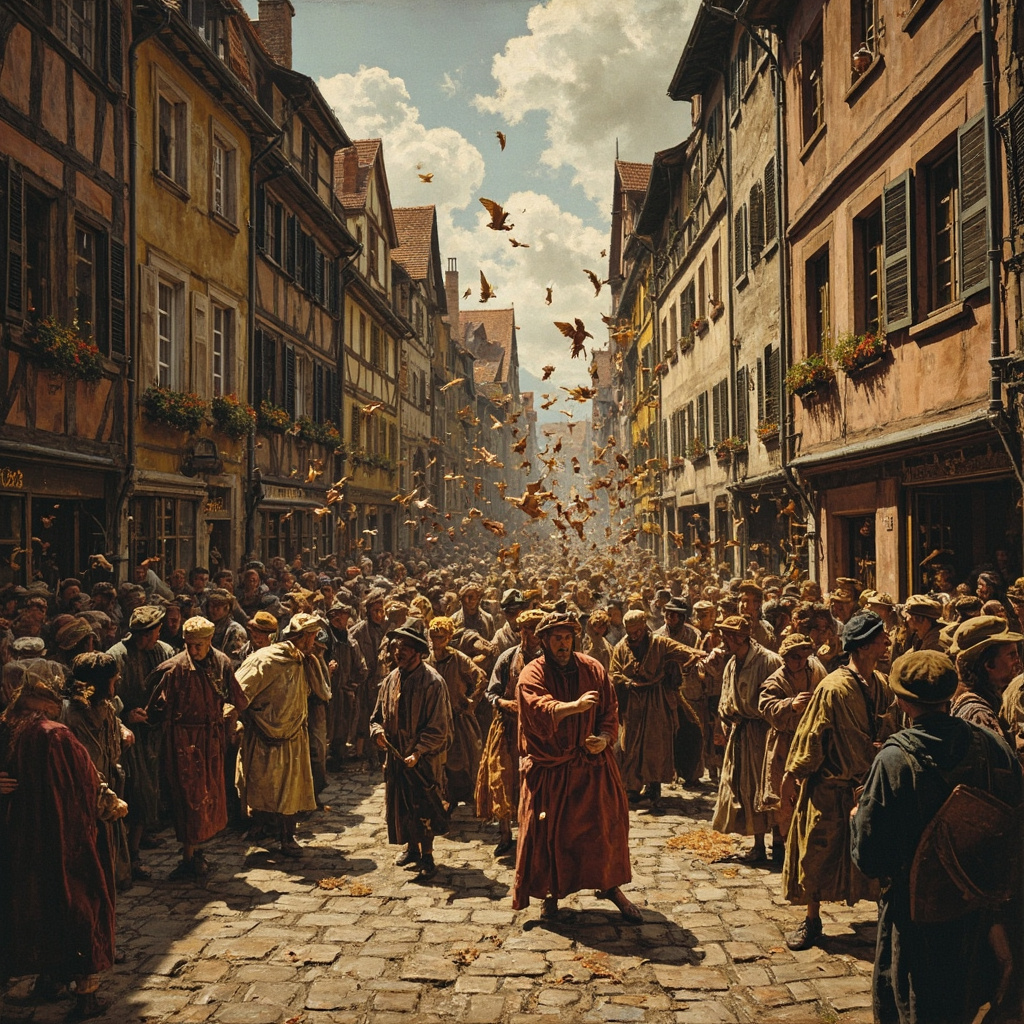
In the summer of 1518, something extraordinary and terrifying occurred in the streets of Strasbourg, then part of the Holy Roman Empire. What began as one woman dancing uncontrollably in the street would escalate into one of history’s most bizarre and deadly mass hysteria events—the Dancing Plague of 1518.
The Outbreak Begins
It started with Frau Troffea, who began dancing fervently in a narrow street in Strasbourg in July 1518. She danced continuously for days, unable to stop, her feet bleeding and her body exhausted. Rather than seeking immediate medical help, curious onlookers gathered to watch this strange spectacle.
Within a week, approximately 34 others had joined her compulsive dancing. By the end of the month, the number had swollen to around 400 people, all dancing uncontrollably in the streets, public spaces, and even in their homes. The afflicted danced day and night, many without rest, food, or water.
Medical Response and Theories
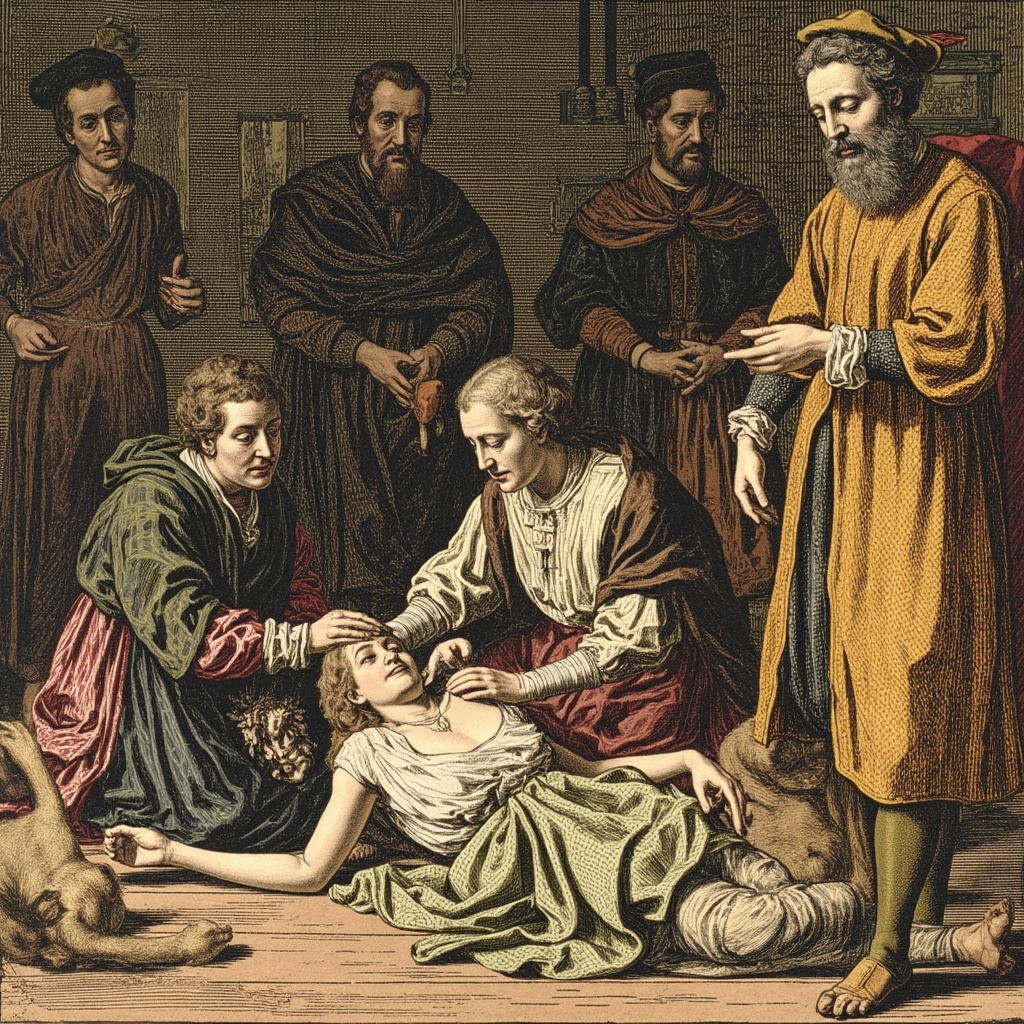
Medieval physicians were baffled by the phenomenon. The prevailing medical theory of the time suggested that the affliction was caused by “hot blood” and that the cure was… more dancing. Authorities hired professional dancers and musicians, believing that if the afflicted danced it out of their systems, they would eventually recover.
This approach proved disastrous. Instead of providing relief, the music and professional dancers seemed to encourage the mania, drawing more people into the compulsive dancing. The authorities quickly realized their mistake and banned public dancing and music.
The City’s Response
As the situation spiraled out of control, Strasbourg’s authorities took increasingly desperate measures. They consulted physicians, theologians, and astrologers, seeking any explanation for the bizarre epidemic sweeping their city.

The most widely accepted theory among authorities was that the dancers had been cursed by Saint Vitus, a Christian martyr. According to this belief, those who angered the saint—often through immoral behavior or blasphemy—would be afflicted with uncontrollable dancing. The solution, therefore, was to take the dancers to Saint Vitus’ shrine at Hohlenstein for prayer and religious intervention.
The Death Toll
Historical accounts suggest that several dozen people died during the plague, though exact numbers are disputed. Victims reportedly died from heart attacks, strokes, and pure exhaustion. Some contemporary chroniclers claimed the death toll reached into the hundreds, though modern historians believe this number is likely exaggerated.
The condition seemed particularly deadly because the affected individuals could not stop dancing, even when they desperately wanted to. Their bodies were pushed beyond all physical limits, leading to collapse and, in many cases, death.
Modern Explanations
Today, historians and medical experts offer several theories for what might have caused the Dancing Plague of 1518:
- Ergot Poisoning: Some suggest the dancing was caused by ergotism, a condition resulting from eating rye bread infected with ergot fungus, which contains compounds similar to LSD.
- Mass Hysteria: Others believe it was a case of mass psychogenic illness, where psychological stress manifested as physical symptoms that spread through social influence.
- Religious Mania: The event may have been triggered by religious fervor combined with extreme social and economic stress that plagued the region.
- Collective Stress Response: Strasbourg in 1518 was experiencing famine, disease, and political uncertainty, creating conditions ripe for mass hysteria.
Historical Impact
The Dancing Plague of 1518 was not an isolated incident. Similar outbreaks of compulsive dancing had occurred throughout medieval Europe, though none were as well-documented or as extensive as the Strasbourg event. These incidents highlight the complex relationship between physical and psychological health, particularly in times of social stress.
The event also demonstrates how medieval understanding of disease and psychology differed dramatically from modern medical knowledge. The initial response of prescribing more dancing shows how authorities often misunderstood the very phenomena they were trying to treat.
Legacy and Lessons
The Dancing Plague of 1518 remains one of history’s most fascinating examples of mass hysteria and collective behavior. It serves as a reminder of how little we still understand about the human psyche and the power of group psychology.
More importantly, it illustrates how communities under extreme stress can manifest their anxieties in unexpected and dramatic ways. In our modern world, understanding these historical precedents helps us better recognize and respond to similar phenomena when they arise.
The streets of Strasbourg eventually returned to normal, but the memory of those summer months in 1518 lingered for generations, serving as both a cautionary tale and a fascinating glimpse into the mysteries of human behavior under extreme circumstances.