The Great Stork Derby: The Toronto Contest to Have the Most Babies

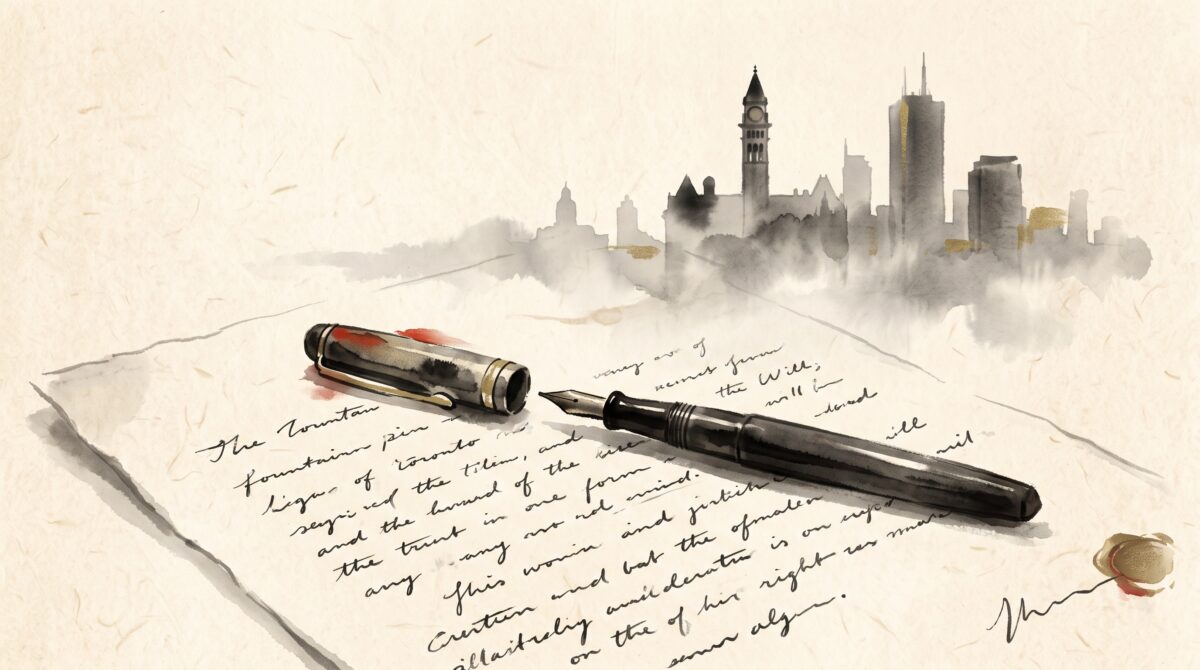
On Halloween of 1926, a wealthy Toronto lawyer named Charles Vance Millar died suddenly of a heart attack at his office. He was seventy-three, a lifelong bachelor with no children and no close heirs — and a reputation as one of the most incorrigible practical jokers the city had ever produced. Millar had spent a lifetime quietly studying one subject above all others: what people will do for money. His will was to be his final experiment, and its most notorious clause would set off a frantic, decade-long race that came to be known across the continent as the Great Stork Derby.
A joker with a lawyer’s precision
Millar was no eccentric fool who had stumbled into wealth. He was a sharp, successful financier who owned shares in breweries, racetracks, and transportation companies, and he understood human nature the way other men understood ledgers. His whole life he had delighted in small, revealing pranks: he was said to leave real dollar bills on the sidewalk simply to watch respectable citizens glance around and pocket them. Money, to Millar, was a truth serum. Give people enough of it, and they showed you who they really were.
His will was that experiment written large. To several Protestant ministers who preached loudly against drinking and gambling, he left shares in a brewery and in a jockey club — daring them to refuse the dividends or quietly cash them. To three lawyers who were known to despise one another, he left joint lifetime shares in a vacation property, forcing them to share it or squabble over it. Each bequest was a small trap baited with greed. But he saved the largest trap for last.
Clause Nine
The ninth and final clause of Millar’s will directed that, after specific gifts were settled, the entire residue of his estate be allowed to accumulate for ten years — and then handed to the mother in Toronto who, in the decade following his death, had given birth to the greatest number of children. He could not have chosen a provocation more perfectly designed to scandalize polite society and enthrall everyone else. A dead man was offering a fortune, quite literally, for babies.
The clause might have remained a curiosity, a rich man’s tasteless joke soon forgotten. Two things kept it alive. The first was the size of the pot: Millar had owned stock connected to the Detroit–Windsor crossing, and as that traffic boomed the value of the estate swelled far beyond what anyone had expected, climbing toward what was, for the era, a genuine fortune. The second was history itself. Three years after his death, the stock market collapsed and the Great Depression descended. Suddenly Millar’s morbid little wager was not a joke at all. It was a way out.
The race that gripped a city
Through the grim years of the early 1930s, the Stork Derby became a running story in the Toronto papers and beyond. Reporters tracked the leading families the way sports pages tracked pennant races, tallying births, printing standings, knocking on doors in the city’s poorer neighbourhoods to photograph exhausted mothers surrounded by children. For families crushed by unemployment and hunger, another pregnancy was no longer only a private matter — it was, improbably, a shot at deliverance. Women who already had large families found themselves in a very public contest they had never asked to enter.
It was, by any honest reckoning, a strange and uncomfortable spectacle: a competition in childbearing, run through a decade of desperation, all set in motion by a bachelor who had never raised a child in his life. Yet it was also a window into the age. The same unsettling human impulses that Millar loved to expose — hope, hunger, the willingness to bend one’s life around a distant prize — ran through the Derby exactly as he must have known they would. He had turned an entire city into the subject of his experiment, and he did not have to be alive to watch it play out.
The courtroom and the finish line
Not everyone was willing to let the joke stand. Millar’s distant relatives, and later officials who found the whole affair offensive to public morals, went to court to have Clause Nine struck down as contrary to public policy — an attempt to void the bequest and claim the money for the family or the province. The legal fight climbed through the Ontario courts and dragged on nearly the length of the contest itself. In the end, the judges declined to rewrite a dead man’s clear wishes. Eccentric and provocative it certainly was, but it was not illegal. The race would be run to its finish and paid out as written.
When the ten years closed in 1936 and the accounting was done, four Toronto women had each given birth to nine children within the decade — Annie Katzman, Kathleen Nagle, Lucy Timleck, and Isabel MacLean. In 1938 they split the great bulk of the estate between them, each walking away with a sum that, in the depths of the Depression, could buy a house several times over and lift a family out of poverty. Two other claimants who had borne even more children fell into legal grey areas — one because several of her pregnancies had ended in stillbirths, which the courts did not count as “births,” and another because some of her children were ruled ineligible under the will’s terms. Rather than prolong the fight, each accepted a smaller settlement and stepped aside.
Why the joke still lingers
Charles Vance Millar got exactly what he wanted, which was to be talked about long after he was gone. The Great Stork Derby has outlived nearly everything else about him; his fortune is spent, his brewery shares forgotten, but the wager endures because it captured something true and a little painful about people. He built a machine out of a single sentence and greed and time, switched it on, and stepped away — and it ran for ten years without him, driven entirely by human need.
It is easy to remember the Derby as a grotesque punchline, and part of it certainly was. But the women at its centre were not punchlines. They were mothers raising enormous families through the hardest decade of the century, and for a handful of them a dead stranger’s cruel-seeming joke turned into real bread on the table and a roof that stayed overhead. Millar spent his life proving that money reveals who we are. In the end, what his last prank revealed was mostly endurance. If you enjoy history’s more improbable characters, the Derby keeps good company with figures like Lord Timothy Dexter, the fool who got rich selling coal to Newcastle, and Emperor Norton, the bankrupt who declared himself ruler of the United States — and, like Millar’s stock in the border crossing, it is one more thread in the odd and tangled history of Canada.
More from the archive
- The Village That Lost Its Children: The Freckleton Air Disaster of 1944
- Shanawdithit: The Last of the Beothuk