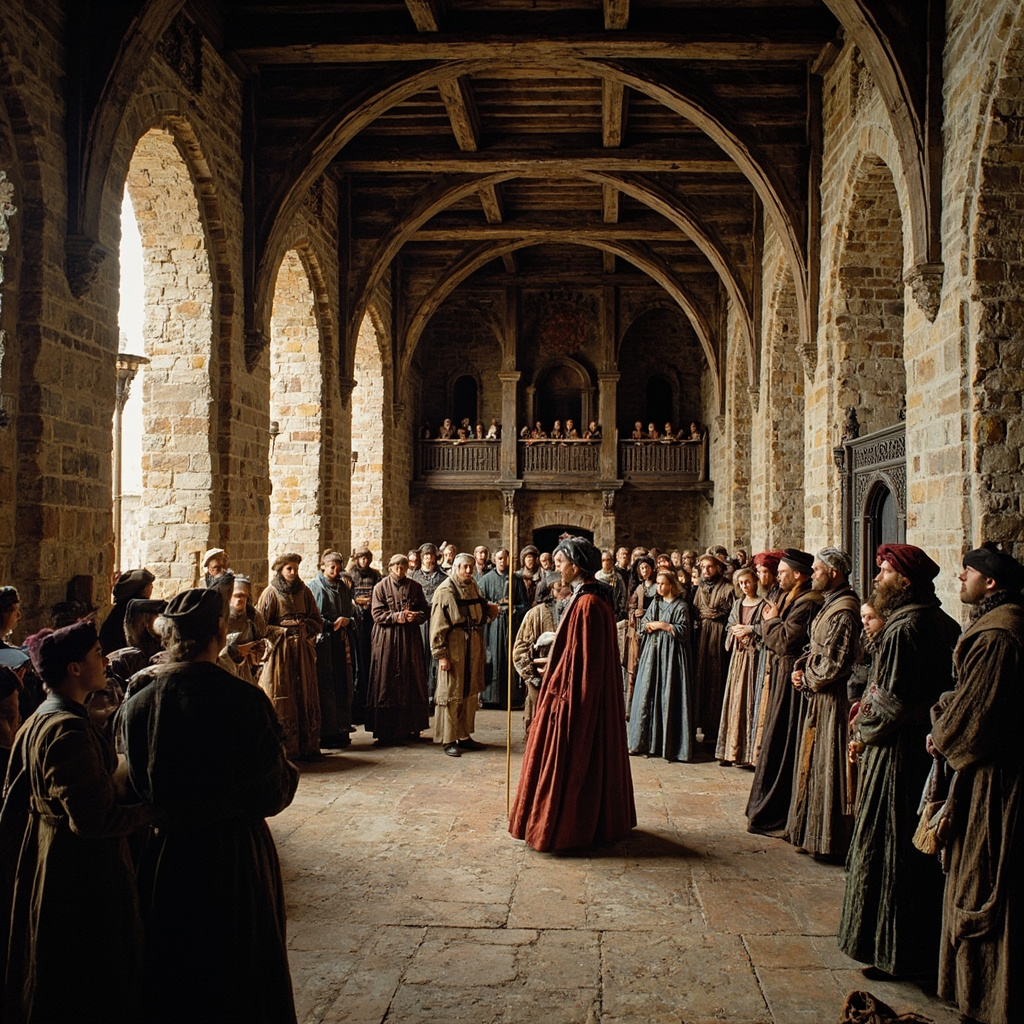
Gladiator Blood Cocktails and Urine Taste Tests: The Horrifying World of Roman Medicine

The ancient Romans are celebrated for their engineering marvels, military prowess, and legal systems that still influence modern society. But beneath this veneer of civilization lay some of the most bizarre, repulsive, and downright dangerous medical practices in human history—treatments that would make modern doctors faint and patients flee in terror.

When Urine Was Liquid Gold: Roman Diagnostic Medicine

Roman physicians took the phrase “taste test” to disturbing new heights. Medical practitioners routinely tasted their patients’ urine as a primary diagnostic tool, believing they could determine illnesses by analyzing flavor profiles, sweetness levels, and even subtle mineral notes.

This wasn’t casual sipping—it was systematic urine sommelier work. Doctors categorized different flavors and textures, creating elaborate classification systems based on taste, smell, and visual appearance. Sweet urine indicated diabetes, salty suggested kidney problems, and bitter pointed to liver issues.

The practice was so ingrained in Roman medicine that physicians developed refined palates specifically for urine analysis. Some medical schools even included taste training as part of their curriculum, with master physicians teaching students to distinguish between dozens of different urinary flavors.

Drilling for Demons: Trepanation and Skull Surgery

Roman surgeons performed trepanation—drilling holes in skulls—with shocking frequency and surprisingly sophisticated techniques. Unlike crude prehistoric attempts, Roman trepanation involved precision instruments and systematic approaches to brain surgery.

The Procedure: Using bronze or iron tools, surgeons would carefully drill circular holes in patients’ skulls, sometimes removing entire sections of bone. The procedures were performed on conscious patients, who remained awake throughout the ordeal.

Medical Rationale: Romans believed trepanation could cure everything from headaches and epilepsy to mental illness and demonic possession. The holes allegedly allowed evil spirits to escape and pressure to be relieved from the brain.

Archaeological evidence suggests many patients actually survived these procedures, with some showing signs of multiple trepanations throughout their lives. Bone healing patterns indicate that Roman surgical techniques were remarkably advanced for their time.

The Gladiator’s Blood Cure: Ultimate Medicine

Nothing epitomized Roman medical extremes like their obsession with gladiator blood. Romans believed that fresh blood from fallen gladiators possessed magical healing properties, particularly for treating epilepsy.

Roman gladiator arena scene with amphitheater architecture

Wealthy Romans would pay premium prices to drink warm gladiator blood immediately after arena deaths. The practice was so popular that special vendors operated within amphitheaters, selling cups of fresh blood to eager customers who believed it would cure seizures and restore vitality.

The Science Behind the Madness: Romans theorized that gladiators’ courage and strength could be transferred through blood consumption. They believed that drinking the blood of brave warriors would cure cowardice, weakness, and various neurological disorders.

Cosmetic Nightmares: Beauty Through Suffering

Roman beauty standards led to medical treatments that were as dangerous as they were bizarre:

Lead Face Paint: Wealthy Roman women used lead-based cosmetics to achieve fashionably pale complexions. The lead slowly poisoned users, causing hair loss, tooth decay, and eventual death—but the pale look remained popular for centuries.

Mercury for Hair Removal: Romans used mercury compounds to remove unwanted body hair. The treatment worked by dissolving hair follicles, but also caused mercury poisoning, neurological damage, and kidney failure.

Crocodile Dung Face Masks: Elite Roman women applied crocodile excrement mixed with mud as facial treatments, believing it would prevent wrinkles and maintain youthful skin. The bacterial infections that resulted were considered a small price to pay for beauty.

The Reversed Circumcision: A Roman Innovation

Perhaps no Roman medical practice was as psychologically complex as “epispasm”—the surgical reversal of circumcision. Romans viewed circumcision as barbaric and aesthetically displeasing, leading to the development of procedures to restore foreskins.

The Process: Surgeons would stretch remaining penile skin and attach weights or mechanical devices to gradually extend tissue. More drastic procedures involved cutting and grafting skin from other body parts.

Social Pressure: Jewish and Christian converts to Roman society often underwent these procedures to fit in at public baths and social gatherings where nudity was common. The painful process could take months or years to complete.

Magical Medicine: When Superstition Met Surgery

Roman medicine blended scientific observation with elaborate superstitions, creating treatments that were part medical procedure, part religious ritual:

Amulet Implantation: Surgeons would implant small protective amulets under patients’ skin during operations, believing this would protect against infection and ensure successful healing.

Planetary Surgery Timing: Roman physicians scheduled operations based on astrological calculations, believing that planetary alignments affected surgical outcomes. Mars was considered favorable for blood-letting, while Venus was preferred for cosmetic procedures.

Sacred Water Irrigation: Wounds were cleaned with water from specific temples, blessed by particular gods. Different deities were thought to specialize in healing different body parts—Diana for women’s issues, Mars for military injuries.

The Vomitorium Myth and Real Roman Excess

While vomitoria were actually architectural exits from amphitheaters, Romans did practice deliberate vomiting for medical purposes. Physicians prescribed regular vomiting as a cure for everything from indigestion to plague prevention.

Induced Vomiting Techniques:

  • Feathers inserted down the throat
  • Bitter herbal concoctions designed to trigger nausea
  • Physical pressure on the stomach
  • Spinning patients until they became violently ill

The practice was so common that wealthy Romans often employed professional “vomit assistants” who specialized in helping people regurgitate efficiently and safely.

Eye Surgery with a Side of Horror

Roman eye surgery combined genuine medical innovation with terrifying techniques. Cataract removal involved inserting needles into the eye to push clouded lenses out of the visual field—a procedure performed without anesthesia while patients remained conscious.

The Couching Procedure: Surgeons used bronze needles to dislodge cataracts, literally poking them into the back of the eyeball. Success rates were surprisingly high, but complications included blindness, infection, and severe pain that could last for weeks.

Archaeological finds include sophisticated bronze surgical instruments specifically designed for eye operations, suggesting that Roman ophthalmology was more advanced than medieval medicine that came centuries later.

Ancient Roman surgical instruments and medical tools

Pain Management: Roman Style

Without modern anesthetics, Romans developed creative but dangerous approaches to pain management:

Opium and Wine Mixtures: Patients were given potent combinations of opium poppy extract and strong wine before surgery. The dosages were often lethal, with many patients dying from overdoses rather than their original conditions.

Pressure Point Paralysis: Roman physicians used pressure points and nerve compression to temporarily numb body parts. The techniques sometimes caused permanent nerve damage but were considered preferable to conscious surgery.

Ice and Snow Treatment: For wealthy patients, surgeons used imported ice to numb surgical areas. The ice was packed around limbs until they became completely frozen, allowing for painless amputation—though frostbite and tissue death were common side effects.

The Strange Case of Roman Dentistry

Roman dental practices ranged from surprisingly sophisticated to absolutely horrifying:

Gold Dental Work: Wealthy Romans had elaborate gold dental bridges and false teeth crafted by skilled metalworkers. Some Roman dental work was so well-made that it would impress modern dentists.

Urine Mouthwash: Romans used human and animal urine as mouthwash, believing its ammonia content would whiten teeth and kill bacteria. Portuguese urine was considered particularly effective and was imported at premium prices.

Live Extraction Methods: Tooth extraction involved no painkillers and often required multiple assistants to hold down patients. Teeth were removed with crude forceps, often shattering and requiring additional surgical procedures to remove fragments.

Legacy of Roman Medical Madness

Despite their bizarre and often dangerous practices, Roman medicine contributed significantly to medical knowledge. Their detailed anatomical studies, surgical instruments, and systematic approaches to disease classification laid groundwork for later medical advances.

Many Roman medical innovations—like cataract surgery, bone setting, and wound cleaning—contained kernels of genuine medical wisdom that wouldn’t be fully understood until centuries later. Their combination of careful observation with dangerous experimentation created a medical legacy that was simultaneously progressive and terrifying.

The Romans proved that even the most advanced civilizations can hold medical beliefs that seem utterly insane to modern eyes, reminding us that medical progress is often built on the frightening experiments of our ancestors—some of whom were brave enough to drink gladiator blood and taste urine in the name of healing.

The Bizarre Medieval Practice of Stuffing Corpses: Austria’s 280-Year-Old Mystery

When archaeologists discovered a 280-year-old corpse in Austria, they expected to find another typical burial from the colonial era. What they uncovered instead was one of the most bizarre and innovative preservation methods in recorded history—a body that had been posthumously stuffed with wood chips, twigs, fabric, and zinc chloride through the rectum.

The Austrian Discovery That Shocked Archaeologists

The preservation technique, discovered in 2025, represents the first archaeological evidence of this unusual but apparently successful method of corpse preservation. The meticulous process involved carefully removing internal organs and replacing them with an eclectic mixture of organic and chemical materials, creating a kind of medieval taxidermy for humans.

What makes this discovery even more remarkable is the extraordinary state of preservation achieved. Unlike typical burials from the same period, where remains are often reduced to bone fragments, this body retained much of its original structure and even some soft tissues after nearly three centuries underground.

Medieval Death: More Than Meets the Eye

This Austrian discovery opens a window into the complex and often strange world of medieval death practices. During the medieval period, death wasn’t simply the end of life—it was the beginning of an elaborate process designed to ensure proper transition to the afterlife.

Medieval mortician working on corpse preparation using historical preservation techniques

The Transportation Problem: Long before modern embalming, medieval people faced the challenge of transporting bodies over long distances for burial in family plots or sacred locations. The solution was often as practical as it was gruesome.

Bodies requiring long-distance transport were frequently “defleshed”—a process involving dismembering the corpse and boiling the pieces until the flesh separated from the bones. The bones would then be transported and reassembled for burial, while the flesh was often buried locally.

The Art of Medieval Body Preparation

The Austrian corpse represents a sophisticated understanding of preservation chemistry that predates modern embalming by centuries. The use of zinc chloride shows remarkable chemical knowledge, as this compound is still used today for its antimicrobial and preservation properties.

The Process Revealed:

  • Complete removal of internal organs through natural body openings
  • Careful packing with preservative materials including zinc chloride
  • Strategic placement of organic materials like wood chips and twigs to maintain body shape
  • Fabric wrapping to contain the preservative mixture

This technique suggests the work of skilled practitioners who understood both anatomy and chemistry—possibly physicians, barber-surgeons, or specialized morticians of the era.

Why Stuff a Corpse? The Cultural Context

Medieval European death culture was deeply influenced by Christian beliefs about bodily resurrection. The physical preservation of the body was often seen as important for the eventual resurrection of the dead on Judgment Day.

For wealthy families, maintaining the body’s appearance during transport to family burial grounds was a matter of both religious conviction and social status. A well-preserved corpse demonstrated the family’s resources and commitment to proper Christian burial practices.

Other Bizarre Medieval Death Customs

The Corpse Roads: Special paths called “corpse roads” were used exclusively for transporting the dead to consecrated burial grounds. These roads often took circuitous routes to avoid inhabited areas, based on beliefs that spirits of the dead might linger along straight paths.

Sin-Eating Rituals: Professional sin-eaters would consume food over a corpse, symbolically taking on the deceased’s sins to ensure their smooth passage to heaven. This practice continued in some remote areas until the early 20th century.

Chained Burials: Some medieval burials included iron chains wrapped around the corpse, not for restraint, but as protection against evil spirits or to prevent the dead from rising as revenants.

The Science Behind Medieval Preservation

Modern analysis of the Austrian corpse reveals sophisticated chemical knowledge that challenges our assumptions about medieval science. The preservation mixture included:

Zinc Chloride: A powerful antimicrobial agent that inhibits bacterial growth and tissue decomposition.

Organic Materials: Wood chips and twigs containing natural tannins, which have preservative properties similar to those used in leather-making.

Textiles: Fabrics that helped control moisture and maintain the preservative environment within the body cavity.

Comparison to Modern Methods

Remarkably, this medieval technique achieved preservation results that rival some modern methods. While contemporary embalming focuses on arterial injection of preservatives, the medieval approach of cavity packing proved equally effective for long-term preservation.

Regional Variations in Unusual Burials

Scandinavian Ship Burials: Vikings and other Germanic peoples sometimes buried their dead in ships, either real vessels or stone ship-shapes, symbolizing the journey to the afterlife.

Irish Bog Bodies: Natural bog preservation created some of the most remarkably preserved ancient bodies, though these were likely ritual sacrifices rather than normal burials.

Charlemagne’s Three Burials: The great emperor was reportedly buried three times—first in a sitting position wearing his crown and holding a scepter, then exhumed and reburied, and finally moved to a golden shrine.

Medieval cemetery with elaborate tombstones showing unusual burial practices

What This Tells Us About Medieval Society

The Austrian discovery illuminates the sophisticated networks of knowledge that existed in medieval Europe. The preservation technique required:

  • Advanced understanding of human anatomy
  • Knowledge of chemical preservation methods
  • Access to specialized materials like zinc chloride
  • Skilled practitioners capable of performing the procedure

This suggests that medieval death practices involved organized professions and trade networks far more complex than previously understood.

The Legacy of Medieval Death Innovation

The techniques discovered in the Austrian corpse represent a direct link between ancient preservation methods and modern embalming. The principles of cavity treatment, chemical preservation, and moisture control remain fundamental to contemporary mortuary science.

More broadly, these unusual burial practices remind us that medieval people were far from the ignorant, superstitious population often portrayed in popular culture. They were innovative problem-solvers who developed sophisticated solutions to the universal human challenge of honoring the dead.

As archaeologists continue to uncover more unusual burial sites across Europe, we’re gaining a richer understanding of how our ancestors navigated the complex intersection of practical necessity, religious belief, and cultural tradition in their treatment of death—sometimes leading to solutions that were as bizarre as they were effective.

The Bone Wars: America’s Most Bitter Scientific Rivalry

In the dusty badlands of the American West during the late 19th century, two brilliant paleontologists waged a war that would revolutionize our understanding of dinosaurs—while nearly destroying each other in the process. The “Bone Wars,” fought between Othniel Charles Marsh and Edward Drinker Cope from 1872 to 1897, represented one of the most vicious scientific rivalries in history, complete with espionage, sabotage, and bitter personal attacks that captivated the American public.

The Protagonists: Marsh and Cope

Othniel Charles Marsh and Edward Drinker Cope were both wealthy, educated men with a passion for paleontology, but their personalities couldn’t have been more different. Marsh, born in 1831, was the methodical nephew of philanthropist George Peabody. Thanks to his uncle’s financial backing, Marsh secured a professorship at Yale University and had access to substantial funding for his expeditions. He was cautious, systematic, and politically savvy, with a talent for organization and institutional backing.

Edward Drinker Cope, born in 1840, was nine years younger than Marsh but possessed a brilliant, restless mind that drove him to work at a frantic pace. A Quaker from Philadelphia, Cope was independently wealthy and used his inheritance to fund his own research. Unlike the steady Marsh, Cope was impulsive, quick-tempered, and prone to publishing hastily. He was also incredibly productive, ultimately authoring over 1,400 scientific papers during his career.

The two men initially maintained a cordial professional relationship. They even named fossil species after each other in the early years of their careers. However, their friendship would not survive the fierce competition that emerged as both men turned their attention to the fossil-rich American West.

Fossil excavation site showing damaged bones and equipment
Evidence of sabotage at a fossil dig site during the Bone Wars, showing the destructive lengths to which rivals would go

The War Begins

The conflict began in earnest in 1872 when both men became interested in the fossil deposits of the American West. The discovery of dinosaur bones in places like Wyoming, Colorado, and Montana had opened up entirely new frontiers for paleontological research. However, the vast distances and harsh conditions of the frontier meant that successful expeditions required significant resources and careful planning.

The first major incident occurred when Cope accused Marsh of bribing his fossil collectors to work exclusively for Yale instead of shipping specimens to Philadelphia. This accusation marked the beginning of a pattern of mutual suspicion and increasingly aggressive tactics. Both men began to recruit networks of collectors, offering higher and higher payments to secure the loyalty of workers in the field.

What started as professional competition quickly escalated into personal animosity. The two men began intercepting each other’s communications, bribing each other’s workers, and even resorting to industrial espionage. Field teams working for one scientist would sometimes destroy fossil sites after excavating them to prevent their rivals from making additional discoveries.

Espionage and Sabotage

As the Bone Wars intensified, both sides employed increasingly desperate tactics. Spies were planted in opposing camps to report on new discoveries and planned expeditions. Workers were offered substantial bonuses to abandon their current employer and switch sides, leading to a cycle of ever-increasing wages that threatened to bankrupt both expeditions.

The sabotage became particularly destructive when teams began dynamiting fossil sites after removing the best specimens, ensuring that competitors couldn’t benefit from any remaining bones. This practice destroyed countless irreplaceable fossils and deprived science of valuable specimens that could have advanced paleontological understanding.

Both Marsh and Cope also engaged in academic warfare, rushing to publish descriptions of new species before their rival could do so. This led to numerous errors and confusion in the scientific literature, as hastily prepared papers often contained inaccuracies or incomplete information. The pressure to be first sometimes resulted in the same species being named multiple times by different researchers, creating taxonomic chaos that took decades to sort out.

The Battle for Public Opinion

The rivalry between Marsh and Cope wasn’t confined to academic journals and remote excavation sites. Both men understood the value of public relations and worked to cultivate relationships with journalists and popular magazines. They provided newspapers with dramatic stories of their discoveries, often exaggerating the significance of their finds or the difficulties they faced in the field.

The American public became fascinated with the ongoing conflict. Newspaper articles portrayed the Bone Wars as an exciting adventure story, complete with hostile environments, dangerous wildlife, and rival teams racing against time to uncover ancient treasures. This media coverage helped secure additional funding for both expeditions but also intensified the pressure to produce spectacular results.

The rivalry reached its peak in the 1880s when both men published attack pieces in newspapers, accusing each other of scientific incompetence and professional misconduct. Cope even published a detailed expose of Marsh’s alleged unethical practices in the New York Herald in 1890, leveling accusations of plagiarism, financial impropriety, and scientific fraud.

Victorian museum display showing dinosaur skeleton reconstructions
Victorian-era museum displaying the impressive dinosaur discoveries made during the Bone Wars period

Scientific Achievements Amid the Chaos

Despite the destructive nature of their rivalry, both Marsh and Cope made extraordinary contributions to paleontology. Between them, they discovered and named over 130 species of dinosaurs, many of which remain valid today. Their work laid the foundation for our modern understanding of dinosaur evolution and diversity.

Marsh’s expeditions, backed by Yale University and the U.S. Geological Survey, were particularly productive in the fossil-rich deposits of Wyoming and Colorado. He discovered and named famous dinosaur species including Allosaurus, Stegosaurus, and Triceratops. His systematic approach to fieldwork and careful documentation set new standards for paleontological research.

Cope’s contributions were equally impressive, despite his more chaotic working style. He discovered numerous dinosaur species and made important contributions to the understanding of mammalian evolution as well. His rapid-fire publication of new species, while sometimes resulting in errors, also meant that many important discoveries were quickly made available to the scientific community.

Both men also pioneered new techniques in fossil preparation and reconstruction. They developed methods for extracting delicate specimens from hard rock and for mounting complete skeletons for museum display. Their work helped establish paleontology as a legitimate scientific discipline and sparked public interest in dinosaurs that continues to this day.

The Cost of War

The Bone Wars came at enormous personal and professional cost to both men. The constant conflict consumed vast amounts of time and energy that could have been devoted to scientific research. The financial burden of maintaining competing expeditions eventually bankrupted Cope, who was forced to sell his fossil collection to pay his debts.

Marsh fared better financially due to his institutional backing, but his reputation suffered from the public nature of the conflict. The bitter disputes damaged the credibility of American paleontology and created lasting divisions within the scientific community. Many respected scientists refused to take sides in the conflict, while others found their own work overshadowed by the dramatic rivalry.

The destruction of fossil sites through sabotage represented perhaps the greatest cost of the Bone Wars. Countless irreplaceable specimens were lost forever when teams dynamited excavation sites or carelessly damaged fossils in their haste to prevent competitors from accessing them. The scientific value of these lost specimens can never be fully calculated.

The rivalry also established negative precedents for how scientific disputes should be conducted. The public nature of the attacks between Marsh and Cope damaged the reputation of paleontology and created an adversarial atmosphere that persisted for decades. Young researchers entering the field found themselves pressured to choose sides rather than focus on collaborative scientific work.

The End of the War

The Bone Wars gradually subsided in the 1890s as both men faced increasing financial and personal pressures. Cope’s fortune was exhausted, and he was forced to take on teaching positions to support himself. Marsh maintained his institutional position but faced criticism from government officials who questioned the value of continuing to fund his increasingly expensive expeditions.

Edward Drinker Cope died in 1897 at the age of 56, effectively ending the active phase of the rivalry. His death came after years of declining health and financial stress brought on by his relentless pursuit of paleontological glory. Even in death, Cope couldn’t resist one final gesture in his ongoing competition with Marsh—he donated his brain to science for study, challenging Marsh to do the same to prove whose brain was superior.

Othniel Charles Marsh outlived his rival by only two years, dying in 1899 at age 67. By the time of his death, Marsh had achieved greater institutional recognition than Cope, including election to the National Academy of Sciences and appointment as the first vertebrate paleontologist for the U.S. Geological Survey. However, his final years were marked by congressional investigations into his research spending and questions about the scientific value of his work.

Legacy and Impact

The Bone Wars left a complex legacy for American paleontology. On the positive side, the rivalry drove both men to extraordinary productivity and led to groundbreaking discoveries that advanced scientific understanding of prehistoric life. The public attention generated by their conflict also increased popular interest in paleontology and helped secure funding for future research.

However, the destructive aspects of the rivalry created lasting problems for the field. The loss of fossil specimens through sabotage represented an irreparable loss to science. The bitter personal attacks and unethical practices employed by both sides damaged the reputation of American paleontology and created divisions within the scientific community that persisted for generations.

The Bone Wars also established unfortunate precedents for how scientific competition could be conducted. While healthy competition can drive innovation and discovery, the extreme measures employed by Marsh and Cope demonstrated how rivalry could become destructive when personal animosity and financial interests overwhelmed scientific objectivity.

Modern paleontologists have learned from the mistakes of the Bone Wars era. Contemporary fossil excavations emphasize collaboration, careful documentation, and the preservation of sites for future study. The bitter rivalry between Marsh and Cope serves as a cautionary tale about the importance of maintaining professional ethics even in highly competitive fields.

Lessons for Modern Science

The story of the Bone Wars offers several important lessons for modern scientific research. First, it demonstrates the potential benefits and dangers of intense competition in scientific fields. While the rivalry between Marsh and Cope drove remarkable discoveries, it also led to unethical behavior and the destruction of valuable scientific resources.

Second, the conflict highlights the importance of institutional oversight and ethical standards in scientific research. The lack of clear guidelines for conduct during fossil expeditions contributed to the escalating nature of the rivalry. Modern scientific institutions have established ethical standards and review processes specifically to prevent similar conflicts.

The Bone Wars also illustrate the complex relationship between public relations and scientific research. Both Marsh and Cope understood that public support could translate into funding and institutional backing. However, their emphasis on dramatic discoveries and public spectacle sometimes compromised the quality and accuracy of their scientific work.

Finally, the rivalry demonstrates the importance of collaboration in scientific research. While Marsh and Cope achieved remarkable individual success, their conflict prevented the kind of collaborative work that might have led to even greater discoveries. Modern paleontology emphasizes teamwork and the sharing of resources and expertise across institutional boundaries.

The End of an Era

The Bone Wars represented both the best and worst of 19th-century American scientific ambition. The rivalry between Marsh and Cope produced extraordinary discoveries that laid the foundation for modern paleontology, but it also demonstrated how personal animosity and unethical competition could damage scientific progress.

Today, the fossils discovered during the Bone Wars continue to provide valuable insights into prehistoric life. Museums around the world display specimens collected by Marsh and Cope’s expeditions, and their discoveries remain central to our understanding of dinosaur evolution and diversity.

The story of the Bone Wars serves as a reminder that scientific progress depends not only on individual brilliance and determination but also on professional ethics and collaborative spirit. While competition can drive innovation, it must be balanced with respect for colleagues, preservation of resources, and commitment to the broader goals of scientific knowledge.

In the end, both Marsh and Cope achieved a kind of immortality through their contributions to paleontology, but their bitter rivalry stands as a cautionary tale about the potential costs of unchecked scientific ambition. The Bone Wars remain one of the most fascinating and instructive episodes in the history of American science—a reminder that even in the pursuit of knowledge, human nature can lead to both remarkable achievements and spectacular failures.

The Radium Girls: How Factory Workers Fought Corporate America and Won Workers’ Rights

In the 1920s, hundreds of young women painted clock faces with radium paint, told it was perfectly safe. They were instructed to lick their paintbrushes to create fine points—consuming deadly radium with every stroke. These women, known as the Radium Girls, would eventually take on powerful corporations in a legal battle that transformed workers’ rights in America forever.

Their story is one of corporate cover-ups, scientific denial, and ordinary women who refused to die quietly. The Radium Girls didn’t just fight for their own lives—they fought for the safety of all American workers.

The Glow of Progress

Radium was discovered by Marie and Pierre Curie in 1898, and by the 1920s, it had captured the public imagination. This “miracle element” glowed in the dark and was marketed as a cure-all, added to everything from toothpaste to chocolate. Wealthy socialites paid premium prices for radium-infused cosmetics, believing it would give them a healthy, youthful glow.

The radium industry boomed during World War I when the military needed glow-in-the-dark watches and instrument panels. The largest employer of dial painters was the United States Radium Corporation in Orange, New Jersey, followed by the Radium Dial Company in Ottawa, Illinois.

The job was considered desirable—clean work in a bright factory, paying well above minimum wage. Young women, many just teenagers, were thrilled to land these positions. They called themselves “ghost girls” because their hair, clothes, and skin would glow green in the dark after work.

The Deadly Routine

Every day, hundreds of dial painters would arrive at the factory and take their places at long tables. Each woman received:

A small dish of radium paint mixed with adhesive and water
A fine camel-hair brush for precision painting
Detailed watch faces or instrument panels to paint
A quota of about 250 dials per day

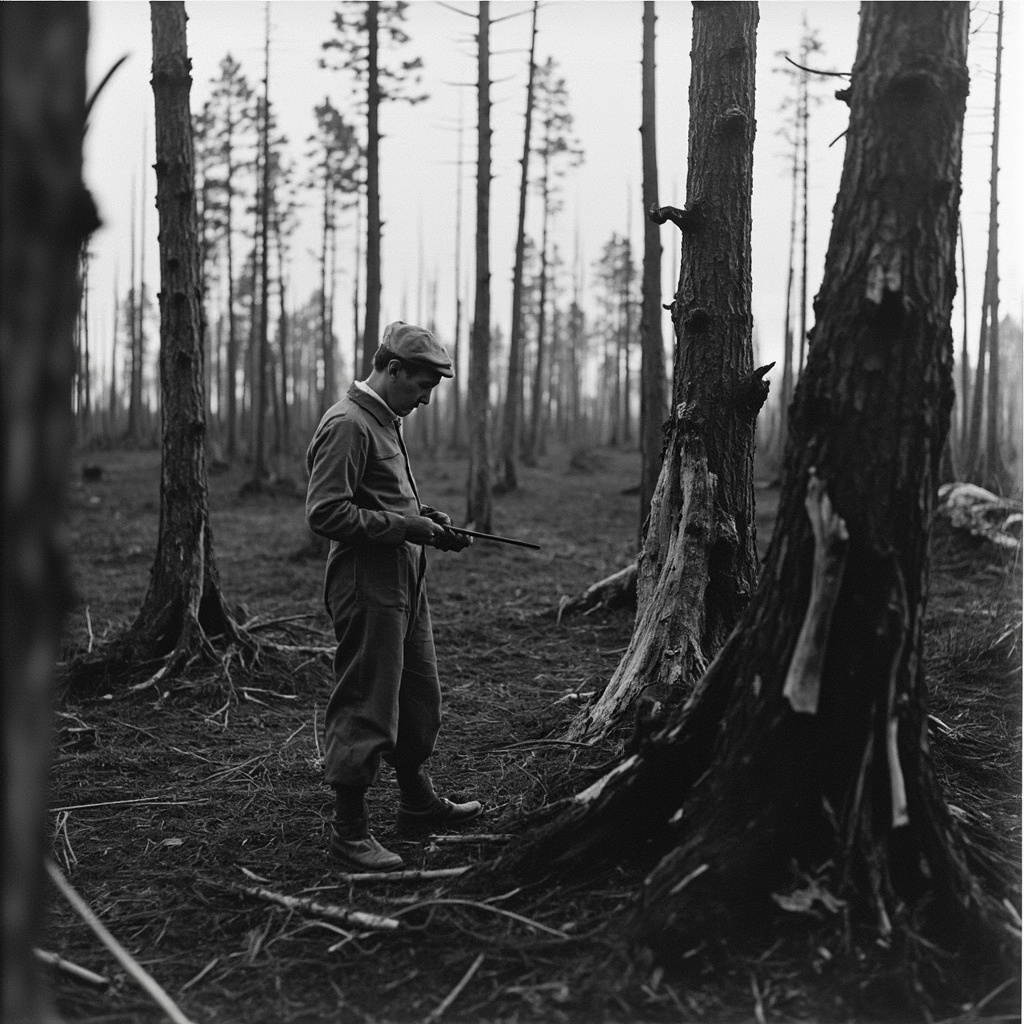
The technique was called “lip-pointing”—workers were instructed to shape their paintbrushes to fine points using their lips and tongues. Supervisors demonstrated the technique and assured workers it was completely harmless. “It’s no worse than eating salt,” they were told.

A 1920s factory worker demonstrating the dangerous lip-pointing technique with radium paint

What the women didn’t know was that their supervisors and the company scientists handling radium wore protective equipment and never touched the material directly. The dial painters, however, were consuming radium all day long through lip-pointing.

The First Signs of Trouble

By 1922, dentists in Orange, New Jersey began noticing an unusual pattern among young women. Patients who worked at the radium factory were coming in with severe dental problems:

Teeth falling out spontaneously
Jawbones that wouldn’t heal after extractions
Mysterious jaw fractures
Persistent, unexplained anemia

Dr. Theodore Blum, a local dentist, was the first to make the connection. He called the condition “radium jaw” and published his findings in 1924. The U.S. Radium Corporation immediately challenged his research, claiming their own studies showed radium was completely safe.

Meanwhile, young women continued to get sick. Grace Fryer, who had worked at the factory from 1917 to 1920, began experiencing severe tooth loss and jaw pain. Her case would become the centerpiece of the legal battle to come.

Corporate Cover-Up and Denial

When confronted with evidence of illness among their workers, U.S. Radium Corporation launched a systematic campaign of denial and misdirection:

Fake Medical Studies: The company hired doctors to examine sick workers and publicly declare them healthy. These “independent” physicians were secretly on the company payroll.

Alternative Diagnoses: When women became ill, company doctors blamed everything from syphilis to poor hygiene to “hysteria.” They suggested the women were malingering or seeking attention.

Intimidation Tactics: Workers who complained were fired. Families of deceased workers were told their daughters died from “natural causes” unrelated to radium exposure.

Scientific Manipulation: The company suppressed internal research showing radium’s dangers while publicly promoting studies claiming it was beneficial to health.

The Legal Battle Begins

In 1925, Grace Fryer decided to sue U.S. Radium Corporation for damages. She faced immediate obstacles:

No lawyer would take her case initially—the radium companies were too powerful and wealthy
The statute of limitations appeared to have expired
Medical experts were reluctant to testify against the radium industry
Public opinion favored the “miracle” radium over unknown factory girls

After two years of searching, Fryer found attorney Raymond Berry, who agreed to represent her and four other women: Edna Hussman, Katherine Schaub, Quinta McDonald, and Albina Larice. The press dubbed them “The Five”—the first Radium Girls to challenge corporate America in court.

Scientific Evidence Mounts

Dr. Harrison Martland, a physician and researcher, conducted independent studies of radium workers and made crucial discoveries:

Radium accumulates in bones and continues emitting radiation for years
The “lip-pointing” technique delivered concentrated doses directly to the mouth and throat
Radiation damage affects the entire body, not just the mouth and jaw
There is no safe level of radium consumption

Martland’s research provided the scientific foundation needed to prove the companies’ liability. However, U.S. Radium Corporation fought back with their own “experts” who claimed radium was beneficial and that the women’s illnesses were unrelated to their work.

The Ottawa, Illinois Connection

While the New Jersey case proceeded slowly through the courts, another tragedy was unfolding in Ottawa, Illinois. The Radium Dial Company employed hundreds more dial painters using the same deadly techniques.

Catherine Wolfe Donohue, a former dial painter, organized fellow workers to demand answers about their illnesses. The Ottawa women faced the same corporate denial and legal obstacles as their New Jersey counterparts.

The Illinois women had one advantage: they could learn from the New Jersey legal strategy. They also faced one major disadvantage: many were sicker and dying faster, as the Ottawa plant had used even higher concentrations of radium.

David vs. Goliath in Court

The legal proceedings revealed the shocking extent of corporate callousness:

Internal Memos: Company documents showed executives knew about radium dangers as early as 1922 but chose to suppress the information to protect profits.

Double Standards: While telling workers radium was safe, the company provided protective equipment for its executives and scientists.

Victim Blaming: Defense attorneys argued the women were promiscuous and their illnesses were due to venereal disease, not radium exposure.

Stalling Tactics: The company used every legal maneuver to delay proceedings, hoping the women would die before winning their case.

The Turning Point

Public opinion began shifting in 1928 when newspapers started reporting the full story. The image of young women literally glowing as they walked home from work, only to die horrible deaths from radiation poisoning, captured public sympathy.

Key moments that changed the narrative:

Grace Fryer’s Testimony: Too weak to raise her right hand to take the oath, Fryer’s frail appearance in court generated widespread sympathy and press coverage.

Expert Medical Testimony: Dr. Martland’s scientific evidence was overwhelming and undeniable, even under aggressive cross-examination.

Company Hypocrisy Exposed: Revelations about protective equipment for executives while workers were told radium was safe sparked public outrage.

The historic courtroom scene where the Radium Girls fought for workers' rights against corporate America

Victory and Legacy

In June 1928, the New Jersey Radium Girls reached a settlement with U.S. Radium Corporation:

$10,000 lump sum for each woman (approximately $150,000 today)
$600 annual pension for life
Full medical expenses covered
Company admission that radium caused their illnesses

The Illinois women won their case in 1938, though many had died by then. Catherine Wolfe Donohue, the lead plaintiff, died just months after the victory.

Transforming Workers’ Rights

The Radium Girls’ legal victories established crucial precedents:

Right to Sue: Workers gained the legal right to sue employers for damages from occupational diseases.

Employer Responsibility: Companies became legally responsible for providing safe working conditions and informing workers of known hazards.

Statute of Limitations Reform: The “discovery rule” was established—the statute of limitations begins when the worker discovers their illness, not when exposure occurred.

Industrial Safety Standards: Federal oversight of workplace safety was strengthened, leading eventually to OSHA creation in 1970.

Scientific and Medical Advances

The Radium Girls’ cases contributed significantly to medical and scientific understanding:

Radiation Safety: Comprehensive safety protocols were developed for handling radioactive materials.

Occupational Medicine: The field of occupational health emerged, studying how workplace exposures affect human health.

Cancer Research: Long-term studies of radium workers provided crucial data about radiation-induced cancer.

Bone Metabolism: Research on radium poisoning advanced understanding of how bones absorb and process minerals.

The Human Cost

The exact number of radium poisoning victims remains unknown, but researchers estimate:

4,000+ dial painters worked at various facilities nationwide
Hundreds died from radium-related illnesses
Many more suffered chronic health problems
Some families experienced multiple generations of health issues

The women who survived long enough to see justice were permanently disabled. Grace Fryer lived until 1969 but suffered constant pain and required multiple surgeries. Most of “The Five” died in their 40s or 50s from radiation-related cancers.

Modern Recognition and Remembrance

Today, the Radium Girls are remembered as pioneers in workers’ rights and corporate accountability:

Historical Markers: Monuments in New Jersey and Illinois commemorate their struggle.

Academic Study: Their case is taught in law schools, medical schools, and public health programs worldwide.

Popular Culture: Books, documentaries, and even a Broadway musical have told their story to new generations.

Legal Precedent: Their cases continue to influence workplace safety litigation and corporate responsibility law.

Lessons for Today

The Radium Girls’ story remains relevant in our modern economy:

Corporate Accountability: Their battle established that companies cannot hide behind “trade secrets” when worker health is at stake.

Scientific Integrity: The importance of independent research and the dangers of industry-funded studies that prioritize profit over safety.

Worker Empowerment: The power of workers organizing to demand safe working conditions and holding employers accountable.

Regulatory Oversight: The need for strong government oversight of workplace safety and environmental health.

The Radium Girls didn’t choose to be heroes—they simply refused to accept that their lives were expendable for corporate profits. Their courage in fighting powerful companies while battling life-threatening illnesses transformed American workplace safety and established rights that protect workers to this day.

Their legacy reminds us that progress often comes at great personal cost, and that ordinary people can achieve extraordinary change when they refuse to remain silent in the face of injustice.

The Vatican Secret Archives: Hidden Treasures and Forbidden Knowledge That Changed History

Deep beneath the Vatican lies one of history’s most mysterious collections: the Vatican Secret Archives. For centuries, these sealed vaults have sparked conspiracy theories and captured imaginations. But the truth about what’s actually hidden in these archives is far more fascinating than any fiction.

In 2019, Pope Francis officially renamed them the “Vatican Apostolic Archives,” acknowledging that the word “secret” had fueled too much speculation. Yet even today, only a select few scholars gain access to documents that could reshape our understanding of history.

The Origins of Secrecy

The Vatican Archives began accumulating documents in the 4th century, but the modern secret archive system started in 1612 under Pope Paul V. The original purpose wasn’t conspiracy—it was preservation. In an era of political upheaval and wars, the Vatican needed to protect its most important diplomatic and administrative documents from destruction or theft.

The “secret” designation (from the Latin secretum, meaning “private”) indicated these were personal papal documents, separate from materials available in the Vatican Library. But this privacy created an aura of mystery that has persisted for over 400 years.

What’s Actually Inside

Ancient Vatican manuscripts and historical documents

Galileo’s Trial Documents: The complete records of Galileo’s 1633 heresy trial reveal surprising details. Contrary to popular belief, Galileo wasn’t tortured, and several cardinals actually supported his scientific work privately. The trial was more about papal authority than pure religious doctrine.

Letters from Michelangelo: The artist’s personal complaints about working on the Sistine Chapel, including his famous protests about painting the ceiling when he considered himself a sculptor, not a painter. One letter translates roughly as “I am not a painter” repeated multiple times in exasperation.

Henry VIII’s Marriage Petition: The original document shows 81 seals from English nobles supporting Henry’s request to annul his marriage to Catherine of Aragon. The elaborate presentation suggests Henry genuinely believed he could convince the Pope through political pressure.

Modern Access and Digital Revolution

Modern scholars researching Vatican historical documents

Today, qualified researchers can access most pre-1958 documents, with some exceptions. The process requires academic credentials, specific research proposals, and Vatican approval. The Vatican has begun digitizing archives, making some documents available online.

The Vatican Secret Archives—now Apostolic Archives—represent one of humanity’s great historical repositories. While conspiracy theories persist, the reality is far more interesting: a massive collection of documents showing how religious, political, and scientific forces have shaped our world for over 1,500 years.

The Carrington Event: When the Sun Nearly Destroyed Civilization in 1859

The Stage is Set: The Birth of the Electric Age
By 1859, the world was experiencing its first taste of the electric revolution. Telegraph lines stretched across continents, connecting cities and nations in ways previously unimaginable. The first transatlantic telegraph cable had been successfully laid just the year before, though it had quickly failed after only a few weeks of operation.
This early electrical infrastructure was primitive by today’s standards but revolutionary for its time. Telegraph operators were the masters of this new technology, sending coded messages across vast distances almost instantaneously. Little did they know they were about to become witnesses to one of the most extraordinary natural phenomena in recorded history.

The Solar Observer: Richard Carrington
The man whose name would forever be associated with this event was Richard Christopher Carrington, a 33-year-old English astronomer and amateur scientist. Carrington was one of the few people in the world systematically observing and documenting sunspots, those dark patches on the sun’s surface that wax and wane in roughly 11-year cycles.
On the morning of September 1, 1859, Carrington was conducting his routine solar observations from his private observatory in Redhill, Surrey. Using a small telescope and projecting the sun’s image onto a screen (a safe method of solar observation), he was carefully sketching the sunspots he could see when something unprecedented happened.

Richard Carrington observing sunspots through telescope in his private observatory during 1859

The Solar Flare: A Star’s Violent Eruption
At 11:18 AM, Carrington witnessed what appeared to be two brilliant points of white light erupting from a large sunspot group. The flare was so bright that it was visible even through his solar filters—the only time in history that a solar flare has been observed with the naked eye through proper solar observation equipment.
Carrington immediately called for a witness, but by the time someone else arrived, the brilliant display had already faded. The entire event lasted only about five minutes, but those five minutes would mark the beginning of the most intense geomagnetic storm in recorded history.
What Carrington had witnessed was a coronal mass ejection (CME) of unprecedented magnitude. The sun had literally hurled billions of tons of charged particles into space at speeds of millions of miles per hour, and they were heading directly toward Earth.

The Eighteen-Hour Journey
Unlike light, which travels from the sun to Earth in just over eight minutes, the charged particles from Carrington’s solar flare took about 18 hours to reach our planet. This unusually fast travel time indicated the extraordinary power of the eruption—typical CMEs take two to three days to reach Earth.
During those 18 hours, telegraph operators around the world went about their normal business, completely unaware that a electromagnetic catastrophe was hurtling toward them at incredible speed. The stage was set for the most dramatic demonstration of the sun’s power over human technology.

September 2, 1859: The Day the World Went Electric
When the charged particles finally reached Earth on September 2, 1859, the results were immediate and spectacular. The planet’s magnetosphere—the magnetic field that normally protects us from solar radiation—was completely overwhelmed by the intensity of the geomagnetic storm.

The Telegraph Networks Collapse
Telegraph systems around the world began failing in dramatic fashion. Lines sparked, caught fire, and delivered electric shocks to operators. In some cases, the electromagnetic induction was so strong that telegraph keys became too hot to touch, and operators received electrical burns.
But perhaps most remarkably, some telegraph lines actually began working better than usual. The induced electrical current was so strong that operators discovered they could disconnect their power sources entirely and still send messages using only the electricity generated by the geomagnetic storm.

Victorian telegraph operators dealing with electrical chaos during Carrington Event of 1859

A Global Aurora Display
The most visible effect of the Carrington Event was the aurora display that followed. Typically confined to polar regions, aurora were seen as far south as Rome, Havana, and even Hawaii. The lights were so bright that people could read newspapers by their glow.
In the Rocky Mountains, gold miners reportedly woke up thinking it was dawn and began preparing breakfast, only to realize that the brilliant light illuminating the sky was coming from the aurora, not the sun. Birds began chirping as if morning had arrived in the middle of the night.

Firsthand Accounts of the Chaos
The historical record is filled with dramatic accounts of the chaos that ensued:
**From a Boston Telegraph Operator:** “I never saw anything like it in my life. The current was so strong that platinum points were entirely melted off. The messages were coming in, but we could not send any out.”
**From Portland, Maine:** “The celestial light appeared to cover the whole firmament, apparently like a luminous cloud, through which the stars of the larger magnitude indistinctly shone. The light was greater than that of the moon at its full.”
**From Telegraph Office in France:** “The transmission of dispatches was completely interrupted for several hours, and when communication was restored, many of the messages were found to be completely garbled.”

Conclusion: A Reminder of Our Cosmic Vulnerability
The Carrington Event stands as one of history’s most dramatic reminders that Earth and human civilization exist at the mercy of cosmic forces far beyond our control. In 1859, we got a preview of what our sun is capable of when it unleashes its full electromagnetic fury.
As we become increasingly dependent on electronic technology, our vulnerability to space weather events continues to grow. The question is not whether another Carrington-level event will occur, but when—and whether we’ll be prepared for it.
The next time you look up at the sun on a clear day, remember that our seemingly stable star is actually a roiling ball of electromagnetic energy capable of reaching across 93 million miles of space to disrupt life on Earth. The Carrington Event was our first warning shot. Let’s hope we’re better prepared for the next one.
In the words of Richard Carrington himself, written in his observation log on September 1, 1859: “A brilliant white-light stellar point appeared suddenly on the margin of the sunspot… I believe that this phenomenon was caused by a sudden eruption of solar matter from the sun’s surface.” He had no idea he was documenting what would become known as the most powerful natural electromagnetic event in recorded human history.

Double Vision: Famous Twins Who Shaped History

From the mythological founders of Rome to groundbreaking scientific subjects, twins have fascinated humanity for millennia. Their stories — sometimes triumphant, sometimes tragic — reveal deep truths about identity, connection, and what it means to share your life with someone who entered the world alongside you. Here are some of history’s most remarkable twin stories.

Romulus and Remus: The Twins Who Built an Empire

Perhaps no twins loom larger in Western civilization than Romulus and Remus, the legendary founders of Rome. According to myth, these twin brothers were born to Rhea Silvia, a Vestal Virgin, and Mars, the god of war. Their great-uncle, King Amulius, ordered them drowned in the Tiber River to eliminate any threat to his throne. But fate — or the gods — had other plans.

A she-wolf discovered the abandoned infants and nursed them in a cave called the Lupercal. Later, a shepherd named Faustulus found and raised them. When the brothers grew to manhood and learned their true origins, they overthrew Amulius and restored their grandfather to power. Then they set out to build their own city.

What happened next is one of history’s darkest twin stories. The brothers quarreled over where to build and how to rule. In a fit of rage, Romulus killed Remus and became the sole founder of Rome — a city that would grow to dominate the known world. The tale of Romulus and Remus isn’t just a founding myth; it’s a meditation on rivalry, ambition, and the terrible price of power, even between those who share the closest possible bond.

Chang and Eng Bunker: The Original “Siamese Twins”

Chang and Eng Bunker, the original Siamese twins

Born in 1811 in Siam (modern-day Thailand), Chang and Eng Bunker were conjoined twins connected at the chest by a band of cartilage. Their story would give the world the now-outdated term “Siamese twins” — but their lives were far more interesting than any label.

Discovered by a British merchant, the brothers were brought to the West as curiosities and toured with P.T. Barnum’s circus. But Chang and Eng were no passive spectacles. They were shrewd businessmen who eventually bought their freedom, became American citizens, purchased a plantation in North Carolina, and married two sisters — Adelaide and Sarah Yates.

Between them, the brothers fathered 21 children. They developed a rotating schedule, spending three days at Chang’s home and three at Eng’s. Despite being physically inseparable their entire lives, the twins had distinctly different personalities: Chang was more outgoing and drank heavily, while Eng was quieter and more reserved. When Chang died in his sleep on January 17, 1874, Eng reportedly said, “Then I am going too,” and passed away hours later. Modern doctors believe surgical separation would have been possible — and relatively simple — with today’s techniques.

The Dionne Quintuplets: Canada’s Famous Five

While not twins in the strict sense, the Dionne quintuplets — Yvonne, Annette, Cécile, Émilie, and Marie — were born near Callander, Ontario, in 1934 as the first quintuplets known to survive infancy. What makes their story relevant to twin history is that they were identical siblings, all developed from a single fertilized egg, making them essentially twins multiplied.

Their birth was a sensation, but what followed was exploitation on a staggering scale. The Ontario government removed the girls from their parents and placed them in a specially built facility called “Quintland,” where they became a tourist attraction. Up to 6,000 people a day watched them play behind one-way glass. They generated an estimated $500 million in tourism revenue during the Great Depression — money they never saw.

The quintuplets were eventually returned to their parents, but the damage was done. In later years, the surviving sisters revealed they had suffered abuse at home and carried deep psychological scars from their childhood as exhibits. Their story remains a powerful cautionary tale about the exploitation of multiple births and the dark side of public fascination with twins and multiples.

The “Silent Twins”: June and Jennifer Gibbons

The Silent Twins, June and Jennifer Gibbons

Of all the twin stories in history, few are as haunting as that of June and Jennifer Gibbons, known as the “Silent Twins.” Born in 1963 in Barbados and raised in Haverfordwest, Wales, the identical twins were the only Black children in their community and suffered severe bullying. They withdrew into each other completely, developing a secret language and refusing to communicate with anyone else.

Their bond was intense and suffocating. They made a pact: if one died, the other must begin to speak and live a normal life. They wrote novels — Jennifer authored The Pepsi-Cola Addict and June wrote The Pugilist — but their isolation eventually led to a crime spree of arson and theft that landed them in Broadmoor, Britain’s notorious high-security psychiatric hospital, where they spent 11 years.

The most chilling chapter came in 1993 when the twins were being transferred to a less restrictive facility. Jennifer suddenly became ill on the bus and died of acute myocarditis — inflammation of the heart — with no clear medical explanation. There were no drugs in her system, no obvious cause. June later told a reporter, “I’m free at last, liberated, and at last Jennifer has given up her life for me.” June has lived a quiet, independent life ever since, fulfilling their pact.

Twin Science: The Minnesota Twin Study

Beyond individual stories, twins have played a crucial role in advancing our understanding of human nature itself. The most famous scientific twin study — the Minnesota Study of Twins Reared Apart — began in 1979 under psychologist Thomas Bouchard. The study tracked identical twins who had been separated at birth and raised in different families, comparing their traits, behaviors, and life choices.

The results were astonishing. Jim Lewis and Jim Springer, separated at four weeks old and reunited at age 39, discovered they had both married women named Linda, divorced, and then married women named Betty. Both had sons named James. Both drove the same car, smoked the same cigarettes, and vacationed at the same Florida beach. Coincidence? The Minnesota study suggested that genetics played a far larger role in personality and behavior than scientists had previously believed — a finding that reshaped psychology, medicine, and our understanding of what makes us who we are.

Royal Twins and Political Power

Twins have also shaped political history. In 17th-century France, the birth of twin sons to Queen Anne of Austria in 1638 and 1640 (Louis XIV and Philippe, Duke of Orléans, who were not actually twins but were close in age) inspired Alexandre Dumas’s famous novel The Man in the Iron Mask, which imagined a secret twin imprisoned to prevent a succession crisis.

Real twin rulers have existed, too. Lech and Jarosław Kaczyński, identical twins from Poland, simultaneously held the positions of President and Prime Minister from 2006 to 2007 — one of the only times in modern history that twins controlled both the executive offices of a nation. Their political partnership and rivalry echoed, in democratic form, the ancient tensions of Romulus and Remus.

The Eternal Fascination

Why do twins captivate us so? Perhaps it’s because they challenge our deepest assumptions about individuality. In a world that prizes uniqueness, twins remind us that identity is more complicated than we think — that two people can share a face, a genome, even a womb, and still become entirely different people. Or, in some cases, remain so deeply connected that one cannot survive without the other.

From Roman myth to modern science, the stories of twins are really stories about all of us: about nature and nurture, love and rivalry, independence and connection. They are mirrors reflecting the fundamental question of what makes a person who they are — and whether any of us are truly alone in the world.

The Invisible Light: How X-rays Went from Accidental Discovery to World-Changing Technology

On a chilly November evening in 1895, a 50-year-old German physicist named Wilhelm Conrad Röntgen was working alone in his darkened laboratory at the University of Würzburg. He was experimenting with cathode ray tubes — the cutting-edge technology of his day — when something peculiar caught his eye. A fluorescent screen on the other side of the room was glowing. It shouldn’t have been. The tube was completely covered in thick black cardboard. Whatever was causing that glow was passing straight through the covering like it wasn’t even there.

Röntgen was baffled. He spent the next several weeks barely eating or sleeping, locked in his laboratory, obsessively investigating this mysterious new radiation. He didn’t know what it was, so he called it “X-rays” — X for unknown. It was a placeholder name that stuck forever. What he discovered in those feverish weeks would transform medicine, reshape warfare, revolutionize industry, and accidentally kill quite a few people along the way.

The Photograph That Stunned the World

The famous first X-ray photograph of Anna Bertha Röntgen's hand, 1895

On December 22, 1895, Röntgen asked his wife Anna Bertha to place her hand on a photographic plate while he aimed his X-ray tube at it. The exposure took about 15 minutes — during which Anna Bertha had to hold perfectly still. The resulting image was haunting: the dark shadows of her bones clearly visible, her wedding ring floating ghostlike around her finger. When she saw the image, she reportedly gasped, “I have seen my death.”

Röntgen published his findings on December 28, 1895, and the news exploded across the globe with a speed that rivaled the telegraph itself. Within days, newspapers on every continent were breathlessly reporting on the “new photography” that could see through flesh to the bones beneath. The public was equal parts fascinated and terrified.

In 1901, Röntgen was awarded the very first Nobel Prize in Physics. True to his modest character, he donated the prize money to his university and refused to patent his discovery, believing it belonged to humanity. He died in relative obscurity in 1923, during the economic chaos of Weimar Germany, while the technology he unleashed was already changing the world in ways he never imagined.

X-ray Mania: When Seeing Bones Was Entertainment

Victorian-era X-ray parlor with people lining up to see their own skeletons

The years following Röntgen’s discovery saw an extraordinary craze sweep through Europe and America. “X-ray parlors” sprang up in cities, offering curious customers the chance to see their own skeletons for a small fee. It was the Victorian equivalent of a selfie — except instead of your face, you were showing off your metacarpals.

Department stores installed X-ray machines as novelty attractions. Shoe stores offered “fluoroscopes” that let customers wiggle their toes inside their shoes to check the fit — bombarding their feet with radiation in the name of retail satisfaction. These shoe-fitting fluoroscopes remained in widespread use from the 1920s through the 1950s before someone finally asked, “Wait, is this a good idea?”

The entertainment industry embraced X-rays with gusto. Thomas Edison, ever the showman, demonstrated a large fluoroscope at the 1896 Electrical Exhibition in New York City. His assistant, Clarence Dally, operated the device extensively. Dally would become one of the first known casualties of radiation exposure in America — he developed severe radiation burns, had both arms amputated, and died in 1904 at the age of 39. Edison, shaken by Dally’s fate, abandoned all X-ray research.

The early enthusiasm was dangerously naive. Without understanding radiation’s biological effects, people treated X-rays as harmless curiosities. Doctors would demonstrate X-ray machines at dinner parties. Inventors proposed X-ray opera glasses so theatergoers could peer through walls. A London company advertised “X-ray proof undergarments” for modest ladies who feared their privacy was at risk. The fear was absurd, but the entrepreneurial spirit was very real.

From Parlor Trick to Battlefield Savior

Marie Curie operating mobile X-ray equipment during World War I

While civilians were gawking at their bones in parlors, the medical community quickly recognized X-rays’ life-saving potential. During the Balkan Wars of 1897 and the Boer War (1899–1902), military surgeons used X-rays to locate bullets and shrapnel lodged in wounded soldiers — a task that had previously required agonizing exploratory surgery.

But it was World War I that truly proved X-rays’ value on a massive scale. Marie Curie — already famous for her research on radioactivity — threw herself into the war effort with characteristic determination. She equipped a fleet of vehicles with portable X-ray machines, creating the world’s first mobile radiological units. Soldiers affectionately called them “petites Curies” — little Curies.

Curie personally drove these vehicles to field hospitals near the front lines, training doctors and technicians to use the equipment. Her teenage daughter Irène joined her, operating X-ray machines in battlefield hospitals at the age of 17. Together, the Curies helped perform over a million X-ray examinations during the war, guiding surgeons to extract bullets and shrapnel that would have otherwise meant amputation or death.

The wartime experience transformed X-ray technology from a medical curiosity into an indispensable clinical tool. After the war, hospitals worldwide invested in permanent X-ray departments, and the specialty of radiology was born.

The Dark Side: Radiation’s Hidden Toll

The enthusiasm for X-rays came at a terrible price. In the early decades, no one understood the cumulative damage that radiation inflicted on human tissue. Radiologists routinely tested their equipment by X-raying their own hands. Many developed radiation dermatitis — chronic skin damage that progressed to ulceration and cancer.

By the 1930s, the toll was becoming undeniable. Hundreds of early radiologists and X-ray technicians had developed cancers, lost fingers and limbs, or died from radiation-related illnesses. A memorial erected in Hamburg, Germany, in 1936 listed 169 names of radiologists who died from radiation exposure. By 1960, the list had grown to 360 names.

The radium industry — a cousin of X-ray technology — was claiming victims too. The infamous “Radium Girls” of the 1920s, young women who painted luminous watch dials with radium-laced paint, developed devastating jaw necrosis and cancers after being told to lick their brushes to form a fine point. Their legal battle against the U.S. Radium Corporation became a landmark case in occupational health law.

These tragedies eventually forced the development of radiation safety standards. Lead shielding, exposure limits, dosimetry badges, and the principle of using the minimum radiation dose necessary all emerged from the painful lessons of the early X-ray era.

The Modern Age: From Film to Digital

Modern hospital radiology department with CT scanner

The second half of the 20th century brought revolutionary advances. In 1971, British engineer Godfrey Hounsfield introduced the CT (computed tomography) scanner, which used X-rays and computer processing to create detailed cross-sectional images of the body. It was like going from a shadow puppet show to a full 3D movie. Hounsfield shared the 1979 Nobel Prize in Physiology or Medicine for this invention.

CT scanning transformed diagnostic medicine. Doctors could now see tumors, blood clots, fractures, and internal bleeding with unprecedented clarity — without surgery. Emergency rooms became dependent on CT scanners for evaluating trauma patients. Oncologists used them to stage cancers and monitor treatment response.

The digital revolution of the 1980s and 1990s replaced photographic film with electronic sensors, bringing instant image display, computer enhancement, and electronic storage. Radiation doses plummeted as detector technology improved. Today’s digital X-ray systems deliver a fraction of the radiation that early machines produced.

The 21st century has brought further marvels: cone beam CT for three-dimensional imaging, AI algorithms that can detect diseases on X-rays with superhuman accuracy, and portable X-ray devices small enough to fit in a backpack for use in disaster zones and remote communities.

A Legacy of Light and Shadow

The story of X-rays is, in many ways, a perfect parable of human discovery. A curious scientist stumbles upon something extraordinary. Society embraces it with reckless enthusiasm. People suffer from the unintended consequences. And gradually, painfully, we learn to harness the discovery safely and effectively.

From Röntgen’s darkened laboratory to modern hospital radiology suites, from Victorian bone-gazing parlors to AI-powered diagnostic systems, the invisible light that one physicist discovered by accident has illuminated the hidden interior of the human body for 130 years. It has saved millions of lives, enabled entire medical specialties, and — in its darkest chapters — reminded us that every powerful technology demands respect.

Wilhelm Röntgen never sought fame or fortune from his discovery. He gave it freely to the world, asking nothing in return. The X stands for unknown — and in a sense, it still does. Even today, researchers are finding new applications for X-ray technology, from archaeology to art conservation to airport security. The unknown ray turned out to be one of the most versatile and consequential discoveries in human history.

Not bad for an accident on a November evening.

The War of the Bucket: When Italy Fought a Bloody Battle Over a Wooden Pail

In 1325, soldiers from the Italian city-states of Bologna and Modena fought a pitched battle involving thousands of troops, cavalry charges, and considerable bloodshed. The prize they were fighting over? A wooden bucket.

The War of the Bucket — or Guerra della Secchia Rapita — is one of the most absurd conflicts in military history. But beneath its comical surface lies a story about the deadly factional politics that tore medieval Italy apart for centuries.

Guelphs vs. Ghibellines: Italy’s Endless Civil War

To understand the War of the Bucket, you need to understand the conflict that dominated Italian politics for nearly three hundred years: the struggle between the Guelphs and the Ghibellines.

The Guelphs supported the Pope as the supreme authority in Italy. The Ghibellines backed the Holy Roman Emperor. Every Italian city was forced to choose a side, and the rivalry infected every aspect of civic life. Neighboring cities often chose opposite factions specifically to justify attacking each other.

Bologna was a Guelph city — prosperous, home to one of Europe’s oldest universities, and loyal to the papacy. Modena, just 25 miles to the northwest, was Ghibelline — smaller, scrappier, and perpetually in Bologna’s shadow. The two cities had been feuding for generations, and by the early fourteenth century, tensions were at a breaking point.

The Bucket Raid

Modenese soldiers stealing the famous oak bucket from Bologna central well in 1325

In 1325, a group of Modenese soldiers carried out a daring raid into the heart of Bologna. They fought their way into the city, and in an act of supreme provocation, stole an oak bucket from the main city well in the central square. The bucket — a secchia — was an ordinary wooden pail, worth almost nothing in monetary terms. But in symbolic terms, it was an intolerable insult.

Stealing from a city’s central well was a deliberate humiliation, equivalent to capturing an enemy’s flag. It announced to the world that Modena’s soldiers had penetrated Bologna’s defenses and taken a trophy from the very heart of the city. For proud, wealthy Bologna, this was an affront that demanded a military response.

The Battle of Zappolino

Medieval cavalry battle between Modena and Bologna armies at Zappolino in 1325

Bologna assembled a massive army. Historical accounts vary, but most sources suggest the Bolognese force numbered around 32,000 men — including 2,000 cavalry — making it one of the largest armies fielded by an Italian city-state in the medieval period. They also called upon allies from Florence, Romagna, and other Guelph cities. A papal legate accompanied the army, underscoring the involvement of the papacy itself.

Modena’s army was significantly smaller, perhaps 5,000 infantry and 2,000 cavalry, bolstered by Ghibelline allies including the fearsome warlord Passerino Bonacolsi, the lord of Mantua, who brought experienced troops hardened by years of factional warfare.

The two armies met on November 15, 1325, at the town of Zappolino, about nine miles south of Modena. What followed was a decisive and humiliating defeat for Bologna.

Despite their overwhelming numerical superiority, the Bolognese army was poorly coordinated and overconfident. The Modenese and their allies launched a devastating cavalry charge that broke the Bolognese lines. The rout was swift and total. The Bolognese army fled the field, abandoning equipment, supplies, and pride.

Modenese forces pursued the retreating Bolognese all the way back to the gates of Bologna, where, according to tradition, they carried out one final humiliation: they held a mock jousting tournament within sight of the city walls, taunting the defeated Bolognese from the safety of their own suburbs.

The Casualties and the Peace

The Battle of Zappolino was bloody by medieval Italian standards. Estimates of the dead range from several hundred to over 2,000, depending on the source. Thousands more were captured. For a conflict triggered by the theft of a bucket, the human cost was staggering.

Despite their crushing victory, the Modenese were unable to capture Bologna itself — the city’s walls were too strong and well-defended. A peace treaty was eventually negotiated, but the fundamental Guelph-Ghibelline tensions remained unresolved. The two cities would continue to skirmish for decades.

And the bucket? Modena kept it. It was never returned.

The Bucket Today

Nearly seven hundred years later, the stolen bucket still exists. It hangs in the bell tower of the Cathedral of Modena — the Torre della Ghirlandina — where it has been displayed as a trophy of victory for centuries. A replica can be seen in the town hall. Modenese citizens remain proud of their ancestors’ audacious theft and the military triumph that followed.

The War of the Bucket was immortalized in 1622 by the Italian poet Alessandro Tassoni, whose mock-heroic epic La Secchia Rapita (“The Stolen Bucket”) used the conflict as the basis for a satirical poem that mocked the absurdity of Italian factional warfare. The poem was a bestseller in its day and remains a classic of Italian literature.

More Than a Joke

It’s tempting to treat the War of the Bucket as a historical punchline — and it is genuinely funny that thousands of men fought and died over a wooden pail. But the conflict illuminates something important about how wars actually start.

The bucket wasn’t really the cause of the war. It was the spark. The underlying fuel was centuries of accumulated grievance, factional hatred, economic competition, and wounded civic pride. The theft of the bucket was simply the final provocation in a long chain of provocations, the insult that made war feel not just justified but necessary.

History is full of wars triggered by seemingly trivial incidents — a severed ear, a football match, a pig wandering across a border. In each case, the triviality of the trigger obscures the depth of the underlying tensions. The War of the Bucket reminds us that when communities are primed for conflict, even the most absurd catalyst can unleash devastating violence.

So the next time someone tells you that a particular dispute is “too silly to fight over,” remember Modena and Bologna. Remember the bucket that launched a war, killed hundreds, and still hangs in a cathedral tower as a proud trophy of victory. In politics, as in life, nothing is ever really about the bucket.