When Europeans Ate Ancient Egyptian Corpses: The Bizarre 700-Year Medical Practice of Mummy Powder

For nearly seven centuries, Europeans engaged in one of history’s most macabre medical practices: consuming powdered Egyptian mummies as medicine. This wasn’t some underground cult activity—it was mainstream healthcare endorsed by physicians, sold in apothecaries, and consumed by royalty and commoners alike.

The Origin of Mummia

The practice began with a linguistic misunderstanding that would cost thousands of ancient lives. Medieval physicians had read about mumiya—a black, tar-like substance from Persia used medicinally. However, when Arabic texts were translated into Latin, scholars confused this bituminous material with the dark resin used in Egyptian mummification.

Egyptian mummy being unwrapped for medical use

By the 12th century, European merchants were raiding Egyptian tombs to harvest mummy remains for the lucrative medical trade. What started as a translation error became a booming industry that would persist until the 18th century.

A Prescription for the Dead

Medieval and Renaissance physicians prescribed powdered mummy for nearly every ailment imaginable. According to medical texts of the era, mummia could cure:

  • Internal bleeding and wounds
  • Epilepsy and convulsions
  • Headaches and migraines
  • Stomach ailments
  • Broken bones
  • Poisoning

The logic, such as it was, followed medieval medical theory that ancient corpses preserved with natron and resins retained some life force that could heal the living. Some physicians believed that bodies that had survived thousands of years must possess extraordinary preservative powers.

The Gruesome Supply Chain

As demand for mummy powder exploded across Europe, Egyptian tomb robbers couldn’t keep pace with orders from European apothecaries. Enterprising merchants developed horrific alternatives.

Renaissance physician prescribing mummy powder to wealthy patient

French apothecaries began creating “artificial mummies” by stealing fresh corpses from gallows, coating them with bitumen, and aging them in ovens. These counterfeit remedies were then ground up and sold as authentic Egyptian mummy powder.

Even King Charles II of England reportedly consumed “The King’s Drops”—a tincture made from powdered human skull. The wealthy could afford genuine Egyptian mummies, while the poor made do with locally sourced human remains.

The Medical Establishment’s Embrace

This wasn’t fringe medicine—it was endorsed by the medical establishment. Renowned physicians like Paracelsus championed mummy consumption, while medical schools taught its supposed benefits. European pharmacopeias—official medical handbooks—listed detailed recipes for preparing human flesh medicines.

The practice was so normalized that physicians debated not whether to use human remains, but which body parts were most effective. Some preferred skull powder for head ailments, while others insisted ground heart was superior for cardiac conditions.

The Irony of Cannibalism Accusations

While Europeans spent centuries consuming Egyptian corpses, they simultaneously used accusations of cannibalism as justification for colonizing and “civilizing” indigenous peoples in the Americas, Africa, and Australasia. The hypocrisy was staggering—Europeans condemned tribal peoples as savage cannibals while literally grinding up human remains in their own pharmacies.

The End of Corpse Medicine

By the Renaissance, some scholars began questioning the practice. When physicians realized they had misunderstood the original Arabic texts, the medical justification for mummy consumption crumbled.

French surgeon Ambroise Paré was among the first medical professionals to condemn the practice, writing scathingly about apothecaries who “in the absence of superior mummy, were sometimes moved to steal by night the bodies of such as were hanged.”

The practice gradually declined through the 17th and 18th centuries as medical understanding improved. However, some European pharmacies continued selling human skull powder and other corpse medicines well into the 1800s.

A Legacy of Destruction

The European appetite for mummy medicine devastated Egypt’s archaeological heritage. Countless ancient tombs were ransacked, and priceless mummies—including potentially unknown pharaohs and nobles—were reduced to powder for European stomachs.

This medical cannibalism represents one of history’s most sustained acts of cultural vandalism, justified by pseudoscience and motivated by profit. For 700 years, Europeans literally consumed Egypt’s ancestors while condemning other cultures as barbaric.

The next time someone mentions the “civilizing” influence of European colonialism, remember that European medicine cabinets were once stocked with ground-up human corpses—and that this was considered perfectly normal for seven centuries.

The London Beer Flood of 1814: When a Tsunami of Porter Killed Eight People

On the afternoon of October 17, 1814, one of history’s most bizarre industrial disasters struck London when a massive brewery tank burst, unleashing a deadly tsunami of beer through the streets. The London Beer Flood would claim eight lives and leave a trail of destruction that seemed almost too strange to believe.

The Horse Shoe Brewery

At the corner of Great Russell Street and Tottenham Court Road stood the Horse Shoe Brewery, owned by Meux and Company. In 1810, the brewery had installed a massive wooden fermentation tank that towered 22 feet high and held the equivalent of over 3,500 barrels of brown porter ale—a beer not unlike modern stout. The enormous vat was held together by massive iron rings, containing approximately 388,000 gallons of fermenting beer.

The Horse Shoe Brewery in 1814

The sheer size of these fermentation vessels was a marvel of industrial brewing technology. The wooden staves were under enormous pressure from the fermenting liquid within, making the iron binding rings absolutely critical to the structure’s integrity.

The Catastrophic Failure

On that fateful Monday afternoon, one of the massive iron rings around the tank suddenly snapped. For about an hour, brewery workers noticed the problem but underestimated the danger. Then, without warning, the entire tank ruptured with explosive force.

The hot, fermenting ale burst forth like a tidal wave, hitting the back wall of the brewery with such violence that it collapsed entirely. The force of the escaping beer was so tremendous that it blasted open several other large vats, adding their contents to the growing flood. In total, more than 320,000 gallons of beer poured into the surrounding streets.

Death in St. Giles

The beer tsunami struck the St. Giles Rookery, a densely populated slum filled with cheap housing, tenements, and London’s poorest residents. The neighborhood was home to destitute families, prostitutes, criminals, and others living on society’s margins.

Aftermath of the London Beer Flood

The 15-foot-high wave of beer and debris crashed through George Street and New Street within minutes. The force inundated the basements of two houses, causing them to collapse entirely. In one house, Mary Banfield and her daughter Hannah were taking afternoon tea when the flood struck—both were killed instantly.

In the basement of another house, tragedy struck during an Irish wake. Four mourners had gathered to pay respects to a two-year-old boy who had died the previous day. All four were killed when the beer flood destroyed their shelter. The wave also demolished a wall of the Tavistock Arms pub, trapping teenage barmaid Eleanor Cooper in the rubble.

The Grisly Aftermath

Eight people died in the disaster, but the story doesn’t end with the immediate casualties. The sudden availability of “free” beer led hundreds of people to rush into the streets with buckets, pots, and any containers they could find to collect the alcohol. Some simply drank directly from the beer-soaked streets.

Reports later emerged of a ninth victim who died several days after the flood from alcohol poisoning, having consumed too much of the free beer. The macabre scenes continued when some families displayed the corpses of victims for money, creating ghoulish exhibitions. In one house, the weight of visitors coming to view the bodies caused the floor to collapse, plunging everyone waist-deep into the beer-flooded cellar below.

Legal and Financial Consequences

The brewery faced massive costs from the disaster—approximately £23,000 (roughly £1.25 million in today’s money). However, when the case went to court, the disaster was ruled to be an “Act of God,” leaving no one legally responsible for the deaths and destruction.

Remarkably, the brewery was able to reclaim the excise duty they had paid on the beer, which saved them from bankruptcy. They also received £7,250 (about £400,000 today) as compensation for the lost beer barrels.

Lasting Impact

The stench of beer lingered in the St. Giles area for months after the flood. More importantly, the disaster led to significant changes in brewery safety practices. Wooden fermentation casks began to be phased out in favor of lined concrete vats, which were much safer and less prone to catastrophic failure.

The Horse Shoe Brewery itself was eventually demolished in 1922. Today, the Dominion Theatre sits partly on the site where one of history’s strangest disasters unfolded—a reminder that even the most ordinary substances can become deadly under the right circumstances.

The London Beer Flood stands as one of the most unusual industrial disasters in history, a perfect storm of poor engineering, unfortunate timing, and tragic circumstances that created a day when London literally drowned in beer.

Why Carrots Are Orange: The Dutch Political Conspiracy That Changed Our Vegetables Forever

What if we told you that the orange carrot – that ubiquitous vegetable found in every grocery store – is actually the result of a 16th-century political campaign? For most of human history, carrots were purple, white, or yellow. The bright orange variety that dominates today owes its existence to Dutch nationalism and the House of Orange-Nassau.

The Purple Past of Carrots

Wild carrots were originally white or yellow when they first appeared in nature. But when humans began domesticating them nearly 5,000 years ago on the Iranian Plateau and in Persia, selective breeding produced carrots in shades of purple and gold. For approximately 600 years, most cultivated carrots had a distinct violet hue.

Ancient Persian farmers harvesting purple and white carrots in historical scene

These purple carrots were the norm across most of the ancient world. They were hardy, nutritious, and well-adapted to various climates. Archaeological evidence shows that purple carrots spread from Persia throughout the Mediterranean, eventually reaching Europe through trade routes.

The Dutch Agricultural Revolution

Fast-forward to the 16th century, when the Netherlands had emerged as one of Europe’s primary agricultural powerhouses. The Dutch Golden Age wasn’t just about art and exploration – it was also a period of remarkable horticultural innovation. The Verenigde Oostindische Compagnie (VOC), better known as the Dutch East India Company, was importing carrot seeds from across Asia and bringing back crucial knowledge about plant genetics.

16th century Dutch horticulturalists selectively breeding orange carrots in their garden laboratory

Dutch horticulturalists began systematically cross-breeding different carrot strains. Through careful selection and cultivation, they developed a carrot variety loaded with beta-carotene – the antioxidant compound that produces the vibrant orange color. These orange carrots weren’t just visually striking; they were more uniform in size and shape than their purple predecessors, and they thrived in the Netherlands’ mild, wet climate.

Orange Politics: The House of Orange Connection

Here’s where history gets interesting. The timing of this agricultural innovation coincided perfectly with the rise of William of Orange, who became a symbol of Dutch independence from Spanish rule. The House of Orange-Nassau had adopted orange as their dynastic color, and it became deeply associated with Dutch national identity.

Whether by deliberate design or fortunate coincidence, Dutch growers began promoting their new orange carrots as a patriotic symbol. The bright orange vegetables became a way to literally put the royal color on every dinner table. Orange carrots weren’t just food – they were edible nationalism.

Global Domination Through Trade

The Dutch had another advantage: superior marketing and distribution networks. Orange carrots sold better than traditional varieties, both domestically and across Europe. They were more visually appealing to consumers and had better storage characteristics for long-distance trade.

As Dutch exports grew, so did the popularity of orange carrots throughout Europe and eventually the world. The superior trade networks of the Dutch Golden Age meant that their orange variety gradually displaced traditional purple and white carrots across global markets.

The Modern Legacy

Today, orange carrots account for approximately 85% of global carrot production. What began as a regional Dutch innovation has become the universal standard. While purple and white “heritage” varieties have made a comeback in recent years among specialty growers and health-conscious consumers, the orange carrot remains dominant.

This agricultural transformation represents one of history’s most successful examples of how political symbolism, agricultural innovation, and trade networks can combine to literally change what the world eats. Every time you bite into a carrot, you’re tasting a piece of 16th-century Dutch political propaganda – and it worked so well that we’ve forgotten it was ever propaganda at all.

The Carrot Revolution That Lasted

The story of the orange carrot demonstrates how deeply politics can influence even the most basic aspects of human life, including our food. The Dutch didn’t just create a new variety of vegetable – they created a new normal that has persisted for over 400 years.

In an era when we’re increasingly aware of how political and commercial interests shape our food systems, the humble orange carrot serves as a reminder that this influence is nothing new. Sometimes the most successful revolutions are the ones that happen so gradually and completely that we forget they ever occurred at all.

The Most Bizarre Death in Ancient History: How an Eagle Killed the Father of Greek Tragedy

In the annals of history’s most bizarre deaths, few stories rival that of Aeschylus, the father of Greek tragedy, who met his end in 456 BC when an eagle dropped a tortoise on his bald head. The great playwright, credited with transforming theater into high art, died in the most ironically dramatic fashion possible.

The Father of Tragedy

Aeschylus (525-456 BC) was no ordinary playwright. Born into the golden age of Athens, he revolutionized theater by introducing a second actor, allowing for true dialogue and conflict on stage. His works, including the legendary Oresteia trilogy and Prometheus Bound, established the foundations of tragic drama that would influence Western literature for millennia.

Known as “the father of tragedy,” Aeschylus was the first dramatist to present plays as trilogies, creating complex narratives that unfolded across multiple performances. His Oresteia remains the only complete ancient trilogy to survive to modern times, a testament to his enduring genius.

An eagle in flight carrying a large tortoise, soaring over an ancient Greek landscape with olive groves and classical temples

A Prophecy Fulfilled

According to ancient sources, including the historian Valerius Maximus, Aeschylus had received a prophecy that he would die when something fell from the sky. Naturally cautious, the playwright began avoiding buildings and spending more time outdoors, believing this would protect him from falling objects like roof tiles or masonry.

The irony was exquisite. In trying to avoid his fate, Aeschylus positioned himself perfectly for it. During his final visit to Gela in Sicily, the 67-year-old playwright was walking in an open area when a lammergeier (bearded vulture) soared overhead, clutching a large tortoise in its talons.

The Fatal Mistake

These magnificent birds of prey have a unique hunting technique: they drop tortoises and other hard-shelled creatures onto rocks to crack them open and access the meat inside. The eagle, spotting Aeschylus’s gleaming bald pate from above, mistook it for a perfect rock surface.

The tortoise struck the playwright’s head with fatal force, killing him instantly. The man who had created some of literature’s most dramatic and tragic deaths had become the victim of perhaps the most absurdly dramatic death in recorded history.

Classical representation of the tragic moment when the eagle drops the tortoise, showing the dramatic irony of fate

Legacy of a Literary Giant

Aeschylus left behind a body of work that fundamentally shaped Western drama. He wrote an estimated 70 to 90 plays, though only seven complete works survive today. His innovations included the introduction of elaborate costumes, painted scenery, and choreographed dance sequences that elevated theater from simple storytelling to sophisticated art form.

His plays dealt with weighty themes of justice, divine retribution, and human suffering—themes that took on a darkly humorous dimension given his own bizarre demise. The Oresteia, his masterpiece about the curse of the House of Atreus, explores how violence begets violence in an endless cycle—a concept that gains extra poignancy when considering that Aeschylus himself became victim to nature’s own violent caprice.

Historical Accuracy and Modern Skepticism

Modern historians debate whether the tortoise story represents literal truth or symbolic narrative. Some scholars suggest the tale may be allegorical, representing the random nature of death that can strike even the most celebrated individuals. Others point out that lammergeiers do indeed practice this hunting technique in Mediterranean regions, making the account plausible.

Regardless of its literal truth, the story has endured for over two millennia precisely because it captures something profound about the human condition. The greatest tragedian of the ancient world, a man who understood better than anyone how fate could strike without warning, became the protagonist of his own tragic tale.

Today, Aeschylus is remembered not just for his revolutionary contributions to theater, but for embodying the very principles of Greek tragedy in his death: the powerful brought low, fate fulfilled despite attempts at avoidance, and the cosmic irony that governs human existence. In death, as in life, Aeschylus proved that truth can indeed be stranger than fiction.

The Carnian Pluvial Event: When Earth Endured Two Million Years of Rain

Imagine a rainstorm that lasted not for hours, days, or even months—but for two million years. This is exactly what happened during the Carnian Pluvial Event, one of the most extraordinary climate episodes in Earth’s history that fundamentally changed the course of life on our planet.

When the Skies Opened and Never Closed

Around 232 million years ago, during the Late Triassic period, Earth’s climate underwent a dramatic transformation. What began as the end of a dry spell turned into the longest sustained rainstorm our planet has ever experienced. For context, this was when all the continents were still smooshed together into the supercontinent Pangaea, creating a climate already prone to extreme weather patterns.

The seas were described by paleoenvironment researcher Paul Wignall as being like “hot soup,” meaning there was already abundant moisture in the atmosphere. But something extraordinary happened to turn this wet climate into an unrelenting deluge that would persist for millions of years.

Massive volcanic eruptions during the Carnian Pluvial Event

The Volcanic Trigger

Scientists believe the Carnian Pluvial Event was triggered by a series of massive volcanic eruptions from what is now known as the Wrangellia Terrane—geological formations that today sit along the coasts of Alaska and British Columbia. These weren’t ordinary volcanic eruptions; they were climate-altering catastrophes that pumped vast amounts of greenhouse gases into the atmosphere.

Geoscientist Jacopo Dal Corso, who studied the geochemical signatures of these eruptions, explained: “The eruptions were so huge, they pumped vast amounts of greenhouse gases like carbon dioxide and there were spikes of global warming.” The volcanic activity increased water vapor in the stratosphere, similar to what happened after the recent Hunga Tonga-Hunga Ha’apai eruption, but on a scale that dwarfs anything in human history.

Life Under the Endless Rain

The consequences of this two-million-year monsoon were profound. Marine life bore the brunt of the catastrophe, with massive extinctions affecting ammonoids, conodonts, and crinoids. As much as 33% of all marine species may have perished during this period, making it a “lost” mass extinction event that has been overshadowed by the more famous extinction that ended the dinosaur age.

But while many species vanished, others thrived. The constant rainfall created new ecological niches and fundamentally altered terrestrial ecosystems. Forests changed, river systems were transformed, and vast new wetlands emerged across Pangaea.

Early dinosaurs emerging after the Carnian Pluvial Event

The Rise of the Dinosaurs

Perhaps the most significant consequence of the Carnian Pluvial Event was that it set the stage for the rise of dinosaurs. Before this period, dinosaurs were relatively minor players in Earth’s ecosystems. However, the massive environmental changes and extinctions caused by the endless rain created opportunities that dinosaurs were uniquely positioned to exploit.

As researchers noted in the Journal of the Geological Society: “In the wake of wide extinctions of plants and key herbivores on land, the dinosaurs were seemingly the main beneficiaries in the time of recovery, expanding rapidly in diversity, ecological impact (relative abundance) and regional distribution.”

The evidence for this dinosaur explosion can be seen in rock formations, particularly in the Italian Dolomites. Below the grey rock layers that mark the Carnian Pluvial Event, dinosaur footprints are virtually absent. Above these layers, they’re abundant—a clear geological signature of how the great rainstorm changed the course of evolution.

Proof Written in Stone

The first evidence of this remarkable event was discovered in the 1980s by British geologists Alastair Ruffell and Michael Simms. Ruffell noticed a distinctive grey stripe running through the red stone of Somerset’s Lipe Hill—a telltale sign that the region had transitioned from extreme dryness to intense, prolonged wetness.

Initially dismissed by senior academics as “preposterous,” the theory gained support as similar evidence was found in Germany, the United States, and the Himalayas. Today, the Carnian Pluvial Event is so well-established that there are scientific conferences dedicated to studying this remarkable period.

A Climate Catastrophe That Created Our World

The Carnian Pluvial Event serves as a powerful reminder of how dramatically Earth’s climate can change and how these changes ripple through every aspect of life on our planet. What began as a series of volcanic eruptions became a two-million-year rainstorm that wiped out countless species while paving the way for dinosaurs to dominate Earth for the next 160 million years.

In many ways, we owe the spectacular diversity of dinosaurs—and by extension, the birds that descended from them—to this ancient climate catastrophe. It’s a testament to life’s resilience and adaptability that such devastation could ultimately lead to some of the most magnificent creatures our planet has ever known.

The next time you’re caught in a persistent rainstorm, remember the Carnian Pluvial Event: sometimes the most transformative changes come from the most challenging circumstances, even if they last for two million years.

When Samurai Could Have Sent Fax Messages to Abraham Lincoln: The 22-Year Timeline Overlap That Sounds Impossible

In the vast tapestry of human history, certain timeline overlaps seem so improbable they border on the absurd. Yet one of the most mind-bending historical coincidences involves a 22-year window during which a Japanese samurai could, theoretically, have sent a fax message to President Abraham Lincoln.

This isn’t science fiction or alternate history — it’s a fascinating convergence of three seemingly unrelated historical timelines that reveals just how compressed and interconnected our recent past truly is.

The Unlikely Triangle of History

The mathematics of this temporal overlap are surprisingly simple. Japan’s samurai class officially existed until the Meiji Restoration ended feudalism in 1868. The electric printing telegraph — the direct ancestor of the fax machine — was patented in 1843 by Scottish inventor Alexander Bain. Abraham Lincoln served as president from 1861 until his assassination in 1865.

Abraham Lincoln receiving telegraph messages in the White House

This creates a remarkable 22-year window of opportunity, from 1843 to 1865, when all three elements coexisted on the same timeline. While the practical barriers to such communication were enormous, the technological and political infrastructure theoretically existed.

The Samurai at History’s Crossroads

By the 1840s and 1850s, Japan’s samurai were living through the twilight of their era. These warrior-aristocrats had dominated Japanese society for over 700 years, but the country’s forced opening by Commodore Matthew Perry in 1854 initiated rapid social and technological changes.

The samurai class included not just warriors, but administrators, scholars, and diplomats who were beginning to engage with Western technology and ideas. Some forward-thinking samurai were already experimenting with Western innovations, making the concept of telegraph communication less far-fetched than it might initially appear.

Lincoln’s Telegraph Revolution

Abraham Lincoln was arguably the first “wired” president, embracing telegraph technology with unprecedented enthusiasm. During the Civil War, Lincoln spent countless hours in the War Department’s telegraph office, personally composing and reading messages that coordinated Union forces across vast distances.

The telegraph network had expanded dramatically by the 1860s, with transatlantic cables connecting America to Europe. While no direct cable reached Japan until later, the global communication infrastructure was rapidly developing, making international messaging a growing reality.

Early electric printing telegraph machine from the 1840s

The Technology That Made It Possible

Alexander Bain’s electric printing telegraph represented a crucial step toward modern fax technology. Unlike Morse code systems that required trained operators to decode dots and dashes, Bain’s machine could reproduce written text and simple images directly onto paper using electromagnetic principles.

The device used a stylus that moved across a metal surface, with electrical currents varying based on whether the stylus encountered conductive or non-conductive areas. This signal was transmitted over telegraph lines and reproduced on the receiving end, creating a crude but functional facsimile transmission.

Breaking Down the Barriers

Of course, the practical obstacles to a samurai-Lincoln fax exchange were formidable. Japan remained largely isolated until the 1850s, with limited international telegraph connections. The technology was expensive and primarily available to governments and large commercial enterprises. Language barriers, diplomatic protocols, and the sheer novelty of the technology would have made such communication extremely unlikely.

Yet the fact remains that for over two decades, the basic technological and historical elements coexisted. A wealthy, progressive samurai with access to Western technology could have theoretically composed a message and transmitted it through the growing global telegraph network to reach Lincoln’s desk in Washington.

Timeline Overlaps That Reshape Perspective

This samurai-Lincoln-fax connection exemplifies how our perception of historical periods can be misleading. We often think of samurai as belonging to a distant, pre-modern era, while viewing Lincoln and telegraph technology as part of the modern world. In reality, these elements shared the same historical moment.

Similar timeline overlaps abound in history: woolly mammoths still roamed Siberian islands when the Egyptian pyramids were already ancient monuments. Oxford University was educating students before the Aztec Empire was founded. The last public execution in England occurred after the London Underground was operational.

The Compression of Modern History

These overlaps highlight how rapidly human civilization has transformed in recent centuries. The technological and social changes that separate us from the mid-19th century are vast, yet that period is remarkably recent in historical terms. A person born in 1843, when Bain patented his printing telegraph, could have lived to see the invention of television, commercial aviation, and early computers.

The samurai-Lincoln-fax scenario serves as a powerful reminder that history isn’t a series of discrete, separate epochs but rather a continuous flow of overlapping developments, innovations, and social transformations.

Legacy of an Impossible Message

While no samurai ever actually sent a fax to Abraham Lincoln, the theoretical possibility opens fascinating windows into historical perspective. It challenges our assumptions about technological development and reminds us that the past was far more complex and interconnected than our simplified mental timelines suggest.

The next time you send an instant message or email across the globe, remember that the basic concept — using technology to transmit written communication across vast distances — was theoretically possible during Abraham Lincoln’s presidency. The tools were different, the networks were primitive, and the barriers were enormous, but the fundamental idea existed in that remarkable 22-year window when samurai, presidents, and early fax technology briefly shared the same historical stage.

The Voynich Manuscript: History’s Most Mysterious Book That No One Can Read

Hidden in the depths of Yale University’s Beinecke Rare Book Library sits what may be the world’s most enigmatic tome—a 15th-century manuscript that has confounded scholars, cryptographers, and linguists for over a century. The Voynich Manuscript, as it came to be known, contains 240 pages of indecipherable text accompanied by bizarre illustrations of unknown plants, astronomical diagrams, and naked figures in strange baths. Despite countless attempts by some of history’s brightest minds, including World War II codebreakers, the manuscript’s secrets remain locked away.

The Discovery That Started a Century-Long Mystery

In 1912, Polish book dealer Wilfrid Voynich made what he believed would be the discovery of a lifetime. While examining manuscripts at Villa Mondragone near Rome, he came across a peculiar volume that would consume the rest of his life and challenge generations of scholars to come. The manuscript was written in an unknown script using an unidentified language, filled with illustrations that seemed to depict plants and astronomical phenomena that existed nowhere else on Earth.

Scholar studying the Voynich Manuscript by candlelight

Voynich immediately recognized the manuscript’s potential importance and spent years attempting to decode its mysteries. The book appeared to be divided into several sections: botanical illustrations showing plants that don’t match any known species, astronomical charts with unfamiliar constellations, and what appeared to be pharmaceutical or alchemical recipes accompanied by drawings of naked women in green liquid baths.

A Language Like No Other

What makes the Voynich Manuscript particularly baffling is its unique script. The text flows from left to right and consists of about 25 different characters, some resembling Latin letters while others appear completely alien. Statistical analysis reveals that the text exhibits properties typical of natural languages—it has a consistent vocabulary, repetitive patterns, and even what appear to be punctuation marks.

Yet no linguist has been able to identify the language or decode the meaning. Some letters appear frequently while others are rare, following patterns similar to European languages. However, the words themselves follow no known linguistic structure, leading some experts to suspect it might be an elaborate cipher or even an entirely constructed language.

Centuries of Failed Attempts

The manuscript has attracted attention from some of history’s most brilliant minds. During World War II, American and British cryptographers—the same experts who were successfully breaking enemy codes—turned their attention to the Voynich Manuscript during their spare time. Despite their expertise in cracking the most sophisticated military ciphers of the era, the manuscript defeated their every attempt.

In 1947, Professor William F. Friedman, who had helped break the Purple cipher used by Japan, assembled a group of cryptographers specifically to tackle the manuscript. After decades of analysis, even Friedman admitted defeat, though he maintained until his death that the manuscript contained a genuine message rather than meaningless gibberish.

Modern Science Meets Medieval Mystery

Today, the manuscript resides at Yale University’s Beinecke Library, where researchers continue to study it using cutting-edge technology. Carbon dating has confirmed its 15th-century origins, while microscopic analysis of the ink and parchment has revealed fascinating details about its creation. The manuscript was written with iron gall ink using quill pens, and the parchment is made from calfskin—all typical of medieval European manuscripts.

The Voynich Manuscript preserved at Yale University

Recent computer analysis has revealed intriguing patterns in the text that suggest it might indeed be a sophisticated cipher. In 2026, a peer-reviewed study published in Cryptologia demonstrated that the manuscript could plausibly have been created using encryption methods that were within medieval technological capabilities, reigniting hope that the mystery might eventually be solved.

Theories and Speculation

Over the decades, theories about the manuscript’s origin and purpose have ranged from the plausible to the fantastical. Some scholars believe it’s the work of Roger Bacon, the 13th-century philosopher and scientist, while others suggest it might be an elaborate hoax designed to fool a wealthy collector. More exotic theories propose it contains ancient knowledge about unknown botanical species, serves as a guide to alchemical practices, or even represents an alien language.

One of the more intriguing recent theories suggests the manuscript might be written in a constructed language similar to those created by medieval mystics and scholars. This would explain why the text exhibits linguistic properties while remaining indecipherable—it follows consistent rules that exist nowhere else in human language.

The Mystery Endures

Despite more than a century of intense study involving linguists, historians, computer scientists, and amateur enthusiasts, the Voynich Manuscript continues to guard its secrets. Each generation of scholars brings new tools and techniques to bear on the problem, from early 20th-century linguistic analysis to modern artificial intelligence and machine learning algorithms.

The manuscript remains one of history’s most enduring puzzles, a testament to the fact that even in our age of advanced technology and sophisticated analysis, some mysteries from the past continue to elude our understanding. Whether it contains revolutionary medieval knowledge, represents an elaborate historical hoax, or preserves a language lost to time, the Voynich Manuscript stands as a humbling reminder that there are still secrets waiting to be unlocked in the pages of history.

Until someone finally cracks its code, the manuscript will continue to challenge our assumptions about medieval knowledge, linguistic possibilities, and the very nature of human communication itself.

The Greatest Literary Hoax in History: How George Psalmanazar Invented an Entire Civilization

In 1704, London society was captivated by an extraordinary visitor from the exotic island of Formosa (modern-day Taiwan). George Psalmanazar, a blonde-haired, blue-eyed young man, regaled fashionable drawing rooms with tales of his homeland’s bizarre customs: aristocrats who breakfasted on viper’s blood, students who practiced ritual infant sacrifice, and elaborate religious ceremonies involving human hearts.

There was just one problem: George Psalmanazar was completely fabricating everything. He was actually a Frenchman who had never set foot in Asia, and his “memoir” would become one of history’s most audacious and successful literary hoaxes.

The Birth of a Fake Native

The man we know as George Psalmanazar was born around 1679, likely in southern France. His real name remains unknown to this day. As a young man, he wandered across Europe as a beggar and petty criminal, inventing increasingly elaborate backstories to survive.

Ancient book with mysterious text

His stroke of genius came when he decided to pose as a pagan from the mysterious island of Formosa. In the early 18th century, Taiwan was largely unknown to Europeans, making it the perfect canvas for his imagination. He created an entire language, complete with its own alphabet, and memorized an intricate mythology about Formosan culture.

Conquering London Society

When Psalmanazar arrived in London in 1703, he was an immediate sensation. His pale European features should have given him away, but he cleverly explained this by claiming that upper-class Formosans lived underground to avoid the sun. He supported himself by teaching his invented “Formosan” language and was even invited to lecture at Oxford University.

The Anglican Church embraced him enthusiastically, seeing him as proof of successful missionary work. Psalmanazar claimed to have been converted from paganism by a Scottish military chaplain, and his exotic background made him a perfect poster child for Christian evangelism.

The Fantastic World of Fake Formosa

In 1704, Psalmanazar published “An Historical and Geographical Description of Formosa,” which became an immediate bestseller. The book detailed a civilization that was simultaneously sophisticated and barbaric, exactly what European readers expected from a distant Asian culture.

Elaborate fictional ritual scene

According to Psalmanazar’s vivid imagination:

  • Formosan nobles consumed the blood of snakes for breakfast as a delicacy
  • The island practiced annual human sacrifice, with 18,000 young boys’ hearts offered to gods
  • Formosan architecture featured underground cities with elaborate ventilation systems
  • The culture had a complex calendar system and unique religious practices
  • Women wore distinctive clothing that covered their entire bodies except their faces

Psalmanazar even created a complete “Formosan” alphabet and language, producing translations of prayers and religious texts. His linguistic invention was so convincing that scholars studied it seriously.

Questions Begin to Mount

Despite his initial success, cracks began to appear in Psalmanazar’s elaborate fiction. Jesuits who had actually visited Asia questioned his descriptions. His inability to provide consistent details about climate and geography raised suspicions. Most damaging was his claim that Formosa was a Japanese colony—real travelers knew it was controlled by China.

When confronted with these inconsistencies, Psalmanazar proved remarkably creative at explaining them away. He claimed that real travelers had only visited coastal areas, while he knew the “true” interior culture. He suggested that Jesuit accounts were deliberately falsified to make their missionary work seem more difficult than it actually was.

The Confession and Redemption

By 1706, the questions had become too persistent to ignore. Gradually, Psalmanazar withdrew from public attention. He never made a full public confession, but around 1728, he privately admitted the hoax to friends and began a new life as a serious theological writer.

Remarkably, instead of becoming a pariah, Psalmanazar earned respect for his scholarship and repentance. He became friends with literary luminaries including Dr. Samuel Johnson, who considered him one of the most remarkable men he had ever met. Johnson praised Psalmanazar’s learning and integrity, apparently never holding the elaborate deception against him.

Legacy of the Great Pretender

George Psalmanazar died in 1763, taking his real identity to the grave. Even in his posthumously published memoirs, he refused to reveal his true name or origins, maintaining one last mystery about his remarkable life.

His hoax succeeded for several reasons that tell us much about 18th-century European attitudes:

  • Complete ignorance about East Asian cultures made verification impossible
  • European fascination with “exotic” peoples created a ready audience
  • Religious motivations made church authorities eager believers
  • The era’s scholarly methods lacked rigorous fact-checking standards

Modern scholars recognize Psalmanazar as a master manipulator who understood exactly what his audience wanted to hear. His fake Formosa reflected European prejudices and fantasies about Asian cultures more than any real place.

The George Psalmanazar affair remains one of history’s most successful confidence tricks—a reminder that even educated people can be remarkably gullible when confronted with an elaborate lie that confirms their existing beliefs.

The Woman Who Convinced England She Gave Birth to Rabbits: Mary Toft’s Outrageous 1726 Hoax

In the autumn of 1726, a bizarre medical sensation gripped Georgian England. Mary Toft, an illiterate servant from the small Surrey town of Godalming, claimed she had given birth to a litter of rabbits. The story was so extraordinary that it reached the court of King George I himself, fooling some of the finest medical minds of the age and creating one of history’s most audacious hoaxes.

The Unlikely Beginning

Mary Toft was a 25-year-old married woman living in modest circumstances when her incredible tale began. In September 1726, she contacted John Howard, a local surgeon and man-midwife, claiming to have given birth to animal parts. What started as a local curiosity quickly spiraled into a national obsession that would embarrass the medical establishment and captivate the public imagination.

King George I receiving news of Mary Toft's rabbit births

Royal Attention and Medical Examination

The story gained such traction that King George I dispatched his own court physicians to Surrey to investigate. Samuel Molyneux, a respected astronomer and politician, along with several distinguished doctors including Nathanael St. André, the royal surgeon-anatomist, traveled to examine Mary Toft personally.

Over the course of several weeks, Mary appeared to deliver multiple rabbit parts in front of these learned men. The medical professionals were initially convinced, writing detailed reports about this unprecedented phenomenon that seemed to challenge everything they knew about human reproduction.

The Hoax Unraveled

Mary Toft’s deception was elaborate but ultimately flawed. She had been secretly inserting dead rabbit parts into her birth canal, then pretending to give birth to them during examinations. The scheme required careful timing and considerable physical discomfort, but for weeks it worked perfectly.

18th century Godalming village scene

The Investigation Intensifies

As the case gained notoriety, Mary was eventually brought to London for further examination. It was here that her elaborate ruse began to crumble. Suspicious doctors kept her under constant surveillance, making it impossible for her to continue the deception.

The breakthrough came when investigators discovered that someone had been purchasing rabbits from local markets near wherever Mary was staying. Confronted with this evidence and facing increasingly intense scrutiny, Mary Toft finally confessed to the hoax in December 1726.

Consequences and Legacy

The revelation sent shockwaves through Georgian society. Several prominent doctors who had vouched for the authenticity of Mary’s births found their reputations severely damaged. The case became a cautionary tale about the dangers of accepting extraordinary claims without proper scientific skepticism.

Mary Toft was briefly imprisoned but eventually released. She returned to obscurity in Surrey, where she died in 1763. The scandal she created had lasting effects on medical practice, encouraging more rigorous standards of evidence and investigation.

Cultural Impact

The Mary Toft affair became the subject of numerous satirical pamphlets, poems, and even a famous etching by William Hogarth. The incident highlighted the gullibility of even educated people when faced with sensational claims, and it remains one of history’s most successful medical hoaxes.

The case also revealed much about 18th-century attitudes toward women, medicine, and the nature of scientific authority. It demonstrated how desperately people wanted to believe in miraculous explanations for unexplained phenomena, even when simpler, more logical explanations were available.

Lessons from History

Mary Toft’s rabbit birth hoax serves as a timeless reminder of the importance of skeptical thinking and rigorous investigation. In an age where misinformation can spread rapidly, her story resonates as a warning about the dangers of accepting extraordinary claims without extraordinary evidence.

The incident also shows how social and economic desperation can drive people to extraordinary lengths for attention and potential financial gain. Mary Toft may have been illiterate and poor, but she possessed the cunning to fool some of the most educated men of her time, proving that intelligence and wisdom are not always found where society expects them.

The War of Jenkins’ Ear: When a Pickled Body Part Started an International Conflict

In the annals of bizarre historical events, few can match the sheer absurdity of a war that began with a severed ear preserved in a bottle. The War of Jenkins’ Ear (1739-1748) stands as one of history’s most unusual conflicts, sparked by a gruesome encounter between a British sea captain and Spanish coast guards that would ultimately plunge two empires into nearly a decade of warfare.

The Incident That Changed History

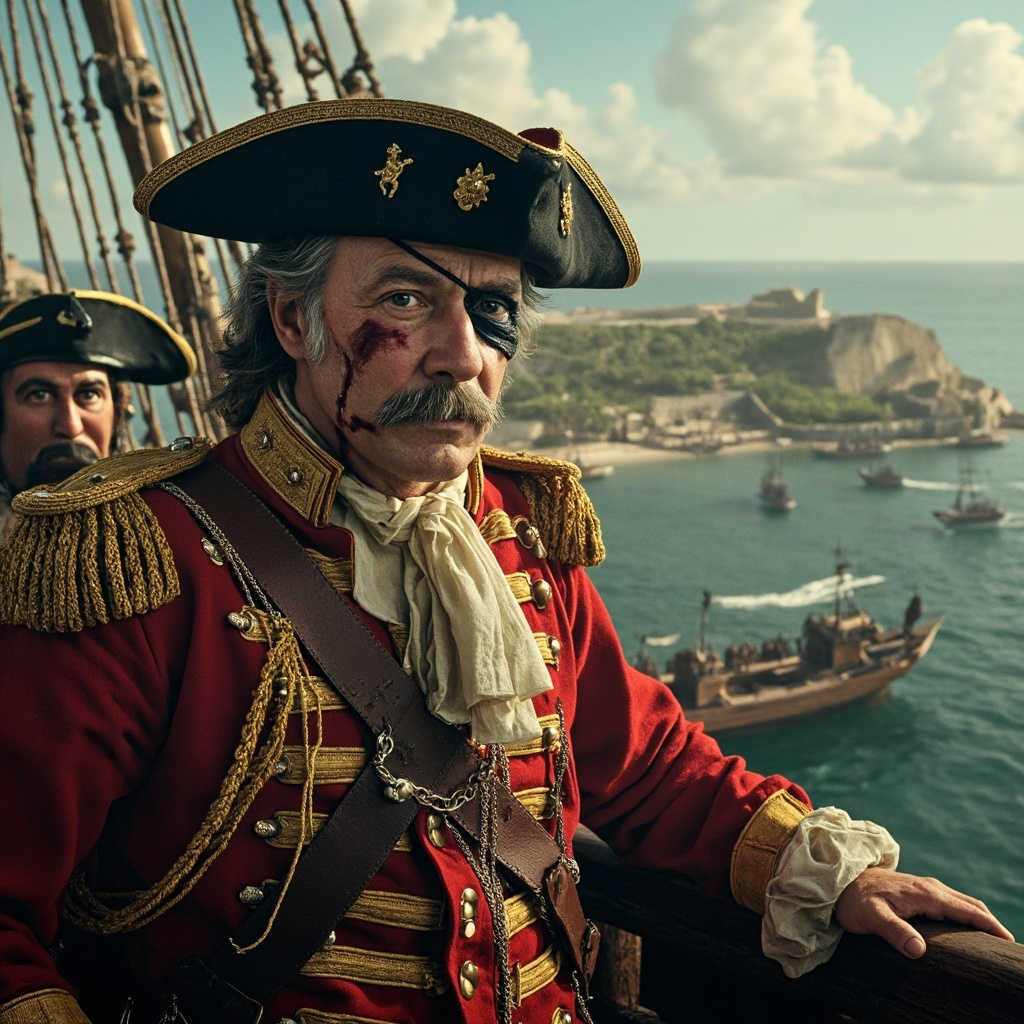
Captain Robert Jenkins was a British merchant sailor whose life took a dramatic turn during what should have been a routine voyage in the Caribbean. In 1731, Spanish coast guards boarded his ship, the Rebecca, as part of their ongoing efforts to enforce trade restrictions in their colonial waters. During the confrontation, the Spanish officers allegedly severed Jenkins’ ear—though historical accounts remain murky about the exact circumstances and whether it was truly cut off by the Spanish or lost in a tavern brawl.

Spanish coast guards boarding British merchant ship

What happened next would prove far more significant than the injury itself. Jenkins, in a move that would make even the most dramatic storyteller proud, preserved his severed ear in a bottle of brine and returned to England with his grisly trophy.

Parliament and the Power of Propaganda

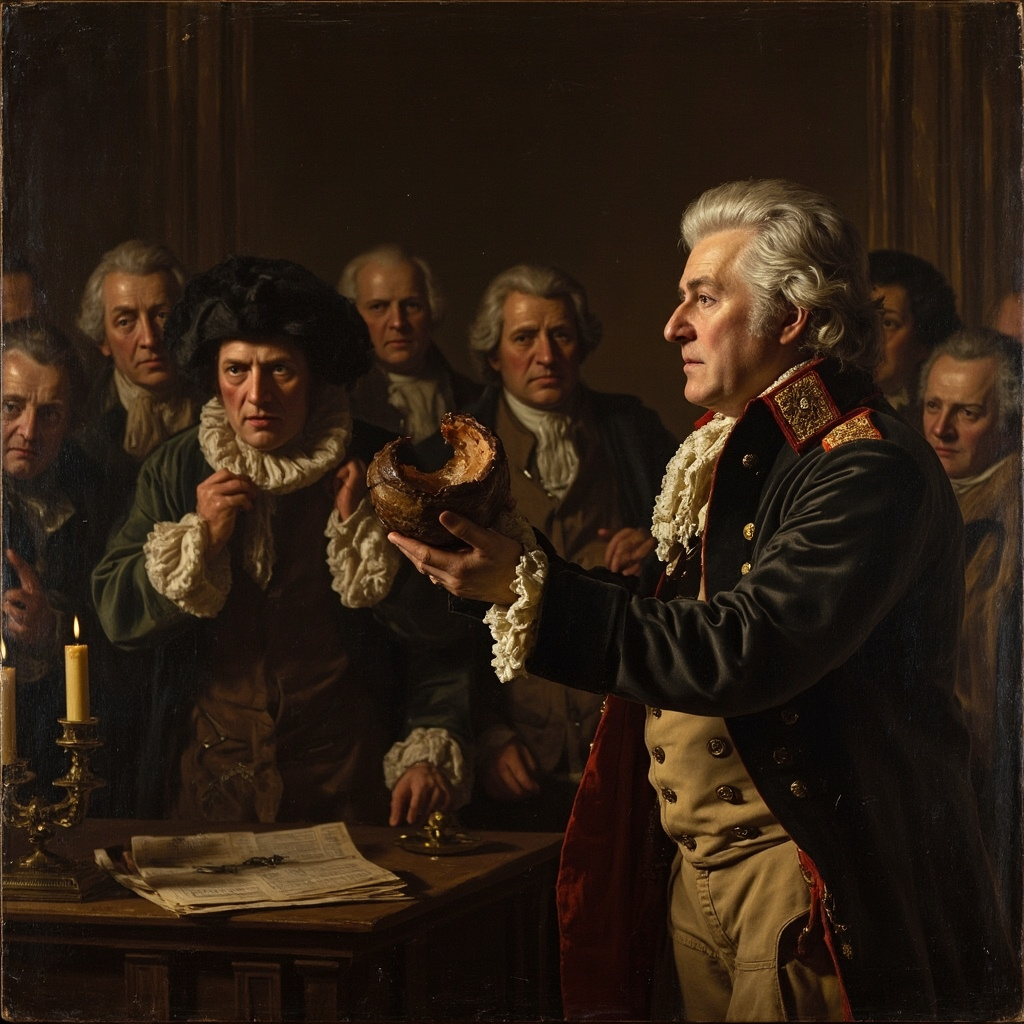
When Jenkins arrived in London, his pickled ear became an instant sensation. The House of Commons summoned him to appear before Parliament, where he dramatically produced the preserved appendage. When asked what he had done during the assault, Jenkins delivered what would become one of history’s most memorable quotes: “I commended my soul to God and my cause to my country.”

The public reaction was explosive. The ear became a symbol of Spanish brutality and British resilience, capturing the nation’s imagination in a way that dry diplomatic protests never could. Anti-Spanish sentiment reached a fever pitch, with citizens demanding that the government take action against what they saw as an intolerable insult to British honor.

From Ear to War

Prime Minister Robert Walpole, initially reluctant to escalate tensions, found himself under enormous pressure from both Parliament and the public. The incident provided the perfect pretext for those who had long sought conflict with Spain, particularly over lucrative trade disputes in the Caribbean and South America.

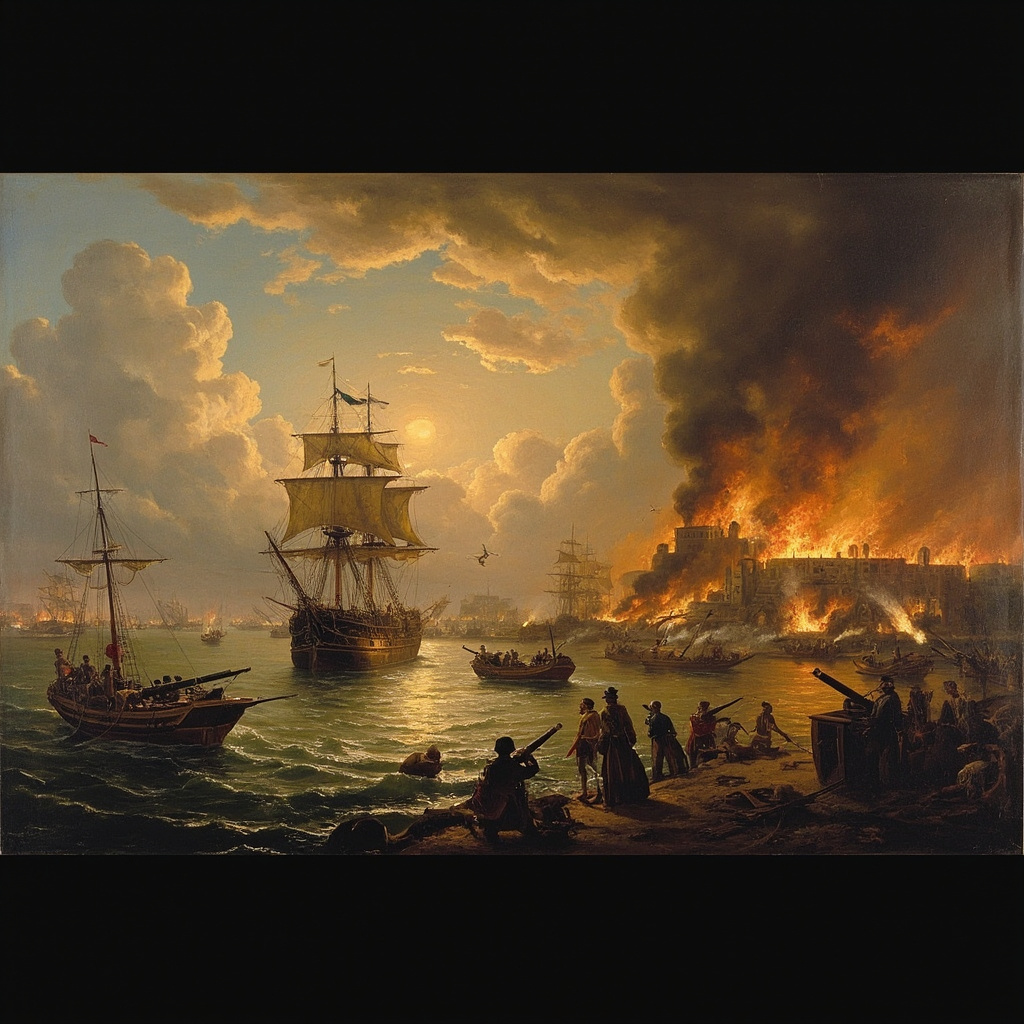
Admiral Vernon attacking Spanish fortress at Portobelo

In 1739, Britain formally declared war on Spain. The conflict quickly expanded beyond its bizarre origins, encompassing battles across multiple continents and eventually merging with the larger War of Austrian Succession. One of the war’s early victories came when Admiral Edward Vernon successfully attacked the Spanish fortress at Portobelo in modern-day Panama, a triumph that briefly made him a national hero.

The Reality of Colonial Warfare

Despite its unusual beginning, the War of Jenkins’ Ear proved to be a serious and costly conflict. British forces launched ambitious campaigns in the Caribbean, attempting to seize key Spanish territories and disrupt their lucrative colonial trade. However, the realities of 18th-century warfare—disease, logistical challenges, and determined Spanish resistance—made these campaigns far more difficult than anticipated.

The war saw significant naval battles, sieges of fortified ports, and complex diplomatic maneuvering as other European powers were drawn into the conflict. What began as a matter of national honor over a severed ear evolved into a struggle for colonial supremacy that would reshape the balance of power in the Americas.

Legacy of the Absurd

The War of Jenkins’ Ear officially ended with the Treaty of Aix-la-Chapelle in 1748, though its resolution was largely overshadowed by the broader European conflict it had become entangled with. The territorial and economic outcomes were mixed, with neither Britain nor Spain achieving their primary objectives.

What makes this conflict truly remarkable is not its military outcomes but its origins. It stands as a perfect example of how a single dramatic incident—whether completely true or embellished for political purposes—can escalate into international warfare. The power of Jenkins’ pickled ear to inflame public opinion demonstrates the complex relationship between propaganda, public sentiment, and political decision-making in the 18th century.

Questions That Remain

Historians continue to debate the veracity of Jenkins’ account. Was his ear truly severed by Spanish officers, or was it lost in a more mundane fashion? Did Jenkins embellish his story for dramatic effect, or were the Spanish guards particularly brutal that day? These questions may never be definitively answered, but they hardly matter in the broader context of the war’s significance.

What cannot be disputed is the remarkable fact that a preserved body part in a bottle became one of the most effective pieces of war propaganda in British history. Jenkins’ ear achieved something that countless diplomatic negotiations had failed to accomplish—it gave the British public a visceral, emotional reason to support war with Spain.

The Most Famous Ear in History

The War of Jenkins’ Ear serves as a fascinating case study in how the most bizarre and seemingly trivial incidents can have profound historical consequences. It reminds us that history is not always shaped by grand ideological struggles or rational political calculations—sometimes, it’s influenced by the theatrical presentation of a pickled ear to a room full of outraged parliamentarians.

In an age before photography or mass media, physical evidence like Jenkins’ preserved ear carried enormous symbolic weight. It transformed an abstract diplomatic dispute into something tangible and emotionally powerful that ordinary citizens could understand and rally behind.

Today, the War of Jenkins’ Ear stands as perhaps history’s most memorably named conflict, a reminder that truth can indeed be stranger than fiction. While other wars are remembered for their battles, leaders, or consequences, this one will forever be known for the pickled ear that started it all—making Robert Jenkins’ severed appendage undoubtedly the most famous ear in human history.