Wojtek the Bear — The Polish Soldier Bear of World War II

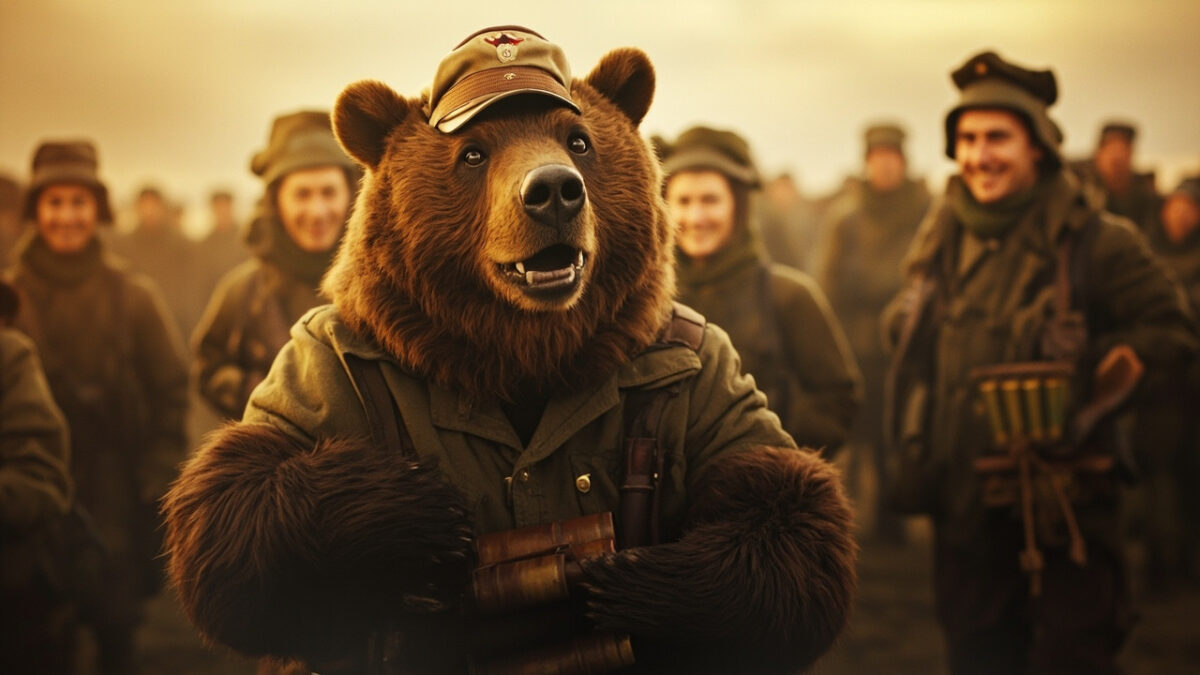
World War II produced countless stories of heroism, sacrifice, and unlikely friendships. But none of them are quite as heartwarming — or as wonderfully absurd — as the story of Wojtek, the Syrian brown bear who was officially enlisted in the Polish Army, carried ammunition at the Battle of Monte Cassino, and retired to a zoo in Scotland.
Yes, a bear. A real bear. With a real military rank. This is not a metaphor.
From Orphan Cub to Army Mascot
The story begins in 1942, in the mountains of Iran. A group of Polish soldiers — members of the Polish II Corps under General Władysław Anders — were making their way through the Middle East after being released from Soviet labor camps. These men had already endured unimaginable hardships: deportation to Siberia, forced labor, starvation, and a grueling journey south through the Soviet Union.
Near the town of Hamadan, the soldiers encountered a young Iranian boy carrying a burlap sack. Inside was a tiny, orphaned Syrian brown bear cub whose mother had been killed by hunters. The soldiers, perhaps recognizing a fellow lost soul, traded a few cans of food, some chocolate, and a Swiss Army knife for the cub.
They named him Wojtek (pronounced “VOY-tek”), which is a traditional Polish name meaning “happy warrior” or “he who enjoys war.” It was, as it turned out, a remarkably fitting name.
Growing Up in the Army
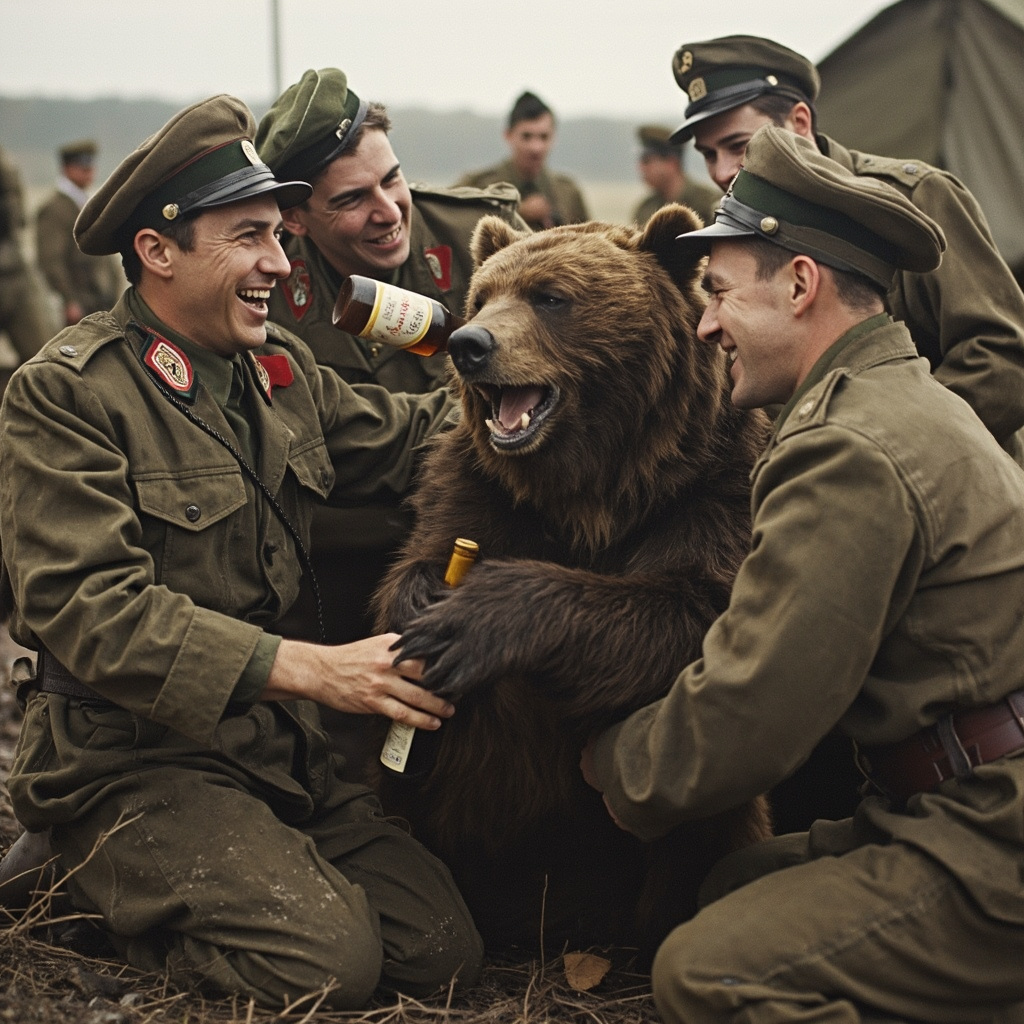
The soldiers adopted Wojtek as their mascot, and the bear quickly became one of the boys. In his early days, when he was still a small cub, they fed him condensed milk from an empty vodka bottle. As he grew, his diet expanded to include fruit, honey, marmalade, and — inevitably, because he was living with Polish soldiers — beer. Wojtek developed a particular fondness for beer and would happily down a bottle whenever one was offered.
He also picked up some decidedly un-bear-like habits. He learned to salute when greeted. He loved wrestling with the soldiers and would gently pin them without hurting anyone. He slept in tents with his companions, sometimes sharing sleeping bags on cold nights. He rode in trucks, sitting in the passenger seat like a very large, very hairy hitchhiker.
As Wojtek grew — eventually reaching about 6 feet tall and 485 pounds — he became a beloved figure throughout the entire Polish II Corps. He wasn’t just a mascot; he was a genuine morale booster. After everything these men had been through, having a friendly bear lumber up and demand a wrestling match was exactly the kind of absurd joy they needed.
The Enlistment
In 1943, the Polish II Corps was ordered to join the Allied forces in Italy. There was just one problem: British transport regulations prohibited mascots and pets on military transport ships. You couldn’t just show up at the gangplank with a 485-pound bear and say “he’s with me.”
The solution? They officially enlisted Wojtek in the Polish Army. Private Wojtek was given his own paybook, rank, and serial number (the serial number part is real — they actually assigned him one). He was listed as a soldier in the 22nd Artillery Supply Company of the Polish II Corps.
And just like that, a bear became a soldier. The British transport authorities, now faced with official military documentation for one “Pvt. Wojtek,” had no grounds to refuse him passage. Bureaucracy: defeated by its own logic.
The Battle of Monte Cassino
The Battle of Monte Cassino, fought from January to May 1944, was one of the fiercest and bloodiest engagements of the Italian Campaign. The Allies made four major assaults to break through the German Gustav Line, with the Polish II Corps playing a crucial role in the final, successful assault.
And Wojtek was there.
According to multiple eyewitness accounts from soldiers in the 22nd Company, Wojtek helped carry 100-pound crates of artillery shells from supply trucks to the guns. He apparently learned this by watching the soldiers and began imitating them, picking up crates and walking them over on his hind legs.
Whether Wojtek truly understood what was happening or was simply mimicking his human companions is debatable. But the soldiers swore by it, and multiple photographs exist of Wojtek carrying or handling ammunition boxes. He never dropped a single one, they claimed.
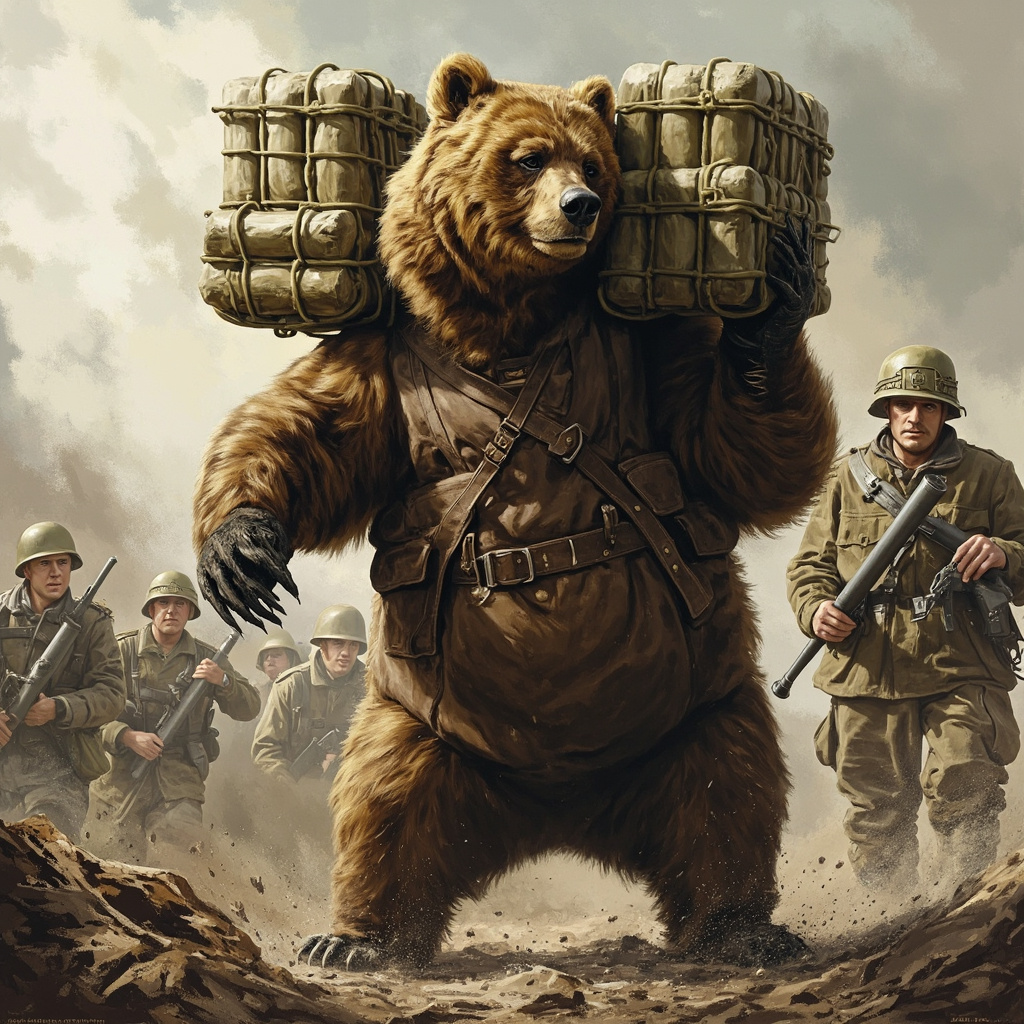
In recognition of Wojtek’s contribution, the 22nd Company adopted an official emblem featuring a bear carrying an artillery shell. This emblem was approved by the military and appeared on the company’s vehicles, uniforms, and official insignia. You can still see it today.
Life After War
When the war ended in 1945, the Polish soldiers faced a painful reality. Poland was now under Soviet control, and most couldn’t go home. Many were resettled in the United Kingdom, and Wojtek went with them.
The soldiers and their bear were initially stationed at Winfield Camp in the Scottish Borders. Wojtek continued his military service — technically still a soldier — until the Polish II Corps was officially demobilized in 1947.
After demobilization, Wojtek needed a home. He was taken in by the Edinburgh Zoo, where he spent his remaining years. The arrangement was bittersweet. Wojtek had spent his entire life around humans, particularly his beloved Polish soldiers, and he never fully adjusted to being “just a bear” in a zoo.
His former comrades regularly visited him, and he would perk up at the sound of Polish being spoken. Some would toss him cigarettes — another habit he’d picked up in the army. He didn’t smoke them, exactly, but he would eat them. (Bears, it turns out, are not terribly discerning about what they consume.)
One particularly touching account describes a soldier climbing into Wojtek’s enclosure to wrestle with him, just like the old days. The zookeepers were initially horrified, but Wojtek simply played gently with his old friend, just as he always had.
Legacy of the Happy Warrior
Wojtek died in December 1963, at the age of 21. He had outlived many of his human companions and had become one of Edinburgh Zoo’s most popular residents.
But Wojtek’s story didn’t end with his death. If anything, his legend has only grown. There are now statues of Wojtek in Edinburgh, London, Ottawa, and multiple cities in Poland. Books have been written about him. Documentaries have been made. He was featured in a graphic novel. There have been multiple campaigns to create even more memorials.
The most prominent statue stands in Princes Street Gardens in Edinburgh, unveiled in 2015. It depicts Wojtek walking alongside a Polish soldier, both in mid-stride, heading somewhere together. It’s a simple image, but a powerful one.
Wojtek’s story resonates because it’s about more than a bear — it’s about the bonds forged in the most unlikely circumstances. These were men who had lost everything: their country, their homes, their families. In the middle of a global catastrophe, they found companionship and joy in a bear cub they traded some chocolate for.
And the bear? He found a family. He carried shells, drank beer, wrestled with his friends, and never hurt a soul. In a war defined by humanity’s worst impulses, Wojtek was a reminder of its best ones.
Private Wojtek: the happy warrior, the beer-drinking, cigarette-eating, shell-carrying bear who went to war and became a legend. They truly don’t make soldiers like that anymore.