The ukulele’s incredible journey from a Portuguese cabinetmaker’s workshop in Madeira to Hawaiian royal courts, Tin Pan Alley, and global stardom — all in a tiny four-stringed package named after a jumping flea.
Traded for a can of food as a cub, Wojtek the bear was officially enlisted in the Polish Army, carried ammunition at Monte Cassino, and retired to an Edinburgh zoo. This is his incredible story.
In the spring of 1925, a dapper, smooth-talking man sat in a suite at the Hôtel de Crillon — one of the most prestigious hotels in Paris — and calmly sold the Eiffel Tower to a scrap metal dealer. The buyer handed over a small fortune. The seller disappeared. And when the victim realized he’d been conned, he was too embarrassed to tell the police.
So the con man came back and sold it again.
His name was Victor Lustig, and he was arguably the greatest con artist who ever lived.
The Making of a Con Man
Victor Lustig was born Robert V. Miller in 1890 in Hostinné, a small town in what was then Austria-Hungary (now the Czech Republic). From an early age, he displayed a remarkable gift for languages, eventually becoming fluent in five: Czech, German, French, English, and Italian. He was handsome, charming, and possessed an almost supernatural ability to read people.
By his twenties, Lustig had abandoned any pretense of legitimate work. He drifted across Europe and the Atlantic, running cons on ocean liners — a favorite hunting ground where wealthy passengers were relaxed, bored, and eager to trust a fellow first-class traveler. He accumulated 47 known aliases and was wanted by police forces on multiple continents.
But his masterpiece was yet to come.
Selling the Eiffel Tower
In 1925, Lustig was reading a Paris newspaper when he stumbled across an article about the Eiffel Tower’s maintenance costs. Originally built as a temporary structure for the 1889 World’s Fair, the tower was expensive to maintain and had its share of critics who considered it an eyesore. The article mused about the possibility of tearing it down.
A lesser mind might have seen idle speculation. Lustig saw an opportunity.
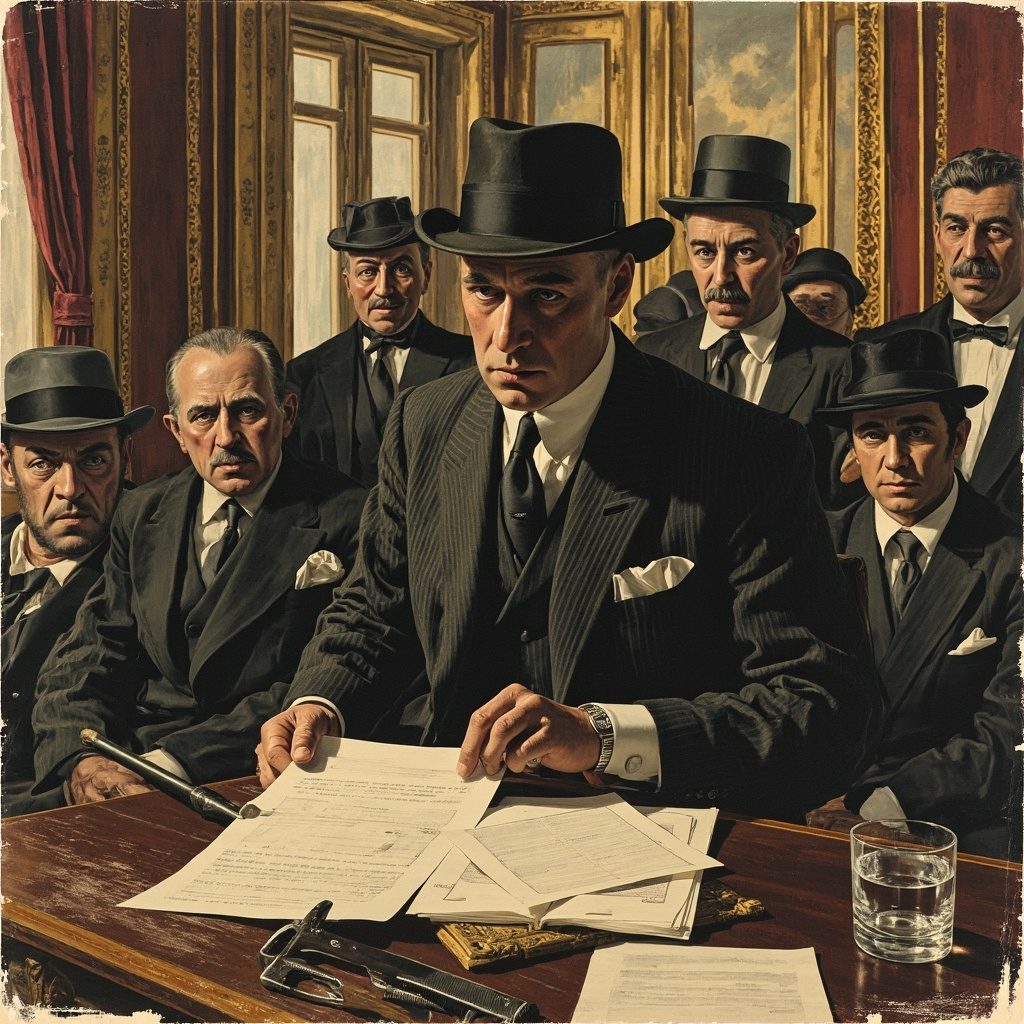
He had counterfeit government stationery printed, identifying himself as the Deputy Director-General of the Ministère des Postes et Télégraphes. He then invited six scrap metal dealers to a confidential meeting at the Hôtel de Crillon, explaining that the government had quietly decided to demolish the Eiffel Tower and sell it for scrap — a deal worth tens of thousands of tons of iron.
The setting was perfect. The Crillon was exactly where a senior government official would host such a meeting. The secrecy made sense — the public would be outraged if word got out before the deal was done. And the dealers were hungry for the contract of a lifetime.
Lustig quickly identified his mark: André Poisson, a dealer from the provinces who was eager to break into the Paris business scene and slightly insecure about his status. Lustig played him masterfully, first creating urgency (“the government must act quickly and quietly”), then subtly requesting a bribe — which actually reassured Poisson, since bribery was exactly what he expected from a corrupt government official.
Poisson paid. Lustig took the money and fled to Vienna.
He waited, scanning the Paris newspapers for reports of the fraud. Nothing appeared. Poisson, realizing he’d been duped, was so humiliated that he never went to the police.
Lustig couldn’t believe his luck. So he went back to Paris and ran the entire scheme again with a new group of dealers. This time, the second victim did go to the police — but by then, Lustig had vanished.
The Money Printing Machine
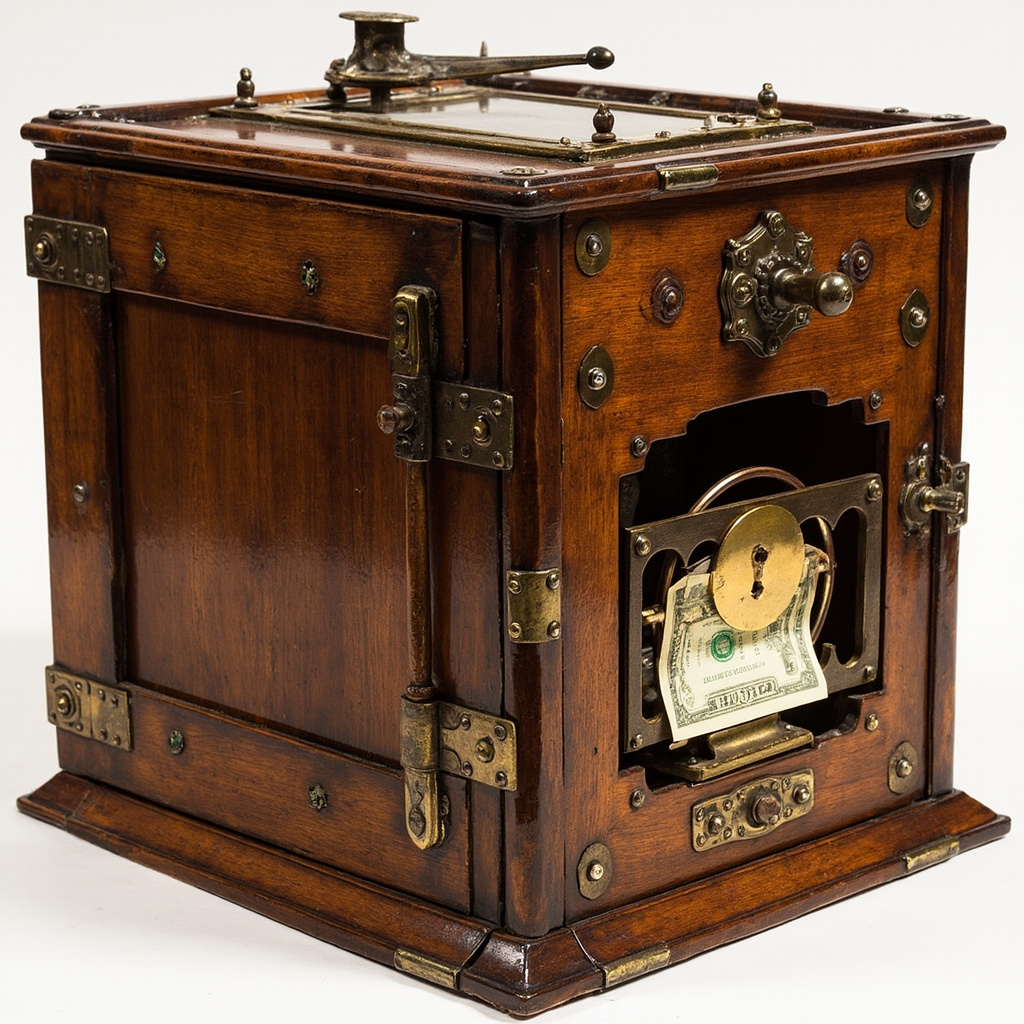
The Eiffel Tower wasn’t Lustig’s only famous scam. He also perfected the “money box” con — a beautifully crafted wooden box that he claimed could duplicate $100 bills. He would demonstrate it for a mark, feeding in a real bill and pulling out what appeared to be a perfect copy (actually another real bill he’d pre-loaded). Then he’d sell the box for an enormous sum.
The brilliance was in the timing: the machine supposedly took six hours to produce each copy. By the time the buyer realized it only produced blank paper, Lustig was long gone.
Conning Al Capone
Perhaps the most audacious testament to Lustig’s nerve was the time he conned Al Capone — and lived to tell about it. Lustig approached the notorious gangster with a “sure thing” investment opportunity, and Capone gave him $50,000. Lustig simply put the money in a safe deposit box, waited two months, then returned to Capone claiming the deal had fallen through.
He handed back every cent.
Capone, impressed by Lustig’s apparent honesty, gave him $5,000 as a consolation — which was what Lustig had been after all along. He’d calculated that stealing $50,000 from Capone would get him killed, but that returning it would earn him a generous “tip.” He was right.
The Fall
Lustig’s downfall came not from the Eiffel Tower scam but from a counterfeiting operation he ran in the United States during the 1930s. Working with a chemist named Tom Shaw, Lustig produced exceptionally high-quality counterfeit bills that flooded the American economy.
The Secret Service — whose primary mission at the time was combating counterfeiting — launched a massive investigation. Lustig was arrested in 1935, largely thanks to a tip from his mistress, who had turned on him after discovering he was seeing another woman. (Even the greatest con artists have blind spots.)
He was sentenced to 20 years on Alcatraz — the inescapable island prison in San Francisco Bay. Even there, he made one final attempt at deception: in 1947, while dying of complications from pneumonia, the man who had used 47 aliases throughout his life had his death certificate list his occupation as “apprentice salesman.”
He died on March 11, 1947. He was 57 years old.
The Legacy of a Scoundrel
Victor Lustig left behind a document sometimes called “The Ten Commandments for Con Men” — a set of rules for manipulating people that reads like a dark mirror of Dale Carnegie’s How to Win Friends and Influence People. Among the rules: be a patient listener, never look bored, agree with the mark’s politics, and never boast.
It’s tempting to admire Lustig’s audacity and ingenuity — selling a national monument takes a special kind of nerve. But behind every brilliant con was a real victim: André Poisson, who lost his savings and his dignity. The countless people who bought worthless money boxes. The businesses damaged by his counterfeit bills.
Victor Lustig was a genius. He was also a thief. History remembers both.
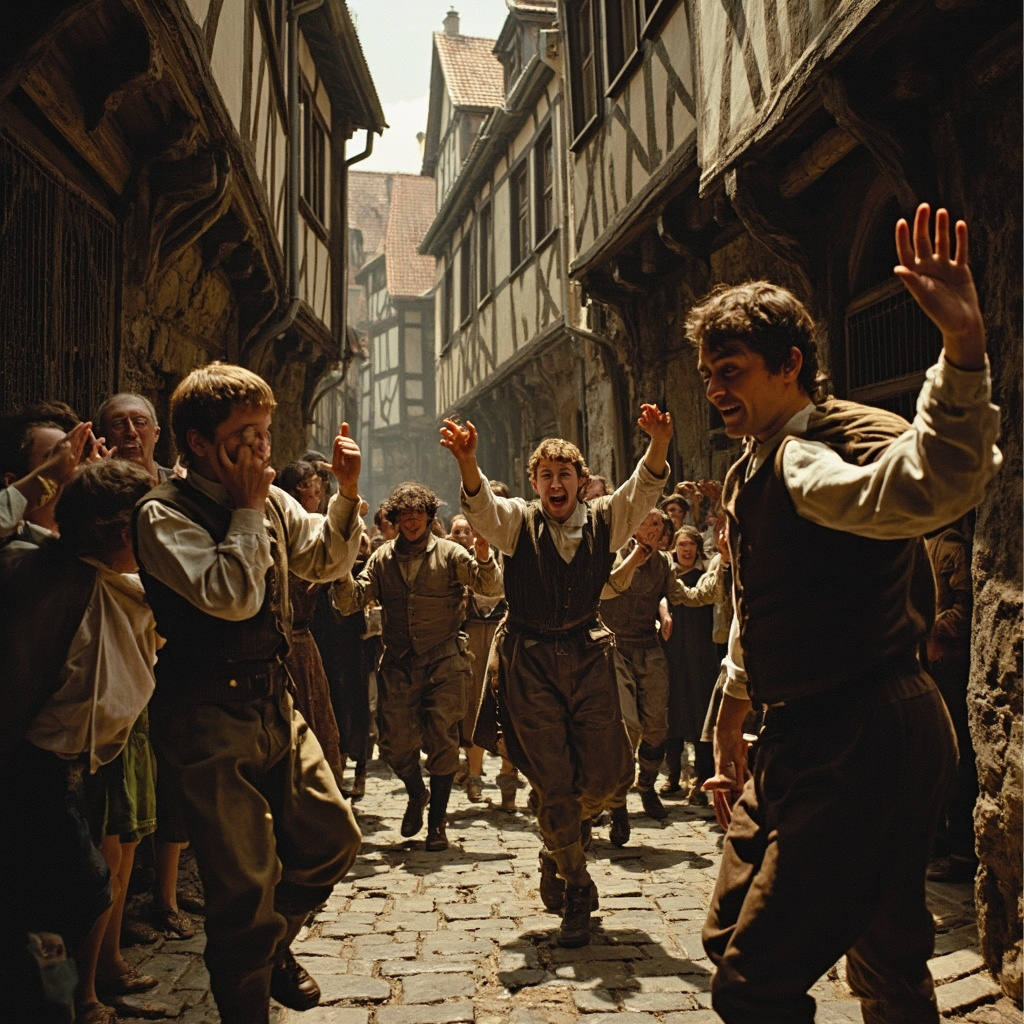
In July 1518, on a narrow street in Strasbourg — then part of the Holy Roman Empire — a woman known as Frau Troffea stepped outside and began to dance. There was no music. No celebration. No apparent reason. She simply danced, her body twisting and turning in the summer heat, hour after hour, until night fell.
She danced through the night. And the next day. And the day after that.
By the end of the week, more than thirty people had joined her. Within a month, the number had swelled to roughly 400 men, women, and children — all dancing uncontrollably in the streets of Strasbourg. Some danced until they collapsed from sheer exhaustion. Others suffered strokes and heart attacks. People were literally dancing themselves to death.
This was the Dancing Plague of 1518, and it remains one of the strangest events in recorded history.
A City Already on the Edge
To understand how an entire city could fall into a dance of death, you need to understand what Strasbourg had already endured. In the years leading up to 1518, the region had been ravaged by a brutal trifecta of suffering: famine, smallpox, and syphilis. Crop failures had left the poor starving. Disease swept through cramped, unsanitary streets. The people of Strasbourg were physically weakened, psychologically traumatized, and spiritually desperate.
Into this cauldron of misery stepped Frau Troffea — and the city broke.
The Authorities’ Baffling Response
When the dancing first began to spread, Strasbourg’s city council consulted local physicians. Their diagnosis? The afflicted were suffering from “hot blood” and needed to dance the fever out of their systems. The cure, they declared, was more dancing.
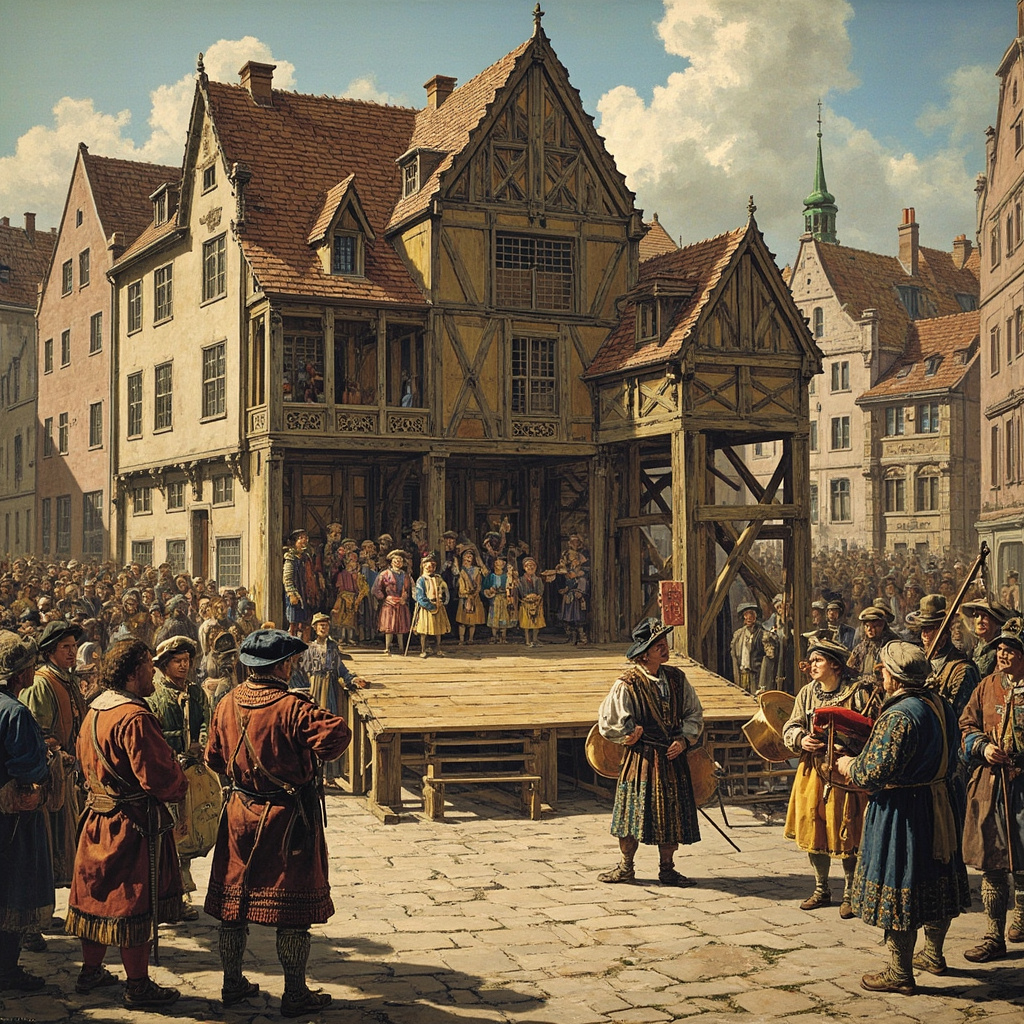
The authorities built a wooden stage. They hired musicians — guild pipers and drummers — to provide accompaniment. They even opened two guild halls for the dancers to use. The logic was that if the dancers could sweat out their condition, they would eventually stop.
They did not stop. The dancing only intensified, and people continued to collapse.
Realizing their catastrophic miscalculation, the authorities reversed course. The music was silenced. The stages were dismantled. The afflicted were carted to a mountaintop shrine dedicated to St. Vitus, the patron saint associated with dancing and epilepsy. There, they were given holy oil, blessed crosses, and red shoes to wear as part of a curative ritual.
Gradually — whether through divine intervention, exhaustion, or the simple passage of time — the dancing stopped. By early September, the plague had burned itself out.
What Caused It?
Historians and scientists have debated the cause of the Dancing Plague for centuries. Three theories dominate the discussion:
Mass Psychogenic Illness
The leading modern theory, championed by historian John Waller, suggests the Dancing Plague was a case of mass psychogenic illness — sometimes called mass hysteria. Under extreme psychological stress, people can enter trance-like states and exhibit involuntary physical symptoms. In a deeply superstitious society, where people genuinely believed that saints could curse them with dancing plagues, the fear itself may have been enough to trigger the condition. Once Frau Troffea began, others — equally stressed, equally desperate — were susceptible to the same psychological contagion.
Ergot Poisoning (St. Anthony’s Fire)
Another theory points to ergotism — poisoning caused by ergot, a fungus that grows on damp grain, particularly rye. Ergot contains chemicals related to LSD and can cause convulsions, hallucinations, and involuntary muscle movements. Since Strasbourg’s poor subsisted largely on rye bread, and the preceding years had seen the kind of wet conditions that promote ergot growth, some researchers have suggested the dancers were essentially tripping on contaminated bread.
However, critics note that ergot poisoning typically causes constricted blood flow to the extremities — making coordinated dancing unlikely rather than more so. The theory remains contested.
Stress-Induced Trance
A related but distinct theory suggests the dancers entered a dissociative trance state — a known psychological phenomenon in which extreme stress causes a person to disconnect from conscious control of their body. Cultural context matters here: in 1518, people believed that St. Vitus had the power to curse people with compulsive dancing. If you believed — truly, deeply believed — that you had been cursed, your body might comply with what your mind expected.
Not the First Time
Remarkably, the Strasbourg incident was not unique. Similar outbreaks of compulsive dancing were recorded across medieval Europe, particularly in the Rhineland region. In 1374, a major outbreak struck several towns along the Rhine, with dozens of people dancing for days. Smaller incidents were recorded in the 14th and 15th centuries in Basel, Zurich, and other cities.
The 1518 outbreak was simply the largest, best-documented, and most deadly.
A Mirror for Our Times
The Dancing Plague of 1518 is more than a historical curiosity. It’s a reminder that the human mind and body are deeply intertwined — and that extreme stress can manifest in ways that seem impossible until they happen. In an era of pandemic anxiety, economic uncertainty, and social upheaval, the people of Strasbourg have something to teach us about the fragility of collective sanity.
Frau Troffea danced for six days straight before she was carried away. We still don’t know her real name, what happened to her afterward, or why she started dancing in the first place.
Some mysteries, it seems, are meant to keep us guessing.