The Great Molasses Flood: When Boston Drowned in 2.3 Million Gallons of Syrup

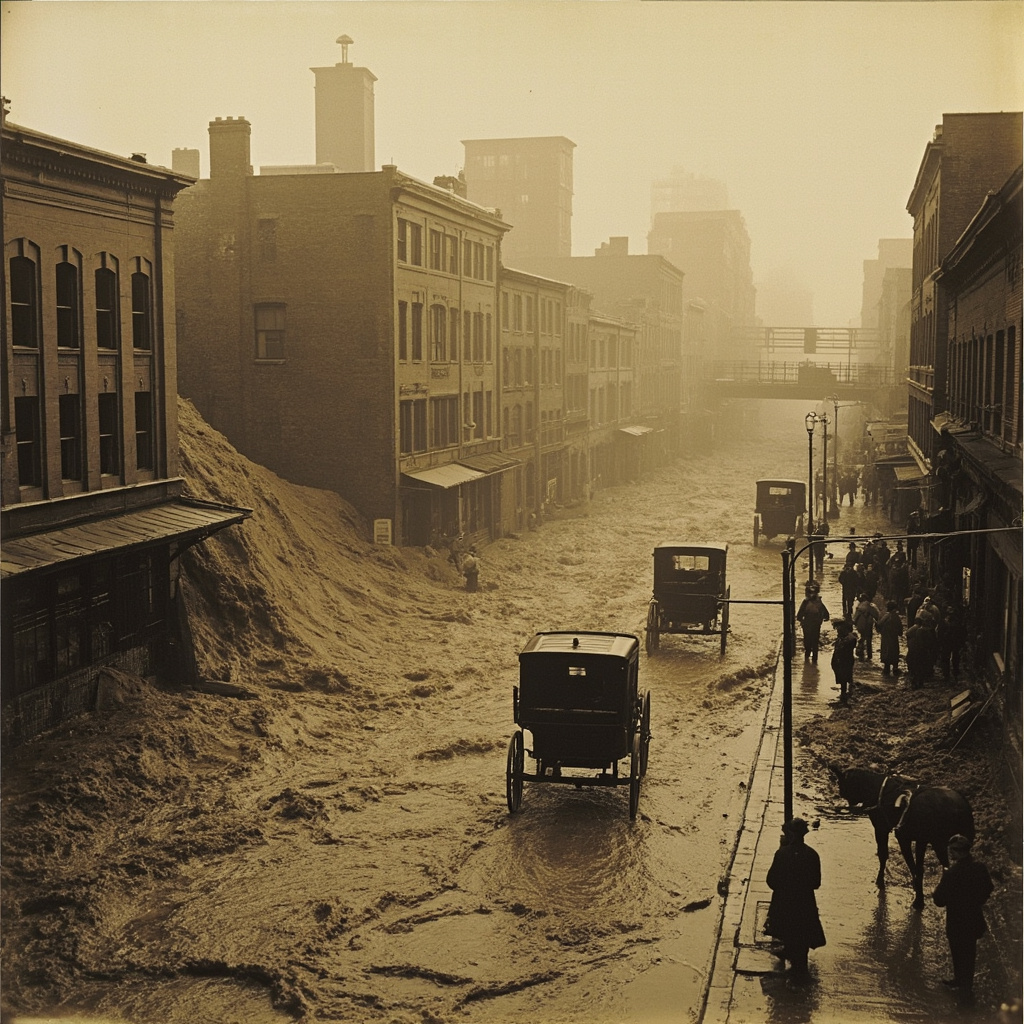
On January 15, 1919, Boston experienced one of the most bizarre and deadly industrial disasters in American history. What started as an unusually warm winter day—temperatures reaching over 40°F—ended with the Commercial Street area covered in a sticky brown nightmare that would haunt the city for decades.
The scene that afternoon was typical for Boston’s North End. Workers bustled about Commercial Street, horses clip-clopped along pulling carts, and the elevated train platform hummed with activity. At the Engine 31 firehouse, men played cards during their lunch break. Nearby, eight-year-old Antonio di Stasio and his sister Maria gathered firewood with their friend Pasquale Iantosca, while barman Martin Clougherty dozed upstairs at his family home overlooking the massive molasses tank.
The Monster Tank
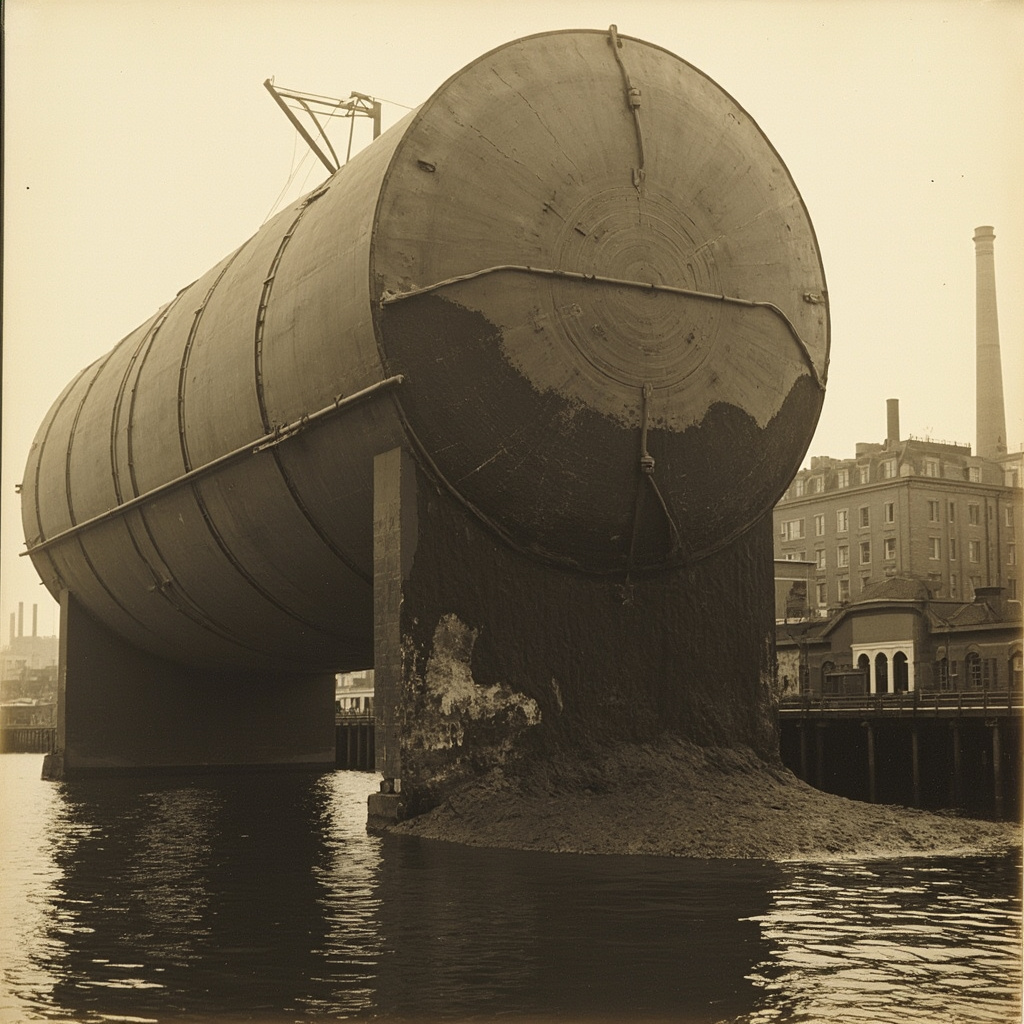
The United States Industrial Alcohol Company’s molasses storage tank was a true industrial giant. Standing 50 feet tall and 90 feet in diameter, it contained as much as 2.3 million gallons of thick, dark molasses—raw material for producing industrial alcohol. The tank had been hastily constructed in 1915 to meet wartime demand, and locals had long complained about the groaning sounds it made and the molasses that leaked from its joints.
What they didn’t know was that the tank’s design was fundamentally flawed. The steel walls were only half as thick as they should have been for a structure of that size, and no engineer had properly calculated the stress loads. The warm weather that January day was the final straw—as the molasses heated up, it expanded, creating pressure the weakened tank could no longer contain.
12:40 PM: Hell Breaks Loose
At exactly 12:40 PM, the tank catastrophically failed. Witnesses described hearing “a rumble, a hiss—some say a boom and a swish” before 2.3 million gallons of molasses erupted in a massive brown tsunami. The Boston Post later wrote that “the wave of molasses swept out” in a wall 15 feet high, moving at 35 miles per hour through the streets.
The destruction was immediate and complete. The molasses wave snapped the solid steel supports of the elevated train platform like twigs. Buildings “cringed up as though they were made of pasteboard,” according to the Boston Globe. The Engine 31 firehouse was knocked clean off its foundation, its second story collapsing into the first. The Clougherty house was swept away entirely and dashed against the train platform.
Martin Clougherty, jolted awake by the rumble, watched his home crumble around him. “I was in bed on the third floor of my house when I heard a deep rumble,” he later recalled. “When I awoke, it was in several feet of molasses.” He nearly drowned in the sticky whirlpool before climbing atop his bed frame and riding it like a raft to safety.
The Human Cost
The three children gathering firewood weren’t as fortunate. Antonio di Stasio, Maria di Stasio, and Pasquale Iantosca were all instantly swallowed by the torrent. Maria suffocated to death in the molasses, and Pasquale was killed when struck by a railroad car swept up in the wave. Antonio survived but suffered a severe head injury from being flung into a light post.
In total, the Great Molasses Flood killed 21 people and injured 150 others. The victims included laborers, children, and even horses—all trapped in the sticky brown mass that was nearly impossible to escape. The molasses was so thick and adhesive that conventional rescue methods were useless.
The Impossible Cleanup
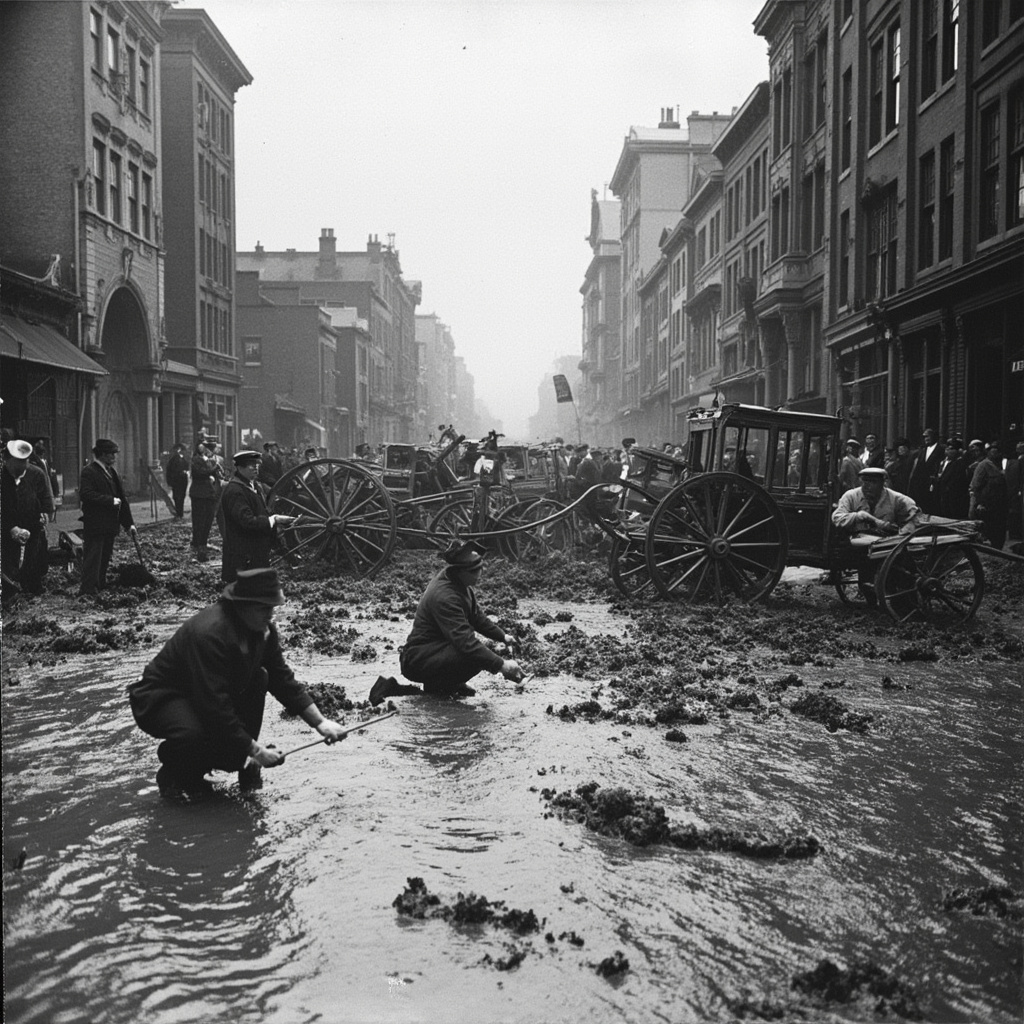
The aftermath of the flood presented unique challenges that Boston had never faced. Molasses doesn’t dissolve in water—it only gets stickier. Fire hoses were useless, and attempts to wash away the molasses only spread it further. Rescue workers had to use salt water from Boston Harbor, which finally began to break down the sticky mess.
The cleanup took weeks. Everything the molasses touched—buildings, streets, sidewalks, even the harbor itself—remained sticky for months. Bostonians reportedly tracked molasses footprints around the city well into the summer, and locals claimed they could still smell molasses in the North End on hot days decades later.
A Legal Revolution
The disaster led to one of the first major corporate liability lawsuits in American history. The United States Industrial Alcohol Company initially tried to blame the explosion on anarchist sabotage, claiming Italian immigrants had planted a bomb. However, a thorough investigation revealed the true cause: corporate negligence.
The company had ignored engineer warnings, used substandard materials, and failed to test the tank properly. In 1925, after years of legal battles, the company was found liable and ordered to pay $628,000 in damages—equivalent to about $10 million today. The case established important precedents for corporate responsibility in industrial disasters.
Legacy of a Sweet Disaster
The Great Molasses Flood stands as one of history’s most unusual industrial disasters, but its lessons remain relevant today. It demonstrated the deadly consequences of cutting corners on safety, the importance of proper engineering oversight, and the need for corporate accountability.
Today, a small plaque near the former site commemorates the victims of the flood. Boston’s building codes were significantly strengthened in its aftermath, and the disaster became a cautionary tale taught in engineering schools worldwide. While the story might sound almost comical to modern ears, for the 21 people who died and the hundreds who were injured, the Great Molasses Flood was a very real tragedy—proof that even the sweetest substances can turn deadly when industrial negligence meets natural forces.