The Phantom Time Hypothesis: Did 297 Years of Medieval History Never Actually Happen?

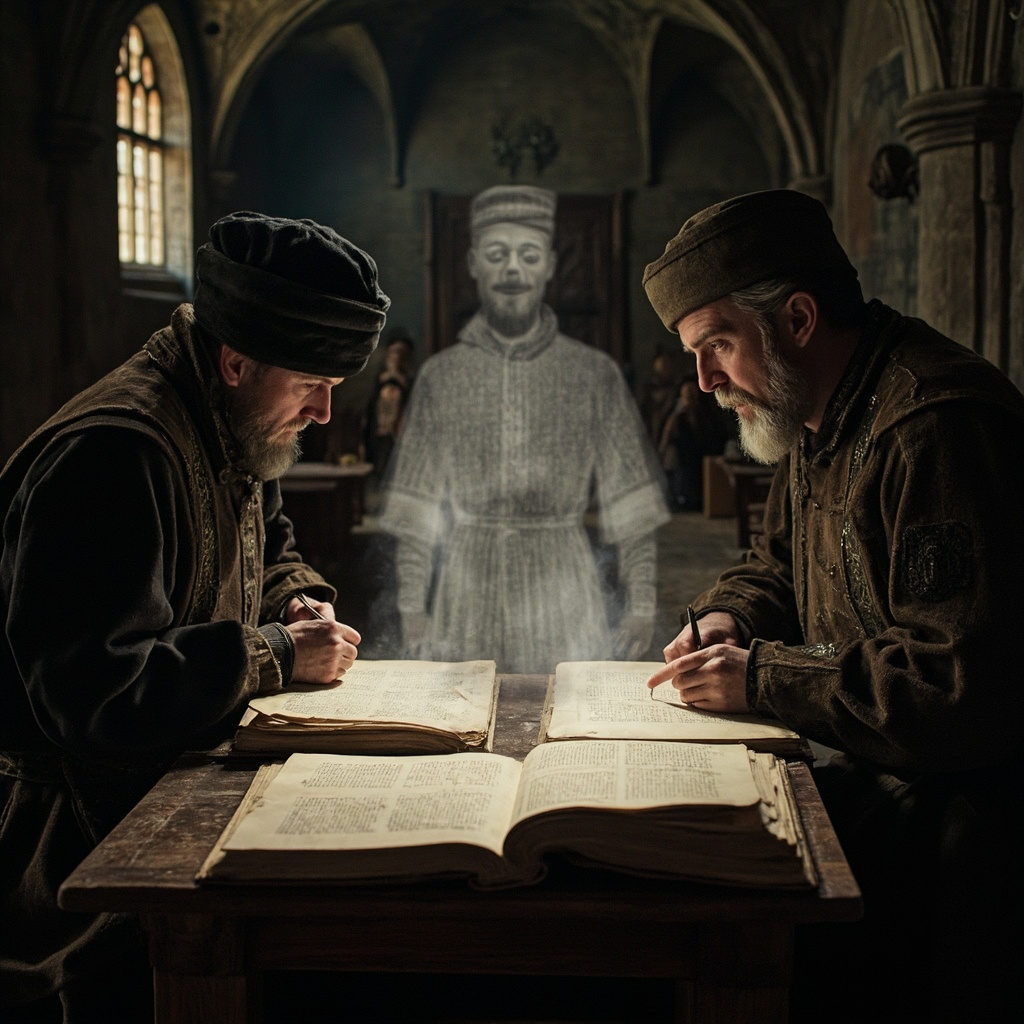
Imagine if nearly three centuries of human history never actually occurred. According to a controversial theory proposed by German historian Heribert Illig, the years 614 to 911 A.D. were entirely fabricated by medieval elites to advance their political agendas. This audacious claim, known as the Phantom Time Hypothesis, suggests that Charlemagne never existed, the Carolingian Empire was a fiction, and nearly 300 years of medieval history is nothing more than an elaborate forgery.
The Birth of a Radical Theory
In 1996, Heribert Illig shocked the academic world with his book Das erfundene Mittelalter: Die grösste Zeitfälschung der Geschichte (The Invented Middle Ages: The Greatest Time-Falsification in History). Illig, a German publisher and amateur historian, claimed to have discovered massive inconsistencies in medieval chronology that pointed to a systematic manipulation of time itself.
Illig’s investigation began with a comparison between the Julian calendar (implemented by Julius Caesar in 45 B.C.) and the Gregorian calendar (introduced by Pope Gregory XIII in 1582 A.D.). According to his calculations, approximately 297 years appeared to be missing from the historical record. But rather than attributing this discrepancy to natural calendar drift, Illig proposed something far more sinister: a coordinated conspiracy to literally add centuries to human history.
The Alleged Conspiracy
According to Illig’s theory, this massive historical deception was orchestrated by two powerful medieval figures: Pope Sylvester II and Holy Roman Emperor Otto III. These men, supposedly living in the 8th century, allegedly wanted to fast-forward time so that their reigns would coincide with the year 1000—exactly one millennium after the birth of Jesus Christ.
To accomplish this audacious goal, the conspirators supposedly employed armies of scribes to create and copy medieval manuscripts detailing fictitious events and individuals. These forged documents were then distributed to monasteries and libraries across Europe, where they would eventually be mistaken for authentic historical records by later generations.
Famous Figures That Never Existed?
Perhaps the most shocking claim of the Phantom Time Hypothesis is that some of history’s most celebrated medieval figures were complete fabrications. According to Illig, Charlemagne—the King of the Franks often called the “Founder of Europe”—never actually lived. Similarly, Alfred the Great, the legendary English king who successfully defended against Viking invasions, was supposedly another fictional character created by medieval propagandists.
The theory doesn’t stop with European history. Illig’s hypothesis extends to suggest that much of what we know about the early Middle Ages, including the rise of Islam, Viking expeditions, and Byzantine politics, was either completely invented or significantly altered to fit the fabricated timeline.
Scientific Evidence Demolishes the Theory
While the Phantom Time Hypothesis might sound intriguing, it crumbles under scientific scrutiny. Multiple lines of evidence from around the world definitively prove that these “missing” centuries actually occurred.

Tree ring chronologies provide perhaps the most compelling refutation of Illig’s claims. Dendrochronology—the science of dating tree rings—creates unbroken chronological sequences that span thousands of years. Ancient trees and preserved wood samples from the supposed “phantom” period show clear evidence of annual growth patterns, proving conclusively that these years actually passed.
Additionally, astronomical records from China, the Islamic world, and other civilizations document specific celestial events like solar eclipses and supernovae during the allegedly fabricated period. These observations correlate perfectly with modern astronomical calculations, providing independent confirmation that time progressed normally through the 7th, 8th, and 9th centuries.
Why Do Such Theories Persist?
Despite overwhelming evidence against it, the Phantom Time Hypothesis continues to attract adherents. Historians suggest this persistence stems from several psychological and cultural factors. The theory appeals to those who distrust authority and prefer alternative explanations to established facts. It also reflects a troubling Eurocentric bias that ignores or dismisses historical evidence from non-European civilizations.
As medievalist Paul Sturtevant notes, conspiracy theories like this one are “more emotional than logical.” The belief in phantom time cannot be dispelled through facts because it is based primarily on a deep-seated mistrust of scholarly authority rather than genuine historical inquiry.
The Broader Context
The Phantom Time Hypothesis exists within a broader ecosystem of historical revisionism and conspiracy theories. Similar to Holocaust denial or ancient alien theories, it selectively dismisses massive amounts of evidence while promoting alternative narratives that serve ideological rather than scholarly purposes.
Illig’s theory also has a Russian counterpart promoted by mathematician Anatoly Fomenko, who argues that most of ancient history actually occurred during the Middle Ages. These theories share common characteristics: they dismiss established chronologies, ignore international evidence, and propose vast conspiracies involving hundreds of scholars across different cultures and time periods.
Lessons for Modern Critical Thinking
While the Phantom Time Hypothesis may seem absurd to trained historians, it offers valuable lessons about the importance of critical thinking and scientific methodology. The theory demonstrates how cherry-picking evidence, ignoring contradictory data, and proposing unfalsifiable conspiracies can create compelling but ultimately false narratives.
As journalist Rex Sorgatz observes, “Every bit of counter-evidence offers a new plot from a crypto-historian.” This infinite regress—where each piece of debunking evidence is explained away by invoking an even larger conspiracy—is a hallmark of pseudoscientific thinking.
The next time you encounter claims that challenge established history, remember the Phantom Time Hypothesis. Ask yourself: Does this theory account for all available evidence? Does it rely on massive, unprovable conspiracies? Most importantly, what would it take to change the minds of its proponents?
In the case of phantom time, the answer is clear: no amount of evidence seems sufficient to convince true believers. Tree rings, astronomical records, archaeological findings, and documentation from multiple civilizations all converge on the same conclusion: those 297 years definitely happened, complete with all their triumphs, tragedies, and ordinary human experiences.
History, it turns out, is far too complex and messy to be the product of medieval conspiracy. The truth, as always, is both stranger and more wonderful than fiction.