When Samurai Could Have Sent Fax Messages to Abraham Lincoln: The 22-Year Timeline Overlap That Sounds Impossible

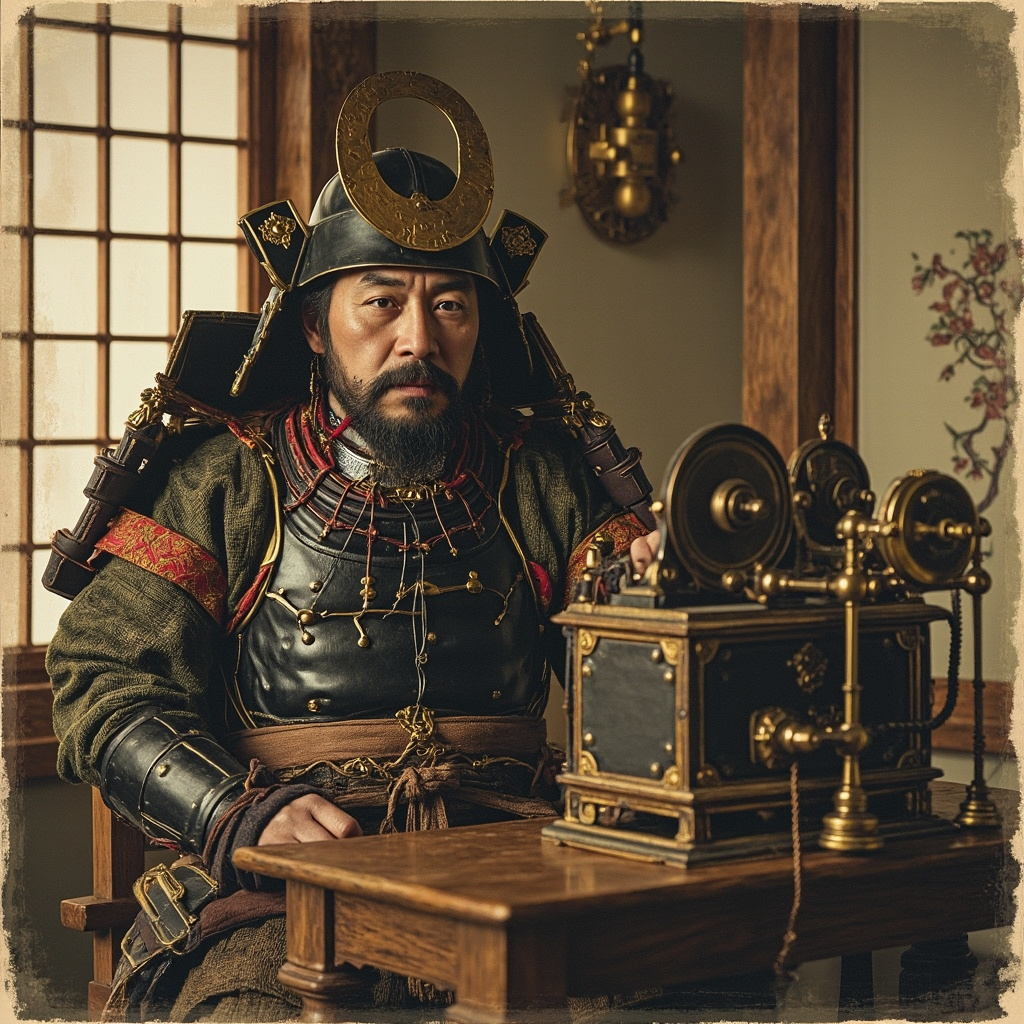
In the vast tapestry of human history, certain timeline overlaps seem so improbable they border on the absurd. Yet one of the most mind-bending historical coincidences involves a 22-year window during which a Japanese samurai could, theoretically, have sent a fax message to President Abraham Lincoln.
This isn’t science fiction or alternate history — it’s a fascinating convergence of three seemingly unrelated historical timelines that reveals just how compressed and interconnected our recent past truly is.
The Unlikely Triangle of History
The mathematics of this temporal overlap are surprisingly simple. Japan’s samurai class officially existed until the Meiji Restoration ended feudalism in 1868. The electric printing telegraph — the direct ancestor of the fax machine — was patented in 1843 by Scottish inventor Alexander Bain. Abraham Lincoln served as president from 1861 until his assassination in 1865.
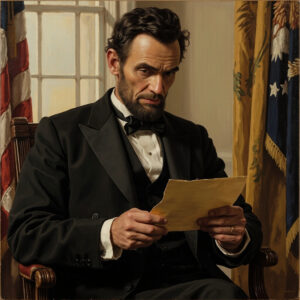
This creates a remarkable 22-year window of opportunity, from 1843 to 1865, when all three elements coexisted on the same timeline. While the practical barriers to such communication were enormous, the technological and political infrastructure theoretically existed.
The Samurai at History’s Crossroads
By the 1840s and 1850s, Japan’s samurai were living through the twilight of their era. These warrior-aristocrats had dominated Japanese society for over 700 years, but the country’s forced opening by Commodore Matthew Perry in 1854 initiated rapid social and technological changes.
The samurai class included not just warriors, but administrators, scholars, and diplomats who were beginning to engage with Western technology and ideas. Some forward-thinking samurai were already experimenting with Western innovations, making the concept of telegraph communication less far-fetched than it might initially appear.
Lincoln’s Telegraph Revolution
Abraham Lincoln was arguably the first “wired” president, embracing telegraph technology with unprecedented enthusiasm. During the Civil War, Lincoln spent countless hours in the War Department’s telegraph office, personally composing and reading messages that coordinated Union forces across vast distances.
The telegraph network had expanded dramatically by the 1860s, with transatlantic cables connecting America to Europe. While no direct cable reached Japan until later, the global communication infrastructure was rapidly developing, making international messaging a growing reality.
The Technology That Made It Possible
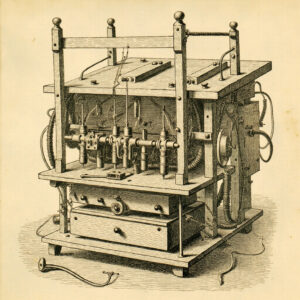
Alexander Bain’s electric printing telegraph represented a crucial step toward modern fax technology. Unlike Morse code systems that required trained operators to decode dots and dashes, Bain’s machine could reproduce written text and simple images directly onto paper using electromagnetic principles.
The device used a stylus that moved across a metal surface, with electrical currents varying based on whether the stylus encountered conductive or non-conductive areas. This signal was transmitted over telegraph lines and reproduced on the receiving end, creating a crude but functional facsimile transmission.
Breaking Down the Barriers
Of course, the practical obstacles to a samurai-Lincoln fax exchange were formidable. Japan remained largely isolated until the 1850s, with limited international telegraph connections. The technology was expensive and primarily available to governments and large commercial enterprises. Language barriers, diplomatic protocols, and the sheer novelty of the technology would have made such communication extremely unlikely.
Yet the fact remains that for over two decades, the basic technological and historical elements coexisted. A wealthy, progressive samurai with access to Western technology could have theoretically composed a message and transmitted it through the growing global telegraph network to reach Lincoln’s desk in Washington.
Timeline Overlaps That Reshape Perspective
This samurai-Lincoln-fax connection exemplifies how our perception of historical periods can be misleading. We often think of samurai as belonging to a distant, pre-modern era, while viewing Lincoln and telegraph technology as part of the modern world. In reality, these elements shared the same historical moment.
Similar timeline overlaps abound in history: woolly mammoths still roamed Siberian islands when the Egyptian pyramids were already ancient monuments. Oxford University was educating students before the Aztec Empire was founded. The last public execution in England occurred after the London Underground was operational.
The Compression of Modern History
These overlaps highlight how rapidly human civilization has transformed in recent centuries. The technological and social changes that separate us from the mid-19th century are vast, yet that period is remarkably recent in historical terms. A person born in 1843, when Bain patented his printing telegraph, could have lived to see the invention of television, commercial aviation, and early computers.
The samurai-Lincoln-fax scenario serves as a powerful reminder that history isn’t a series of discrete, separate epochs but rather a continuous flow of overlapping developments, innovations, and social transformations.
Legacy of an Impossible Message
While no samurai ever actually sent a fax to Abraham Lincoln, the theoretical possibility opens fascinating windows into historical perspective. It challenges our assumptions about technological development and reminds us that the past was far more complex and interconnected than our simplified mental timelines suggest.
The next time you send an instant message or email across the globe, remember that the basic concept — using technology to transmit written communication across vast distances — was theoretically possible during Abraham Lincoln’s presidency. The tools were different, the networks were primitive, and the barriers were enormous, but the fundamental idea existed in that remarkable 22-year window when samurai, presidents, and early fax technology briefly shared the same historical stage.