The London Beer Flood of 1814: When a Tsunami of Porter Killed Eight People

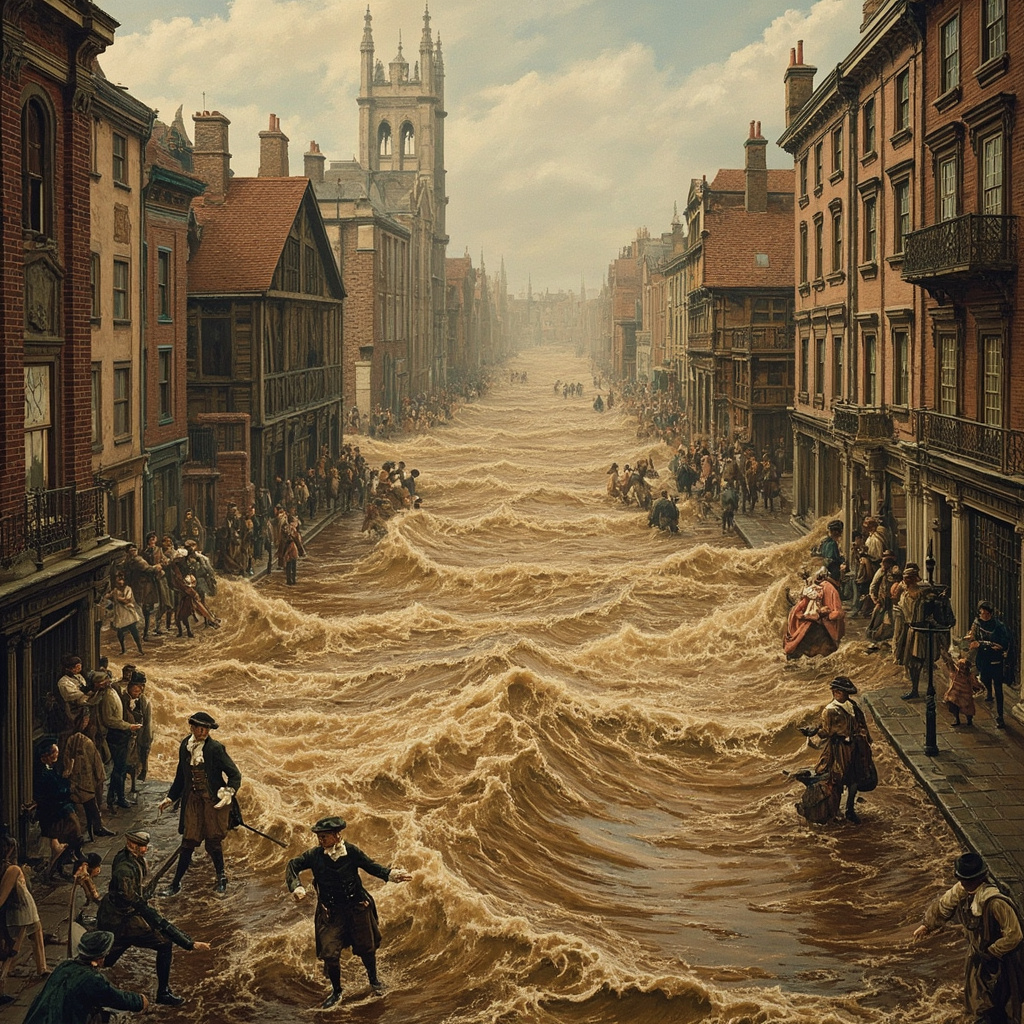
On the afternoon of October 17, 1814, one of history’s most bizarre industrial disasters struck London when a massive brewery tank burst, unleashing a deadly tsunami of beer through the streets. The London Beer Flood would claim eight lives and leave a trail of destruction that seemed almost too strange to believe.
The Horse Shoe Brewery
At the corner of Great Russell Street and Tottenham Court Road stood the Horse Shoe Brewery, owned by Meux and Company. In 1810, the brewery had installed a massive wooden fermentation tank that towered 22 feet high and held the equivalent of over 3,500 barrels of brown porter ale—a beer not unlike modern stout. The enormous vat was held together by massive iron rings, containing approximately 388,000 gallons of fermenting beer.
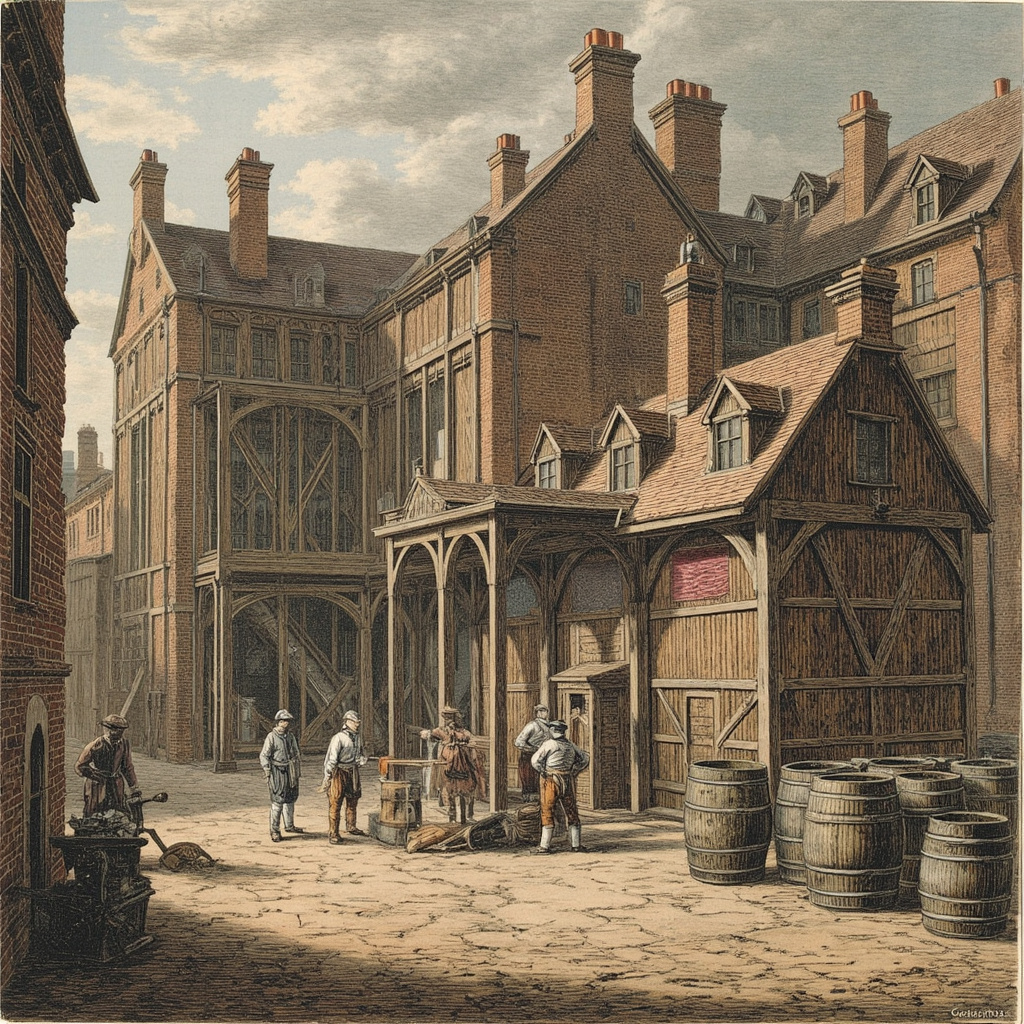
The sheer size of these fermentation vessels was a marvel of industrial brewing technology. The wooden staves were under enormous pressure from the fermenting liquid within, making the iron binding rings absolutely critical to the structure’s integrity.
The Catastrophic Failure
On that fateful Monday afternoon, one of the massive iron rings around the tank suddenly snapped. For about an hour, brewery workers noticed the problem but underestimated the danger. Then, without warning, the entire tank ruptured with explosive force.
The hot, fermenting ale burst forth like a tidal wave, hitting the back wall of the brewery with such violence that it collapsed entirely. The force of the escaping beer was so tremendous that it blasted open several other large vats, adding their contents to the growing flood. In total, more than 320,000 gallons of beer poured into the surrounding streets.
Death in St. Giles
The beer tsunami struck the St. Giles Rookery, a densely populated slum filled with cheap housing, tenements, and London’s poorest residents. The neighborhood was home to destitute families, prostitutes, criminals, and others living on society’s margins.
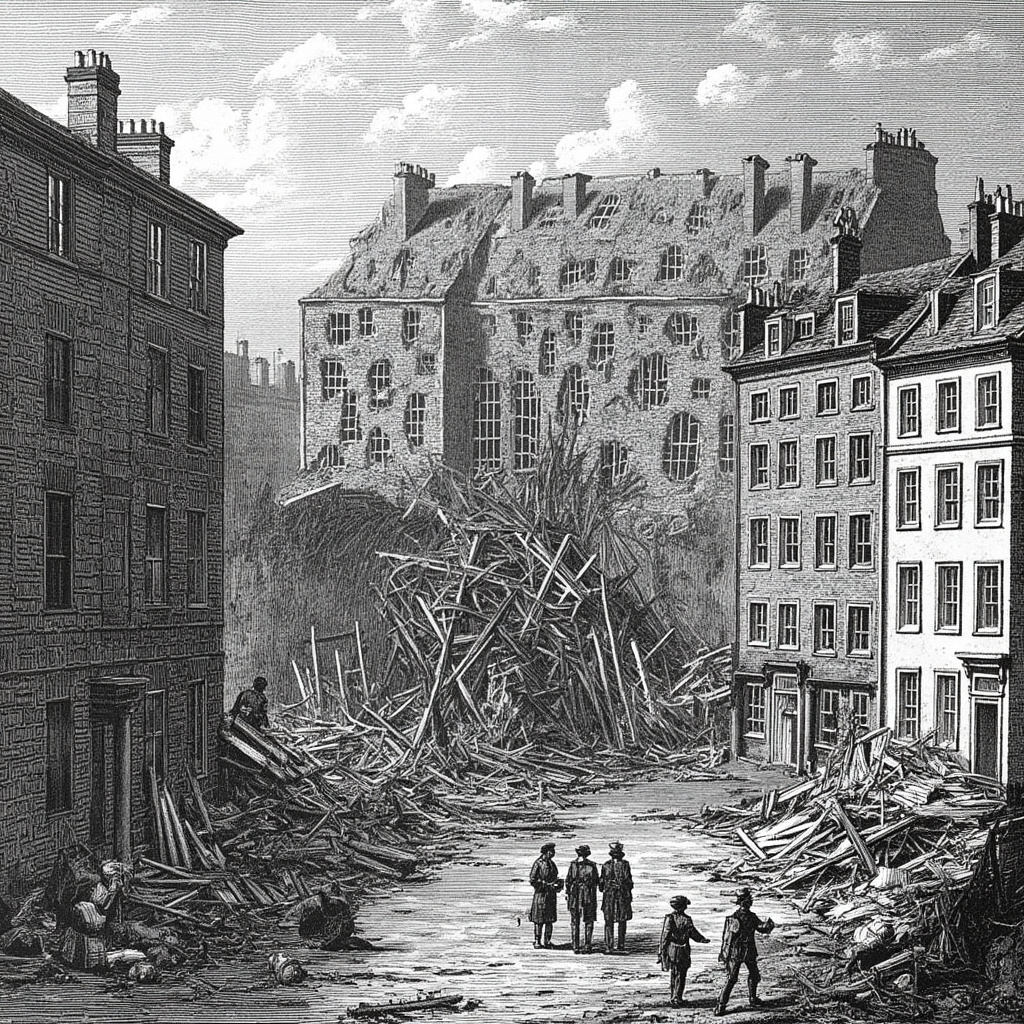
The 15-foot-high wave of beer and debris crashed through George Street and New Street within minutes. The force inundated the basements of two houses, causing them to collapse entirely. In one house, Mary Banfield and her daughter Hannah were taking afternoon tea when the flood struck—both were killed instantly.
In the basement of another house, tragedy struck during an Irish wake. Four mourners had gathered to pay respects to a two-year-old boy who had died the previous day. All four were killed when the beer flood destroyed their shelter. The wave also demolished a wall of the Tavistock Arms pub, trapping teenage barmaid Eleanor Cooper in the rubble.
The Grisly Aftermath
Eight people died in the disaster, but the story doesn’t end with the immediate casualties. The sudden availability of “free” beer led hundreds of people to rush into the streets with buckets, pots, and any containers they could find to collect the alcohol. Some simply drank directly from the beer-soaked streets.
Reports later emerged of a ninth victim who died several days after the flood from alcohol poisoning, having consumed too much of the free beer. The macabre scenes continued when some families displayed the corpses of victims for money, creating ghoulish exhibitions. In one house, the weight of visitors coming to view the bodies caused the floor to collapse, plunging everyone waist-deep into the beer-flooded cellar below.
Legal and Financial Consequences
The brewery faced massive costs from the disaster—approximately £23,000 (roughly £1.25 million in today’s money). However, when the case went to court, the disaster was ruled to be an “Act of God,” leaving no one legally responsible for the deaths and destruction.
Remarkably, the brewery was able to reclaim the excise duty they had paid on the beer, which saved them from bankruptcy. They also received £7,250 (about £400,000 today) as compensation for the lost beer barrels.
Lasting Impact
The stench of beer lingered in the St. Giles area for months after the flood. More importantly, the disaster led to significant changes in brewery safety practices. Wooden fermentation casks began to be phased out in favor of lined concrete vats, which were much safer and less prone to catastrophic failure.
The Horse Shoe Brewery itself was eventually demolished in 1922. Today, the Dominion Theatre sits partly on the site where one of history’s strangest disasters unfolded—a reminder that even the most ordinary substances can become deadly under the right circumstances.
The London Beer Flood stands as one of the most unusual industrial disasters in history, a perfect storm of poor engineering, unfortunate timing, and tragic circumstances that created a day when London literally drowned in beer.