The Day Napoleon Was Defeated by Rabbits: The Most Humiliating Military Retreat in History

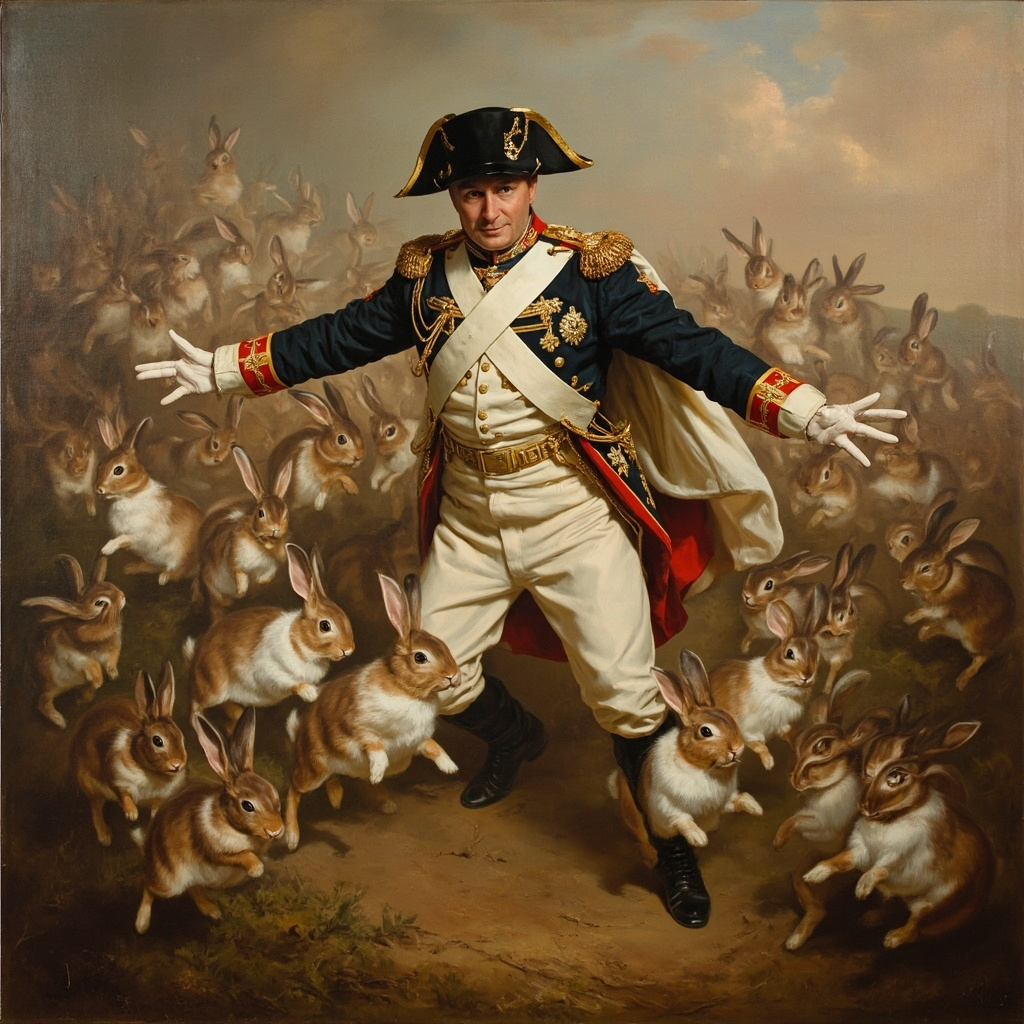
Napoleon Bonaparte conquered much of Europe, faced down empires, and redrew the map of the continent. But in July 1807, the great emperor met his match in the most unexpected adversary imaginable: a swarm of fluffy rabbits that sent him fleeing in retreat.
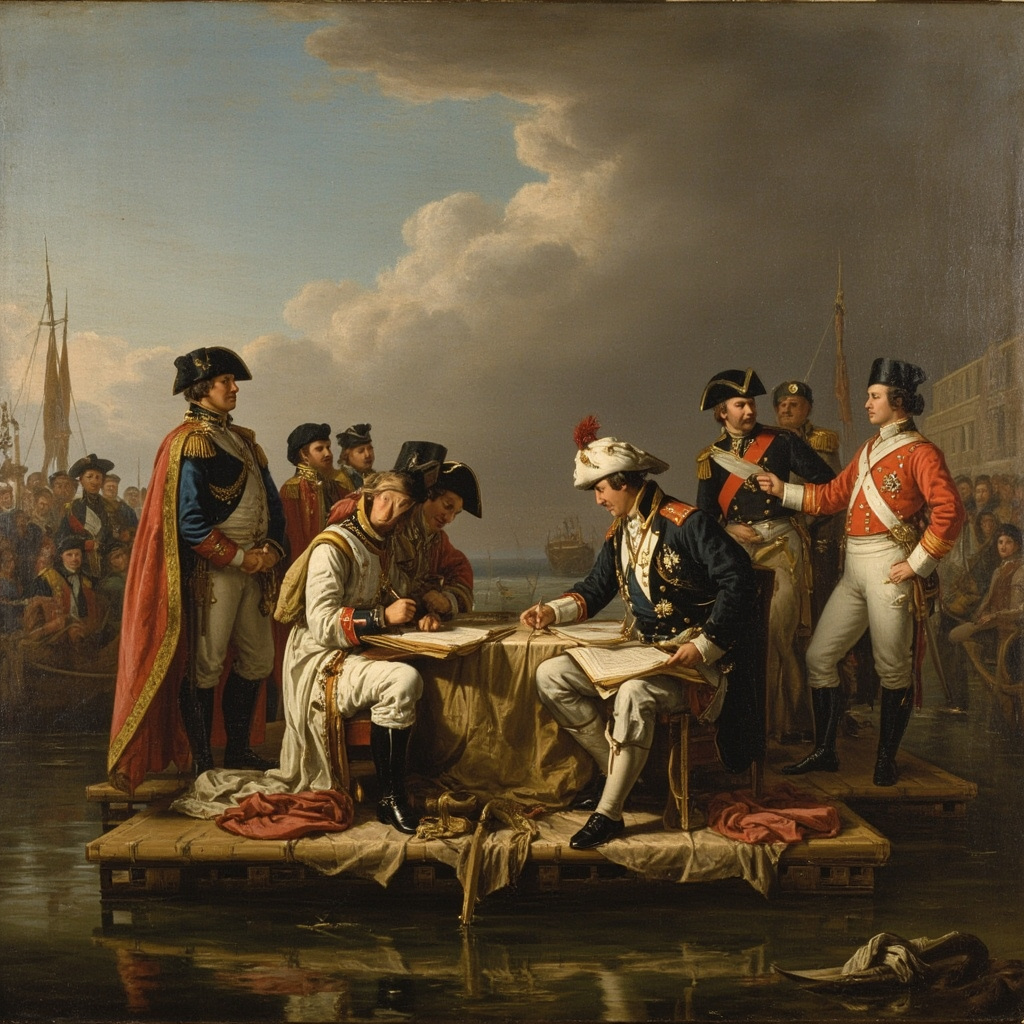
This bizarre historical incident, known as Napoleon’s Rabbit Defeat, occurred during what should have been a triumphant celebration following the signing of the Treaties of Tilsit, which ended the war between France and Russia. Instead, it became one of history’s most embarrassing military retreats.
The Setup: A Celebration Gone Wrong
In July 1807, Napoleon had just achieved a significant diplomatic victory. The Treaties of Tilsit brought peace between the French Empire and Imperial Russia, establishing Napoleon as the dominant force in continental Europe. To celebrate this momentous occasion, Napoleon’s Chief of Staff, Alexandre Berthier, organized what he believed would be a perfect day of leisure: a traditional rabbit hunt.
Berthier was thrilled when Napoleon accepted his invitation to hunt at a park he owned within Paris. The Chief of Staff spared no expense, organizing a splendid breakfast and inviting some of the military’s most distinguished officers. Everything was meticulously planned to please the emperor.
However, there was one problem: Berthier’s property didn’t have enough rabbits for a proper hunt. So he did what any resourceful officer would do—he ordered his men to collect rabbits from local markets and farms. Some accounts suggest he gathered hundreds of rabbits, while others claim the number reached as many as 3,000.

The Fatal Flaw: Tame vs. Wild
Here’s where Berthier made his crucial mistake: instead of collecting wild rabbits that would naturally flee from humans, his men gathered domesticated rabbits from local farms and markets. These weren’t the skittish creatures that would bolt at the first sight of hunters. These were tame rabbits accustomed to being fed by humans.
As the hunting party assembled in their finest clothes, with Napoleon resplendent in his military uniform, the rabbits were released from their cages. Berthier and his guests expected the animals to scatter into the woods, providing an entertaining chase.
The Attack: When Rabbits Became the Hunters
Instead of running away, the hundreds of hungry rabbits did exactly what they had been trained to do their entire lives: they ran toward the humans, expecting to be fed. But what started as a curious approach quickly escalated into something far more aggressive.
The rabbits swarmed toward Napoleon and his entourage in overwhelming numbers. They didn’t flee when the men tried to shoo them away—instead, they pressed their attack, climbing up the men’s legs, jumping onto their jackets, and refusing to be deterred.
According to eyewitness accounts, the rabbits were particularly drawn to Napoleon himself. They jumped on his clothing, nested in the folds of his uniform, and seemed determined to overwhelm the emperor. Some even allegedly climbed up his legs and into his jacket.
The Retreat: Napoleon’s Most Humiliating Defeat
Faced with this unprecedented assault, Napoleon—the man who had stared down Austrian armies and Prussian cavalry—was forced to beat a hasty retreat. The emperor and his officers began swatting at the rabbits with sticks and their hands, but the sheer number of the creatures made resistance futile.
The situation became so overwhelming that Napoleon was forced to flee to his carriage. Even there, he found no sanctuary—rabbits had apparently followed him and continued their relentless assault. His men had to physically remove rabbits from the emperor’s uniform and the interior of his carriage.
The great military commander who had conquered kingdoms was defeated by fluffy farm animals in what must rank as one of history’s most embarrassing retreats. The hunting party was abandoned, and Napoleon left the field to his unlikely conquerors.
The Aftermath: A Story Too Strange to Suppress
Despite the obvious embarrassment this incident caused, the story survived and has been passed down through historical accounts. It serves as a perfect example of how even the most carefully laid plans can go spectacularly wrong when small details are overlooked.
For Berthier, who had intended to honor his emperor with a pleasant day of sport, the rabbit hunt became a nightmare of epic proportions. The very animals meant to provide entertainment instead provided one of the most humorous military anecdotes in European history.
The incident also highlights an important historical lesson: the difference between wild and domestic animals. Had Berthier’s men collected truly wild rabbits, the hunt would likely have proceeded as planned. Instead, the domesticated rabbits’ learned behavior to approach humans for food turned a celebration into chaos.
Historical Impact and Legacy
While Napoleon’s rabbit defeat had no lasting impact on European politics or military strategy, it has become one of history’s most beloved anecdotes about the great emperor. The story humanizes a figure often portrayed as an invincible military genius, showing that even Napoleon Bonaparte could be humbled by the most unexpected circumstances.
The incident has been retold countless times, often with embellishments that make the story even more dramatic. Some versions claim the rabbits numbered in the thousands; others suggest they actually pursued Napoleon for miles. While the exact details may vary, the core story remains consistent: the conqueror of Europe was defeated by an army of fluffy farm animals.
Today, Napoleon’s rabbit defeat stands as a reminder that history is full of unexpected moments that can humble even the mightiest leaders. It proves that sometimes the most memorable events aren’t the grand battles or political treaties, but the absurd moments that reveal the very human side of historical figures.
In the end, while Napoleon may have conquered Europe, been crowned Emperor, and reshaped the modern world, he will forever be remembered as the man who was defeated by rabbits—a legacy that even his greatest military victories can’t entirely erase.