The Carnian Pluvial Event: When Earth Endured Two Million Years of Rain

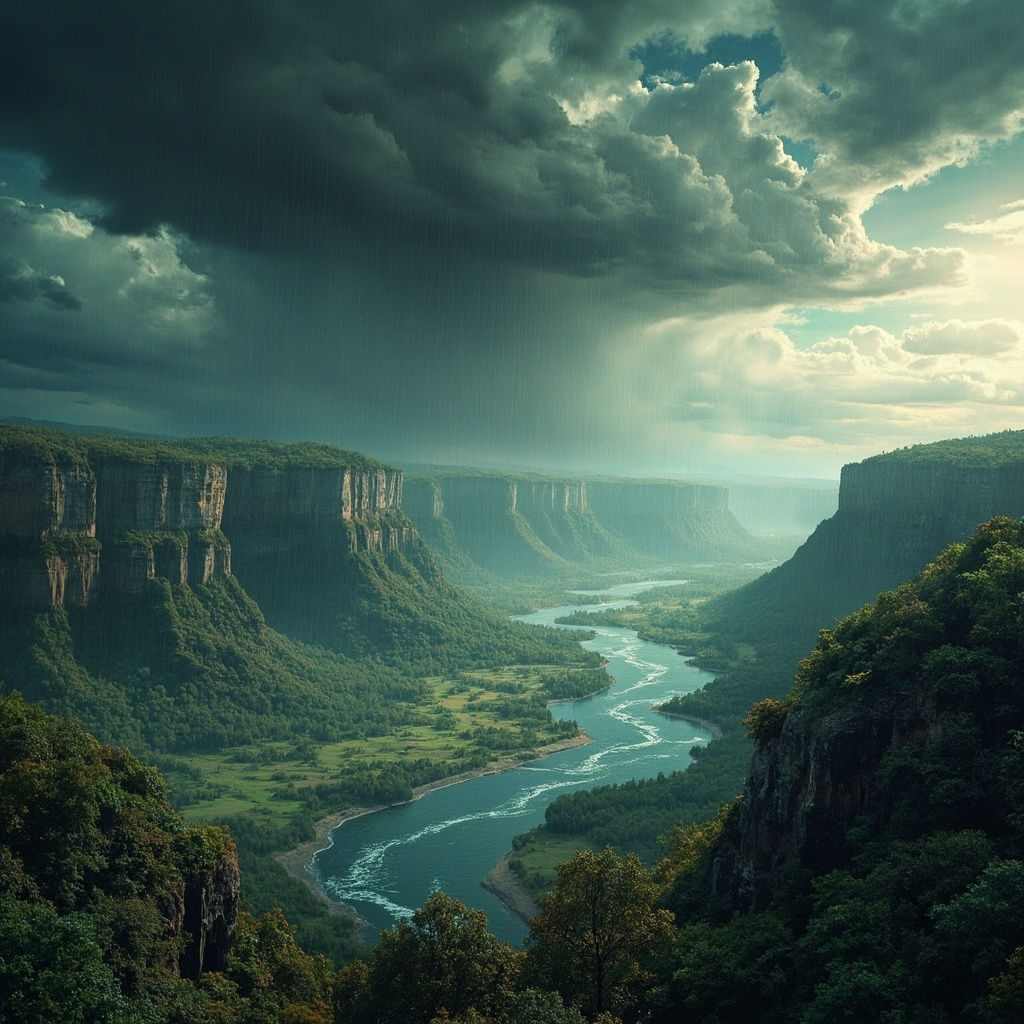
Imagine a rainstorm that lasted not for hours, days, or even months—but for two million years. This is exactly what happened during the Carnian Pluvial Event, one of the most extraordinary climate episodes in Earth’s history that fundamentally changed the course of life on our planet.
When the Skies Opened and Never Closed
Around 232 million years ago, during the Late Triassic period, Earth’s climate underwent a dramatic transformation. What began as the end of a dry spell turned into the longest sustained rainstorm our planet has ever experienced. For context, this was when all the continents were still smooshed together into the supercontinent Pangaea, creating a climate already prone to extreme weather patterns.
The seas were described by paleoenvironment researcher Paul Wignall as being like “hot soup,” meaning there was already abundant moisture in the atmosphere. But something extraordinary happened to turn this wet climate into an unrelenting deluge that would persist for millions of years.
The Volcanic Trigger
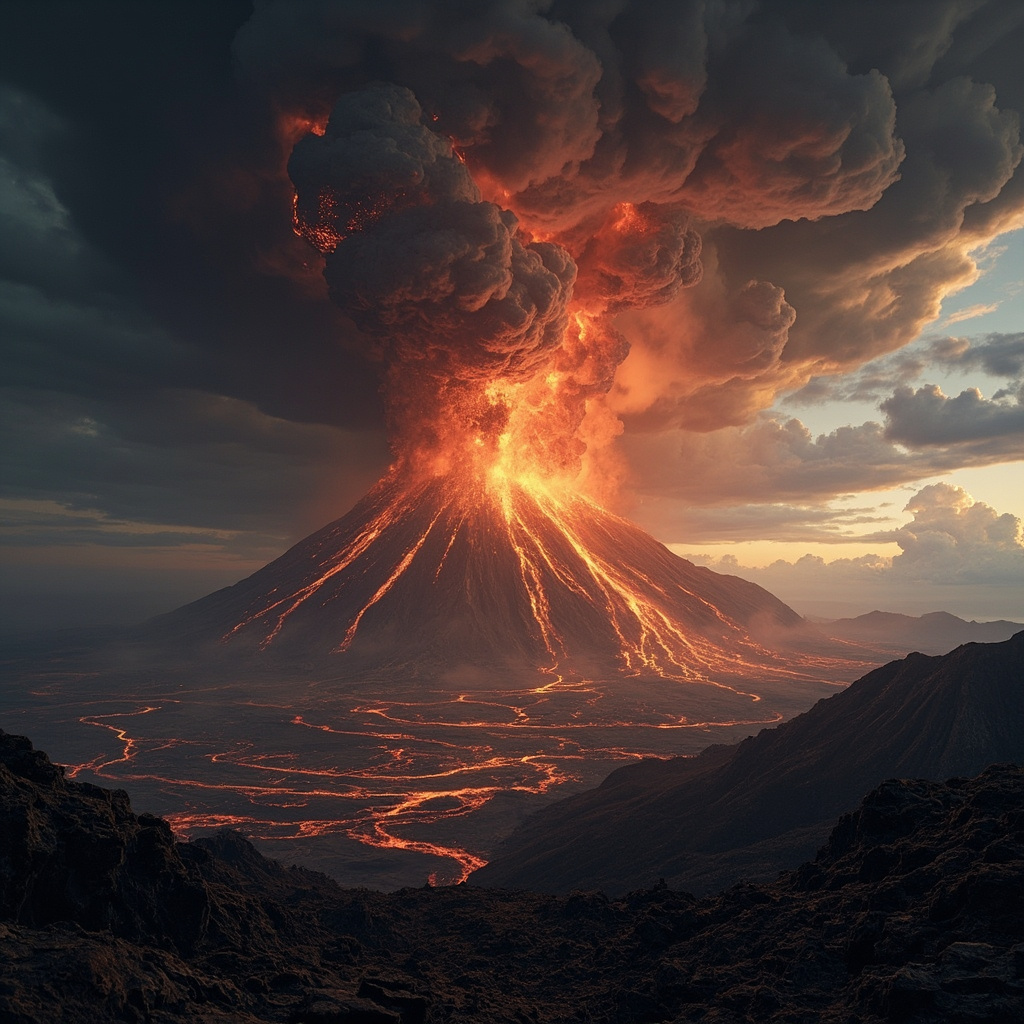
Scientists believe the Carnian Pluvial Event was triggered by a series of massive volcanic eruptions from what is now known as the Wrangellia Terrane—geological formations that today sit along the coasts of Alaska and British Columbia. These weren’t ordinary volcanic eruptions; they were climate-altering catastrophes that pumped vast amounts of greenhouse gases into the atmosphere.
Geoscientist Jacopo Dal Corso, who studied the geochemical signatures of these eruptions, explained: “The eruptions were so huge, they pumped vast amounts of greenhouse gases like carbon dioxide and there were spikes of global warming.” The volcanic activity increased water vapor in the stratosphere, similar to what happened after the recent Hunga Tonga-Hunga Ha’apai eruption, but on a scale that dwarfs anything in human history.
Life Under the Endless Rain
The consequences of this two-million-year monsoon were profound. Marine life bore the brunt of the catastrophe, with massive extinctions affecting ammonoids, conodonts, and crinoids. As much as 33% of all marine species may have perished during this period, making it a “lost” mass extinction event that has been overshadowed by the more famous extinction that ended the dinosaur age.
But while many species vanished, others thrived. The constant rainfall created new ecological niches and fundamentally altered terrestrial ecosystems. Forests changed, river systems were transformed, and vast new wetlands emerged across Pangaea.
The Rise of the Dinosaurs
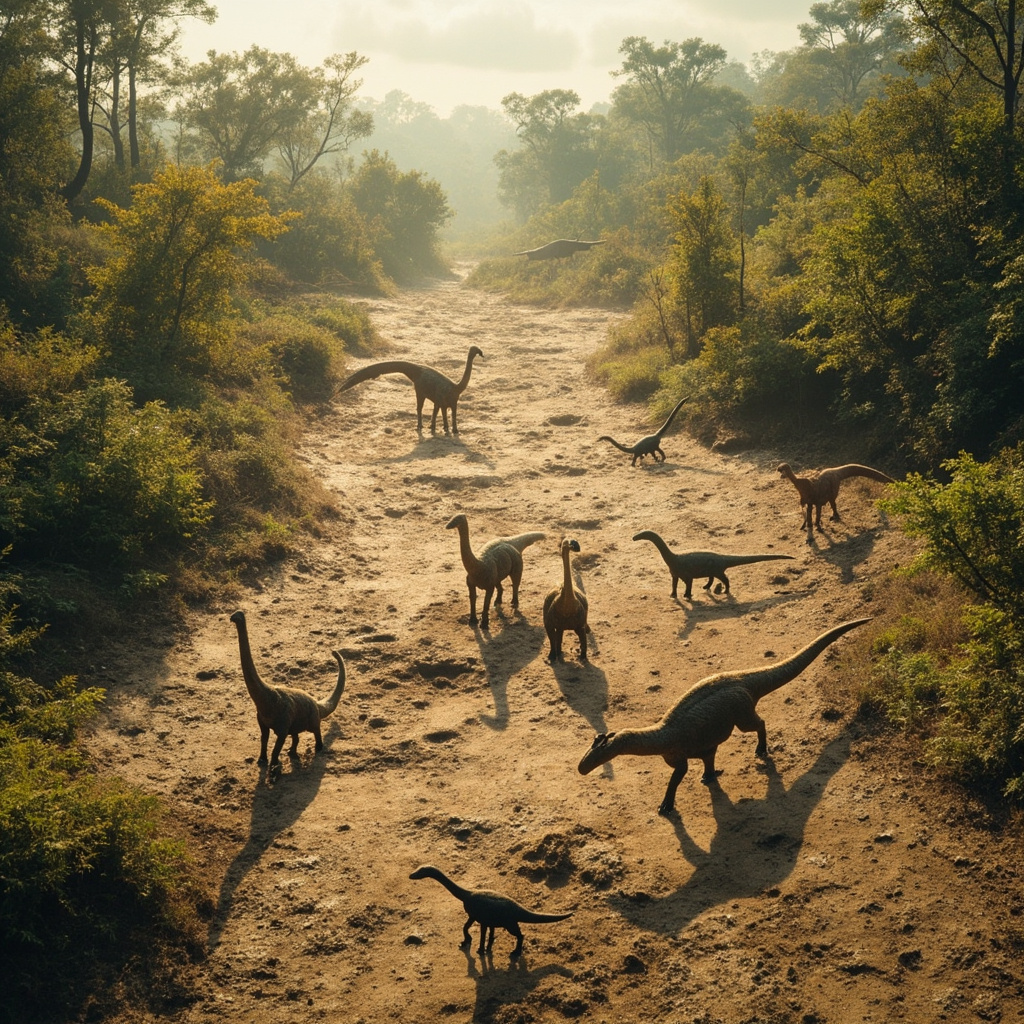
Perhaps the most significant consequence of the Carnian Pluvial Event was that it set the stage for the rise of dinosaurs. Before this period, dinosaurs were relatively minor players in Earth’s ecosystems. However, the massive environmental changes and extinctions caused by the endless rain created opportunities that dinosaurs were uniquely positioned to exploit.
As researchers noted in the Journal of the Geological Society: “In the wake of wide extinctions of plants and key herbivores on land, the dinosaurs were seemingly the main beneficiaries in the time of recovery, expanding rapidly in diversity, ecological impact (relative abundance) and regional distribution.”
The evidence for this dinosaur explosion can be seen in rock formations, particularly in the Italian Dolomites. Below the grey rock layers that mark the Carnian Pluvial Event, dinosaur footprints are virtually absent. Above these layers, they’re abundant—a clear geological signature of how the great rainstorm changed the course of evolution.
Proof Written in Stone
The first evidence of this remarkable event was discovered in the 1980s by British geologists Alastair Ruffell and Michael Simms. Ruffell noticed a distinctive grey stripe running through the red stone of Somerset’s Lipe Hill—a telltale sign that the region had transitioned from extreme dryness to intense, prolonged wetness.
Initially dismissed by senior academics as “preposterous,” the theory gained support as similar evidence was found in Germany, the United States, and the Himalayas. Today, the Carnian Pluvial Event is so well-established that there are scientific conferences dedicated to studying this remarkable period.
A Climate Catastrophe That Created Our World
The Carnian Pluvial Event serves as a powerful reminder of how dramatically Earth’s climate can change and how these changes ripple through every aspect of life on our planet. What began as a series of volcanic eruptions became a two-million-year rainstorm that wiped out countless species while paving the way for dinosaurs to dominate Earth for the next 160 million years.
In many ways, we owe the spectacular diversity of dinosaurs—and by extension, the birds that descended from them—to this ancient climate catastrophe. It’s a testament to life’s resilience and adaptability that such devastation could ultimately lead to some of the most magnificent creatures our planet has ever known.
The next time you’re caught in a persistent rainstorm, remember the Carnian Pluvial Event: sometimes the most transformative changes come from the most challenging circumstances, even if they last for two million years.