The Bone Wars: America’s Most Bitter Scientific Rivalry

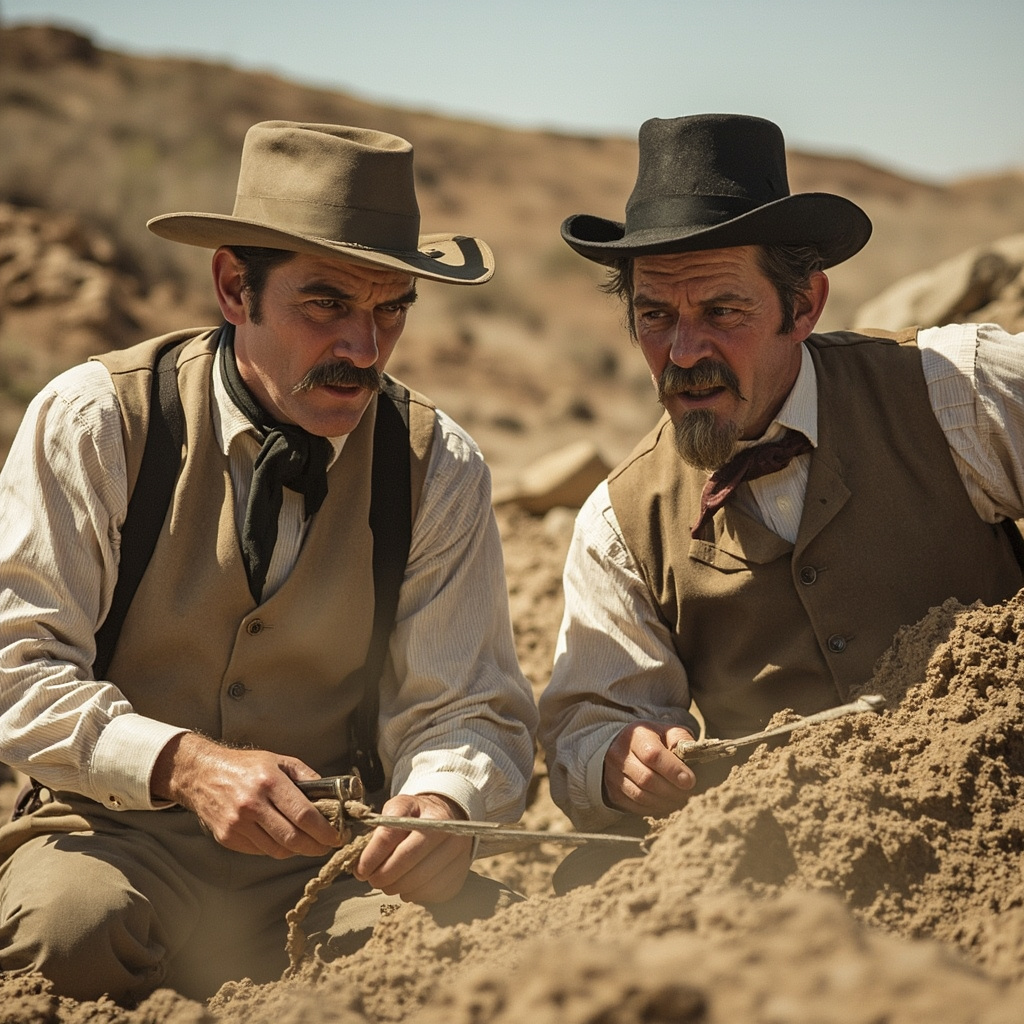
In the dusty badlands of the American West during the late 19th century, two brilliant paleontologists waged a war that would revolutionize our understanding of dinosaurs—while nearly destroying each other in the process. The “Bone Wars,” fought between Othniel Charles Marsh and Edward Drinker Cope from 1872 to 1897, represented one of the most vicious scientific rivalries in history, complete with espionage, sabotage, and bitter personal attacks that captivated the American public.
The Protagonists: Marsh and Cope
Othniel Charles Marsh and Edward Drinker Cope were both wealthy, educated men with a passion for paleontology, but their personalities couldn’t have been more different. Marsh, born in 1831, was the methodical nephew of philanthropist George Peabody. Thanks to his uncle’s financial backing, Marsh secured a professorship at Yale University and had access to substantial funding for his expeditions. He was cautious, systematic, and politically savvy, with a talent for organization and institutional backing.
Edward Drinker Cope, born in 1840, was nine years younger than Marsh but possessed a brilliant, restless mind that drove him to work at a frantic pace. A Quaker from Philadelphia, Cope was independently wealthy and used his inheritance to fund his own research. Unlike the steady Marsh, Cope was impulsive, quick-tempered, and prone to publishing hastily. He was also incredibly productive, ultimately authoring over 1,400 scientific papers during his career.
The two men initially maintained a cordial professional relationship. They even named fossil species after each other in the early years of their careers. However, their friendship would not survive the fierce competition that emerged as both men turned their attention to the fossil-rich American West.
The War Begins
The conflict began in earnest in 1872 when both men became interested in the fossil deposits of the American West. The discovery of dinosaur bones in places like Wyoming, Colorado, and Montana had opened up entirely new frontiers for paleontological research. However, the vast distances and harsh conditions of the frontier meant that successful expeditions required significant resources and careful planning.
The first major incident occurred when Cope accused Marsh of bribing his fossil collectors to work exclusively for Yale instead of shipping specimens to Philadelphia. This accusation marked the beginning of a pattern of mutual suspicion and increasingly aggressive tactics. Both men began to recruit networks of collectors, offering higher and higher payments to secure the loyalty of workers in the field.
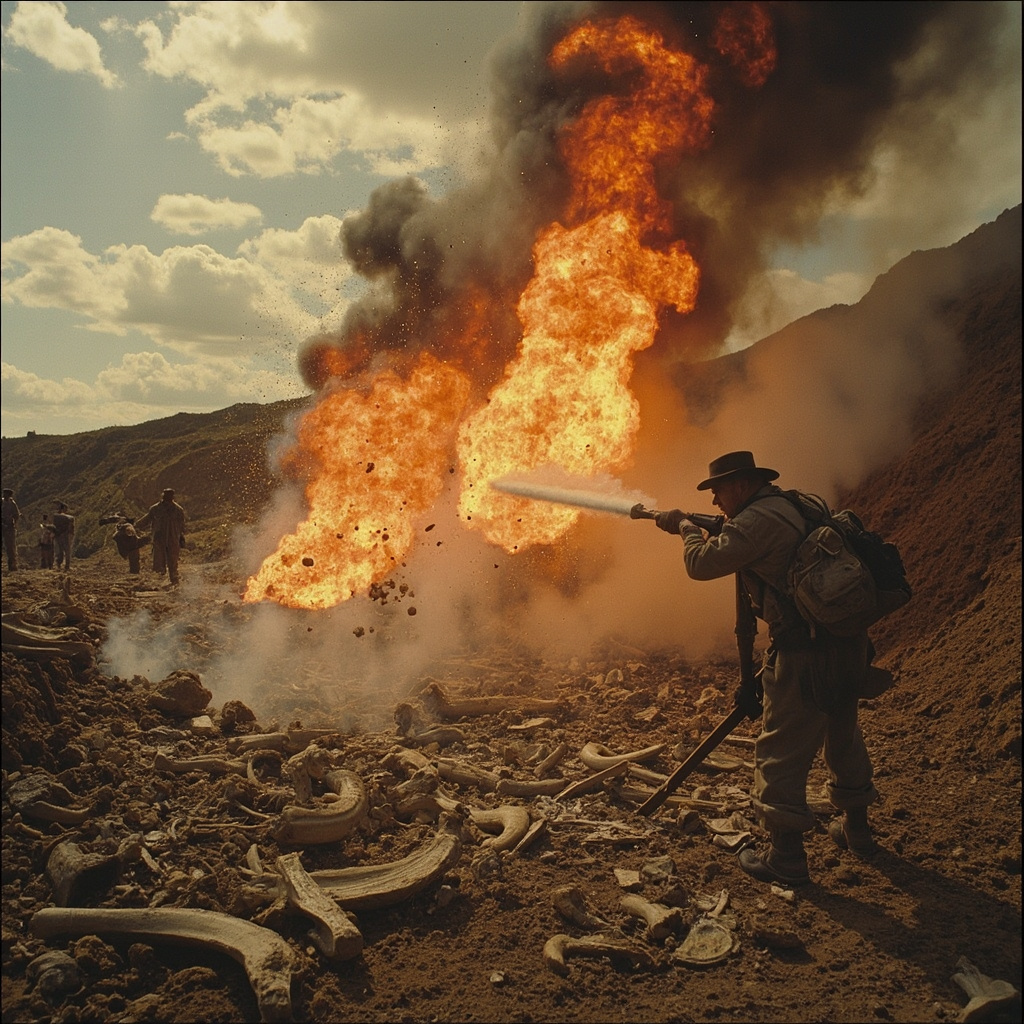
What started as professional competition quickly escalated into personal animosity. The two men began intercepting each other’s communications, bribing each other’s workers, and even resorting to industrial espionage. Field teams working for one scientist would sometimes destroy fossil sites after excavating them to prevent their rivals from making additional discoveries.
Espionage and Sabotage
As the Bone Wars intensified, both sides employed increasingly desperate tactics. Spies were planted in opposing camps to report on new discoveries and planned expeditions. Workers were offered substantial bonuses to abandon their current employer and switch sides, leading to a cycle of ever-increasing wages that threatened to bankrupt both expeditions.
The sabotage became particularly destructive when teams began dynamiting fossil sites after removing the best specimens, ensuring that competitors couldn’t benefit from any remaining bones. This practice destroyed countless irreplaceable fossils and deprived science of valuable specimens that could have advanced paleontological understanding.
Both Marsh and Cope also engaged in academic warfare, rushing to publish descriptions of new species before their rival could do so. This led to numerous errors and confusion in the scientific literature, as hastily prepared papers often contained inaccuracies or incomplete information. The pressure to be first sometimes resulted in the same species being named multiple times by different researchers, creating taxonomic chaos that took decades to sort out.
The Battle for Public Opinion
The rivalry between Marsh and Cope wasn’t confined to academic journals and remote excavation sites. Both men understood the value of public relations and worked to cultivate relationships with journalists and popular magazines. They provided newspapers with dramatic stories of their discoveries, often exaggerating the significance of their finds or the difficulties they faced in the field.
The American public became fascinated with the ongoing conflict. Newspaper articles portrayed the Bone Wars as an exciting adventure story, complete with hostile environments, dangerous wildlife, and rival teams racing against time to uncover ancient treasures. This media coverage helped secure additional funding for both expeditions but also intensified the pressure to produce spectacular results.
The rivalry reached its peak in the 1880s when both men published attack pieces in newspapers, accusing each other of scientific incompetence and professional misconduct. Cope even published a detailed expose of Marsh’s alleged unethical practices in the New York Herald in 1890, leveling accusations of plagiarism, financial impropriety, and scientific fraud.

Scientific Achievements Amid the Chaos
Despite the destructive nature of their rivalry, both Marsh and Cope made extraordinary contributions to paleontology. Between them, they discovered and named over 130 species of dinosaurs, many of which remain valid today. Their work laid the foundation for our modern understanding of dinosaur evolution and diversity.
Marsh’s expeditions, backed by Yale University and the U.S. Geological Survey, were particularly productive in the fossil-rich deposits of Wyoming and Colorado. He discovered and named famous dinosaur species including Allosaurus, Stegosaurus, and Triceratops. His systematic approach to fieldwork and careful documentation set new standards for paleontological research.
Cope’s contributions were equally impressive, despite his more chaotic working style. He discovered numerous dinosaur species and made important contributions to the understanding of mammalian evolution as well. His rapid-fire publication of new species, while sometimes resulting in errors, also meant that many important discoveries were quickly made available to the scientific community.
Both men also pioneered new techniques in fossil preparation and reconstruction. They developed methods for extracting delicate specimens from hard rock and for mounting complete skeletons for museum display. Their work helped establish paleontology as a legitimate scientific discipline and sparked public interest in dinosaurs that continues to this day.
The Cost of War
The Bone Wars came at enormous personal and professional cost to both men. The constant conflict consumed vast amounts of time and energy that could have been devoted to scientific research. The financial burden of maintaining competing expeditions eventually bankrupted Cope, who was forced to sell his fossil collection to pay his debts.
Marsh fared better financially due to his institutional backing, but his reputation suffered from the public nature of the conflict. The bitter disputes damaged the credibility of American paleontology and created lasting divisions within the scientific community. Many respected scientists refused to take sides in the conflict, while others found their own work overshadowed by the dramatic rivalry.
The destruction of fossil sites through sabotage represented perhaps the greatest cost of the Bone Wars. Countless irreplaceable specimens were lost forever when teams dynamited excavation sites or carelessly damaged fossils in their haste to prevent competitors from accessing them. The scientific value of these lost specimens can never be fully calculated.
The rivalry also established negative precedents for how scientific disputes should be conducted. The public nature of the attacks between Marsh and Cope damaged the reputation of paleontology and created an adversarial atmosphere that persisted for decades. Young researchers entering the field found themselves pressured to choose sides rather than focus on collaborative scientific work.
The End of the War
The Bone Wars gradually subsided in the 1890s as both men faced increasing financial and personal pressures. Cope’s fortune was exhausted, and he was forced to take on teaching positions to support himself. Marsh maintained his institutional position but faced criticism from government officials who questioned the value of continuing to fund his increasingly expensive expeditions.
Edward Drinker Cope died in 1897 at the age of 56, effectively ending the active phase of the rivalry. His death came after years of declining health and financial stress brought on by his relentless pursuit of paleontological glory. Even in death, Cope couldn’t resist one final gesture in his ongoing competition with Marsh—he donated his brain to science for study, challenging Marsh to do the same to prove whose brain was superior.
Othniel Charles Marsh outlived his rival by only two years, dying in 1899 at age 67. By the time of his death, Marsh had achieved greater institutional recognition than Cope, including election to the National Academy of Sciences and appointment as the first vertebrate paleontologist for the U.S. Geological Survey. However, his final years were marked by congressional investigations into his research spending and questions about the scientific value of his work.
Legacy and Impact
The Bone Wars left a complex legacy for American paleontology. On the positive side, the rivalry drove both men to extraordinary productivity and led to groundbreaking discoveries that advanced scientific understanding of prehistoric life. The public attention generated by their conflict also increased popular interest in paleontology and helped secure funding for future research.
However, the destructive aspects of the rivalry created lasting problems for the field. The loss of fossil specimens through sabotage represented an irreparable loss to science. The bitter personal attacks and unethical practices employed by both sides damaged the reputation of American paleontology and created divisions within the scientific community that persisted for generations.
The Bone Wars also established unfortunate precedents for how scientific competition could be conducted. While healthy competition can drive innovation and discovery, the extreme measures employed by Marsh and Cope demonstrated how rivalry could become destructive when personal animosity and financial interests overwhelmed scientific objectivity.
Modern paleontologists have learned from the mistakes of the Bone Wars era. Contemporary fossil excavations emphasize collaboration, careful documentation, and the preservation of sites for future study. The bitter rivalry between Marsh and Cope serves as a cautionary tale about the importance of maintaining professional ethics even in highly competitive fields.
Lessons for Modern Science
The story of the Bone Wars offers several important lessons for modern scientific research. First, it demonstrates the potential benefits and dangers of intense competition in scientific fields. While the rivalry between Marsh and Cope drove remarkable discoveries, it also led to unethical behavior and the destruction of valuable scientific resources.
Second, the conflict highlights the importance of institutional oversight and ethical standards in scientific research. The lack of clear guidelines for conduct during fossil expeditions contributed to the escalating nature of the rivalry. Modern scientific institutions have established ethical standards and review processes specifically to prevent similar conflicts.
The Bone Wars also illustrate the complex relationship between public relations and scientific research. Both Marsh and Cope understood that public support could translate into funding and institutional backing. However, their emphasis on dramatic discoveries and public spectacle sometimes compromised the quality and accuracy of their scientific work.
Finally, the rivalry demonstrates the importance of collaboration in scientific research. While Marsh and Cope achieved remarkable individual success, their conflict prevented the kind of collaborative work that might have led to even greater discoveries. Modern paleontology emphasizes teamwork and the sharing of resources and expertise across institutional boundaries.
The End of an Era
The Bone Wars represented both the best and worst of 19th-century American scientific ambition. The rivalry between Marsh and Cope produced extraordinary discoveries that laid the foundation for modern paleontology, but it also demonstrated how personal animosity and unethical competition could damage scientific progress.
Today, the fossils discovered during the Bone Wars continue to provide valuable insights into prehistoric life. Museums around the world display specimens collected by Marsh and Cope’s expeditions, and their discoveries remain central to our understanding of dinosaur evolution and diversity.
The story of the Bone Wars serves as a reminder that scientific progress depends not only on individual brilliance and determination but also on professional ethics and collaborative spirit. While competition can drive innovation, it must be balanced with respect for colleagues, preservation of resources, and commitment to the broader goals of scientific knowledge.
In the end, both Marsh and Cope achieved a kind of immortality through their contributions to paleontology, but their bitter rivalry stands as a cautionary tale about the potential costs of unchecked scientific ambition. The Bone Wars remain one of the most fascinating and instructive episodes in the history of American science—a reminder that even in the pursuit of knowledge, human nature can lead to both remarkable achievements and spectacular failures.