The Bone Wars: America’s Most Bitter Scientific Rivalry

In the dusty badlands of the American West during the late 19th century, two brilliant paleontologists waged a war that would revolutionize our understanding of dinosaurs—while nearly destroying each other in the process. The “Bone Wars,” fought between Othniel Charles Marsh and Edward Drinker Cope from 1872 to 1897, represented one of the most vicious scientific rivalries in history, complete with espionage, sabotage, and bitter personal attacks that captivated the American public.

The Protagonists: Marsh and Cope

Othniel Charles Marsh and Edward Drinker Cope were both wealthy, educated men with a passion for paleontology, but their personalities couldn’t have been more different. Marsh, born in 1831, was the methodical nephew of philanthropist George Peabody. Thanks to his uncle’s financial backing, Marsh secured a professorship at Yale University and had access to substantial funding for his expeditions. He was cautious, systematic, and politically savvy, with a talent for organization and institutional backing.

Edward Drinker Cope, born in 1840, was nine years younger than Marsh but possessed a brilliant, restless mind that drove him to work at a frantic pace. A Quaker from Philadelphia, Cope was independently wealthy and used his inheritance to fund his own research. Unlike the steady Marsh, Cope was impulsive, quick-tempered, and prone to publishing hastily. He was also incredibly productive, ultimately authoring over 1,400 scientific papers during his career.

The two men initially maintained a cordial professional relationship. They even named fossil species after each other in the early years of their careers. However, their friendship would not survive the fierce competition that emerged as both men turned their attention to the fossil-rich American West.

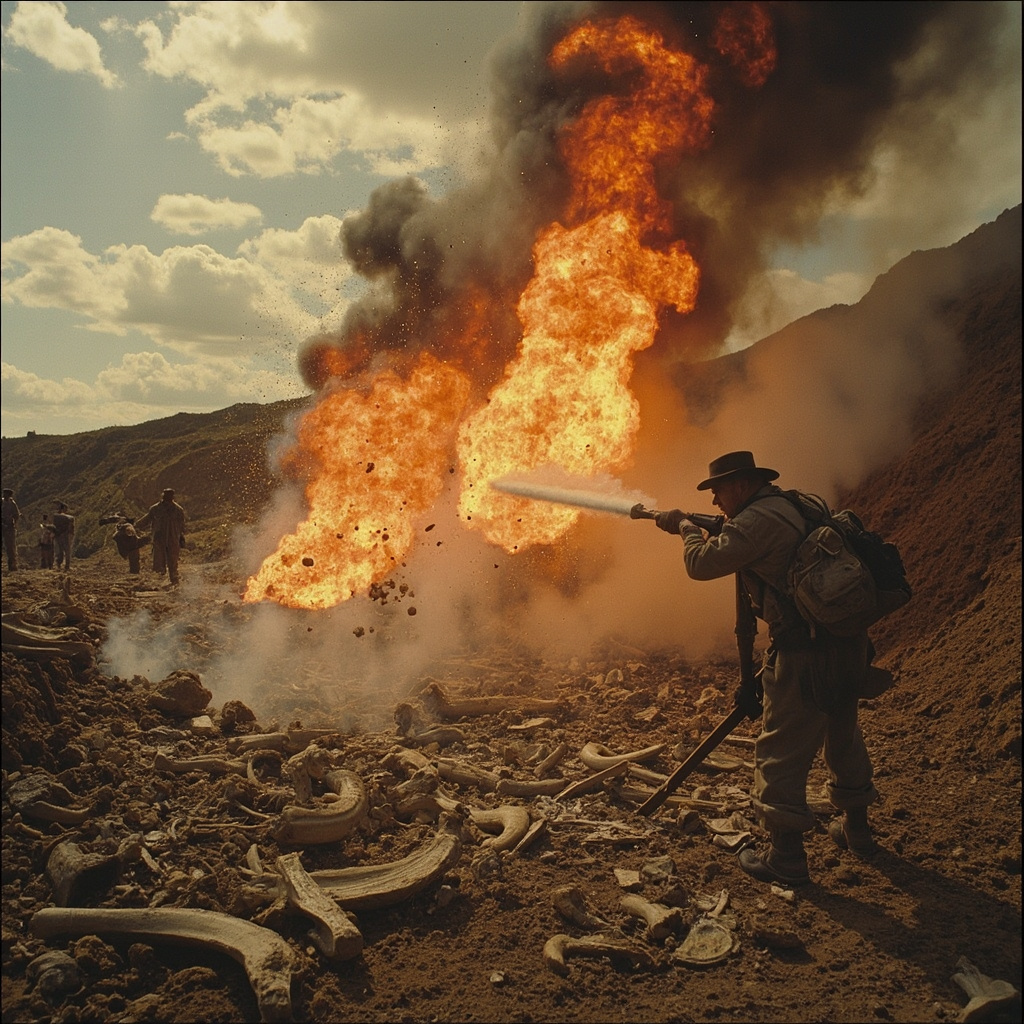
Fossil excavation site showing damaged bones and equipment
Evidence of sabotage at a fossil dig site during the Bone Wars, showing the destructive lengths to which rivals would go

The War Begins

The conflict began in earnest in 1872 when both men became interested in the fossil deposits of the American West. The discovery of dinosaur bones in places like Wyoming, Colorado, and Montana had opened up entirely new frontiers for paleontological research. However, the vast distances and harsh conditions of the frontier meant that successful expeditions required significant resources and careful planning.

The first major incident occurred when Cope accused Marsh of bribing his fossil collectors to work exclusively for Yale instead of shipping specimens to Philadelphia. This accusation marked the beginning of a pattern of mutual suspicion and increasingly aggressive tactics. Both men began to recruit networks of collectors, offering higher and higher payments to secure the loyalty of workers in the field.

What started as professional competition quickly escalated into personal animosity. The two men began intercepting each other’s communications, bribing each other’s workers, and even resorting to industrial espionage. Field teams working for one scientist would sometimes destroy fossil sites after excavating them to prevent their rivals from making additional discoveries.

Espionage and Sabotage

As the Bone Wars intensified, both sides employed increasingly desperate tactics. Spies were planted in opposing camps to report on new discoveries and planned expeditions. Workers were offered substantial bonuses to abandon their current employer and switch sides, leading to a cycle of ever-increasing wages that threatened to bankrupt both expeditions.

The sabotage became particularly destructive when teams began dynamiting fossil sites after removing the best specimens, ensuring that competitors couldn’t benefit from any remaining bones. This practice destroyed countless irreplaceable fossils and deprived science of valuable specimens that could have advanced paleontological understanding.

Both Marsh and Cope also engaged in academic warfare, rushing to publish descriptions of new species before their rival could do so. This led to numerous errors and confusion in the scientific literature, as hastily prepared papers often contained inaccuracies or incomplete information. The pressure to be first sometimes resulted in the same species being named multiple times by different researchers, creating taxonomic chaos that took decades to sort out.

The Battle for Public Opinion

The rivalry between Marsh and Cope wasn’t confined to academic journals and remote excavation sites. Both men understood the value of public relations and worked to cultivate relationships with journalists and popular magazines. They provided newspapers with dramatic stories of their discoveries, often exaggerating the significance of their finds or the difficulties they faced in the field.

The American public became fascinated with the ongoing conflict. Newspaper articles portrayed the Bone Wars as an exciting adventure story, complete with hostile environments, dangerous wildlife, and rival teams racing against time to uncover ancient treasures. This media coverage helped secure additional funding for both expeditions but also intensified the pressure to produce spectacular results.

The rivalry reached its peak in the 1880s when both men published attack pieces in newspapers, accusing each other of scientific incompetence and professional misconduct. Cope even published a detailed expose of Marsh’s alleged unethical practices in the New York Herald in 1890, leveling accusations of plagiarism, financial impropriety, and scientific fraud.

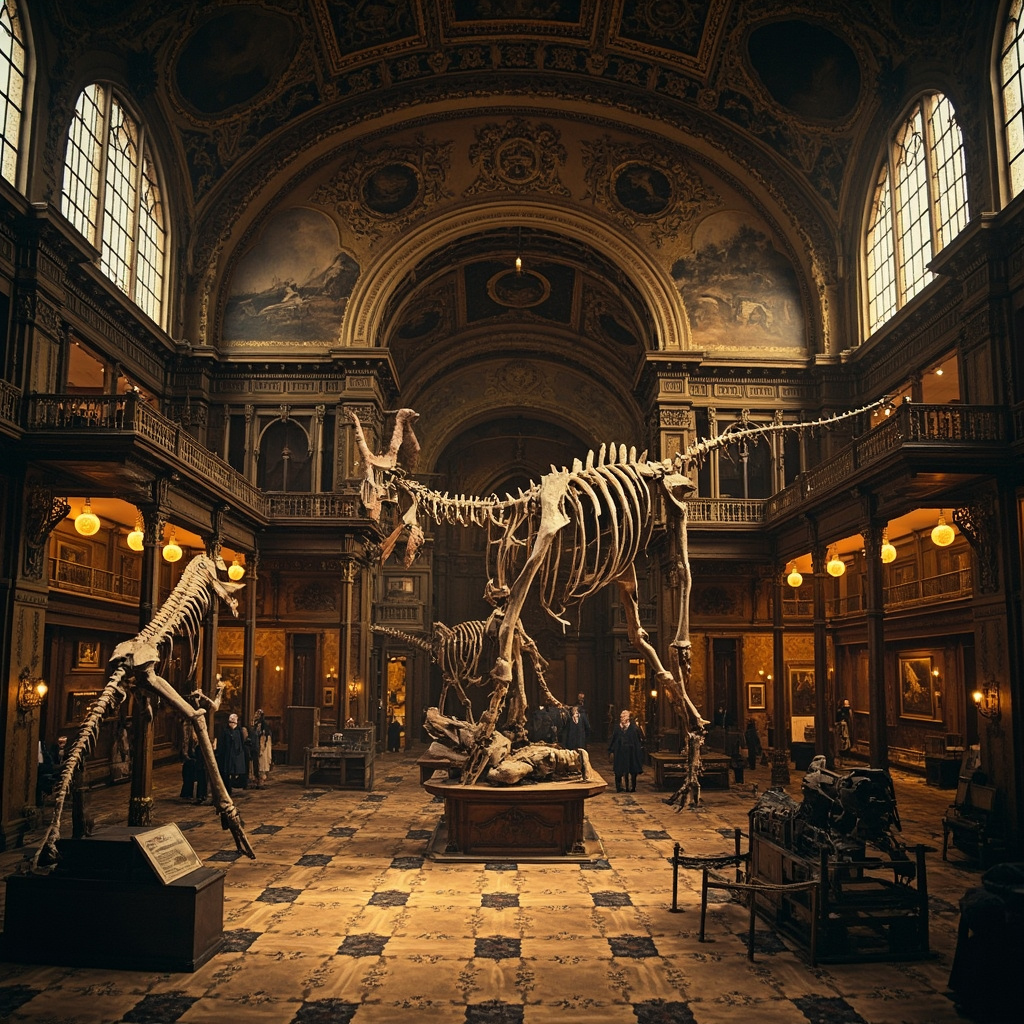
Victorian museum display showing dinosaur skeleton reconstructions
Victorian-era museum displaying the impressive dinosaur discoveries made during the Bone Wars period

Scientific Achievements Amid the Chaos

Despite the destructive nature of their rivalry, both Marsh and Cope made extraordinary contributions to paleontology. Between them, they discovered and named over 130 species of dinosaurs, many of which remain valid today. Their work laid the foundation for our modern understanding of dinosaur evolution and diversity.

Marsh’s expeditions, backed by Yale University and the U.S. Geological Survey, were particularly productive in the fossil-rich deposits of Wyoming and Colorado. He discovered and named famous dinosaur species including Allosaurus, Stegosaurus, and Triceratops. His systematic approach to fieldwork and careful documentation set new standards for paleontological research.

Cope’s contributions were equally impressive, despite his more chaotic working style. He discovered numerous dinosaur species and made important contributions to the understanding of mammalian evolution as well. His rapid-fire publication of new species, while sometimes resulting in errors, also meant that many important discoveries were quickly made available to the scientific community.

Both men also pioneered new techniques in fossil preparation and reconstruction. They developed methods for extracting delicate specimens from hard rock and for mounting complete skeletons for museum display. Their work helped establish paleontology as a legitimate scientific discipline and sparked public interest in dinosaurs that continues to this day.

The Cost of War

The Bone Wars came at enormous personal and professional cost to both men. The constant conflict consumed vast amounts of time and energy that could have been devoted to scientific research. The financial burden of maintaining competing expeditions eventually bankrupted Cope, who was forced to sell his fossil collection to pay his debts.

Marsh fared better financially due to his institutional backing, but his reputation suffered from the public nature of the conflict. The bitter disputes damaged the credibility of American paleontology and created lasting divisions within the scientific community. Many respected scientists refused to take sides in the conflict, while others found their own work overshadowed by the dramatic rivalry.

The destruction of fossil sites through sabotage represented perhaps the greatest cost of the Bone Wars. Countless irreplaceable specimens were lost forever when teams dynamited excavation sites or carelessly damaged fossils in their haste to prevent competitors from accessing them. The scientific value of these lost specimens can never be fully calculated.

The rivalry also established negative precedents for how scientific disputes should be conducted. The public nature of the attacks between Marsh and Cope damaged the reputation of paleontology and created an adversarial atmosphere that persisted for decades. Young researchers entering the field found themselves pressured to choose sides rather than focus on collaborative scientific work.

The End of the War

The Bone Wars gradually subsided in the 1890s as both men faced increasing financial and personal pressures. Cope’s fortune was exhausted, and he was forced to take on teaching positions to support himself. Marsh maintained his institutional position but faced criticism from government officials who questioned the value of continuing to fund his increasingly expensive expeditions.

Edward Drinker Cope died in 1897 at the age of 56, effectively ending the active phase of the rivalry. His death came after years of declining health and financial stress brought on by his relentless pursuit of paleontological glory. Even in death, Cope couldn’t resist one final gesture in his ongoing competition with Marsh—he donated his brain to science for study, challenging Marsh to do the same to prove whose brain was superior.

Othniel Charles Marsh outlived his rival by only two years, dying in 1899 at age 67. By the time of his death, Marsh had achieved greater institutional recognition than Cope, including election to the National Academy of Sciences and appointment as the first vertebrate paleontologist for the U.S. Geological Survey. However, his final years were marked by congressional investigations into his research spending and questions about the scientific value of his work.

Legacy and Impact

The Bone Wars left a complex legacy for American paleontology. On the positive side, the rivalry drove both men to extraordinary productivity and led to groundbreaking discoveries that advanced scientific understanding of prehistoric life. The public attention generated by their conflict also increased popular interest in paleontology and helped secure funding for future research.

However, the destructive aspects of the rivalry created lasting problems for the field. The loss of fossil specimens through sabotage represented an irreparable loss to science. The bitter personal attacks and unethical practices employed by both sides damaged the reputation of American paleontology and created divisions within the scientific community that persisted for generations.

The Bone Wars also established unfortunate precedents for how scientific competition could be conducted. While healthy competition can drive innovation and discovery, the extreme measures employed by Marsh and Cope demonstrated how rivalry could become destructive when personal animosity and financial interests overwhelmed scientific objectivity.

Modern paleontologists have learned from the mistakes of the Bone Wars era. Contemporary fossil excavations emphasize collaboration, careful documentation, and the preservation of sites for future study. The bitter rivalry between Marsh and Cope serves as a cautionary tale about the importance of maintaining professional ethics even in highly competitive fields.

Lessons for Modern Science

The story of the Bone Wars offers several important lessons for modern scientific research. First, it demonstrates the potential benefits and dangers of intense competition in scientific fields. While the rivalry between Marsh and Cope drove remarkable discoveries, it also led to unethical behavior and the destruction of valuable scientific resources.

Second, the conflict highlights the importance of institutional oversight and ethical standards in scientific research. The lack of clear guidelines for conduct during fossil expeditions contributed to the escalating nature of the rivalry. Modern scientific institutions have established ethical standards and review processes specifically to prevent similar conflicts.

The Bone Wars also illustrate the complex relationship between public relations and scientific research. Both Marsh and Cope understood that public support could translate into funding and institutional backing. However, their emphasis on dramatic discoveries and public spectacle sometimes compromised the quality and accuracy of their scientific work.

Finally, the rivalry demonstrates the importance of collaboration in scientific research. While Marsh and Cope achieved remarkable individual success, their conflict prevented the kind of collaborative work that might have led to even greater discoveries. Modern paleontology emphasizes teamwork and the sharing of resources and expertise across institutional boundaries.

The End of an Era

The Bone Wars represented both the best and worst of 19th-century American scientific ambition. The rivalry between Marsh and Cope produced extraordinary discoveries that laid the foundation for modern paleontology, but it also demonstrated how personal animosity and unethical competition could damage scientific progress.

Today, the fossils discovered during the Bone Wars continue to provide valuable insights into prehistoric life. Museums around the world display specimens collected by Marsh and Cope’s expeditions, and their discoveries remain central to our understanding of dinosaur evolution and diversity.

The story of the Bone Wars serves as a reminder that scientific progress depends not only on individual brilliance and determination but also on professional ethics and collaborative spirit. While competition can drive innovation, it must be balanced with respect for colleagues, preservation of resources, and commitment to the broader goals of scientific knowledge.

In the end, both Marsh and Cope achieved a kind of immortality through their contributions to paleontology, but their bitter rivalry stands as a cautionary tale about the potential costs of unchecked scientific ambition. The Bone Wars remain one of the most fascinating and instructive episodes in the history of American science—a reminder that even in the pursuit of knowledge, human nature can lead to both remarkable achievements and spectacular failures.

The Great Emu War: When Australia Lost a Military Campaign to Birds

In 1932, Australia faced an unusual enemy that would prove more challenging than any human adversary: emus. What began as a simple pest control operation escalated into a military campaign so unsuccessful that it became known as the “Great Emu War.” This bizarre chapter in Australian history saw the country’s military deploy machine guns against large flightless birds—and lose spectacularly.

The Emu Problem

The roots of the Great Emu War lay in the aftermath of World War I. The Australian government had promised land grants to returning soldiers, particularly in Western Australia’s wheat belt. These veterans had transformed vast stretches of land into productive farms, but by 1932, they faced two devastating problems: the Great Depression had crashed wheat prices, and an estimated 20,000 emus had invaded their crops.

Emus are Australia’s largest native birds, standing up to six feet tall and capable of running at speeds of 30 miles per hour. After their breeding season, massive flocks would migrate from the interior to coastal areas in search of food and water. The newly cultivated farmlands provided an irresistible buffet of crops, and the birds showed no intention of leaving.

Large emu standing in wheat fields
An Australian emu in farmland, showing the scale of the birds that caused widespread agricultural damage in 1932

The Veterans’ Plea

The ex-servicemen were desperate. They had already struggled to make their farms profitable during the economic downturn, and now thousands of emus were destroying their crops daily. The birds would knock down fences, trample wheat fields, and eat everything in sight. Farmers tried various methods to deter the emus—scarecrows, noise-makers, and hunting parties—but the birds proved remarkably resilient and intelligent.

In November 1932, the farmers approached the government with an unusual request: could the military assist with their emu problem? They specifically asked for machine guns and soldiers to help eliminate the birds. The request eventually reached the Minister for Defence, Sir George Pearce, who saw an opportunity.

Pearce viewed the operation as a chance for the military to gain some practical experience and good publicity. He approved the deployment of soldiers armed with Lewis machine guns to Western Australia. The mission was framed as both a training exercise and a public service to help struggling farmers.

Operation Emu: The First Phase

On November 2, 1932, the “war” officially began. Major G.P.W. Meredith of the Royal Australian Artillery was placed in command of the operation, accompanied by Sergeant S. McMurray and Gunner J. O’Halloran. They were equipped with two Lewis machine guns and 10,000 rounds of ammunition.

The soldiers were confident that their modern military equipment would make quick work of the emu problem. However, they severely underestimated their feathered opponents. The first encounter near Campion revealed the challenges they would face.

When the soldiers spotted a flock of about 50 emus, they set up their machine guns and opened fire. The results were disappointing. The emus scattered rapidly in different directions, making them difficult targets. Of the initial burst of gunfire, only a handful of birds were killed. The majority escaped, seemingly unfazed by the military assault.

The Emus Fight Back

What followed were several days of frustration for the Australian military. The emus proved to be surprisingly tactical opponents. They learned to scatter when they heard the sound of approaching vehicles, making it nearly impossible to get within effective range. The birds’ speed and agility made them difficult targets, even for experienced soldiers.

Major Meredith reported that the emus demonstrated what could only be described as guerrilla warfare tactics. They would split into small groups when threatened, forcing the soldiers to divide their attention. The birds also seemed to post “sentries” that would alert the flock to approaching danger, much like a military unit might do.

The terrain worked against the soldiers as well. The flat, open landscape of Western Australia meant that emus could see the military vehicles coming from great distances. By the time the soldiers got into position and set up their machine guns, the birds had often already begun their escape.

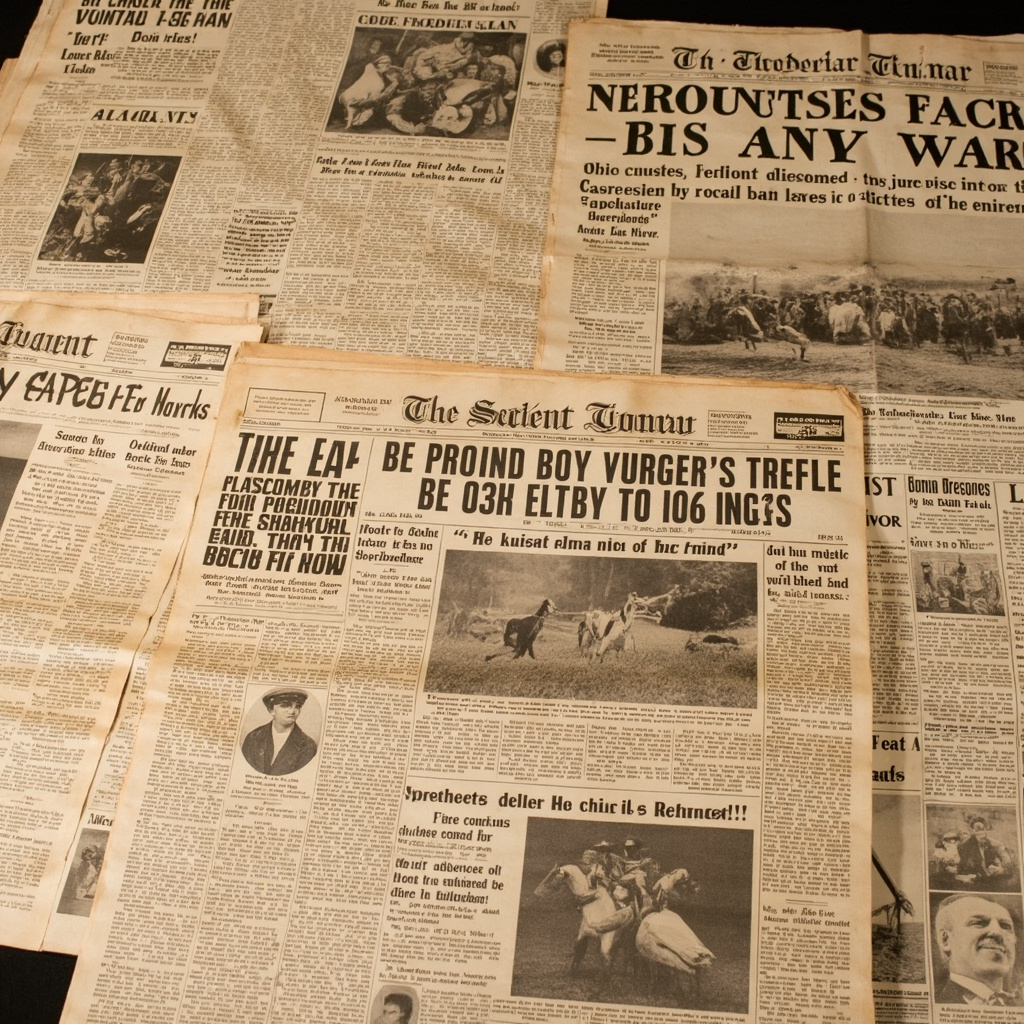
Vintage newspaper headlines about the Emu War
Contemporary newspaper coverage of the Great Emu War, highlighting the military’s unusual defeat by flightless birds

Media Ridicule and Public Embarrassment

News of the military operation quickly spread, and the media had a field day with the story. Australian newspapers began covering the “war” with a mixture of amusement and disbelief. Headlines mocked the military’s inability to defeat birds, and editorial cartoons depicted soldiers fleeing from giant emus.

The situation became even more embarrassing when international media picked up the story. Foreign newspapers reported on Australia’s “war against emus” with undisguised humor, turning the country into a laughingstock on the world stage. The absurdity of a modern military force being outmaneuvered by birds was irresistible to journalists and comedians alike.

Major Meredith’s reports back to headquarters painted an increasingly grim picture. After several days of operation, the soldiers had used significant amounts of ammunition but had little to show for it. The emu population appeared largely unaffected by the military intervention, while the birds continued to devastate crops across the region.

Tactical Withdrawal and Regrouping

By November 8, just six days after the operation began, Major Meredith recommended withdrawal. The mission was suspended, and the soldiers returned to base to reassess their strategy. The first phase of the Great Emu War had ended in humiliating defeat for the Australian military.

Government officials were not pleased with the results. They had promised farmers effective action against the emu problem, and instead had provided the country with an international embarrassment. The Ministry of Defence faced criticism both from the farmers, who still had emu problems, and from taxpayers, who questioned the wisdom of spending money on such a futile operation.

However, pressure from the farming community remained intense. The emus had not disappeared; if anything, they seemed emboldened by their victory over the military. Crops continued to be destroyed, and farmers threatened to abandon their properties if something wasn’t done soon.

The Second Campaign

Bowing to continued pressure, the government authorized a second military operation against the emus on November 13. Major Meredith and his team returned to Western Australia with new tactics and renewed determination. This time, they would try a different approach.

The soldiers attempted to use the terrain to their advantage, setting up ambushes near water sources where emus were known to congregate. They also tried coordinating attacks with local farmers who knew the birds’ habits and movement patterns. These adjustments led to some improved results, but the overall impact remained minimal.

The second campaign lasted until December 10, 1932. During this extended period, the military claimed to have killed several hundred emus, though exact numbers were disputed. Major Meredith reported that his team had expended nearly all their ammunition and that continuing the operation would not be cost-effective.

The War’s End and Assessment

The Great Emu War officially ended in December 1932, with the military acknowledging defeat. Despite deploying soldiers, machine guns, and thousands of rounds of ammunition, the emu population remained largely intact. The birds continued to damage crops throughout Western Australia, forcing farmers to find alternative solutions.

In his final report, Major Meredith made a remarkable admission about his feathered adversaries. He noted that emus were incredibly resilient creatures, capable of absorbing multiple bullet wounds and continuing to run. He also praised their tactical intelligence, observing that they had demonstrated better guerrilla warfare skills than many human enemies he had faced.

The military estimated that they had killed fewer than 1,000 emus during the entire operation, despite firing approximately 9,860 rounds of ammunition. This meant that it took nearly 10 bullets to kill each bird—an embarrassingly poor efficiency rate for a professional military force.

Long-term Consequences and Solutions

The failure of the military operation forced authorities to seek alternative solutions to the emu problem. The government eventually implemented a bounty system, paying farmers and professional hunters for each emu killed. This approach proved more effective than the military campaign, as local hunters understood the birds’ behavior and could work more efficiently than soldiers with heavy equipment.

The bounty system also distributed the costs and efforts across the community rather than concentrating them in a single, highly visible military operation. Over time, the combination of hunting pressure and habitat changes reduced the emu problem to manageable levels.

Farmers also adapted their techniques, installing better fencing and changing their planting patterns to minimize emu damage. Some even learned to coexist with the birds, accepting some crop loss as part of farming in Australia’s unique environment.

Cultural Impact and Legacy

The Great Emu War became a permanent part of Australian folklore, remembered with a mixture of embarrassment and amusement. It demonstrated the challenges of applying military solutions to environmental or agricultural problems, and highlighted the importance of understanding local conditions before launching major operations.

The story has been retold countless times in books, documentaries, and comedy shows, usually focusing on the absurdity of a modern military force being defeated by birds. It serves as a reminder that technology and firepower are not always sufficient to solve complex problems.

Internationally, the Great Emu War became synonymous with military incompetence and bureaucratic overreach. It joined other historical episodes where powerful forces were humbled by unexpected opponents, proving that David doesn’t always need a slingshot to defeat Goliath—sometimes being an emu is enough.

Lessons Learned

The Great Emu War offers several valuable lessons that extend beyond its immediate historical context. First, it demonstrates the importance of understanding the problem before selecting a solution. The military approach was fundamentally flawed because soldiers were trained to fight human enemies, not fast-moving, intelligent birds with excellent survival instincts.

Second, the episode shows how pride and bureaucratic momentum can perpetuate failed policies. Even when it became clear that the military operation was ineffective, officials continued the campaign to avoid admitting defeat. This prolonged a costly and embarrassing situation that could have been resolved more quickly through alternative approaches.

Finally, the story illustrates the power of local knowledge and appropriate technology. The farmers and hunters who eventually addressed the emu problem succeeded because they understood the birds’ behavior and used methods suited to the challenge. The military’s machine guns were impressive but ultimately the wrong tool for the job.

The Great Emu War remains one of history’s most unusual military campaigns, a reminder that even the most well-equipped forces can be outsmarted by unexpected opponents. In the end, the emus didn’t just win a battle—they won their place in history as the only birds to ever defeat a modern army.

The Dancing Plague of 1518: When an Entire City Danced Itself to Death

In the summer of 1518, the streets of Strasbourg witnessed one of history’s most bizarre and terrifying episodes. What started with a single woman dancing alone in the street would escalate into a deadly epidemic that consumed hundreds of people and baffled authorities for months. This wasn’t a celebration or festival—this was the Dancing Plague of 1518, a phenomenon so strange it challenges our understanding of mass hysteria and collective behavior.

It Started with Frau Troffea

The plague began in July 1518 when a woman known as Frau Troffea stepped into a narrow street in Strasbourg and began to dance. But this wasn’t ordinary dancing. She moved with wild, uncontrolled movements, her feet bleeding as she continued for hours without rest. Onlookers initially thought she was celebrating or perhaps intoxicated, but as hours turned into days, it became clear something was terribly wrong.

Troffea danced continuously for six days straight. Her feet became bloody stumps, yet she couldn’t stop. The authorities, uncertain how to handle such an unprecedented situation, eventually carted her away to a nearby shrine, hoping prayer might cure her affliction.

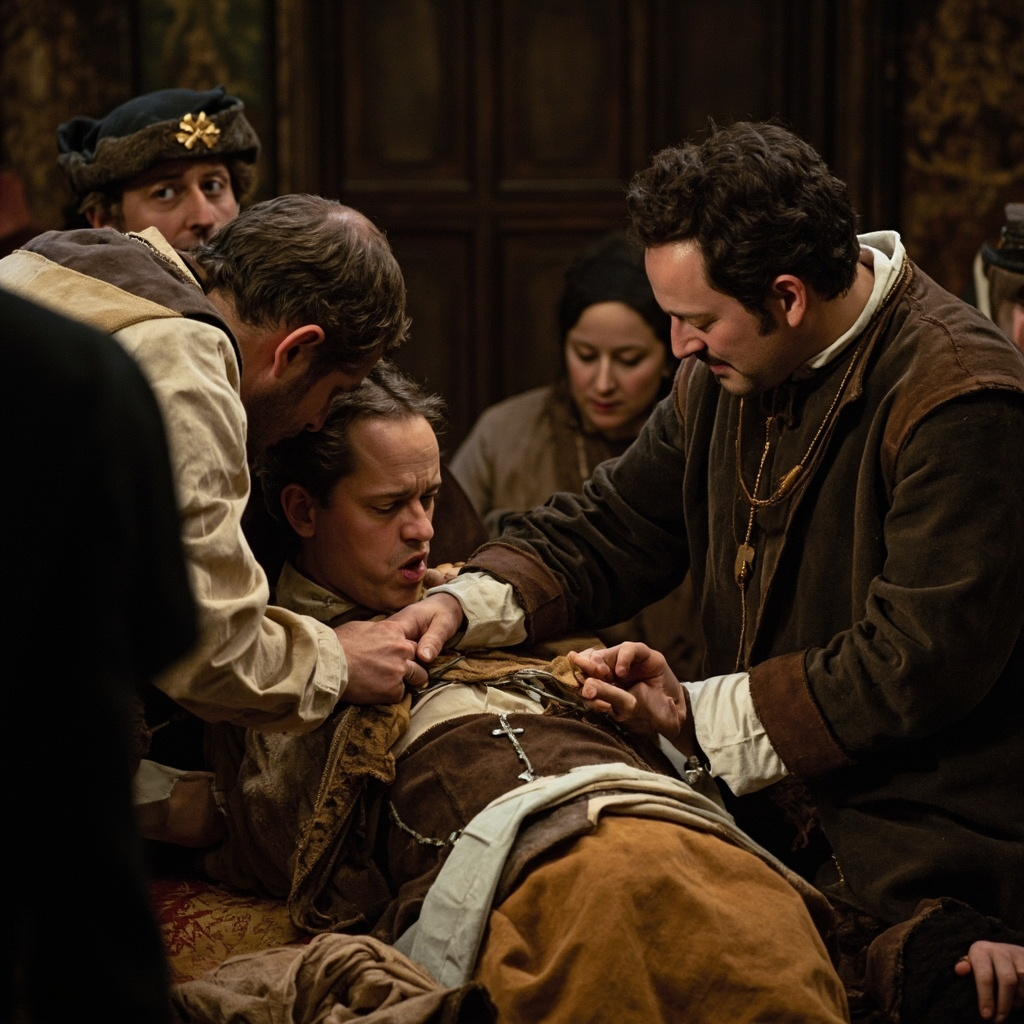
Medieval physicians examining exhausted dancers
Medieval physicians and clergy attempting to treat the dancing plague victims in 1518

The Contagion Spreads

But Troffea’s removal didn’t end the crisis—it only delayed the inevitable. Within days, more people began exhibiting the same compulsive dancing behavior. By the end of the first week, 34 people had joined the macabre dance marathon. The affliction seemed to spread like wildfire through the community, affecting men and women, young and old, rich and poor.

What made the situation even more disturbing was that the dancers couldn’t stop even when they wanted to. Contemporary accounts describe people pleading for help while their bodies continued to move against their will. Many collapsed from exhaustion, only to resume dancing once they regained consciousness. The dancing wasn’t rhythmic or coordinated—it was frantic, desperate, and utterly uncontrollable.

By August, the number of dancers had swelled to around 400 people. The city was in chaos. Normal life ground to a halt as families watched their loved ones dance themselves to the brink of death. Some victims reportedly danced until they suffered heart attacks, strokes, or simply collapsed from sheer exhaustion.

The Authorities’ Misguided Response

Faced with this unprecedented crisis, Strasbourg’s leaders consulted physicians, clergy, and astrologers for answers. The prevailing medical theory of the time attributed the dancing to “hot blood,” and doctors prescribed a treatment that seems absurd in hindsight: more dancing.

Believing that the afflicted needed to “dance out” the illness from their systems, authorities hired professional musicians and dancers to encourage the victims. They opened guild halls and constructed a wooden stage in the town’s grain market. The idea was to provide a controlled environment where the dancers could exhaust themselves safely.

This strategy backfired spectacularly. Rather than curing the dancers, the music and encouragement seemed to intensify their compulsions and attracted even more victims to join the dance. The authorities had essentially created a public venue for mass hysteria.

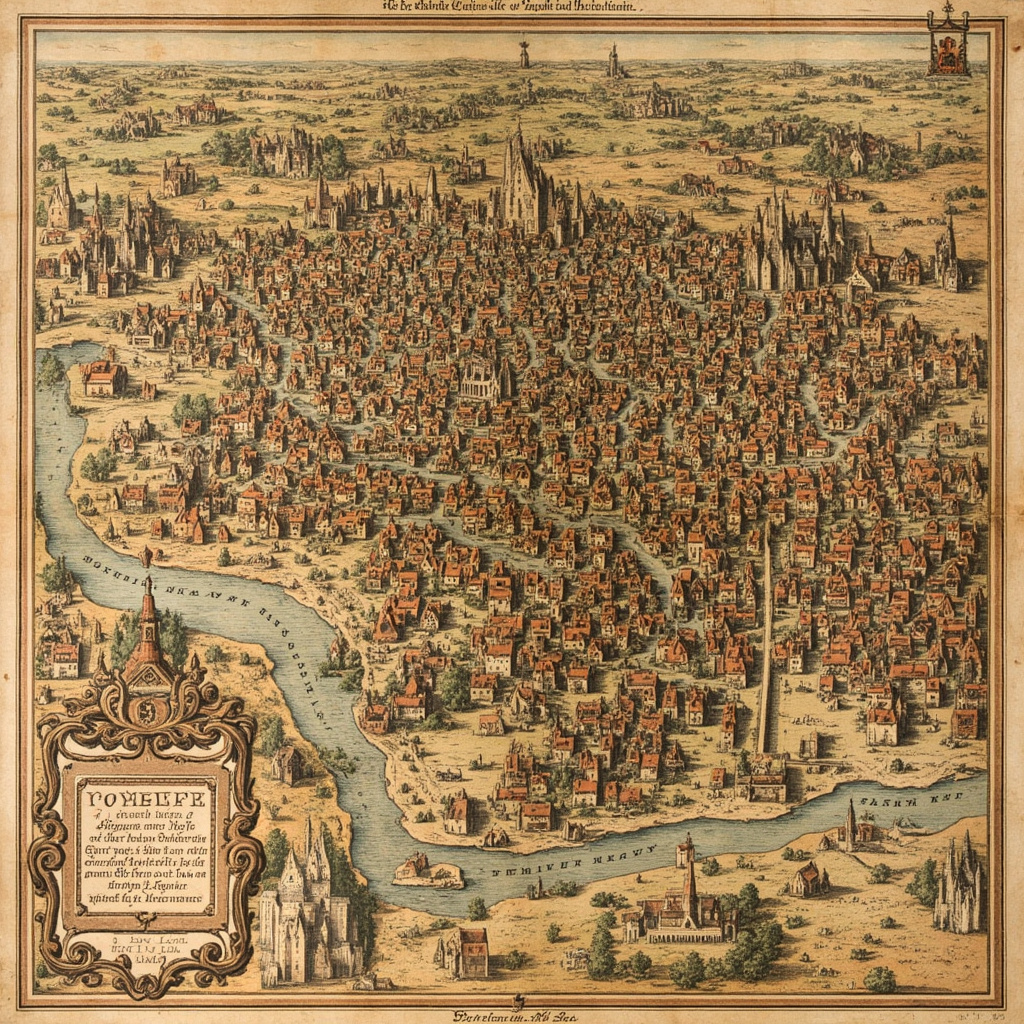
Historic map of 16th century Strasbourg
Map of Strasbourg in the 16th century, showing the city where the dancing plague occurred

Theories and Explanations

Modern historians and scientists have proposed several theories to explain the Dancing Plague of 1518. The most widely accepted explanation is mass psychogenic illness, also known as mass hysteria or conversion disorder. This psychological phenomenon occurs when physical symptoms spread through a group without any identifiable physical cause.

The conditions in early 16th-century Strasbourg were ripe for such an outbreak. The city had recently suffered from famine, disease, and social upheaval. Many residents lived in extreme poverty and faced constant stress about survival. In such an environment, one person’s psychological breakdown could trigger similar responses in others who shared the same fears and anxieties.

Another theory suggests ergot poisoning from contaminated grain. Ergot is a fungus that grows on grains and contains compounds similar to LSD. However, this explanation is less likely because ergot poisoning typically causes muscle contractions and convulsions, not the specific rhythmic dancing observed in 1518.

Some historians point to the religious and social context of the time. Saint Vitus was believed to curse people with unstoppable dancing if they angered him. The widespread belief in this supernatural explanation may have contributed to the psychological conditions that enabled the outbreak.

The End of the Plague

After realizing their mistake with the music therapy, authorities changed course. They banned public dancing, removed the musicians, and began taking the afflicted to shrines for religious intervention. Many victims were taken to Saverne, where they were made to pray before a statue of Saint Vitus and participate in religious ceremonies.

Gradually, the dancing plague subsided. By early September 1518, the number of active dancers had diminished significantly. Whether the religious intervention actually helped or whether the psychological epidemic simply ran its natural course remains unclear. What is certain is that the crisis passed as mysteriously as it had begun.

Legacy and Similar Events

The Dancing Plague of 1518 wasn’t unique in medieval and early modern Europe. Similar episodes occurred throughout the 14th, 15th, and 16th centuries in various regions. These events, often called “dance epidemics” or “choreomania,” typically coincided with periods of social stress, religious fervor, or economic hardship.

The Strasbourg outbreak stands out for its scale, duration, and the detailed contemporary records that survived. These accounts provide valuable insights into how communities dealt with unexplained mass phenomena before the development of modern psychology and medicine.

Today, the Dancing Plague of 1518 serves as a powerful reminder of how social and psychological pressures can manifest in physical symptoms. It demonstrates the complex relationship between mind and body, individual psychology and group dynamics, and the ways in which extreme stress can produce seemingly impossible behaviors.

Lessons from the Past

The Dancing Plague of 1518 offers several important lessons for understanding mass psychological phenomena. First, it shows how quickly unusual behaviors can spread through communities, especially during times of crisis. Second, it demonstrates the danger of well-intentioned but misguided interventions that can actually worsen the situation.

Perhaps most importantly, the dancing plague reveals the power of collective belief and social contagion. In an age where information spreads faster than ever through social media and global communication networks, understanding these historical precedents becomes increasingly relevant for recognizing and managing modern forms of mass hysteria.

The people of Strasbourg in 1518 faced an inexplicable crisis with the tools and knowledge available to them at the time. Their responses—both helpful and harmful—provide valuable insights into human nature and the complex ways that psychological distress can manifest in physical symptoms. The Dancing Plague remains one of history’s most fascinating examples of the mysterious connections between mind, body, and society.

The Year Without a Summer: How a Volcanic Eruption in 1815 Changed the World Forever

In April 1815, a massive volcanic eruption on a remote Indonesian island sent shockwaves around the world—literally and figuratively. Mount Tambora’s explosion was heard 1,200 miles away and ejected so much ash and sulfur into the atmosphere that it changed global weather patterns for years. The result was 1816, known as “The Year Without a Summer,” a climatic disaster that triggered famine, mass migration, and cultural changes that still influence our world today.

This single volcanic event caused more death and disruption than most wars, yet many people today have never heard of it. The story of how one mountain in Indonesia changed the course of human history is a tale of interconnected global systems, human resilience, and unintended consequences that shaped the modern world.

The Explosion Heard Around the World

Mount Tambora, located on the island of Sumbawa in what is now Indonesia, had been rumbling for years. But nothing prepared the world for what happened on April 10, 1815. The eruption began with explosions that could be heard as far away as Java, over 800 miles distant. Local officials initially thought they were hearing naval battles.

The eruption reached its climax on April 10-11, when Tambora literally exploded. The blast was estimated to be equivalent to 800 megatons of TNT—roughly 62,000 times more powerful than the atomic bomb dropped on Hiroshima. The sound was heard 1,200 miles away in Sumatra, making it the loudest sound in recorded human history.

The immediate devastation was catastrophic:

The entire top of the mountain disappeared: Tambora lost over 4,000 feet of height, leaving a massive crater six miles wide.
71,000 people died immediately: Most of Sumbawa’s population was wiped out by pyroclastic flows, ash, and tsunamis.
Ash reached 28 miles high: The eruption column penetrated deep into the stratosphere.
Three provinces vanished: Entire kingdoms and their languages disappeared forever.

A Global Climate Emergency

The eruption injected an estimated 38 cubic miles of debris into the atmosphere, including massive amounts of sulfur dioxide. These particles formed a global aerosol veil that reflected sunlight back to space, causing worldwide cooling.

The climatic effects were unprecedented in recorded history:

Global temperatures dropped 0.4-0.7°C (0.7-1.3°F)
Atmospheric optical effects created spectacular, apocalyptic sunsets worldwide
Weather patterns shifted dramatically across multiple continents
Growing seasons shortened in the Northern Hemisphere

What made Tambora particularly devastating was its timing and location. The eruption occurred just as the world was recovering from the Napoleonic Wars, and the equatorial location meant its effects spread to both hemispheres.

Europe: Famine and Social Upheaval

Europe, already weakened by decades of warfare, was hit hardest by the climate disaster. The summer of 1816 was the coldest on record, with devastating consequences:

Agricultural Collapse: Crops failed across the continent. In Ireland, the potato harvest failed, leading to famine and disease. France experienced its worst grain harvest since 1709.

The Hungry Years: 1816-1817 became known as the “Year of the Beggars” in Germany. Food riots broke out across Europe as bread prices soared.

Cholera Pandemic: The combination of famine, displacement, and poor sanitation created perfect conditions for cholera, which spread from India westward, reaching Europe by 1831.

Mass Migration: Thousands of Europeans emigrated to avoid starvation. This wave of migration significantly increased settlement of the American West.

North America: The Last Great Subsistence Crisis

North America experienced its last major pre-industrial famine:

Killing Frosts: Snow fell in June across New England. Albany, New York recorded snow on June 6. Frost occurred every month of 1816 in much of New England and Canada.

Crop Failures: Corn crops failed throughout the Northeast. Many farmers lost their entire harvests, leading to widespread economic hardship.

Western Migration: The climate disaster accelerated westward expansion as thousands of New England families abandoned their farms. Ohio, Indiana, and Illinois saw massive population increases.

Transportation Revolution: Crop failures and high transportation costs accelerated investment in canals and roads to better connect food-producing and food-consuming regions.

Asia: Monsoon Disruption and Famine

The volcanic winter disrupted Asia’s monsoon patterns with catastrophic results:

China’s Yunnan Province: Late monsoons caused massive crop failures. Survivors resorted to eating bark, grass, and clay. An estimated 100,000 people died of starvation.

Indian Subcontinent: Delayed monsoons caused widespread crop failures, contributing to a cholera outbreak that eventually became pandemic.

Bengal Famine: The disrupted weather patterns contributed to famine conditions that persisted into 1817.

Unintended Consequences That Changed History

The Year Without a Summer triggered a series of unexpected developments that shaped the modern world:

The Birth of the Bicycle

In Germany, crop failures meant no oats for horses. Baron Karl von Drais invented the “running machine” (an early bicycle) in 1817 as horse-free transportation. This direct response to Tambora eventually led to the modern bicycle and influenced transportation development for centuries.

Frankenstein and Vampire Literature

The cold, gloomy summer of 1816 forced Lord Byron, Percy Shelley, Mary Shelley, and others to stay indoors at a villa in Switzerland. To pass time, they held a ghost story contest. Mary Shelley’s contribution became “Frankenstein,” while John Polidori wrote “The Vampyre.” Both works established genres that remain popular today.

The Mormon Migration

Joseph Smith’s family was among those who lost their farm due to climate-related crop failures. They moved to western New York, where Smith would later claim to receive the visions that founded the Mormon church. The religious movement that emerged partly from Tambora’s effects would eventually settle the American West.

Modern Agricultural Science

The widespread crop failures demonstrated the need for better agricultural techniques and crop varieties. This crisis accelerated development of:

Agricultural colleges and systematic farming education
Weather prediction and climate monitoring
Crop diversification and rotation techniques
Food preservation and storage methods

Cultural and Artistic Impact

The apocalyptic atmosphere of 1816 influenced art and culture for decades:

Painting: Artists captured the dramatic sunsets and strange atmospheric effects. Caspar David Friedrich and other Romantic painters were influenced by the otherworldly skies.

Literature: Beyond Frankenstein, the cold summer influenced numerous works exploring themes of isolation, survival, and humanity against nature.

Music: Composers incorporated the melancholy and drama of the climate disaster into their works.

Religious Movements: The apocalyptic conditions sparked numerous religious revivals and millenarian movements, as people interpreted the disasters as signs of end times.

Economic Transformation

The global crisis accelerated several economic developments:

Infrastructure Investment: Governments recognized the need for better transportation networks to move food during shortages. This led to massive canal and road-building projects.

International Trade: The crisis demonstrated global economic interconnectedness and accelerated development of international grain markets.

Banking Evolution: Financial institutions developed new instruments to handle climate-related economic volatility.

Insurance Industry: The widespread losses led to expansion of agricultural and property insurance.

Scientific Understanding

The Tambora crisis advanced scientific understanding in several fields:

Climate Science: Scientists began systematically studying the relationship between volcanic eruptions and weather patterns.

Global Communications: The need to track global weather patterns accelerated development of international scientific cooperation.

Geology: Study of Tambora helped scientists understand volcanic processes and their global effects.

Atmospheric Science: The event provided crucial data about how particles in the atmosphere affect global climate.

Demographic Changes

The climate disaster triggered massive population movements:

European Migration: An estimated 200,000 Europeans emigrated to North America between 1816-1818, many fleeing climate-related hardships.

Internal US Migration: Tens of thousands moved from New England to the Midwest, accelerating settlement of the Ohio Valley and Great Lakes region.

Urban Growth: Failed farmers moved to cities, contributing to early industrial urbanization.

Colonial Expansion: European powers increased focus on securing agricultural colonies to prevent future food shortages.

Lessons for Modern Climate Challenges

The Tambora crisis offers important insights for today’s climate challenges:

Interconnected Systems: The event demonstrated how environmental changes in one location can have global consequences through interconnected climate, economic, and social systems.

Adaptation and Innovation: Humans proved remarkably adaptable, developing new technologies, migration patterns, and social organizations in response to climate challenges.

Unequal Impacts: The crisis affected different regions and social classes unequally, with the poor suffering disproportionately—a pattern that continues with modern climate change.

Long-term Consequences: The effects extended far beyond the immediate climate impacts, influencing culture, technology, and social development for generations.

Recovery and Resilience

Despite the enormous challenges, human societies showed remarkable resilience:

Agricultural Innovation: Farmers developed new techniques and crops better adapted to variable weather conditions.

Social Networks: Communities developed stronger mutual aid systems to help members survive future crises.

Institutional Learning: Governments began developing disaster response capabilities and food security policies.

Cultural Adaptation: Societies incorporated lessons about environmental vulnerability into their cultural practices and beliefs.

The Forgotten Disaster

Why is the Tambora crisis so little known today? Several factors contribute to its historical obscurity:

No Single Dramatic Event: Unlike earthquakes or floods, the effects were spread across years and continents, making them less obvious as a single disaster.

Pre-Industrial Communication: News traveled slowly in 1816, so few people understood the global scope of the crisis.

Competing Historical Narratives: The same period saw the end of the Napoleonic Wars and other major events that dominated historical attention.

Regional Focus: Most historians studied local effects without recognizing the global connections.

Modern Relevance

The Tambora crisis remains relevant for several reasons:

Climate Vulnerability: The event demonstrates how quickly global climate can change and how vulnerable human societies are to environmental disruption.

Global Interconnection: Modern global systems are even more interconnected than in 1816, potentially making us more vulnerable to similar disruptions.

Adaptation Strategies: The historical response provides models for how societies can adapt to rapid environmental change.

Risk Assessment: Understanding past climate disasters helps us prepare for future volcanic eruptions, asteroid impacts, or other global environmental threats.

The Year Without a Summer reminds us that single events can reshape human history in unexpected ways. A volcanic eruption on a remote Indonesian island changed literature, accelerated westward expansion, contributed to religious movements, and influenced technological development worldwide.

Most importantly, it demonstrates both human vulnerability to environmental change and our remarkable capacity for adaptation and innovation when faced with global challenges. As we face our own climate crisis, the lessons of 1816 offer both warnings about the potential for rapid, widespread disruption and hope about humanity’s ability to adapt and ultimately thrive despite environmental challenges.

The Radium Girls: How Factory Workers Fought Corporate America and Won Workers’ Rights

In the 1920s, hundreds of young women painted clock faces with radium paint, told it was perfectly safe. They were instructed to lick their paintbrushes to create fine points—consuming deadly radium with every stroke. These women, known as the Radium Girls, would eventually take on powerful corporations in a legal battle that transformed workers’ rights in America forever.

Their story is one of corporate cover-ups, scientific denial, and ordinary women who refused to die quietly. The Radium Girls didn’t just fight for their own lives—they fought for the safety of all American workers.

The Glow of Progress

Radium was discovered by Marie and Pierre Curie in 1898, and by the 1920s, it had captured the public imagination. This “miracle element” glowed in the dark and was marketed as a cure-all, added to everything from toothpaste to chocolate. Wealthy socialites paid premium prices for radium-infused cosmetics, believing it would give them a healthy, youthful glow.

The radium industry boomed during World War I when the military needed glow-in-the-dark watches and instrument panels. The largest employer of dial painters was the United States Radium Corporation in Orange, New Jersey, followed by the Radium Dial Company in Ottawa, Illinois.

The job was considered desirable—clean work in a bright factory, paying well above minimum wage. Young women, many just teenagers, were thrilled to land these positions. They called themselves “ghost girls” because their hair, clothes, and skin would glow green in the dark after work.

The Deadly Routine

Every day, hundreds of dial painters would arrive at the factory and take their places at long tables. Each woman received:

A small dish of radium paint mixed with adhesive and water
A fine camel-hair brush for precision painting
Detailed watch faces or instrument panels to paint
A quota of about 250 dials per day

The technique was called “lip-pointing”—workers were instructed to shape their paintbrushes to fine points using their lips and tongues. Supervisors demonstrated the technique and assured workers it was completely harmless. “It’s no worse than eating salt,” they were told.

What the women didn’t know was that their supervisors and the company scientists handling radium wore protective equipment and never touched the material directly. The dial painters, however, were consuming radium all day long through lip-pointing.

The First Signs of Trouble

By 1922, dentists in Orange, New Jersey began noticing an unusual pattern among young women. Patients who worked at the radium factory were coming in with severe dental problems:

Teeth falling out spontaneously
Jawbones that wouldn’t heal after extractions
Mysterious jaw fractures
Persistent, unexplained anemia

Dr. Theodore Blum, a local dentist, was the first to make the connection. He called the condition “radium jaw” and published his findings in 1924. The U.S. Radium Corporation immediately challenged his research, claiming their own studies showed radium was completely safe.

Meanwhile, young women continued to get sick. Grace Fryer, who had worked at the factory from 1917 to 1920, began experiencing severe tooth loss and jaw pain. Her case would become the centerpiece of the legal battle to come.

Corporate Cover-Up and Denial

When confronted with evidence of illness among their workers, U.S. Radium Corporation launched a systematic campaign of denial and misdirection:

Fake Medical Studies: The company hired doctors to examine sick workers and publicly declare them healthy. These “independent” physicians were secretly on the company payroll.

Alternative Diagnoses: When women became ill, company doctors blamed everything from syphilis to poor hygiene to “hysteria.” They suggested the women were malingering or seeking attention.

Intimidation Tactics: Workers who complained were fired. Families of deceased workers were told their daughters died from “natural causes” unrelated to radium exposure.

Scientific Manipulation: The company suppressed internal research showing radium’s dangers while publicly promoting studies claiming it was beneficial to health.

The Legal Battle Begins

In 1925, Grace Fryer decided to sue U.S. Radium Corporation for damages. She faced immediate obstacles:

No lawyer would take her case initially—the radium companies were too powerful and wealthy
The statute of limitations appeared to have expired
Medical experts were reluctant to testify against the radium industry
Public opinion favored the “miracle” radium over unknown factory girls

After two years of searching, Fryer found attorney Raymond Berry, who agreed to represent her and four other women: Edna Hussman, Katherine Schaub, Quinta McDonald, and Albina Larice. The press dubbed them “The Five”—the first Radium Girls to challenge corporate America in court.

Scientific Evidence Mounts

Dr. Harrison Martland, a physician and researcher, conducted independent studies of radium workers and made crucial discoveries:

Radium accumulates in bones and continues emitting radiation for years
The “lip-pointing” technique delivered concentrated doses directly to the mouth and throat
Radiation damage affects the entire body, not just the mouth and jaw
There is no safe level of radium consumption

Martland’s research provided the scientific foundation needed to prove the companies’ liability. However, U.S. Radium Corporation fought back with their own “experts” who claimed radium was beneficial and that the women’s illnesses were unrelated to their work.

The Ottawa, Illinois Connection

While the New Jersey case proceeded slowly through the courts, another tragedy was unfolding in Ottawa, Illinois. The Radium Dial Company employed hundreds more dial painters using the same deadly techniques.

Catherine Wolfe Donohue, a former dial painter, organized fellow workers to demand answers about their illnesses. The Ottawa women faced the same corporate denial and legal obstacles as their New Jersey counterparts.

The Illinois women had one advantage: they could learn from the New Jersey legal strategy. They also faced one major disadvantage: many were sicker and dying faster, as the Ottawa plant had used even higher concentrations of radium.

David vs. Goliath in Court

The legal proceedings revealed the shocking extent of corporate callousness:

Internal Memos: Company documents showed executives knew about radium dangers as early as 1922 but chose to suppress the information to protect profits.

Double Standards: While telling workers radium was safe, the company provided protective equipment for its executives and scientists.

Victim Blaming: Defense attorneys argued the women were promiscuous and their illnesses were due to venereal disease, not radium exposure.

Stalling Tactics: The company used every legal maneuver to delay proceedings, hoping the women would die before winning their case.

The Turning Point

Public opinion began shifting in 1928 when newspapers started reporting the full story. The image of young women literally glowing as they walked home from work, only to die horrible deaths from radiation poisoning, captured public sympathy.

Key moments that changed the narrative:

Grace Fryer’s Testimony: Too weak to raise her right hand to take the oath, Fryer’s frail appearance in court generated widespread sympathy and press coverage.

Expert Medical Testimony: Dr. Martland’s scientific evidence was overwhelming and undeniable, even under aggressive cross-examination.

Company Hypocrisy Exposed: Revelations about protective equipment for executives while workers were told radium was safe sparked public outrage.

Victory and Legacy

In June 1928, the New Jersey Radium Girls reached a settlement with U.S. Radium Corporation:

$10,000 lump sum for each woman (approximately $150,000 today)
$600 annual pension for life
Full medical expenses covered
Company admission that radium caused their illnesses

The Illinois women won their case in 1938, though many had died by then. Catherine Wolfe Donohue, the lead plaintiff, died just months after the victory.

Transforming Workers’ Rights

The Radium Girls’ legal victories established crucial precedents:

Right to Sue: Workers gained the legal right to sue employers for damages from occupational diseases.

Employer Responsibility: Companies became legally responsible for providing safe working conditions and informing workers of known hazards.

Statute of Limitations Reform: The “discovery rule” was established—the statute of limitations begins when the worker discovers their illness, not when exposure occurred.

Industrial Safety Standards: Federal oversight of workplace safety was strengthened, leading eventually to OSHA creation in 1970.

Scientific and Medical Advances

The Radium Girls’ cases contributed significantly to medical and scientific understanding:

Radiation Safety: Comprehensive safety protocols were developed for handling radioactive materials.

Occupational Medicine: The field of occupational health emerged, studying how workplace exposures affect human health.

Cancer Research: Long-term studies of radium workers provided crucial data about radiation-induced cancer.

Bone Metabolism: Research on radium poisoning advanced understanding of how bones absorb and process minerals.

The Human Cost

The exact number of radium poisoning victims remains unknown, but researchers estimate:

4,000+ dial painters worked at various facilities nationwide
Hundreds died from radium-related illnesses
Many more suffered chronic health problems
Some families experienced multiple generations of health issues

The women who survived long enough to see justice were permanently disabled. Grace Fryer lived until 1969 but suffered constant pain and required multiple surgeries. Most of “The Five” died in their 40s or 50s from radiation-related cancers.

Modern Recognition and Remembrance

Today, the Radium Girls are remembered as pioneers in workers’ rights and corporate accountability:

Historical Markers: Monuments in New Jersey and Illinois commemorate their struggle.

Academic Study: Their case is taught in law schools, medical schools, and public health programs worldwide.

Popular Culture: Books, documentaries, and even a Broadway musical have told their story to new generations.

Legal Precedent: Their cases continue to influence workplace safety litigation and corporate responsibility law.

Lessons for Today

The Radium Girls’ story remains relevant in our modern economy:

Corporate Accountability: Their battle established that companies cannot hide behind “trade secrets” when worker health is at stake.

Scientific Integrity: The importance of independent research and the dangers of industry-funded studies that prioritize profit over safety.

Worker Empowerment: The power of workers organizing to demand safe working conditions and holding employers accountable.

Regulatory Oversight: The need for strong government oversight of workplace safety and environmental health.

The Radium Girls didn’t choose to be heroes—they simply refused to accept that their lives were expendable for corporate profits. Their courage in fighting powerful companies while battling life-threatening illnesses transformed American workplace safety and established rights that protect workers to this day.

Their legacy reminds us that progress often comes at great personal cost, and that ordinary people can achieve extraordinary change when they refuse to remain silent in the face of injustice.

The Vatican Secret Archives: Hidden Treasures and Forbidden Knowledge That Changed History

Deep beneath the Vatican lies one of history’s most mysterious collections: the Vatican Secret Archives. For centuries, these sealed vaults have sparked conspiracy theories and captured imaginations. But the truth about what’s actually hidden in these archives is far more fascinating than any fiction.

In 2019, Pope Francis officially renamed them the “Vatican Apostolic Archives,” acknowledging that the word “secret” had fueled too much speculation. Yet even today, only a select few scholars gain access to documents that could reshape our understanding of history.

The Origins of Secrecy

The Vatican Archives began accumulating documents in the 4th century, but the modern secret archive system started in 1612 under Pope Paul V. The original purpose wasn’t conspiracy—it was preservation. In an era of political upheaval and wars, the Vatican needed to protect its most important diplomatic and administrative documents from destruction or theft.

The “secret” designation (from the Latin secretum, meaning “private”) indicated these were personal papal documents, separate from materials available in the Vatican Library. But this privacy created an aura of mystery that has persisted for over 400 years.

What’s Actually Inside

Galileo’s Trial Documents: The complete records of Galileo’s 1633 heresy trial reveal surprising details. Contrary to popular belief, Galileo wasn’t tortured, and several cardinals actually supported his scientific work privately. The trial was more about papal authority than pure religious doctrine.

Letters from Michelangelo: The artist’s personal complaints about working on the Sistine Chapel, including his famous protests about painting the ceiling when he considered himself a sculptor, not a painter. One letter translates roughly as “I am not a painter” repeated multiple times in exasperation.

Henry VIII’s Marriage Petition: The original document shows 81 seals from English nobles supporting Henry’s request to annul his marriage to Catherine of Aragon. The elaborate presentation suggests Henry genuinely believed he could convince the Pope through political pressure.

Napoleon’s Excommunication: The formal documents excommunicating Napoleon in 1809, along with his surprisingly respectful responses. Despite seizing papal territories, Napoleon continued attempting diplomatic solutions with the Vatican until his exile.

Documents That Changed History

The Donation of Constantine: For centuries, this document was used to justify papal temporal power over Western Europe. The archives contain evidence that Vatican scholars knew it was a forgery by the 15th century, yet continued using it diplomatically for political advantage.

Templar Trial Records: Complete transcripts from the Knights Templar trials reveal that Pope Clement V privately absolved the Templars of heresy charges. The order was dissolved for political reasons under pressure from French King Philip IV, not religious ones.

Indigenous Rights Documents: Pope Paul III’s 1537 bull Sublimis Deus declared that indigenous Americans were “true men” with souls and rights. These documents show the Vatican’s complex relationship with colonialism—simultaneously blessing conquest while legally protecting indigenous peoples.

World War II: The Most Controversial Files

In 2020, Pope Francis opened the World War II archives, revealing Pope Pius XII’s actions during the Holocaust. The documents show a more complex picture than either critics or defenders expected:

Jewish Rescue Operations: Detailed records of Vatican efforts to shelter Jews in Rome, including fake baptismal certificates and coordination with convents and monasteries. The operation saved thousands of lives, though conducted in absolute secrecy.

Diplomatic Correspondence: Letters show Pius XII walking a careful line between condemning Nazi atrocities and avoiding actions that might provoke worse persecution. His famous “silence” was often strategic rather than indifferent.

Post-War Refugee Documents: Controversial evidence of Vatican assistance helping Nazi war criminals escape Europe through “ratlines”—secret escape routes to South America. These documents reveal how humanitarian refugee aid was sometimes exploited by war criminals.

Scientific Treasures Hidden in Plain Sight

Copernicus’ Original Work: Not just his published De Revolutionibus, but his personal notes showing how he developed heliocentric theory. The marginalia reveals his awareness of potential religious objections and his careful biblical interpretations.

Jesuit Scientific Reports: Centuries of detailed observations from Jesuit missionaries worldwide, including astronomical observations from China, biological studies from the Amazon, and geological surveys from everywhere Jesuits traveled. This collection rivals national scientific archives.

Medieval Medical Texts: Islamic, Jewish, and Christian medical knowledge preserved during the Dark Ages. These documents show how the Vatican served as a repository for scientific knowledge that might otherwise have been lost.

Diplomatic Secrets That Shaped Nations

Irish Independence: Secret correspondence reveals Vatican diplomats quietly supporting Irish independence while publicly maintaining neutrality. The archives show how religious politics influenced the creation of modern Ireland.

Cold War Documents: Recently released files show extensive Vatican intelligence networks in Eastern Europe. The Church maintained contact with suppressed Catholics behind the Iron Curtain, providing both spiritual support and information to Western intelligence agencies.

Treaty of Tordesillas Details: Complete negotiations between Spain and Portugal over dividing the New World. The papal mediation documents show how a religious dispute resolution mechanism shaped South American geography and culture.

The Most Mysterious Files Still Sealed

Despite increased transparency, certain categories remain restricted:

Living Person Privacy: Documents involving people still alive or their immediate descendants remain sealed. This includes many 20th-century diplomatic files and personal correspondence.

State Security Issues: Files that could compromise ongoing diplomatic relationships or reveal intelligence methods remain classified. Some World War II documents fall into this category.

Internal Church Governance: Certain documents about internal church politics, financial matters, and disciplinary cases remain private to protect institutional integrity.

Famous Myths vs. Reality

Myth: The archives contain proof of alien contact.
Reality: The Vatican Observatory does conduct serious astronomical research, but no extraterrestrial evidence is archived.

Myth: Ancient lost gospels are hidden away.
Reality: Early Christian texts exist, but nothing resembling the dramatic “lost gospels” of popular fiction. Most apocryphal texts are already known to scholars.

Myth: Evidence of fake religious relics is suppressed.
Reality: The Church has been surprisingly honest about relic authenticity, often debunking false relics themselves. The archives contain extensive authentication studies.

Modern Access and Digital Revolution

Today, qualified researchers can access most pre-1958 documents, with some exceptions. The process requires:

Academic Credentials: Doctorate in relevant field or equivalent research experience. Tourist visits aren’t permitted.

Specific Research Proposals: Scholars must identify exact documents needed. Random browsing isn’t allowed.

Vatican Approval: A committee reviews each application. Political or sensationalist research is typically rejected.

The Vatican has begun digitizing archives, making some documents available online. This democratization of access has led to exciting new historical discoveries by researchers worldwide.

Recent Discoveries That Made Headlines

Emanuela Orlandi Case Files: Documents related to the 1983 disappearance of a Vatican employee’s daughter have been partially released, showing extensive Vatican cooperation with Italian authorities.

Vatican Bank Documents: Financial records revealing complex relationships between the Vatican, Italian politics, and international banking in the 20th century.

Indigenous Peoples’ Petitions: Hundreds of appeals from colonized peoples seeking Vatican intervention against abuse. These documents provide indigenous perspectives often missing from colonial histories.

The Future of Vatican Transparency

Pope Francis has committed to continued opening of archives, with plans to release more 20th-century materials gradually. The challenge is balancing historical transparency with diplomatic sensitivity and personal privacy.

Digital preservation efforts ensure these historical treasures will survive for future generations. Advanced scanning technology reveals hidden text and corrections in ancient documents, opening new research possibilities.

The Vatican Secret Archives—now Apostolic Archives—represent one of humanity’s great historical repositories. While conspiracy theories persist, the reality is far more interesting: a massive collection of documents showing how religious, political, and scientific forces have shaped our world for over 1,500 years.

The true treasures aren’t hidden supernatural secrets, but the very human story of how power, faith, science, and politics have intersected throughout history. These documents reveal that the most fascinating historical truths are often more complex and interesting than any conspiracy theory.

The Carrington Event: When the Sun Nearly Destroyed Civilization in 1859

The Stage is Set: The Birth of the Electric Age By 1859, the world was experiencing its first taste of the electric revolution. Telegraph lines stretched across continents, connecting cities and nations in ways previously unimaginable. The first transatlantic telegraph cable had been successfully laid just the year before, though it had quickly failed after only a few weeks of operation. This early electrical infrastructure was primitive by today’s standards but revolutionary for its time. Telegraph operators were the masters of this new technology, sending coded messages across vast distances almost instantaneously. Little did they know they were about to become witnesses to one of the most extraordinary natural phenomena in recorded history.

The Solar Observer: Richard Carrington The man whose name would forever be associated with this event was Richard Christopher Carrington, a 33-year-old English astronomer and amateur scientist. Carrington was one of the few people in the world systematically observing and documenting sunspots, those dark patches on the sun’s surface that wax and wane in roughly 11-year cycles. On the morning of September 1, 1859, Carrington was conducting his routine solar observations from his private observatory in Redhill, Surrey. Using a small telescope and projecting the sun’s image onto a screen (a safe method of solar observation), he was carefully sketching the sunspots he could see when something unprecedented happened.

The Solar Flare: A Star’s Violent Eruption At 11:18 AM, Carrington witnessed what appeared to be two brilliant points of white light erupting from a large sunspot group. The flare was so bright that it was visible even through his solar filters—the only time in history that a solar flare has been observed with the naked eye through proper solar observation equipment. Carrington immediately called for a witness, but by the time someone else arrived, the brilliant display had already faded. The entire event lasted only about five minutes, but those five minutes would mark the beginning of the most intense geomagnetic storm in recorded history. What Carrington had witnessed was a coronal mass ejection (CME) of unprecedented magnitude. The sun had literally hurled billions of tons of charged particles into space at speeds of millions of miles per hour, and they were heading directly toward Earth.

The Eighteen-Hour Journey Unlike light, which travels from the sun to Earth in just over eight minutes, the charged particles from Carrington’s solar flare took about 18 hours to reach our planet. This unusually fast travel time indicated the extraordinary power of the eruption—typical CMEs take two to three days to reach Earth. During those 18 hours, telegraph operators around the world went about their normal business, completely unaware that a electromagnetic catastrophe was hurtling toward them at incredible speed. The stage was set for the most dramatic demonstration of the sun’s power over human technology.

September 2, 1859: The Day the World Went Electric When the charged particles finally reached Earth on September 2, 1859, the results were immediate and spectacular. The planet’s magnetosphere—the magnetic field that normally protects us from solar radiation—was completely overwhelmed by the intensity of the geomagnetic storm.

The Telegraph Networks Collapse Telegraph systems around the world began failing in dramatic fashion. Lines sparked, caught fire, and delivered electric shocks to operators. In some cases, the electromagnetic induction was so strong that telegraph keys became too hot to touch, and operators received electrical burns. But perhaps most remarkably, some telegraph lines actually began working better than usual. The induced electrical current was so strong that operators discovered they could disconnect their power sources entirely and still send messages using only the electricity generated by the geomagnetic storm.

A Global Aurora Display The most visible effect of the Carrington Event was the aurora display that followed. Typically confined to polar regions, aurora were seen as far south as Rome, Havana, and even Hawaii. The lights were so bright that people could read newspapers by their glow. In the Rocky Mountains, gold miners reportedly woke up thinking it was dawn and began preparing breakfast, only to realize that the brilliant light illuminating the sky was coming from the aurora, not the sun. Birds began chirping as if morning had arrived in the middle of the night.

Firsthand Accounts of the Chaos The historical record is filled with dramatic accounts of the chaos that ensued: **From a Boston Telegraph Operator:** “I never saw anything like it in my life. The current was so strong that platinum points were entirely melted off. The messages were coming in, but we could not send any out.” **From Portland, Maine:** “The celestial light appeared to cover the whole firmament, apparently like a luminous cloud, through which the stars of the larger magnitude indistinctly shone. The light was greater than that of the moon at its full.” **From Telegraph Office in France:** “The transmission of dispatches was completely interrupted for several hours, and when communication was restored, many of the messages were found to be completely garbled.”

The Science Behind the Catastrophe What made the Carrington Event so devastating was the perfect storm of solar and terrestrial conditions:

Solar Maximum 1859 occurred during a solar maximum, the peak of the sun’s 11-year activity cycle when sunspots and solar flares are most common. However, even for a solar maximum, the Carrington flare was extraordinary.

Direct Hit The coronal mass ejection was aimed directly at Earth. Most CMEs miss our planet entirely or only deliver glancing blows. The Carrington Event was a direct, head-on collision.

Magnetic Field Alignment The magnetic field orientation of the CME was perfectly aligned to breach Earth’s magnetic defenses. When the solar magnetic field opposes Earth’s field (called “southward” orientation), it can cause magnetic reconnection that allows solar particles to penetrate deep into our magnetosphere.

Speed and Density The exceptional speed and particle density of the Carrington CME meant that it compressed and overwhelmed Earth’s magnetic field like nothing before or since.

The Technology of 1859: Why the Damage Was Limited Ironically, the relative simplicity of 1859 technology may have saved civilization from complete collapse. The telegraph system, while groundbreaking, was still limited in scope and not essential for basic survival.

Limited Infrastructure Unlike today, there were no power grids, no satellites, no computers, no GPS systems, and no electronic banking. The telegraph was primarily used for long-distance communication and news transmission, not for controlling critical infrastructure.

Simple Circuit Design Telegraph systems were essentially simple electrical circuits with minimal electronic components. While they could be damaged by electromagnetic pulses, they could also be relatively quickly repaired or replaced.

Manual Backup Systems Most essential functions of society—transportation, commerce, food distribution, and government—still operated through manual systems that were completely unaffected by electromagnetic interference.

If the Carrington Event Happened Today Scientists and engineers have spent considerable time modeling what would happen if an event like the Carrington Event occurred in our modern, electronically dependent world. The results are sobering.

Power Grid Collapse Modern electrical grids would likely face widespread blackouts lasting months or even years. The long-distance transmission lines that carry power across continents are particularly vulnerable to geomagnetically induced currents.

Satellite Destruction Most satellites in orbit would be severely damaged or completely destroyed by the radiation storm. This would eliminate GPS navigation, satellite television, weather forecasting, and military communications.

Internet and Communications The global internet, cellular networks, and most electronic communication systems would likely fail completely. This would halt electronic commerce, banking, and most modern business operations.

Transportation Chaos Modern vehicles rely heavily on electronic systems that would be vulnerable to electromagnetic pulses. Air travel would be particularly affected, as GPS navigation and electronic flight controls could fail.

Economic Devastation Some estimates suggest that a Carrington-level event today could cause between $1-2 trillion in immediate damage and take 4-10 years for complete recovery.

The Warning Signs We’re Seeing Today Solar activity follows predictable cycles, and scientists are constantly monitoring the sun for signs of dangerous flares. Several concerning developments suggest we may be more vulnerable than ever:

Increased Solar Activity The current solar cycle (Solar Cycle 25) has been more active than initially predicted, with several significant flares and CMEs already recorded.

Growing Infrastructure Dependence Our dependence on electronic infrastructure has grown exponentially since 1859. A power grid failure today would affect not just communication, but also water supplies, food distribution, healthcare, and transportation.

Aging Infrastructure Much of our electrical infrastructure was designed without consideration for extreme geomagnetic events. The power grids in many developed nations are particularly vulnerable due to their age and design.

The Heroes of 1859: Telegraph Operators Despite the chaos, many telegraph operators showed remarkable resourcefulness during the Carrington Event. Some discovered they could continue working by disconnecting their power supplies and using the induced current from the geomagnetic storm itself. One famous account describes two operators—one in Portland, Maine, and another in Boston—who managed to carry on a two-hour conversation using only the power generated by the aurora. When one operator suggested they try working without the battery power, the other replied, “Suppose we try.” They successfully sent messages back and forth, with the Boston operator noting, “How do you receive my writing?” The Portland operator responded, “Better than with our batteries connected.” This improvisation not only kept communication lines open during the crisis but also provided early evidence of the electromagnetic nature of the phenomenon.

Richard Carrington’s Legacy Carrington’s careful observation and documentation of the solar flare made him the first person to establish a connection between solar activity and geomagnetic disturbances on Earth. However, his conclusions were initially met with skepticism from the scientific community. Many prominent scientists of the time dismissed the idea that events on the sun could affect Earth so dramatically. It would take decades of additional research and similar (though less intense) events to fully validate Carrington’s insights. Carrington continued his astronomical work but never witnessed another solar flare of comparable magnitude. He died in 1875, having lived to see his observations gradually accepted by the scientific community.

Modern Monitoring and Preparation Today, we have extensive systems in place to monitor solar activity and provide advance warning of potentially dangerous space weather:

Solar Observatories Satellites like the Solar Dynamics Observatory (SDO) and the Advanced Composition Explorer (ACE) provide real-time monitoring of solar flares and coronal mass ejections.

Space Weather Services Government agencies around the world issue space weather forecasts similar to terrestrial weather predictions, allowing utilities and satellite operators to take protective measures.

Grid Hardening Efforts Some utilities have begun implementing protective measures to make power grids more resistant to geomagnetic storms, though progress has been slow and uneven.

The Probability of Another Carrington Event Scientists estimate that Carrington-level events occur roughly once every 150-500 years. Given that it’s been over 160 years since the last one, we may be entering a period of increased risk. Several smaller geomagnetic storms in recent decades have provided glimpses of our vulnerability: – The 1989 Quebec blackout caused by a much smaller geomagnetic storm – The 2003 Halloween storms that damaged satellites and caused power grid problems – The 2012 “near miss” when a Carrington-level CME missed Earth by just a few days

Lessons for Modern Civilization The Carrington Event serves as both a historical curiosity and a urgent warning for modern civilization. It demonstrates that natural phenomena can have global impacts that transcend national boundaries and technological systems.

The Importance of Backup Systems The event highlights the critical importance of maintaining manual backup systems for essential infrastructure, even in an age of electronic automation.

International Cooperation Space weather is a global phenomenon that requires international cooperation for effective monitoring and response. No single nation can adequately prepare for or respond to a Carrington-level event alone.

Infrastructure Investment The potential costs of a modern Carrington Event far exceed the investments needed to harden critical infrastructure against electromagnetic disruption.

Conclusion: A Reminder of Our Cosmic Vulnerability The Carrington Event stands as one of history’s most dramatic reminders that Earth and human civilization exist at the mercy of cosmic forces far beyond our control. In 1859, we got a preview of what our sun is capable of when it unleashes its full electromagnetic fury. As we become increasingly dependent on electronic technology, our vulnerability to space weather events continues to grow. The question is not whether another Carrington-level event will occur, but when—and whether we’ll be prepared for it. The next time you look up at the sun on a clear day, remember that our seemingly stable star is actually a roiling ball of electromagnetic energy capable of reaching across 93 million miles of space to disrupt life on Earth. The Carrington Event was our first warning shot. Let’s hope we’re better prepared for the next one. In the words of Richard Carrington himself, written in his observation log on September 1, 1859: “A brilliant white-light stellar point appeared suddenly on the margin of the sunspot… I believe that this phenomenon was caused by a sudden eruption of solar matter from the sun’s surface.” He had no idea he was documenting what would become known as the most powerful natural electromagnetic event in recorded human history.

The Bone Wars: When Paleontology Became a Blood Sport in the American West

The Combatants: Cope vs. Marsh The rivalry that would define American paleontology pitted two brilliant but fundamentally different men against each other. Othniel Charles Marsh of Yale University was methodical, well-funded, and politically connected. Edward Drinker Cope from Philadelphia was passionate, impulsive, and worked largely with his own fortune. Initially, the two men were friends and colleagues. They had even named fossil species after each other as a sign of mutual respect. But as the stakes grew higher and the potential for fame and fortune increased, their friendship crumbled into one of science’s most destructive rivalries.

The Spark That Ignited the War The feud began with a mistake that wounded Cope’s considerable pride. In 1870, Cope proudly unveiled his reconstruction of *Elasmosaurus*, a long-necked marine reptile. However, Marsh publicly pointed out that Cope had placed the skull on the wrong end of the skeleton—what Cope thought was the tail was actually the neck. This embarrassing correction, delivered in front of their scientific peers, humiliated Cope and created a grudge that would fester for decades. What started as academic disagreement soon escalated into personal warfare.

The Western Theater of Operations The primary battleground for the Bone Wars was the fossil-rich landscape of the American West, particularly Colorado, Wyoming, and Montana. These areas were still largely frontier territory, where law enforcement was sparse and dangers were real.

Como Bluff, Wyoming: The Crown Jewel The most important battlefield in the Bone Wars was Como Bluff, a ridge in Wyoming that proved to be one of the richest fossil deposits ever discovered. When railroad workers first found massive bones in the area in 1877, both Cope and Marsh immediately recognized the site’s potential. What followed was a race to claim as many fossils as possible before the rival could get there. Both men established competing dig sites within sight of each other, creating a tense atmosphere that occasionally erupted into open conflict.

The Tactics: From Science to Espionage As the rivalry intensified, both men abandoned scientific ethics in favor of increasingly desperate tactics:

Financial Warfare Marsh, backed by Yale’s resources and government funding, could afford to hire large teams of diggers and maintain multiple excavation sites simultaneously. Cope, working largely with his family fortune, often found himself stretched thin financially but compensated with his own presence in the field and hands-on approach.

Bribery and Poaching Both sides regularly attempted to bribe each other’s workers to switch sides or provide inside information about promising dig sites. Workers often found themselves caught between competing offers, with loyalties shifting based on who paid better.

Sabotage and Destruction Perhaps most shockingly, both expeditions engaged in deliberate sabotage. Teams would fill in excavation sites, dynamite fossil beds to prevent their rivals from accessing them, and even steal specimens that had already been collected. In some cases, valuable fossils were destroyed simply to prevent the other side from having them.

Spying Networks Each side maintained networks of spies to monitor the other’s activities. Workers were encouraged to report on rival excavations, and both Cope and Marsh hired informants to keep tabs on their opponent’s discoveries and plans.

The Role of Native Americans and Local Communities The Bone Wars took place during a tumultuous period in the American West, with ongoing conflicts between U.S. forces and Native American tribes. Both paleontologists had to navigate these dangerous political waters while pursuing their scientific goals. Local ranchers and townspeople often found themselves caught between the competing expeditions. Some profited by selling information or providing supplies to both sides, while others were forced to choose allegiances that could affect their livelihoods. The expeditions also employed many local workers, including cowboys, miners, and drifters, who brought frontier attitudes to what had once been genteel academic pursuits. This injection of Wild West culture into paleontology contributed to the increasingly violent nature of the rivalry.

Scientific Casualties and Discoveries Despite the destructive nature of their competition, both men made remarkable discoveries that advanced paleontology immensely:

Cope’s Contributions Edward Drinker Cope discovered and named dozens of dinosaur species, including *Camarasaurus*, *Coelophysis*, and *Dryptosaurus*. His rapid publication style and field presence allowed him to claim credit for numerous finds, though sometimes at the cost of accuracy.

Marsh’s Achievements Othniel Charles Marsh, with his more methodical approach, discovered iconic species like *Stegosaurus*, *Triceratops*, and *Allosaurus*. His well-funded expeditions and careful documentation often produced more reliable scientific data.

The Cost of Competition However, the rush to claim discoveries led to numerous scientific errors and hasty conclusions. Both men published descriptions of new species based on incomplete fossils, leading to confusion that paleontologists are still sorting out today. In some cases, the same dinosaur was given multiple names by different expeditions. The competition also meant that many fossil sites were damaged or destroyed in the rush to extract specimens. Valuable scientific context was lost when teams focused on grabbing the most impressive bones rather than carefully documenting their findings.

The Media Circus The Bone Wars captured public imagination in a way that academic disputes rarely do. Newspapers across the country followed the rivalry with enthusiasm, often sensationalizing the conflicts and portraying the paleontologists as larger-than-life characters. This media attention had both positive and negative effects. On one hand, it increased public interest in paleontology and helped secure funding for expeditions. On the other hand, it pressured both men to make increasingly dramatic claims and discoveries to stay in the headlines. The press coverage also amplified every mistake and controversy, making it impossible for either man to back down gracefully from their increasingly destructive competition.

The Government Gets Involved As the Bone Wars raged on, they began to attract unwanted government attention. The expeditions’ activities in the western territories, combined with reports of violence and destruction, eventually led to congressional scrutiny. In 1890, Congress cut funding for Marsh’s surveys, partly due to criticism of his methods and the ongoing controversy. This financial blow severely limited his ability to continue the fight and marked the beginning of the end for the most intense phase of the rivalry.

Personal Destruction and Professional Ruin By the 1890s, the Bone Wars had taken a devastating toll on both combatants:

Marsh’s Decline Despite his early advantages, Marsh found himself increasingly isolated. His autocratic management style and the controversy surrounding his expeditions led to conflicts with government officials and university administrators. He spent his final years defending his discoveries and reputation rather than making new ones.

Cope’s Tragedy Cope, who had never fully recovered from the early humiliation over *Elasmosaurus*, exhausted his family fortune funding his expeditions. He was forced to sell his fossil collection to pay debts and spent his later years working as a professor at the University of Pennsylvania, bitter about his rival’s advantages.

The End of an Era The Bone Wars officially ended with Cope’s death in 1897, though the rivalry had largely fizzled out by the early 1890s as both men found themselves financially and professionally exhausted. Marsh died two years later, in 1899, leaving behind a complex legacy of scientific achievement marred by personal animosity.

Legacy and Lessons Despite its destructive nature, the Bone Wars had several lasting impacts on paleontology and science:

Scientific Progress The competition, while wasteful, did accelerate the pace of discovery. Between them, Cope and Marsh discovered and named over 130 dinosaur species, fundamentally changing our understanding of prehistoric life. Their work laid the foundation for the “golden age” of dinosaur paleontology.

Institutional Changes The excesses of the Bone Wars led to important reforms in how paleontological expeditions were organized and funded. Professional standards were established to prevent similar destructive competitions in the future.

Public Engagement The media attention surrounding the rivalry helped establish paleontology as a field that could capture popular imagination. This public interest has continued to benefit the field through increased funding and support for museum exhibitions and educational programs.

Cautionary Tale The Bone Wars serve as a cautionary tale about how personal rivalries can corrupt scientific endeavors. The story is still taught in graduate programs as an example of how not to conduct scientific research.

Modern Parallels The competitive dynamics of the Bone Wars can be seen in various modern scientific fields, from the race to sequence the human genome to competition over artificial intelligence breakthroughs. The story reminds us that even in the pursuit of knowledge, human nature can lead to destructive behaviors. Today’s paleontologists work under much stricter ethical guidelines and with greater international cooperation. The field has learned from the mistakes of Cope and Marsh, though the competitive drive that fueled their discoveries remains an important motivating force in scientific research.

The Fossils That Changed the World Looking back, it’s remarkable to consider how many of our most famous dinosaurs were discovered during this tumultuous period. *Stegosaurus*, *Triceratops*, *Allosaurus*, and dozens of other species that fill our museums and capture children’s imaginations emerged from the dust and conflict of the Bone Wars. In museum displays around the world, these magnificent skeletons stand as testament to both human scientific achievement and the complex, sometimes destructive nature of scientific competition. The next time you visit a natural history museum and marvel at a towering dinosaur skeleton, remember the extraordinary—and extraordinarily bitter—rivalry that brought these ancient creatures to light. The Bone Wars remind us that science, for all its noble goals, is still fundamentally a human endeavor, complete with all the passion, pride, and petty jealousies that characterize our species. In the end, perhaps that’s what makes the story so compelling—it’s not just about dinosaurs, but about the very human drama of ambition, rivalry, and the relentless pursuit of knowledge.